The Sharp-Shinned Hawk (Accipiter striatus) is a small but powerful raptor found primarily in North and Central America. Known for its agility and speed, this bird is an excellent hunter, preying on small birds and mammals. The Sharp-Shinned Hawk’s small size and sharp, pointed wings allow it to navigate quickly through dense forests and shrubs to catch its prey. While its population is relatively stable, it faces threats from habitat loss and environmental changes. These hawks are migratory, and during the colder months, they head south in search of warmer climates.
Quick Top 10 Facts about Sharp-Shinned Hawk
| SCIENTIFIC NAME | Accipiter striatus |
| CLASSIFICATION | KINGDOM: Animalia PHYLUM: Chordata CLASS: Aves ORDER: Accipitriformes FAMILY: Accipitridae |
| SIZE | Length: 25–34 cm (10–13 inches), Wingspan: 50–61 cm (20–24 inches) |
| SPECIES | There are no recognized subspecies of the Sharp-Shinned Hawk, but their populations are widespread across North and Central America. |
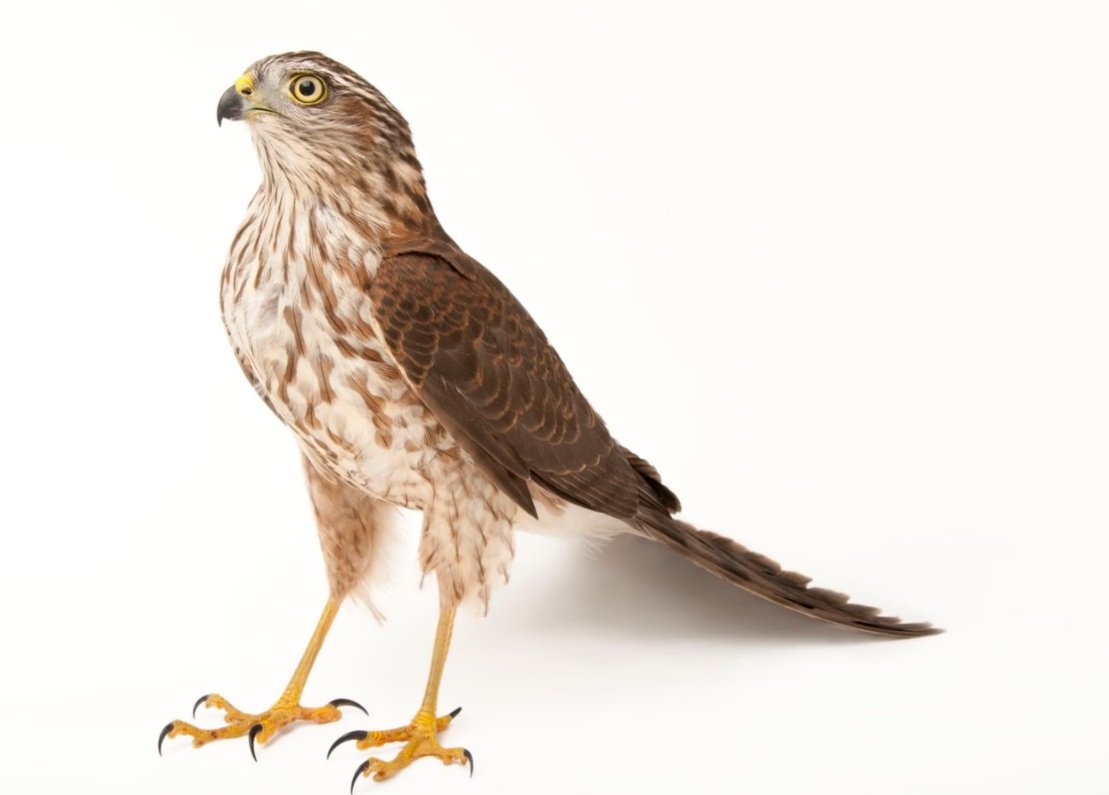
| APPEARANCE | Sharp-Shinned Hawks are small, with a short, rounded tail and wings. Their upperparts are typically gray or slate-colored, while their underparts are white with reddish-brown streaks. They also have yellow eyes and a white throat. |
| LIFE SPAN | Typically 3–5 years in the wild, although some individuals can live much longer with the right conditions. |
| HABITAT | Sharp-Shinned Hawks are typically found in forests, woodlands, and shrubby areas. They often inhabit areas with dense foliage, where they can hide while hunting. |
| DIET | Their primary diet consists of small birds such as sparrows, jays, and chickadees, as well as small mammals like rodents and insects. |
| NATURAL PREDATORS | While Sharp-Shinned Hawks have few natural predators due to their size and speed, they may be preyed upon by larger raptors or animals like foxes or coyotes. |
| COUNTRY | Sharp-Shinned Hawks are found throughout North and Central America, from southern Canada to northern Panama. |
| GESTATION PERIOD | Sharp-Shinned Hawks lay 3–5 eggs per breeding season, with the incubation period lasting about 30 days before hatching. |
| CONSERVATION STATUS | The Sharp-Shinned Hawk is currently classified as “Least Concern” by the International Union for Conservation of Nature (IUCN), though habitat loss and human interference may impact local populations. |
Amazing Facts About Sharp-Shinned Hawk
1. Speed and Agility
The Sharp-Shinned Hawk is known for its impressive speed and agility. It can zip through dense vegetation at high speeds, making it an expert at catching small, fast-moving birds.
2. Small Size, Big Impact
Despite being one of the smallest hawks, the Sharp-Shinned Hawk has a major impact on local ecosystems by controlling populations of small birds and mammals.
3. Master of Stealth
Sharp-Shinned Hawks use their ability to fly low and fast to sneak up on their prey, often ambushing small birds while they are perched or flying.
4. Migratory Behavior
Sharp-Shinned Hawks are migratory, moving from their breeding grounds in the northern regions of North America to the southern United States and Central America during the colder months.
5. Strong Hunting Instincts
These hawks have excellent hunting instincts, relying on their keen eyesight and quick reflexes to capture prey mid-flight or on the ground.
6. Dense Forest Dwelling
Sharp-Shinned Hawks prefer dense forests and woodlands, where they can use their stealthy flight to hide among the trees and bushes while hunting.
7. High-Precision Hunters
When hunting, Sharp-Shinned Hawks are known to make quick, precise strikes to capture their prey, demonstrating a remarkable level of skill and accuracy.
8. Family-Oriented Nesting
During the breeding season, Sharp-Shinned Hawks are family-oriented, with both the male and female working together to care for the young and protect the nest.
9. Threatened by Habitat Loss
Although classified as “Least Concern,” Sharp-Shinned Hawks face threats from habitat destruction and deforestation, which can reduce their available hunting grounds.
10. Symbol of Adaptability
The Sharp-Shinned Hawk’s ability to adapt to a variety of habitats and hunting techniques makes it a symbol of resilience and adaptability in the wild.
Introduction to the Sharp-Shinned Hawk
The Accipitridae family includes the small yet impressive sharp-shinned hawk (Accipiter striatus). This species hunts smaller birds across various environments, including woodlands, cities, and suburban neighbourhoods. It is renowned for its speed and adaptability. The sharp-shinned hawk possesses a range of morphological traits that distinguish it from its peers, and its scientific classification places it firmly among the most fascinating raptors.
Physical Characteristics of the Sharp-Shinned Hawk
Compared to other hawk species like the red-tailed hawk or Cooper’s hawk, the sharp-shinned hawk is notably modest in size. An adult sharp-shinned hawk typically measures between 9 and 13 inches in length and has a wingspan ranging from 20 to 28 inches. Males usually weigh between 4 and 8 ounces, while females typically weigh between 8 and 12 ounces. This noticeable size difference between the sexes, known as sexual dimorphism, simplifies identification.
Distinctive Plumage and Features
The sharp-shinned hawk’s plumage is one of its defining characteristics. When hunting, adults may blend in with the vegetation due to their distinctive blue-grey back and reddish-brown banded breast. Hence the term “sharp-shinned”; their tails are somewhat short and have faint white stripes that are visible when they are in flight. They are further distinguished from other hawks by their distinctive golden eyes and slender legs, which add to their impressive appearance. This combination of physical traits enables the sharp-shinned hawk to thrive in a variety of settings. Their quick flight and excellent eyesight allow them to effectively prey on tiny birds.
Distribution and Habitat of the Sharp-Shinned Hawk
The sharp-shinned hawk (Accipiter striatus) is adaptable and can inhabit a variety of habitats. These hawks are primarily found in deciduous and mixed woodlands, where they can effectively hunt smaller birds like songbirds and pigeons. The extensive cover in these areas enables ambush techniques and stealthy approaches, making them ideal for hunting. Sharp-shinned hawks can also blend in with their environment and find ample nesting sites in forests and shrubby regions, where they are often observed.
Urban Adaptability and Survival Strategies
Sharp-shinned hawks have also adapted exceptionally well to urban environments, even outside their more typical habitats. Their ability to thrive in urban settings is remarkable, as they hunt their prey in parks, gardens, and other green areas. Urban environments offer surprisingly abundant food sources, especially when songbirds are attracted to bird feeders. The increased food supply in these areas satisfies the hawks’ nutritional needs, leading to a rise in sightings within urban regions.
Hunting Behaviour and Diet of Sharp-Shinned Hawks
The sharp-shinned hawk is a unique predator with intriguing feeding habits, primarily consisting of rodents and small birds. This skilled predator mainly preys on birds, using its size to hunt a variety of smaller species. Hawks can swiftly and nimbly catch common prey, such as finches, warblers, and sparrows. When birds are scarce, the sharp-shinned hawk may also consume small mammals like voles in addition to birds.
Agility and Hunting Strategy
The remarkable agility of the sharp-shinned hawk in flight is one of the traits that distinguish its hunting behaviour. To ambush unwary prey, the hawk uses a special combination of stealth and lightning-fast speed. These birds usually sit calmly on trees or posts, watching their surroundings intently and waiting for an opportunity to pursue. Once a victim has been located, the sharp-shinned hawk can move quickly through thick undergrowth, using swift movements and sharp twists to get closer to its prey. Another benefit of the sharp-shinned hawk’s exceptional vision when hunting is its ability to identify possible prey even at great distances. This raptor’s important decision-making throughout the pursuit planning process is aided by its precise distance judgement.
Surprise Attacks and Pair Hunting
It’s interesting to note that several tactics have been shown to be used by sharp-shinned hawks while hunting. They sometimes launch “surprise attacks”, scurrying out of hiding to startle their victim. In order to increase their effectiveness as a team, these hawks may also hunt in pairs during migratory seasons. In summary, the food and hunting habits of the sharp-shinned hawk are essential to its existence and demonstrate the complexity of its predatory abilities and environmental adaptation.
Threats and Conservation Status of the Sharp-Shinned Hawk
The conservation situation of the small prey bird known as the sharp-shinned hawk (Accipiter striatus) has drawn considerable attention. This species is currently classified as Least Concern by the International Union for Conservation of Nature (IUCN), indicating that its population remains relatively stable across most of its range. Nonetheless, certain areas face threats to native populations due to various factors, necessitating conservation efforts and increased awareness.
Impact of Habitat Loss and Urbanisation
Habitat loss is one of the sharp-shinned hawk’s primary challenges. Forests and wooded regions, essential for the hawk’s hunting and nesting activities, are being destroyed as urbanisation expands. In addition to reducing the number of available nesting sites, habitat degradation also affects the availability of prey, which predominantly consists of small birds. Furthermore, the deterioration of natural environments caused by agricultural activities has made it more difficult for this species to survive.
Effects of Climate Change
The sharp-shinned hawk is also significantly threatened by climate change. Changes in weather patterns may impact food availability and migratory schedules. Temperature and precipitation variations can cause habitat changes for both hawks and their prey, leading to inconsistencies in the food supply and breeding cycles. These environmental shifts underscore the importance of comprehensive conservation policies that focus on habitat preservation and climate resilience.
Current Conservation Efforts and How to Help
Numerous conservation initiatives, including habitat restoration projects, public education campaigns, and population monitoring systems, are in place to mitigate these concerns. Supporting local conservation groups, participating in birdwatching activities, and advocating for laws that protect natural areas are all ways individuals can contribute to preserving the sharp-shinned hawk. Engaging in citizen science projects can also provide valuable data for scientists monitoring the health of sharp-shinned hawk populations.

FAQ (Frequently Asked Questions) about Sharp-Shinned Hawk
Q: What is a Sharp-Shinned Hawk?
Ans: The Sharp-Shinned Hawk (Accipiter striatus) is a small, agile raptor known for hunting small birds and mammals. It is found across North and Central America.
Q: Where do Sharp-Shinned Hawks live?
Ans: Sharp-Shinned Hawks are found in forests, woodlands, and shrubby areas across North and Central America, from southern Canada to northern Panama.
Q: What do Sharp-Shinned Hawks eat?
Ans: Sharp-Shinned Hawks primarily feed on small birds such as sparrows, chickadees, and jays, as well as small mammals like rodents.
Q: How long do Sharp-Shinned Hawks live?
Ans: Sharp-Shinned Hawks typically live 3–5 years in the wild, though some individuals can live much longer.
Q: Are Sharp-Shinned Hawks endangered?
Ans: Sharp-Shinned Hawks are classified as “Least Concern” by the IUCN, although habitat loss and deforestation pose ongoing threats.
Q: How do Sharp-Shinned Hawks hunt?
Ans: Sharp-Shinned Hawks hunt by using their speed and agility to surprise and capture small prey, often while flying through dense foliage.
Q: Are Sharp-Shinned Hawks migratory?
Ans: Yes, Sharp-Shinned Hawks migrate from their breeding grounds in the northern parts of North America to the southern United States and Central America during the winter months.
Q: How do Sharp-Shinned Hawks communicate?
Ans: Sharp-Shinned Hawks communicate using a variety of vocalizations, including sharp calls during courtship or territorial disputes.
Q: Can Sharp-Shinned Hawks be kept as pets?
Ans: No, Sharp-Shinned Hawks are wild birds and should not be kept as pets. They are best appreciated in their natural habitats.
Q: How do Sharp-Shinned Hawks raise their young?
Ans: Sharp-Shinned Hawks build nests in trees, where both the male and female care for the eggs and, later, the chicks.
#SharpShinnedHawk #BirdOfPrey #Hawks #NorthAmericanWildlife #Raptors #MigratoryBirds #WildlifeConservation #BirdWatching
Our sources and references about Sharp-Shinned Hawk
1: Wikipedia – Sharp-Shinned Hawk
2: Cornell Lab of Ornithology – Sharp-Shinned Hawk
3: Audubon – Sharp-Shinned Hawk
4: National Geographic – Sharp-Shinned Hawk