Introduction to the Distinct Reptile, the Yellow-Spotted Lizard
The yellow-spotted lizard is a fascinating and beautiful creature, renowned for its unique appearance and connection to numerous stories, especially in literature. It plays a significant role in both natural ecosystems and popular culture, characterised by its yellow-spotted patterns and formidable reputation. Below, we will explore its physical features, habitat, diet, behaviour, life cycle, conservation status, and its important role within the ecosystem.
Quick Top 10 Facts about Yellow Spotted Lizard
| SCIENTIFIC NAME | Eublepharis macularius |
| CLASSIFICATION | KINGDOM: Animalia CLASS: Reptilia ORDER: Squamata FAMILY: Eublepharidae PHYLUM: Chordata GENUS: Eublepharis |
| SIZE | Typically 18-23 cm in length |
| HABITAT | Deserts, rocky areas, and dry grasslands in the Middle East and parts of Asia |
| DIET | Insectivorous – Feeds on insects such as crickets, beetles, and moths |
| SPECIES | Yellow-spotted gecko (Eublepharis macularius) |
| COUNTRY | Found in Afghanistan, Pakistan, India, and surrounding regions |
| GESTATION PERIOD | Eggs are laid in 2-4 weeks, with incubation taking 2-3 months |
| LIFE SPAN | Up to 15-20 years in captivity |
| CONSERVATION STATUS | Least Concern (LC) according to the IUCN Red List |
Physical Features of the Lizard with Yellow Spots
Those familiar with desert habitats will recognise the yellow-spotted lizard (Urosaurus ornatus) due to its distinct body characteristics and colouration.
Colouration
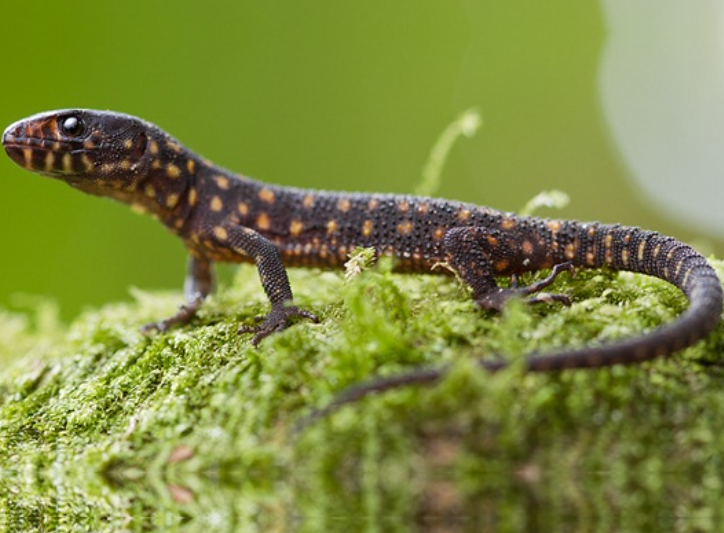
The yellow-spotted lizard’s defining trait is its yellow or yellowish-green dots scattered across its body. These bright patterns contrast sharply with its darker skin, typically greyish, brown, or black. The lizard’s colouration helps it blend into rocky or desert-like habitats. The vivid patches on its body function as camouflage, allowing it to merge with dappled sunlight and desert vegetation.
Size and Shape
The yellow-spotted lizard is a relatively small reptile, measuring between 7 and 10 inches (18 to 25 cm) in length. Its long, thin tail makes up a significant portion of its overall length, while its extended body forms the majority of its size. The small, smooth scales covering its body enable it to move easily in its natural environment. Despite its streamlined body, the lizard has well-developed limbs that allow it to climb and dig. Each leg ends in sharp claws.
Head and Eyes
The yellow-spotted lizard has a triangular, flattened head with two sharp, observant eyes. These eyes are adapted to detect movement from a distance, especially when it is far away. The lizard’s large, dark, round eyes assist it in focusing on the slightest movements of prey or predators.
Tail
The long, thin tail of the yellow-spotted lizard serves multiple vital functions. It aids with balance while running or climbing. In certain situations, it may act as a defence mechanism, allowing the lizard to drop its tail and escape if it feels threatened. Like many reptiles, the tail may regrow over time.

Distribution and Habitat
The yellow-spotted lizard is typically found in desert and semi-arid environments. It often inhabits areas with high temperatures, rocky terrain, and sparse vegetation. The lizard has adapted to thrive in these environments, which offer cover, shelter, and food sources.
Geographic Range
The yellow-spotted lizard inhabits North America, primarily in the southwestern United States, including parts of Arizona, New Mexico, Texas, and Mexico. It is commonly seen in desert scrublands, arid rocky slopes, and desert washes, where temperatures are high and vegetation is minimal.
Preferred Habitat
These lizards favour rocky or boulder-strewn areas, where they can easily find shelter from predators. They are also often found near plants that offer both cover and food, such as cacti, shrubs, and desert flowers. They seek locations that provide both shade for cooling down and sunlight for basking, which is essential for surviving in harsh desert environments.
Habits of Shelter
To avoid the intense desert sun, the yellow-spotted lizard spends much of the day hiding in burrows, cracks, or beneath rocks. It has also been observed using subterranean tunnels made by rats and other animals as shelter.
Nutrition and Feeding Practices
The primary food source of the carnivorous yellow-spotted lizard in its desert habitat consists of smaller animals. Its feeding habits significantly impact the regulation of insect and small animal populations.
Food
Insects, spiders, small invertebrates, and occasionally smaller reptiles form the yellow-spotted lizard’s main diet. It may also consume larvae and other arthropods that it actively hunts or ambushes. While it is not considered a top predator, it plays a crucial role in its ecosystem’s food chain.
Hunting Methods
The yellow-spotted lizard is an opportunistic predator, able to detect potential prey from a distance due to its remarkable eyesight. It may chase fast-moving creatures or ambush small insects that come too close. Thanks to its sharp reflexes and strong claws, it can capture and subdue its prey with ease.
Feeding Behaviour
The lizard is diurnal, feeding during the day and typically hunting alone. It usually hunts in the early morning or late afternoon when the temperatures are milder. The lizard either actively seeks out smaller creatures in the underbrush or waits for prey to pass by before making a swift leap.
Social Structure and Behaviour
Yellow-spotted lizards are solitary and territorial, except during the mating season. They use various behaviours to establish dominance and defend their territories from other lizards.
Territorial Behaviour
Males are particularly territorial. They often use displays such as head-bobbing and tail-waving to assert their dominance and protect their territory from other males during the mating season. While these behaviours are generally harmless, they serve as a means of asserting power without engaging in physical confrontation.
Basking
Like many reptiles, the yellow-spotted lizard is ectothermic, meaning it depends on external sources for body warmth. To regulate its body temperature for activity and digestion, it often spends time basking in the sun.
Defence Mechanisms
When threatened, the yellow-spotted lizard may freeze and use camouflage to avoid detection. If it cannot escape, it may defend itself using its sharp claws. In extreme cases, it may employ autotomy—shedding its tail—to distract predators and allow the lizard to flee.
Life Cycle and Reproduction
The yellow-spotted lizard has a simple reproductive system, laying eggs and mating seasonally.
Mating Behaviour
Breeding typically occurs when the lizards are most active, usually in spring or early summer. Male yellow-spotted lizards perform courtship displays, including head-bobbing and tail-waving, to attract females. If a female is receptive, mating takes place, with the male usually remaining close to protect the female from other males.
Egg-Laying
After mating, the female lays a clutch of eggs in a safe location, often behind rocks or in sandy soil. To shield the eggs from predators and the elements, they are usually placed in burrows or cracks.
Growth and Hatching
The eggs hatch after a few weeks, and the young lizards emerge as fully developed juveniles. Although they initially seek shelter in burrows or behind rocks, they are self-sufficient from birth. The young lizards grow quickly, maturing into adults within a year.
Lifespan
Yellow-spotted lizards typically live between three and five years, though some may live longer if conditions are favourable and they avoid predators.
Status of Conservation
There are no major concerns regarding the overall survival of the yellow-spotted lizard, and its population is thought to be stable across its range. However, like many desert species, it could be affected by habitat changes caused by human activities, such as agriculture, urbanisation, and climate change.
Hazards to Habitat
One of the primary threats to the yellow-spotted lizard is habitat fragmentation and degradation. As human settlements expand into arid regions, the lizard’s access to food and shelter may become restricted.
Conservation Efforts
Although the yellow-spotted lizard is not officially listed as endangered, conservation efforts to preserve desert ecosystems and reduce human impact on their habitats will benefit the species. Protecting arid environments and promoting sustainable land use may help ensure the continued existence of this remarkable lizard.
FAQ (frequently asked questions) about Yellow Spotted Lizard
Q: What is a Yellow Spotted Lizard?
Ans: The Yellow Spotted Lizard is a small desert-dwelling reptile known for its distinctive yellow spots on a dark-colored body.
Q: Where do Yellow Spotted Lizards live?
Ans: Yellow Spotted Lizards are typically found in arid desert regions, often near rocks or caves in hot climates.
Q: What do Yellow Spotted Lizards eat?
Ans: These lizards primarily feed on insects, small mammals, and other small creatures found in their habitat.
Q: How do Yellow Spotted Lizards defend themselves?
Ans: They use their camouflage and agility to evade predators, and some may also secrete toxic substances for defense.
Q: How do Yellow Spotted Lizards reproduce?
Ans: Yellow Spotted Lizards lay eggs, and their reproduction follows the typical reptilian method of external fertilization.
Q: Are Yellow Spotted Lizards venomous?
Ans: No, Yellow Spotted Lizards are not venomous, but they are known to have toxic properties in their skin secretions.
Q: How long do Yellow Spotted Lizards live?
Ans: These lizards have a lifespan of several years, typically living up to 5-10 years in the wild.
Q: What are the predators of Yellow Spotted Lizards?
Ans: Predators of the Yellow Spotted Lizard include larger reptiles, birds of prey, and some mammals.
Q: Do Yellow Spotted Lizards have any natural enemies?
Ans: Yes, other larger lizards and some mammals pose a threat to Yellow Spotted Lizards, especially when they are young.
Q: Are Yellow Spotted Lizards endangered?
Ans: While not critically endangered, the Yellow Spotted Lizard’s population can be affected by habitat loss and environmental changes.
#YellowSpottedLizard, #SpottedLizard, #LizardLove, #WildlifeWonders, #ReptileLife, #LizardWatch, #SpottedBeauty, #NatureSpots, #ReptileKingdom, #HerpLife, #LizardLovers, #WildAndSpotted, #ScalyBeauty, #YellowAndSpotted, #ReptileAdventures
Our sources and references about Yellow Spotted Lizards
1: Wikipedia
2: National Geographic
3: Reptile Fact
4: Encyclopaedia Britannica