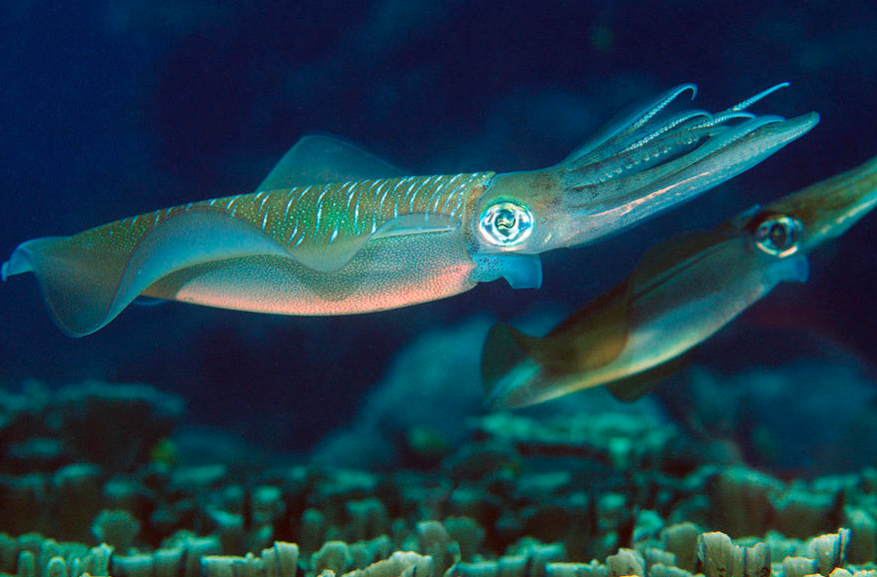
Quick Top 10 Facts about Bigfin Reef Squid
| SCIENTIFIC NAME | Sepioteuthis lessoniana |
| CLASSIFICATION | KINGDOM: Animalia PHYLUM: Mollusca CLASS: Cephalopoda ORDER: Teuthida FAMILY: Loliginidae GENUS: Sepioteuthis SPECIES: S. lessoniana |
| SIZE | Length: Up to 2.5 feet (75 cm), Weight: Around 5–8 pounds (2.3–3.6 kg) |
| HABITAT | Shallow coastal waters, coral reefs, and sandy seabeds in the Indo-Pacific region |
| DIET | Carnivorous; feeds on fish, crustaceans, and smaller marine organisms |
| SPECIES | Bigfin Reef Squid, a species of squid known for its large fins and distinctive appearance |
| COUNTRY | Native to the Indo-Pacific region, particularly around Australia, Indonesia, and the Philippines |
| GESTATION PERIOD | Varies; female squid lay eggs, which hatch into larvae after 2–3 weeks |
| LIFE SPAN | 1–2 years in the wild |
| CONSERVATION STATUS | Not endangered, but population numbers may fluctuate depending on fishing practices and habitat disruption |
Amazing Facts About Bigfin Reef Squid
1. Bigfin Reef Squids have large, distinctive fins
Bigfin Reef Squids are known for their long, broad fins that extend along the sides of their body, giving them an elegant and unique appearance in the water.
2. They are highly intelligent
Like other cephalopods, Bigfin Reef Squids exhibit high levels of intelligence, using their problem-solving skills to avoid predators and capture prey.
3. They can change color
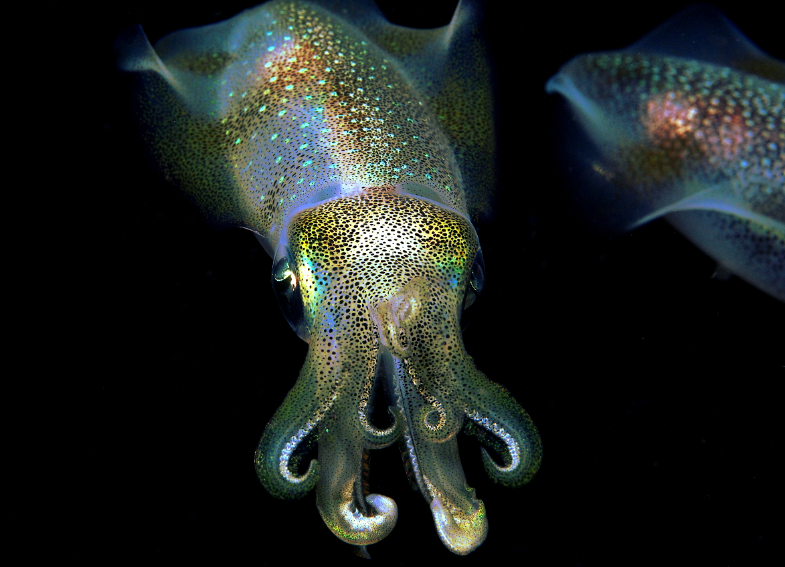
Bigfin Reef Squids have specialized skin cells called chromatophores, which allow them to change color and blend into their environment for camouflage or communication.
4. They have excellent eyesight
With large eyes, Bigfin Reef Squids have excellent vision, helping them detect prey and predators in their underwater environment.
5. They are fast swimmers
Bigfin Reef Squids can propel themselves rapidly through the water by expelling jet-like bursts of water, allowing them to escape predators or chase after prey.
6. They communicate using color changes
Bigfin Reef Squids use their ability to change color as a form of communication, signaling to other squids or warning predators of their presence.
7. They are carnivorous hunters
Bigfin Reef Squids primarily feed on smaller fish, crustaceans, and other marine organisms, using their tentacles to capture prey.
8. They have three hearts
Like all cephalopods, Bigfin Reef Squids have three hearts: two branchial hearts that pump blood to the gills, and one systemic heart that pumps blood to the rest of the body.
9. They can eject ink for defense
When threatened, Bigfin Reef Squids can eject a cloud of ink, which creates a smokescreen to confuse predators and allow the squid to escape.
10. They are short-lived but reproduce rapidly
Bigfin Reef Squids have a relatively short lifespan of 1–2 years, but they reproduce quickly, laying eggs that hatch into juvenile squids after just a few weeks.
Intriguing facts about Bigfin Reef Squid
The Bigfin Reef Squid, technically known as Sepioteuthis lessoniana, is a remarkable marine creature found in the Indo-Pacific region. These cephalopods are distinguished by their elongated bodies and huge fins, which give them their name. These squids are modest, with an average length of 20–30 centimetres, in comparison to other species.
Physical appearance and characteristics of Bigfin Reef Squid
One of the most amazing things about Bigfin Reef Squid is their ability to change colour and pattern quickly. They are very adaptable and hard to identify as predators due to their remarkable ability to blend in with their surroundings. They may alter their appearance to more precisely mimic the hue and texture of their environment, which aids in their ability to blend in and remain undetected by both predators and prey.
Social behavior of Bigfin Reef Squid help them survive and adapt to their environment
Bigfin reef squid are a very social species that are often seen in huge groups called schools. Hundreds or even thousands of students attend these schools, and when they join together, they move in perfect harmony to provide a breathtaking show. Among other things, this social behaviour aids in their ability to locate mates, hunt, and defend themselves against predators. Because of their academic behaviour, they may also communicate with each other via body language and visual clues. Taking everything into account, the Bigfin Reef Squid is a fascinating creature that displays incredible behaviours and adaptations in the aquatic world.

Fascinating facts about Bigfin Reef squid
Nestled in the seas of the Indo-Pacific area lies the intriguing marine species known as Sepioteuthis lessoniana, or Bigfin Reef Squid. This particular species of squid is recognised for its unique traits and behaviour, and it is a member of the Loliginidae family. We will examine some fascinating Bigfin Reef Squid facts below.
Size and Appearance of Bigfin Reef Squid
The Bigfin Reef Squid is a small species of squid, measuring between 10 and 20 centimetres on average for its mantle length. Long, narrow fins that go from the mantle to the tip of the tail are a feature of its slim body. This squid’s colour might vary, but it usually has a transparent or pale appearance that helps it blend in with its environment.
Distribution and Habitat of Bigfin Reef Squid
The Indo-Pacific area, which includes the Red Sea, Indian Ocean, and Pacific Ocean, is home to the Bigfin Reef Squid, which is often found in shallow coastal waters. Its preferred habitats are rocky or sandy soils, seagrass beds, and coral reefs. Due to their remarkable adaptability, these squids may be found at a wide range of depths, ranging from the intertidal zone to as much as 100 metres.
Exploring the eating patterns and hunting strategies of Bigfin Reef Squid
Actions and eating patternsBigfin Reef Squids are a gregarious species that congregate in huge groups called shoals. These educational institutions may house hundreds, or even thousands, of students. In order to protect themselves from predators, they may quickly reverse course or scatter, and their synchronised swimming patterns are well-known.
Use of incredible eyesight and tentacles by Bigfin Reef Squid in cooperative hunting
The Bigfin Reef Squid is a carnivorous predator when it comes to feeding. Its main food sources include small fish, crabs, and other tiny marine animals. It captures its prey with the help of its specialised feeding appendages and tentacles. This species can precisely identify and catch its food because of its keen eyesight, which allows it to pick up even the smallest movements in the water.
Understanding the life cycle and reproduction of Bigfin Reef Squid
The Bigfin Reef Squid’s reproductive habits are quite intriguing. “Sequential hermaphroditism,” the process by which people change their sex numerous times over their existence, is how mating happens. As they become older and bigger, they change from being men at first to females. There is a greater likelihood of successful conception with this novel reproductive technique.
Eggs production and protection by Bigfin Reef Squid
The female Bigfin Reef Squid deposits hundreds or thousands of eggs in gelatinous capsules after mating. For the purpose of shielding the growing embryos, these capsules are fastened to rocks or other substrates. A few weeks later, the eggs hatch, and the baby squid grow and develop quickly until they reach adulthood.
Predators of Bigfin Reef Squid, such as sharks, barracudas, and groupers
Predators abound for the Bigfin Reef Squid, as they do for many other aquatic animals. Sharks, marine animals, and bigger fish are some of its primary predators. These squids have evolved a number of defence measures to defend themselves.
Unique and defensive Colors, textures, and formations of Bigfin Reef Squid
Their capacity to modify the colour and patterns of their skin serves as one of their main defensive mechanisms. They can quickly change how they look to blend in with their environment, which makes it harder for predators to identify them. They may also divert their predators by releasing clouds of ink or disrupting the water with their lengthy fins. This allows them to flee.
Importance of Bigfin Reef Squid to ecosystem
Relevance within the ecosystem As both predator and prey, bigfin reef squid are essential to the marine ecology. As predators, they aid in regulating the number of little fish and crustaceans, preserving the stability of the food chain. As prey, they provide bigger marine species with food, enhancing the ocean’s total richness.
Research findings and studies conducted on Bigfin Reef Squid
Moreover, the Bigfin Reef Squid is an indicator species, which means that its existence or nonexistence might provide information about the condition of the marine ecosystem. Keeping an eye on their numbers and behaviour may provide important information about the health of other coastal ecosystems, including coral reefs.
Importance of ongoing scientific research for understanding and protection of Bigfin Reef Squid
One amazing organism that highlights the beauty of aquatic life is the Bigfin Reef Squid. This type of squid never ceases to amaze scientists and marine fans with its unusual look, behaviour, and significant ecological importance. We can better comprehend the delicate balance of life in our seas and strive towards the conservation and preservation of these squids by learning more about them.
FAQ (Frequently Asked Questions) about Bigfin Reef Squid
Q: What is a Bigfin Reef Squid?
Ans: The Bigfin Reef Squid (*Sepioteuthis lessoniana*) is a species of squid found in tropical and subtropical waters, primarily in the Indo-Pacific region. Known for its vibrant colors and distinctive large fins, it is often found near coral reefs and other coastal habitats.
Q: Where do Bigfin Reef Squids live?
Ans: Bigfin Reef Squids are typically found in the warm, coastal waters of the Indo-Pacific region, including the coasts of Australia, Indonesia, the Philippines, and surrounding areas. They thrive in coral reefs, shallow lagoons, and sandy bottoms at depths of up to 100 meters (330 feet).
Q: What do Bigfin Reef Squids eat?
Ans: Bigfin Reef Squids are carnivorous and feed primarily on small fish, crustaceans, and other marine organisms. They use their powerful tentacles to capture prey, bringing it to their beak-like mouth for consumption. They are also known to consume smaller invertebrates and other squid species.
Q: How big do Bigfin Reef Squids get?
Ans: Bigfin Reef Squids typically grow to about 20 to 30 centimeters (8 to 12 inches) in length, including their tentacles. Their large fins make them highly recognizable and allow them to move quickly through the water. They have an impressive ability to change colors and patterns for communication and camouflage.
Q: How do Bigfin Reef Squids communicate?
Ans: Bigfin Reef Squids are known for their remarkable ability to change color and pattern on their skin. This is achieved through special pigment cells called chromatophores. These color changes are used for communication, camouflage, and attracting mates. They can also display flashing or pulsing colors to signal distress or to ward off predators.
Q: Are Bigfin Reef Squids dangerous?
Ans: Bigfin Reef Squids are not dangerous to humans. While they are equipped with a powerful beak and ink sac for defense, they typically avoid human interaction. However, their ink is used as a defense mechanism to escape predators by creating a cloud of dark ink that helps them escape from threatening situations.
Q: How do Bigfin Reef Squids reproduce?
Ans: During the mating season, male and female Bigfin Reef Squids engage in a courtship display, where males often use their color-changing abilities to attract females. After mating, females lay their eggs on the seafloor or on underwater structures. The eggs hatch into tiny squid larvae, which grow and develop into adult squid within a year.
Q: What is the lifespan of a Bigfin Reef Squid?
Ans: Bigfin Reef Squids have a relatively short lifespan, typically living only about 1 to 2 years. They grow quickly and reproduce early in life. Their fast growth and short lifespan are common traits for many squid species.
Q: Are Bigfin Reef Squids endangered?
Ans: As of now, Bigfin Reef Squids are not considered endangered. They are relatively abundant in their range and have a stable population. However, like many marine species, they can be affected by environmental changes, habitat loss, and pollution.
#BigfinReefSquid, #Squid, #Cephalopods, #MarineLife, #OceanCreatures, #SquidLovers, #UnderwaterWorld, #CoralReefs, #OceanPhotography, #MarineBiology, #AquaticLife, #ColorChangingSquid
Our sources and references about Bigfin Reef Squid
1: Wikipedia – Bigfin Reef Squid
2: National Geographic – Bigfin Reef Squid
3: Aquarium of the Pacific – Bigfin Reef Squid
4: ABC Education – Bigfin Reef Squid Behaviour