Southeast Asia is home to some unique and fascinating animals
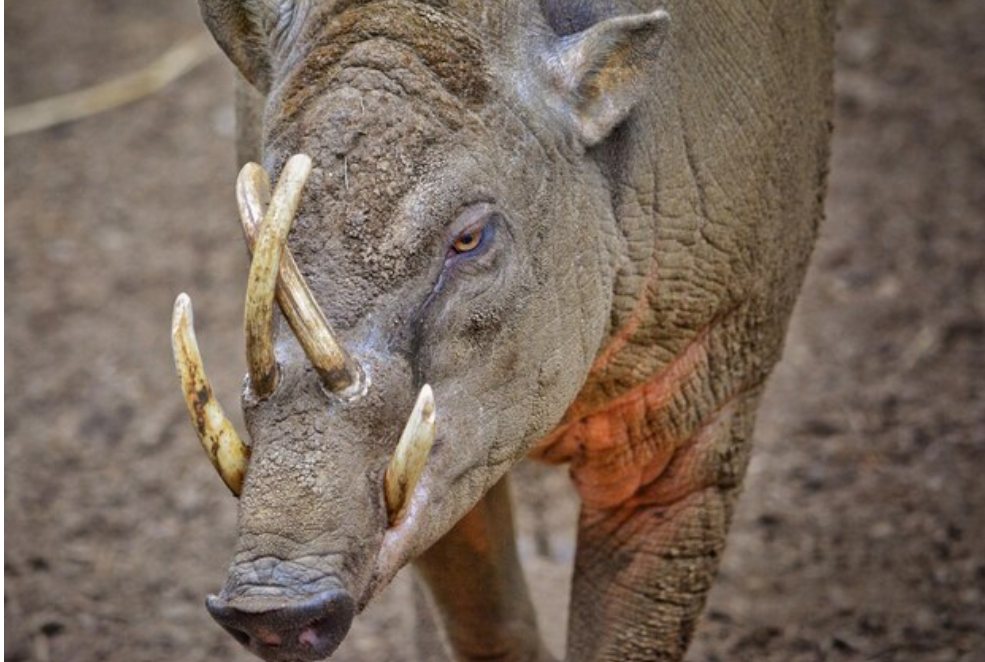
The amazing babirusa, often referred to as the “pig-deer,” is located in the Indonesian islands of Buru, Togian, Sula, and Sulawesi. With their enormous, upward-curving tusks, which may reach a length of 17 inches, these unusual creatures are recognised for their unusual look. In contrast to other pig species, male babirusa tusks develop through their nose skin and bend back towards their foreheads.
Quick Top 10 Facts about Babirusa
| SCIENTIFIC NAME | Babyrousa babyrussa (Babirusa) |
| CLASSIFICATION | KINGDOM: Animalia CLASS: Mammalia ORDER: Artiodactyla FAMILY: Suidae PHYLUM: Chordata GENUS: Babyrousa |
| SIZE | Up to 1.5 meters (5 feet) in length, weighing between 50-100 kg (110-220 lbs) |
| HABITAT | Found in the forests of Sulawesi, Indonesia, and nearby islands |
| DIET | Omnivorous – Feeds on roots, fruits, seeds, and small invertebrates |
| SPECIES | Babirusa (Babyrousa babyrussa) |
| COUNTRY | Native to Indonesia, primarily on the island of Sulawesi |
| GESTATION PERIOD | Approximately 150-155 days |
| LIFE SPAN | Up to 20 years in the wild |
| CONSERVATION STATUS | Listed as “Endangered” (EN) by the IUCN due to habitat loss and hunting pressures |
Preference for fruits, roots, leaves, and even small invertebrates
As an herbivorous animal, the babirusa mostly consumes fruits, leaves, and roots. They can find food sources in their thick forest settings because of their excellent sense of smell. These animals, which can swim quite well, are often seen close to rivers and wetlands, where they seek water vegetation to feed on and cool themselves. Babirusas are nimble climbers that have little trouble moving through trees, despite their massive appearance.
social structure of Babirusa and interactions between babirusa, especially during mating season
Babirusas are renowned for their distinctive social interactions. A dominant male, a few females, and their young usually make up small groups in which they reside. When it comes to breeding season, the dominant male protects his area and mates with the females. It’s interesting to note that babirusas reproduce frequently—their females may give birth to litters of up to four piglets at a time. These piglets have straight tusks at birth, but as they get bigger, they start to bend. Given the challenges to babirusas’ existence, including habitat degradation and poaching for their flesh and tusks, conservation activities are essential.
Scientific name (Babyrousa babyrussa) and its classification as a member of the pig family
The babirusa, also referred to as the “pig-deer” or “deer pig,” is an intriguing and unusual animal species. The babirusa is a native of the Indonesian islands of Sulawesi, Togian, Sula, and Buru. It is often eclipsed in popularity by more well-known animals like tigers and elephants. But these animals are worth studying because of their numerous fascinating traits and habits. You may not be aware of these interesting facts about Babirusa.
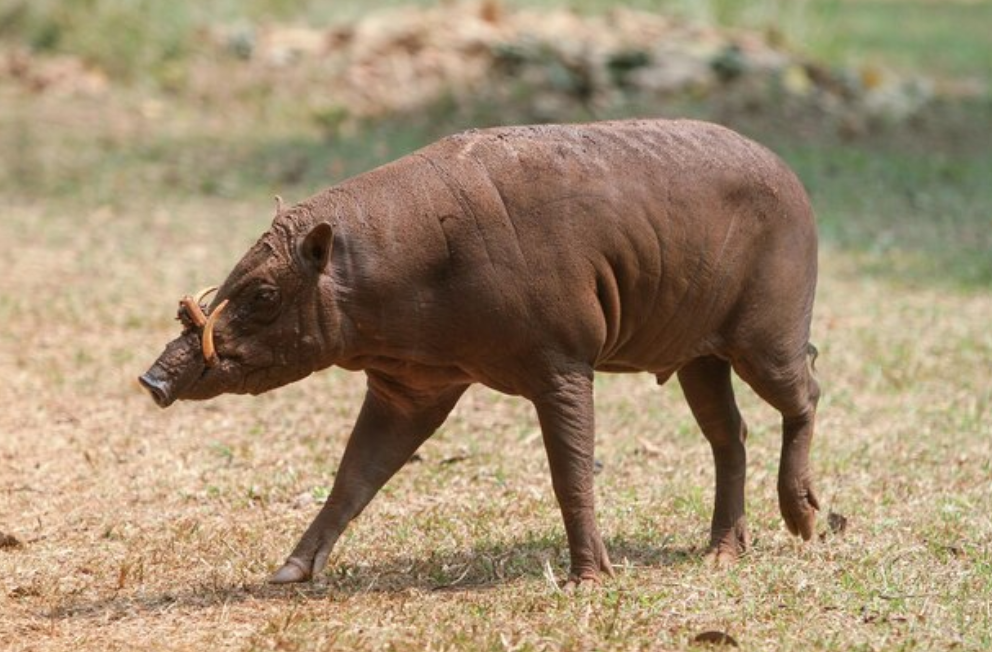
1. Babirusa’s Abnormal physical appearance, emphasising its unique features
The babirusa’s peculiar tusks are among its most distinguishing characteristics. In contrast to the tusks of other pig species, the male Babirusa’s grow vertically from the tip of their snout. They find it difficult to seal their mouths because of these tusks, which may grow up to 17 inches long and sometimes bend back towards the forehead. The result is a distinctive, even humorous, look for the babirusa.
2. social structure of babirusa, which is primarily solitary
Babirusas are gregarious creatures that inhabit social groups of up to eight members, often made up of a male, several females, and their offspring. These groups are always moving, hunting and gathering food, as well as looking for water sources. Babirusas are primarily solitary animals that only join together during the mating season, despite living in groups.
3. A diet high in plants with preference for fruits, roots, and leaves
Babirusas eat mostly fruits, leaves, and roots since they are herbivores, in contrast to other pig family members. They are renowned for being skilled foragers since they dig for food using their snouts. In fact, since they consume fruits and then disperse the seeds via their excrement, these creatures are seen to be an essential component of their ecology.
4. Reproductive behaviour of babirusa, focusing on their mating rituals
Male babirusas will compete with one another during mating season to get the attention of females. Males use complex courting displays to entice females, which include rubbing their tusks together, standing on their hind legs and shaking their heads, and loudly grunting. Males also often fight with their tusks; however, significant damage is seldom sustained in these encounters.
5. Conservation status of babirusa endangered species, which is currently classified as vulnerable
The International Union for Conservation of Nature (IUCN) regrettably lists Babirusas as a vulnerable species. Hunting, intermarriage with domestic pigs, and habitat degradation have all contributed to their population decline. With an estimated 5,000 babirusas remaining in the wild, conservation activities are essential to the survival of babirusas.
6. Cultural significance of babirusa in the regions where they are found
In the Sulawesi area, certain indigenous communities regard babirusas as holy creatures, giving them great cultural value. The flesh and tusks of these animals are used in significant rites, and they are often mentioned in traditional folklore and ceremonies.
7. Natural habitat of babirusa, which includes rainforests, swamps, and marshy areas
Babirusas have evolved a number of adaptations to help them survive in their natural habitat, which includes living in Indonesia’s lush tropical woods. They can easily climb high slopes and negotiate uneven terrain because of their powerful, big hooves. Their highly developed senses of smell and vision also aid in detecting predators and assisting them in navigating their environment.
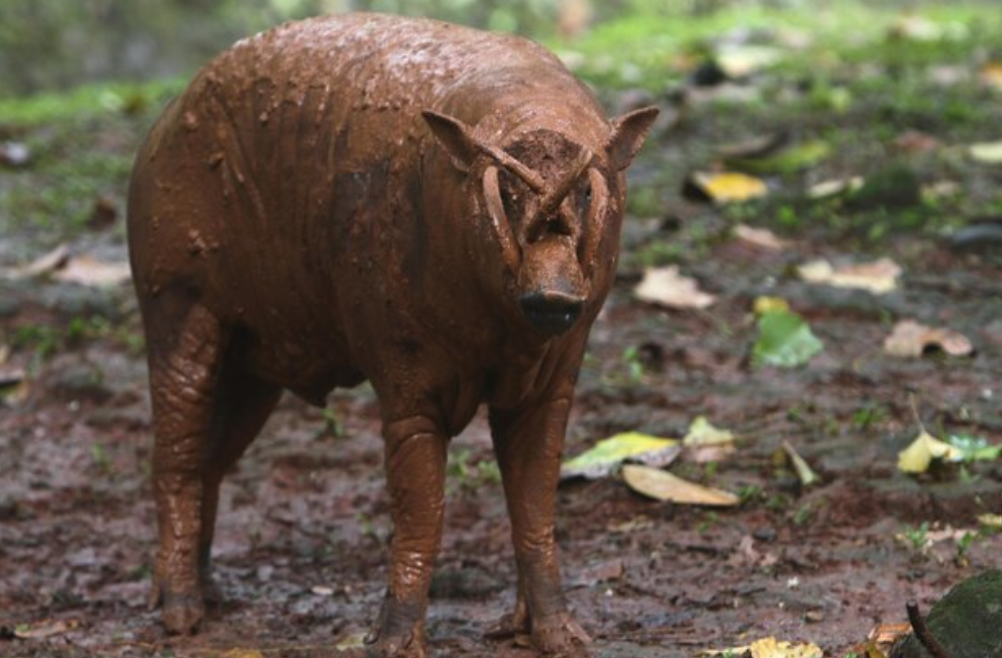
8. Importance of raising awareness about babirusa conservation among local communities
Babirusas are really intriguing creatures with distinctive traits and habits, despite maybe not being as well-known as other species. We must acknowledge and value these animals as their number continues to drop, and we must fight to preserve their environment and ensure their existence for future generations.
FAQ (frequently asked questions) about Babirusa
Q: What is a Babirusa?
Ans: The Babirusa (Babyrousa) is a wild pig native to the islands of Indonesia, known for its distinctive, upward-curving tusks and large, muscular body.
Q: Where do Babirusas live?
Ans: Babirusas are found in the rainforests and swamps of the Indonesian islands of Sulawesi, Togian, and Sula. They prefer forested habitats near water sources.
Q: What do Babirusas eat?
Ans: Babirusas are omnivorous, feeding on a variety of food including fruits, leaves, roots, and small animals like insects and birds.
Q: How do Babirusas defend themselves?
Ans: Babirusas are not particularly aggressive, but they use their powerful tusks for self-defense and to fight other males, especially during mating season.
Q: How do Babirusas reproduce?
Ans: Babirusas reproduce sexually, with females giving birth to a litter of one to three piglets after a gestation period of about 150 days.
Q: Are Babirusas endangered?
Ans: Yes, Babirusas are considered endangered due to habitat loss, hunting, and human encroachment on their natural habitats. Conservation efforts are underway to protect them.
Q: How long do Babirusas live?
Ans: Babirusas typically live around 15 to 25 years in the wild, but their lifespan in captivity may be longer if they are well cared for.
Q: What are the characteristics of Babirusas?
Ans: Babirusas are large pigs with long, upward-curving tusks that are present in males. They have a unique appearance with a slender body and long legs, and their fur is usually sparse and bristly.
Q: Do Babirusas have natural predators?
Ans: Babirusas have few natural predators, but young piglets may fall prey to large carnivores like wild cats or large birds of prey.
Q: How do Babirusas communicate?
Ans: Babirusas communicate using a variety of vocalizations, such as grunts and squeals. They also use body language to express emotions and interact with other members of their group.
#Babirusa, #WildPigs, #EndangeredSpecies, #WildlifePhotography, #AnimalLovers, #UniqueAnimals, #WildlifeConservation, #IndonesianWildlife, #RareAnimals, #NatureLovers, #WildAnimals, #BabirusaConservation, #AnimalKingdom, #ForestCreatures, #WildlifeProtection
Our sources and references about Babirusa
1: Wikipedia
2: Encyclopaedia Britannica
3: IUCN Red List
4: World Wildlife Fund (WWF)