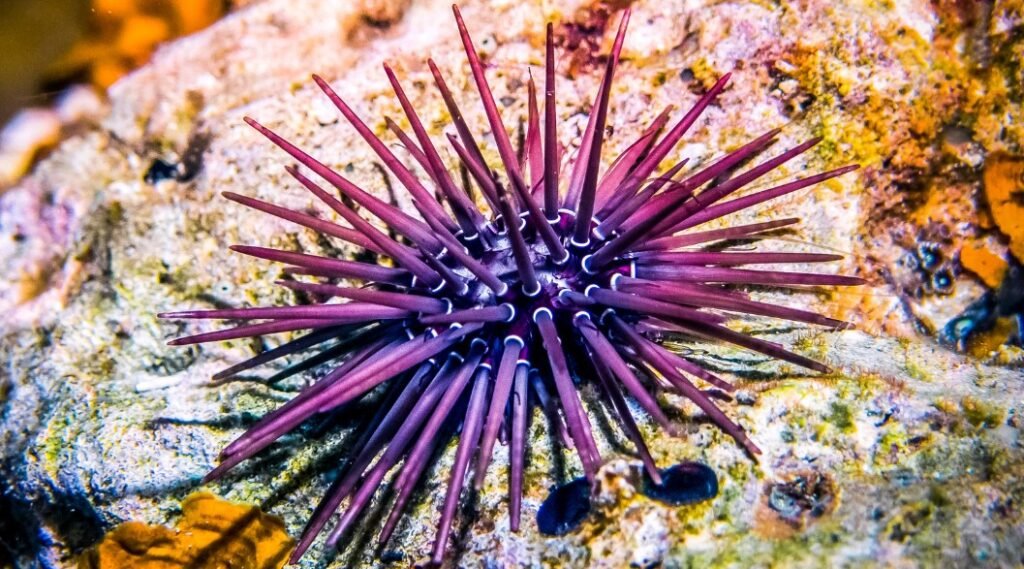
Sea urchins are small, spiny marine creatures found in oceans all around the world. They are part of the class Echinoidea and are known for their spherical bodies covered with long, sharp spines. These creatures are bottom-dwelling and typically live on rocky or sandy sea floors. Sea urchins play an important role in marine ecosystems, often feeding on algae and helping to maintain the balance of underwater vegetation. Their spines can provide protection from predators, and they are also known for their ability to move using tube feet.
Quick Top 10 Facts about Sea Urchin
| SCIENTIFIC NAME | Echinoidea (class) |
| CLASSIFICATION | KINGDOM: Animalia PHYLUM: Echinodermata CLASS: Echinoidea |
| SIZE | Diameter: 5–20 cm (2–8 inches), depending on the species |
| SPECIES | Common species include the Green Sea Urchin (Strongylocentrotus droebachiensis), the Purple Sea Urchin (Strongylocentrotus purpuratus), and the Long-Spined Sea Urchin (Diadema setosum). |
| APPEARANCE | Sea urchins have a round, hard shell (test) covered with sharp spines that can vary in length, color, and pattern depending on the species. They have five-part radial symmetry. |
| LIFE SPAN | Typically 10–30 years, depending on the species and environmental conditions |
| HABITAT | Sea urchins are found in marine environments, particularly in shallow waters, rocky seafloors, kelp forests, and coral reefs. |
| DIET | Primarily herbivores; sea urchins feed on algae, especially kelp, as well as detritus and small invertebrates when algae are scarce. |
| NATURAL PREDATORS | Sea otters, crabs, fish, and some birds are known predators of sea urchins. |
| COUNTRY | Sea urchins are found in oceans worldwide, particularly in temperate and tropical coastal waters. |
| GESTATION PERIOD | Sea urchins reproduce through external fertilization. The eggs develop into larvae, which then settle onto the seafloor to mature into adult urchins. |
| CONSERVATION STATUS | Some species of sea urchins are threatened by overfishing, habitat loss, and climate change. However, many species remain abundant and widespread. |
Amazing Facts About Sea Urchin
1. Unique Body Structure
Sea urchins have a spherical, hard shell (test) covered with sharp spines that help protect them from predators. Their five-part radial symmetry makes them one of the most recognizable marine creatures.
2. They Move with Tube Feet
Although they may appear stationary, sea urchins are capable of slow movement using tube feet located on the underside of their bodies. These tube feet are part of their water vascular system and help them move across the ocean floor.
3. Important Herbivores
Sea urchins play a crucial role in marine ecosystems by grazing on algae. This helps prevent algae from overgrowing and damaging the delicate balance of underwater environments like kelp forests.
4. Long Lifespan
Some species of sea urchins can live up to 30 years, making them relatively long-lived marine animals. Their ability to regenerate lost spines and other body parts contributes to their longevity.
5. They Can Regrow Spines
If a sea urchin loses a spine due to predation or injury, it has the ability to regrow it over time. This regenerative ability is an important survival mechanism.
6. Spiny Protection
The long, sharp spines of sea urchins serve as a defense mechanism against predators. Some species also have venomous spines that can cause pain or injury to predators.
7. No Eyes, But Sensitive
Despite lacking eyes, sea urchins can sense light, movement, and changes in their environment through specialized sensory structures located on their body.
8. Reproductive Strategy
Sea urchins reproduce by releasing their eggs and sperm into the water, where fertilization occurs externally. Their larvae then float in the plankton before settling to the ocean floor to mature.
9. Sea Urchin Shells Are Used in Art
The shells of some sea urchins are used in art and crafts due to their unique, attractive shape and texture. They are sometimes made into jewelry or decorative items.
10. They Can Live in Many Habitats
While commonly associated with rocky coastal areas, sea urchins can be found in a variety of marine environments, including kelp forests, coral reefs, and sandy seafloors.
Sea Urchin: The Ocean’s Spiny Wonder
The sea bottom is home to unusual, spiky marine life known as sea urchins. Sea urchins, which are found in a variety of environments, including the deep ocean and coral reefs, are important components of the marine food web and have long been the focus of scientific research. Sea urchins are amazing animals with complex biological traits and essential ecological roles, despite their spiky appearance. The biology, behaviour, ecological significance, and conservation issues of sea urchins will all be covered in this article.
1. Sea Urchins: What Are They?
The group of marine invertebrates known as echinoderms, which also contains sea cucumbers, sand dollars, and starfish, includes sea urchins. There are more than 950 species of sea urchins, which are divided into two primary categories: regular and irregular. The class Echinoidea is the scientific term for sea urchins.
Sea urchins are distinguished by their globular, spiky bodies, which may vary in length, colour, and form and are often coated with protective, sharp spines. In addition to providing the sea urchins with a unique and identifiable look, these spines act as a defence mechanism against predators. A sea urchin’s test, a hard shell composed of calcium carbonate, encloses its body. The sea urchin’s tube feet may show through the many holes in this test, which facilitates eating, breathing, and mobility.
2. The Physical Attributes of Sea Urchins
Spines
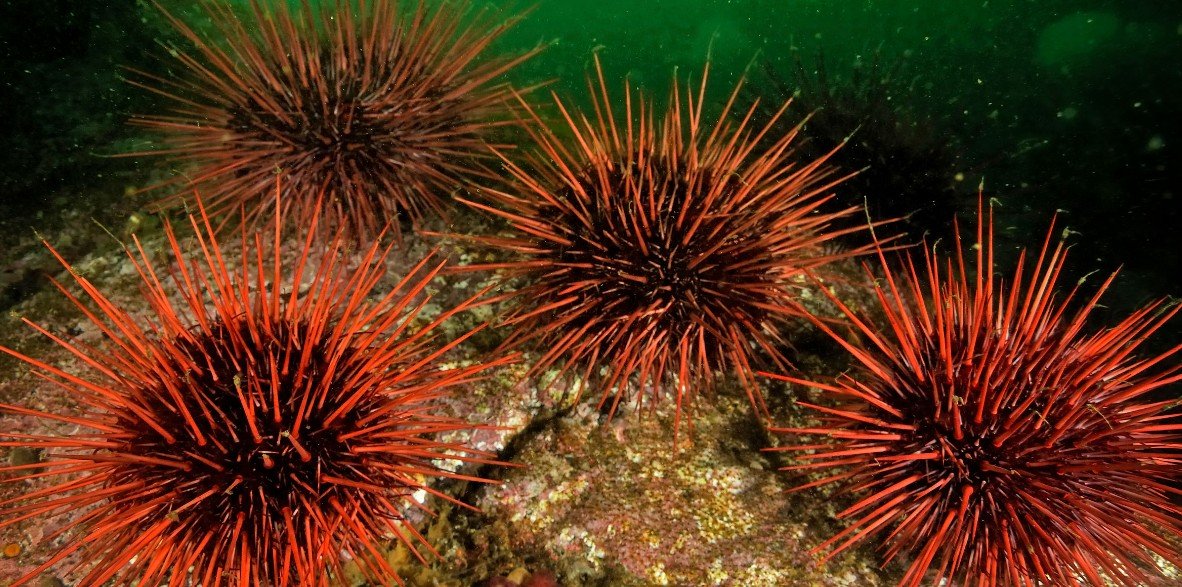
- Sea urchins’ stiff spines, which may reach lengths of several inches, are its most noticeable characteristic. Depending on the species, these spines might have different colours and textures. While some sea urchins have long, thin spines, others have short, heavy ones.
- Because of their adjustable spines, sea urchins may change their posture to better protect themselves from predators. Additionally, certain species include pedicellariae, which are tiny, pincer-like appendages that may assist with defence and maintain the test’s surface clean.
Examine
- The sea urchin’s hard, spherical shell, which surrounds its body, serves as the test. Because it is composed of calcium carbonate, it has a strong, stiff structure that aids in protecting the sea urchin’s interior organs.
- The sea urchin’s tube feet may stretch through a number of tiny holes in the test. The sea urchin can move, breathe, and engage with its surroundings because to these tube feet.
Tube Foot
- As a component of its water circulatory system, sea urchins have tube feet. These little, pliable appendages are used for breathing, eating, surface attachment, and movement. The sea urchin’s tube feet, which may expand and compress to provide movement, are particularly noticeable along the body’s edges.
- By enabling it to stick to rough surfaces or travel around the ocean bottom in pursuit of food, the tube feet also aid the sea urchin in interacting with its surroundings.
Aristotle’s Lantern of the Mouth and Teeth
- The mouth of sea urchins, which is situated at the base of their body, is one of its most fascinating characteristics. Sea urchins can graze on algae and other edibles thanks to a sophisticated device in their mouth called Aristotle’s lantern, which is a series of five sharp teeth that interlock.
- Food may be scraped off hard surfaces like rocks and coral with great efficiency using Aristotle’s lamp. This structure allows the sea urchin to consume algae and other organic materials, which are its main food source.
3. Sea Urchin Behaviour and Diet
In order to stay safe and move about, sea urchins typically move slowly and depend on their spines and tube feet. Although some species may eat tiny animals, debris, or even decomposing organic waste, the majority of sea urchins are herbivores that mostly eat algae.
Feeding Practices
- As grazers, sea urchins scrape algae, kelp, and other plant debris off rocks and other surfaces with their Aristotle’s lantern. Because it prevents algae from displacing coral reefs and other underwater habitats, this grazing behaviour is crucial to preserving the equilibrium of marine ecosystems.
- While less frequent than herbivorous eating, several species of sea urchins may also consume other organic items, such as debris and decaying animal tissue, in addition to algae.
- The way sea urchins eat may significantly affect how healthy undersea habitats are. Sea urchin overgrazing, particularly in regions where their numbers are too great, may cause coral reefs to deteriorate and biodiversity to disappear.
Motion
- Although they cannot move quickly, sea urchins may cover small distances by coordinating the movement of their tube feet. Slowly creeping down the seabed, they often look for food or a good hiding spot to evade predators.
- Using their spines for defence and camouflage, certain sea urchins may even partly bury themselves in sand or behind rocks to ward off predators.
Mechanisms of Defence
- Sea urchins’ main defence against predators including fish, crabs, and sea otters is their sharp spines. Additionally, certain sea urchin species have poisons in their spines that may hurt or injure predators.
- Furthermore, certain sea urchin species have the ability to create chemical deterrents that keep away possible predators.
4. Sea Urchin Species
Sea urchins come in a variety of sizes, shapes, habitats, and colours, with over 950 species divided into many groups. Among the most well-known species are the following:
- Strongylocentrotus purpuratus, the Purple Sea Urchin: One of the most prevalent species on North America’s west coast is the purple sea urchin. It is well-known for its function in grazing on kelp forests, which are vital marine ecosystems, and is distinguished by its purple spines.
- Strongylocentrotus droebachiensis, the Green Sea Urchin: In the North Atlantic, stony tidal pools provide a popular habitat for the green sea urchin. Its spines are greenish, and its body is comparatively smaller. It is well known that the green sea urchin can adapt to a wide range of environments.
- Mesocentrotus franciscanus, or Red Sea Urchin: One of the biggest sea urchin species, the red sea urchin is mostly found along the California coast. Usually crimson or dark purple in hue, these sea urchins are prized in the seafood trade.
- Clypeasteroida, or the Sand Dollar: Sand dollars are often grouped with sea urchins, despite not being a real sea urchin. They often inhabit sandy, shallow waters and have a flattened, disc-shaped body. One kind of irregular urchin that is often linked to coastal ecosystems is the sand dollar.
5. Sea Urchins’ Significance to the Environment
Control of Algae
- One significant algal grazer is the sea urchin. They keep kelp forests and coral reefs healthy by consuming algae, which prevents overgrowth from suffocating corals and other marine life.
- However, excessive sea urchin grazing may cause kelp forests and coral reefs to be depleted, especially when the number of predators (like sea otters) declines.
Recycling of Nutrients
- Sea urchins break down and eat organic debris, including decomposing plants and animals, which helps the marine ecosystem recycle nutrients.
6. Threats and Difficulties in Conservation
Overfishing
- In many regions of the globe, sea urchins—especially those like the red sea urchin—are collected for their roe, or eggs, which are regarded as a delicacy. Sea urchin populations may be drastically reduced by overfishing, upsetting regional ecosystems.
Destroying Habitats
- Sea urchin habitats may be impacted by pollution, coastal development, and climate change. Sea urchin habitats are under danger from coastal erosion, ocean acidification, and temperature changes.
Pressure from Predators
- Overfishing, habitat degradation, and pollution are also causing population decreases in sea otters and other natural predators of sea urchins. Overgrazing on kelp forests and coral reefs may result from an increase in sea urchin populations brought on by the lack of predators.
FAQ (Frequently Asked Questions) about Sea Urchin
Q: What is a sea urchin?
Ans: A sea urchin is a small, spiny marine creature belonging to the class Echinoidea. They are found on the seafloor and play a vital role in marine ecosystems.
Q: What do sea urchins eat?
Ans: Sea urchins primarily feed on algae, particularly kelp, as well as detritus and small invertebrates when algae is scarce.
Q: How do sea urchins move?
Ans: Sea urchins move slowly using tube feet, which are part of their water vascular system. These tube feet allow them to crawl along the seafloor.
Q: Are sea urchins dangerous?
Ans: While sea urchins have sharp spines that can cause injury, they are generally not dangerous to humans unless provoked. Some species also have venomous spines.
Q: How long do sea urchins live?
Ans: Sea urchins can live from 10 to 30 years, depending on the species and environmental conditions.
Q: Can sea urchins regenerate lost spines?
Ans: Yes, sea urchins can regrow lost spines over time. This regenerative ability is one of the reasons they can survive in their harsh marine environments.
Q: Where are sea urchins found?
Ans: Sea urchins are found in oceans worldwide, from temperate and tropical coastal waters to rocky or sandy seafloors.
Q: Are sea urchins endangered?
Ans: Some species of sea urchins are threatened by overfishing, habitat destruction, and climate change. However, many species remain abundant in the wild.
Q: How do sea urchins reproduce?
Ans: Sea urchins reproduce by releasing eggs and sperm into the water, where fertilization occurs externally. Their larvae then settle onto the seafloor to mature into adult urchins.
Q: Can sea urchins live in different environments?
Ans: Yes, sea urchins can thrive in a variety of marine environments, including kelp forests, coral reefs, and sandy ocean floors.
#SeaUrchin #MarineLife #Echinoderm #OceanCreatures #UnderwaterEcosystems #SeaUrchinFacts #MarineBiology #Wildlife
Our sources and references about Sea Urchin
1: Wikipedia – Sea Urchin
2: National Geographic – Sea Urchin
3: Britannica – Sea Urchin
4: Aquarium – Sea Urchins