Quick Top 10 Facts about Bee-Eater Bird
| SCIENTIFIC NAME | Merops (Genus of Bee-Eaters) |
| CLASSIFICATION |
KINGDOM: Animalia CLASS: Aves ORDER: Coraciiformes FAMILY: Meropidae PHYLUM: Chordata GENUS: Merops |
| SIZE | Typically 18 to 30 cm (7 to 12 inches) long with a wingspan of around 30 to 40 cm (12 to 16 inches) |
| HABITAT | Found in open woodlands, savannas, and grasslands, particularly in Africa, Asia, and parts of Europe |
| DIET | Primarily eat bees, wasps, and other flying insects, often catching them mid-air |
| SPECIES | There are over 25 species of bee-eaters, with the most famous being the European Bee-Eater (Merops apiaster) |
| COUNTRY | Found in parts of Africa, Europe, the Middle East, and Asia |
| GESTATION PERIOD | They lay eggs in burrows, and the incubation period is around 20-30 days, with both parents sharing the responsibility |
| LIFE SPAN | Average lifespan is about 5 to 10 years in the wild, depending on the species |
| CONSERVATION STATUS | Most species are of least concern, but some populations are declining due to habitat loss and environmental changes |
Amazing Facts About Bee-Eater Bird
1. They are expert insect hunters
Bee-Eaters are incredibly skilled at catching bees, wasps, and other flying insects mid-flight with their sharp beaks.
2. They have a colorful plumage
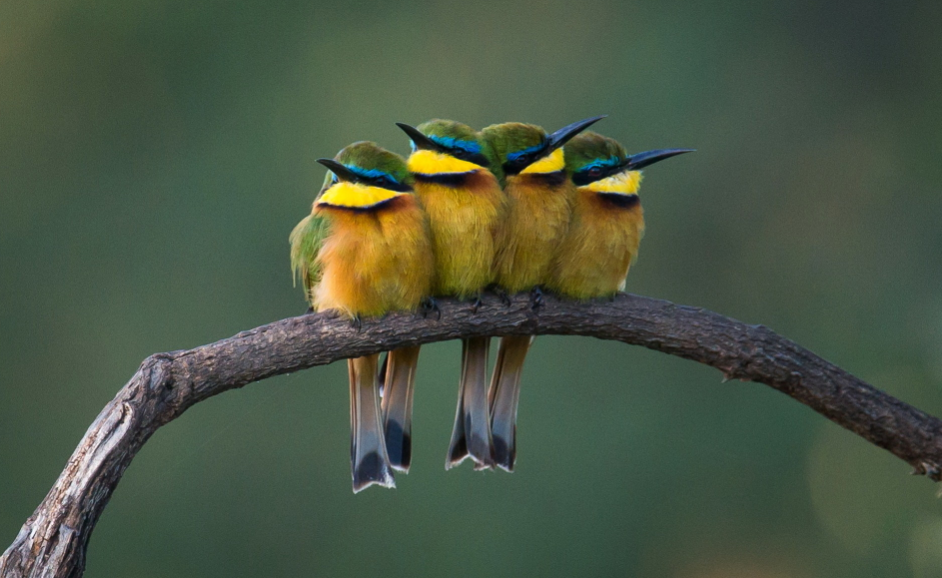
Bee-Eaters are known for their vibrant, multicolored feathers, which include shades of green, blue, yellow, and orange.
3. They can catch insects mid-air
Bee-Eaters are not only skilled hunters, but they are also great fliers, able to snatch their prey while in flight.
4. They are social birds
These birds are often seen in groups, hunting and migrating together, especially during the breeding season.
5. They nest in burrows
Bee-Eaters dig burrows into soft, sandy soil to lay their eggs, usually in colonies of multiple pairs.
6. They clean their prey before eating it
After catching a bee or wasp, Bee-Eaters often beat it against a branch or surface to remove the stinger before consuming it.
7. They migrate seasonally
Some species of Bee-Eaters migrate long distances between breeding and feeding areas, particularly the European Bee-Eater.
8. Their beaks are perfectly adapted for catching insects
Bee-Eaters have long, slender beaks that are perfectly designed for catching insects mid-air.
9. They often perch to hunt
Bee-Eaters typically hunt from a perched position, waiting for an insect to fly by before swooping down to catch it.
10. They are important for controlling insect populations
By feeding on a wide range of insects, including bees, wasps, and grasshoppers, Bee-Eaters help maintain a healthy ecosystem by controlling insect populations.
Characteristics and behaviours of Bee-eater Bird that make them fascinating creatures
Bee-eaters are an amazing bird species that stand out for their vibrant colours and distinctive feeding habits. The Meropidae family includes these birds, which are found in Europe, Africa, Asia, and Australia. Long, pointed wings, slender bodies, and a characteristically extended mouth make bee-eaters easily identifiable.
Hunting techniques of Bee-eater Bird, such as aerial acrobatics and perching strategies
One of the most interesting things about bee-eaters is how they feed. The name of the bird suggests that it mostly devours bees and other flying insects. Their technique for catching their prey is a little different; they perch on a branch or wire and then jump far into the air to catch insects midair. Once they have captured their prey, bee-eaters return to their perch to remove the stingers before consuming the food.
Colour patterns and Vocalisations that differentiate various species of Bee-eater Bird
Bee-eaters are distinguished by their stunning plumage, which varies according to the species. In bee-eaters, bright and brilliant colours like green, blue, yellow, and red are typical. These colours not only seem good, but they also make them blend in with their environment. Additionally, bee-eaters have unique vocalisations and cries that they use in communication and courting. Especially well-known are their elaborate courtship displays, when the birds astonish potential mates with gifts and flying manoeuvres. All things considered, bee-eaters are fascinating birds that exhibit distinctive traits in addition to beauty.
Fascinating facts about Bee-eater Bird
The bee-eater family of birds is distinguished by its vivid colours, elegant flying patterns, and distinctive eating preferences. These birds are distributed across the globe, particularly in Africa, Asia, and Europe. They are members of the Meropidae family. We will examine some amazing information on bee-eater birds in this piece.
Description of the vibrant colours of Bee-eater Bird
Bee-eaters are well-known for their exquisite and vivid plumage. The majority of species are multicoloured, with hues ranging from green to blue to yellow to red. They complement their surroundings and are aesthetically pleasing due to their colours. The European bee-eater (Merops apiaster), which has a blue-green crown, a yellow neck, and a mostly golden-brown back, is among the most remarkable forms. They are indeed a sight to see due to the mix of these colours.
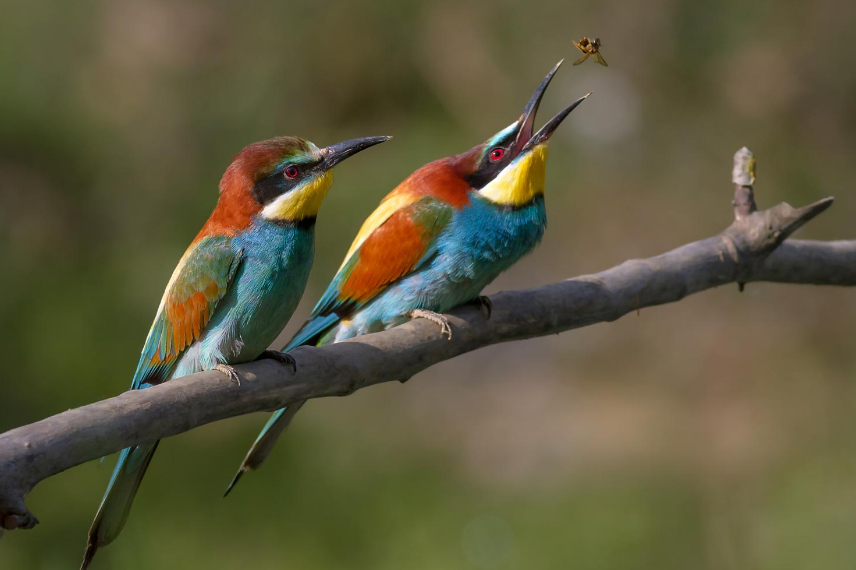
Bee-eater Bird primarily feed on bees and other insects
Bee-eaters, as the name implies, mostly consume bees and other flying insects. To capture and devour their prey, they have evolved special characteristics. Eliminating bee stings before ingestion is among the most remarkable strategies used by bee-eaters.
Hunting techniques and feeding behaviour of Bee-eater Bird
Bee-eaters sit on a branch or wire and search the air for flying insects while they are hunting. They launch themselves into nimble flight as soon as they detect their meal, snatching the insects with their keen beaks midair. After that, they return to their perches and expertly swat the prey against a hard surface many times to remove the stingers.
Migration routes and destinations of Bee-eater Bird
The amazing migratory habits of bee-eaters are well known. Numerous species migrate across great distances, covering thousands of km to arrive at their breeding or wintering sites.
Migration Pattern: country and place of Bee-eater Bird
The European bee-eater, for example, travels an amazing distance from its breeding grounds in Europe to its wintering sites in sub-Saharan Africa. The birds use a variety of environmental signals to navigate across many thousand kilometres throughout their trip.
Factors influencing migration behaviour of Bee-eater Bird
Bee-eaters gather in big groups during migration, and their coordinated flying patterns are a captivating sight. The migration is a breathtakingly beautiful natural event, with groups of hundreds or perhaps thousands of birds.
Roles of different group members in cooperative breeding
A number of individuals help raise the young in the cooperative breeding behaviour seen by some bee-eater species. A second adult, referred to as a helper, is present in this cooperative breeding system and helps the breeding couple with different chores.
Human impact on populations of Bee-eater Bird
The workers contribute to the construction of the nest, egg incubation, and chick feeding. The helpers’ cooperative behaviour guarantees the survival and well-being of the offspring by contributing to the general upkeep and safeguarding of the nest.
Types of cavities, such as abandoned burrows and tree hollows, preferred by Bee-eater Bird
Since bee-eaters are cavity nesters, their nests are built inside of pre-existing tunnels or holes. As nesting locations, they often use riverbeds, cliffs, and sandy banks. Their feet and beaks are used to dig the nesting burrows, which results in a tube that leads to the nesting chamber.
Cavity nesting provides a safe environment for raising their young
The female bee-eater deposits her eggs, typically two to six per clutch, as soon as the burrow is ready. The eggs hatch after a few weeks of incubation, with the male and female taking turns hatching them. When the chicks are ready to fledge, they are given a diet consisting only of regurgitated insects.
Bee-eater Bird feeding habits and nesting behaviour
With their vivid plumage, peculiar eating habits, spectacular migrations, cooperative breeding behaviour, and distinctive nesting behaviour, bee-eaters are absolutely amazing birds. These birds are proof of the richness and splendour of the avian kingdom.
Bee-eater Bird ecological significance and their role in maintaining a healthy environment
Awe-inspiring aerial acrobatics and impressive hunting prowess are on display when bee-eaters are seen in their native environments. Bee-eaters never cease to enthral bird watchers and environment lovers with their remarkable colours and intriguing behaviours.
FAQ (Frequently Asked Questions) about Bee-Eater Bird
Q: What is a Bee-Eater Bird?
Ans: The Bee-Eater is a colorful, insectivorous bird belonging to the family Meropidae. Known for its vibrant plumage and acrobatic hunting skills, the Bee-Eater primarily feeds on bees and other flying insects. There are over 25 species of Bee-Eaters found across parts of Africa, Asia, and Europe.
Q: Why is it called a Bee-Eater?
Ans: The Bee-Eater is named for its diet, which mainly consists of bees and other flying insects. It is known for its unique hunting technique, where it catches flying insects mid-air and may beat them against a branch to remove the sting before eating them.
Q: Where does the Bee-Eater Bird live?
Ans: Bee-Eater Birds are found in a variety of habitats across Africa, Asia, and parts of Europe. They thrive in open woodlands, grasslands, savannas, and along riverbanks where insects are abundant. Some species migrate depending on the availability of food and breeding sites.
Q: What does the Bee-Eater Bird eat?
Ans: The Bee-Eater’s primary diet consists of flying insects, particularly bees, wasps, and hornets. They are skilled hunters, catching their prey mid-flight. Some species may also feed on ants, beetles, and dragonflies.
Q: How does the Bee-Eater catch its food?
Ans: Bee-Eaters are exceptional aerial hunters. They perch on a high vantage point, such as a tree branch or a power line, and wait for flying insects to pass by. When they spot prey, they dart into the air, catching the insect in their beak. After catching the insect, they often beat it against a branch to disarm it before swallowing it.
Q: Is the Bee-Eater Bird endangered?
Ans: Most species of Bee-Eater are not considered endangered, although some populations may be threatened by habitat loss, pesticide use, and changes in climate. The European Bee-Eater, for instance, has a stable population in certain areas but can face localized threats.
Q: How big is the Bee-Eater Bird?
Ans: Bee-Eaters are medium-sized birds, with most species ranging from 10 to 16 inches (25 to 40 cm) in length. Their colorful plumage and long, pointed wings make them easily recognizable. They typically have long tail feathers and a sharp, pointed beak.
Q: How does the Bee-Eater nest?
Ans: Bee-Eaters typically nest in burrows that they dig into the sides of sandy banks or riverbanks. They often nest in colonies, where each pair creates a separate tunnel. The female lays 3 to 7 eggs, and both parents take turns incubating them. After hatching, the chicks are fed a diet of insects by both parents.
Q: Are Bee-Eater Birds social?
Ans: Yes, Bee-Eaters are social birds. They are often seen in small to large flocks, especially during the non-breeding season. Their social behavior extends to their nesting habits, as they often nest in colonies. During the breeding season, they exhibit cooperative behavior, with both parents involved in raising the young.
Q: Can Bee-Eater Birds be kept as pets?
Ans: While Bee-Eaters are beautiful and fascinating birds, they are not suitable to be kept as pets due to their wild nature, specific dietary needs, and migration patterns. They thrive in their natural habitats and require ample space to hunt and fly. It is best to admire them in the wild or in wildlife reserves.
#BeeEaterBird, #BirdWatching, #Wildlife, #InsectivorousBirds, #FlyingInsects, #ColorfulBirds, #BirdSpecies, #BirdConservation, #WildlifePhotography, #NatureIsAwesome, #SavannaBirds, #BirdLovers, #ConservationEfforts
Our sources and references about Bee-Eater Bird
1: Wikipedia – Bee-eater
2: Britannica – Bee-Eater
3: BirdLife International – Bee-Eaters
4: World Wildlife Fund – Bee-Eater