Quick Top 10 Facts about Bees
| SCIENTIFIC NAME | Anthophila (a clade within the superfamily Apoidea) |
| CLASSIFICATION | KINGDOM: Animalia PHYLUM: Arthropoda CLASS: Insecta ORDER: Hymenoptera SUPERFAMILY: Apoidea CLADE: Anthophila |
| SIZE | Varies by species; typically 0.08–1.6 inches (2–40 mm) |
| HABITAT | Gardens, forests, meadows, deserts, and urban areas worldwide |
| DIET | Herbivorous; feeds on nectar and pollen |
| SPECIES | Over 20,000 known species including honeybees, bumblebees, and solitary bees |
| COUNTRY | Found on every continent except Antarctica |
| GESTATION PERIOD | Egg to adult varies by species; usually 16–24 days for honeybees |
| LIFE SPAN | Weeks to several months; queen honeybees can live up to 5 years |
| CONSERVATION STATUS | Many species are declining; conservation efforts ongoing globally |
Amazing Facts About Bees
1. Bees are essential pollinators
Bees pollinate about 75% of flowering plants and 35% of crops worldwide, making them vital to ecosystems and agriculture.
2. There are over 20,000 species of bees
From honeybees and bumblebees to solitary bees, the diversity of bee species is vast and crucial to biodiversity.
3. Honeybees live in complex colonies
A honeybee colony includes a queen, thousands of workers, and male drones, all working together to sustain the hive.
4. Bees communicate through dancing
Honeybees use a “waggle dance” to communicate the direction and distance of food sources to other bees.
5. Bees produce honey and beeswax
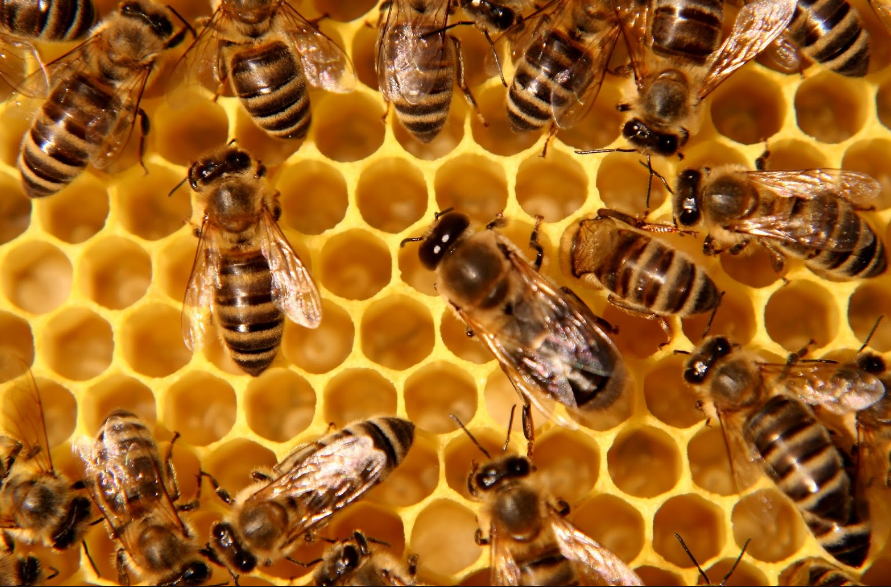
Worker bees create honey from nectar and use wax to build the honeycomb structure of their hives.
6. Only female bees can sting
In most species, only the females possess stingers, and honeybee workers die after stinging.
7. Bees have five eyes
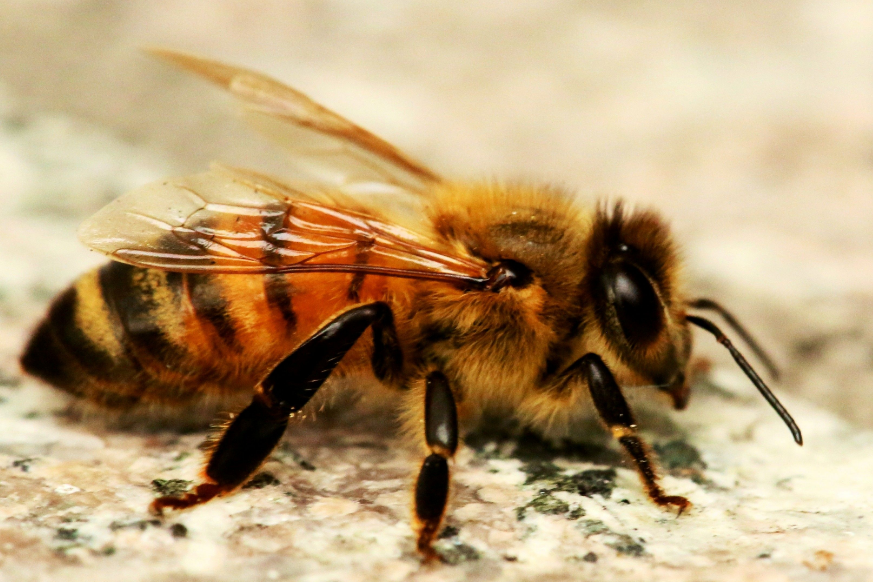
Bees have two large compound eyes and three small simple eyes that help detect light intensity and movement.
8. Bumblebees can fly in cold temperatures
Unlike honeybees, bumblebees are able to generate body heat and forage in cooler weather conditions.
9. Solitary bees don’t live in colonies
Many bee species, like mason bees and leafcutter bees, live alone and are often more efficient pollinators than honeybees.
10. Bee populations are under threat
Pesticides, habitat loss, climate change, and disease are major factors contributing to global bee declines, raising concerns for food security and biodiversity.
Bees and their significance in the natural world
Bees are amazing creatures that are vital to our environment. They are widely known for having an incredible ability to pollinate plants, which is essential for the development of fruits and vegetables as well as the procreation of many flowering plants. In order to collect pollen from flowers and carry it back to their colonies, bees use unique structures on their bodies called pollen baskets. This process moves pollen from a flower’s male to female portions, aiding in fertilisation and seed production.
Role of bees in pollination and the impact on food production
Bees are gregarious insects with excellent organisational skills. Each colony is made up of worker bees, drones, and a queen bee. The queen bee is responsible for maintaining colony cohesion in addition to egg production. In addition to caring for the young bees, building and maintaining the hive, and collecting nectar, all female worker bees perform a number of tasks. Drones, on the other hand, are male bees that live just to mate with the queen.
The incredible communication system of bees, including the famous “waggle dance,”
The complex communication system of bees is well known. They use a combination of pheromones, dances, and vibrations to provide other bees in the colony with crucial information. A worker bee may, for example, waggle dance when it finds a rich quantity of nectar to signal other bees to the location and quality of food. This dance conveys the position and duration of the food supply via precise gestures and sounds. Because of their sophisticated communication system, bees are able to gather resources efficiently and ensure the survival of their colony.
Interesting and fascinating facts about bees
The amazing organisms known as bees are essential to our ecology. They play a crucial role in pollination in addition to being well-known for their capacity to generate honey. You may be surprised to learn the following amazing facts about bees:
Powerful Pollinators: Statistics on the percentage of crops that rely on bee pollination
Around 80% of blooming plants are pollinated by bees, as you may have guessed. They wander from blossom to flower, gathering pollen thanks to the little hairs covering their small bodies. For many plant species, including fruits, vegetables, and nuts, this process is essential to reproduction.
Since many plants depend on bees for pollination, the absence of bees would have a catastrophic effect on our food chain. Thus, don’t forget to give thanks to the bees the next time you savour a tasty fruit or vibrant vegetable
Intricate Societies Support Bees: The social structure of honeybees and their Organized colonies
Since bees have a highly structured social structure, they are social insects that reside in enormous colonies. There are thousands of individual bees in a normal beehive, and each one has a distinct job to do. The queen bee is the most significant individual in the colony. Being the lone fertile female, she lays all the eggs. The worker bees are all female and carry out a variety of jobs, including building and maintaining the hive, gathering pollen and nectar, and tending to the young. Drones are the male bees whose only job it is to mate with the queen.
The phenomenon of swarm behaviour and how bees collectively make decisions
A sophisticated system of pheromones and dances is used by bees to communicate with one another. They communicate information about food sources and any dangers to the colony by making certain motions and vibrations. The diligence and efficiency with which bees work to collect nectar, build honeycombs, and care for the young
work ethics of bees are outstanding
The extraordinary work ethic of bees is well known. In a single day, a worker bee may visit up to 1,500 flowers in search of nectar and pollen to return to the hive with. When looking for food, they may travel many miles from their colony at an average pace of fifteen miles per hour.
Bees are diligent builders as well
To store their honey and rear their young, they construct elaborate hexagonal chambers from beeswax. Not only are these cells space-efficient, but they also provide the hive with structural stability.
unique ability of bees to navigate using the sun and landmarks
Bees are quite good navigators. They can sense the Earth’s magnetic field and use the sun as a compass to travel great distances and return to the hive.
We should respect and preserve bees since they are really amazing animals. For many plant species to survive, including those that provide food for humans, their function in pollination is essential. Consider the amazing job that bees do the next time you see them buzzing around. Raise awareness of the value of bees in our environment, plant flowers in your yard that attract bees, and refrain from using pesticides. By working together, we can guarantee a healthy environment for people as well as bees.
FAQ (Frequently Asked Questions) about Bees (Insects)
Q: What are Bees?
Ans: Bees are flying insects closely related to wasps and ants, known for their role in pollination and, in the case of the best-known species—the honey bee—for producing honey and beeswax. There are over 20,000 known species of bees around the world.
Q: What do Bees do?
Ans: Bees play a critical role in pollinating flowering plants, which helps produce fruits, vegetables, and seeds. Many crops, such as apples, almonds, and blueberries, depend on bees for pollination. Honey bees also produce honey, pollen, royal jelly, and beeswax.
Q: Where do Bees live?
Ans: Bees can be found on every continent except Antarctica. They live in various environments, including forests, deserts, grasslands, and urban areas. While many bees are solitary, some, like honey bees and bumblebees, live in colonies with highly organized social structures.
Q: What do Bees eat?
Ans: Bees primarily feed on nectar and pollen from flowers. Nectar provides energy in the form of carbohydrates, while pollen supplies protein and other nutrients necessary for growth and reproduction. Some bees also collect resin or plant oils for nest building.
Q: How do Bees make honey?
Ans: Honey bees collect nectar from flowers and store it in their honey stomachs. Back at the hive, the nectar is passed from bee to bee, reducing its moisture content. It’s then deposited into honeycomb cells and further dried by fanning wings until it becomes honey.
Q: Are all Bees social?
Ans: No, not all bees are social. While honey bees and bumblebees are social and live in colonies, the majority of bee species are solitary. Solitary bees, like mason bees and leafcutter bees, build and maintain their own nests and do not form hives or colonies.
Q: Are Bee stings dangerous?
Ans: Bee stings can be painful but are usually not dangerous to most people. However, for individuals allergic to bee venom, a sting can trigger a severe allergic reaction called anaphylaxis, which requires immediate medical attention. Most bees sting only in defense.
Q: Are Bees endangered?
Ans: Many bee species are facing population declines due to habitat loss, pesticides, disease, climate change, and lack of forage. Some species, like the rusty patched bumblebee, are listed as endangered. Efforts are underway globally to protect bees and their habitats.
Q: How can I help save the Bees?
Ans: You can help save bees by planting bee-friendly flowers, avoiding pesticides, providing water sources, and creating bee habitats like bee hotels. Supporting organic farming and protecting wildflower areas also contribute to healthy bee populations.
Q: What are the different types of Bees?
Ans: There are many types of bees, including honey bees, bumblebees, carpenter bees, mason bees, leafcutter bees, and sweat bees. Each has unique behaviors, nesting habits, and roles in the ecosystem.
#Bees, #Pollinators, #HoneyBee, #Bumblebee, #SaveTheBees, #Insects, #Pollination, #GardenWildlife, #BeeFacts, #EnvironmentalAwareness, #BeeConservation, #Nature, #Biodiversity
Our sources and references about Bees (Insects)
1: Wikipedia – Bee
2: US Forest Service – Bees
3: National Wildlife Federation – Bees
4: Encyclopedia Britannica – Bee