Quick Top 10 Facts about Black-Tailed Rattlesnake
| SCIENTIFIC NAME | Crotalus molossus |
| CLASSIFICATION | KINGDOM: Animalia PHYLUM: Chordata CLASS: Reptilia ORDER: Squamata FAMILY: Viperidae GENUS: Crotalus SPECIES: C. molossus |
| SIZE | Length: 3–5 feet (0.9–1.5 meters), Weight: Up to 2.5 pounds (1.1 kg) |
| HABITAT | Found in deserts, scrublands, and grasslands of the southwestern United States and Mexico |
| DIET | Carnivorous; feeds primarily on small mammals, birds, and reptiles |
| SPECIES | Black-Tailed Rattlesnake, a species of rattlesnake known for its dark-colored tail |
| COUNTRY | Native to the United States and Mexico, especially in the southwestern regions |
| GESTATION PERIOD | Gestation lasts 3–4 months, with live births occurring in late summer or early fall |
| LIFE SPAN | Up to 20 years in the wild |
| CONSERVATION STATUS | Not endangered, though populations are threatened by habitat destruction and human activity |
Amazing Facts About Black-Tailed Rattlesnake
1. Black-Tailed Rattlesnakes are named for their distinctive tail
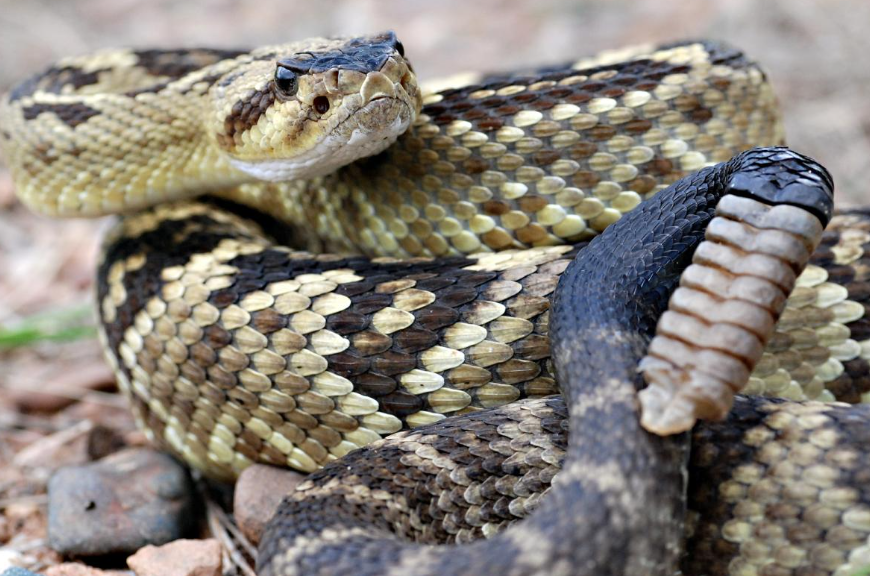
Their tail is darker in color compared to the rest of the body, and it rattles as a warning signal to potential threats.
2. They are venomous
As a member of the rattlesnake family, the Black-Tailed Rattlesnake uses venom to immobilize and digest prey. Their venom is potent, though rarely fatal to humans.
3. They are excellent at camouflage
With their muted coloration, Black-Tailed Rattlesnakes can blend into their desert and scrubland environments, making them hard to spot.
4. They use their rattle to warn predators
The rattle on their tail produces a distinctive sound when shaken, which serves as a warning to predators to stay away.
5. They are skilled hunters
Black-Tailed Rattlesnakes primarily hunt small mammals, birds, and other reptiles, using a combination of stealth and ambush tactics.
6. They are solitary creatures
Black-Tailed Rattlesnakes are generally solitary, coming together only to mate. They are territorial and do not tolerate other snakes in their area.
7. They have heat-sensing pits
Like other pit vipers, Black-Tailed Rattlesnakes have specialized pits on their faces that allow them to detect heat from warm-blooded animals, aiding them in hunting.
8. They can strike quickly
Black-Tailed Rattlesnakes are capable of striking with incredible speed when threatened or when hunting prey, delivering venom through hollow fangs.
9. They are viviparous
Black-Tailed Rattlesnakes give birth to live young, with females carrying the embryos for several months before giving birth.
10. They have a significant role in the ecosystem
As predators, Black-Tailed Rattlesnakes help control populations of small mammals and other prey species, maintaining balance in their ecosystem.
Introduction of the Black-Tailed Rattlesnake as a species
The Black-Tailed Rattlesnake, scientifically named Crotalus molossus, is a venomous snake species found in the southwestern parts of the United States and northern Mexico. Its distinctive black tail, which gives it its name, is exclusive to this species.
The physical appearance of the Black-Tailed Rattlesnake
Adult members of rattlesnake are medium-sized snakes and often reach lengths of two to four feet. Their robust body is covered with scales that range in colour from light grey to brown or olive. The black blotches or bands on their backs’s scales allow them to seamlessly blend in with their natural environment.
Preferred habitat and distribution of the Black-Tailed Rattlesnake
Black-tailed rattlesnakes are mostly found in rocky areas, grasslands, and deserts. They are renowned for their adaptability and may be found anywhere from sea level to steep terrain. Due to their remarkable capacity to adapt to their surroundings, these snakes function as ambush predators, patiently waiting for their prey to become wary and go. They mostly consume small animals, including rats, lizards, and birds.
The behavior patterns of the Black-Tailed Rattlesnake
Like other rattlesnake species, the black-tailed rattlesnake possesses a venomous bite. However, they don’t usually act aggressively and will only attack if they feel confined or in danger. Their main goal while administering venom is to immobilise their target so they can ingest it more easily. If bitten by a black-tailed rattlesnake, you must seek medical attention immediately since the snake’s venom may cause severe pain, tissue damage, and even death.
Mating rituals, gestation period, and birth process of the Black-Tailed Rattlesnake
Observing black-tailed rattlesnakes in action is fascinating. During mating, which typically occurs in the spring, males battle it out for female attention. When a female maintains ovoviviparity after mating, the fertilised eggs remain within her body. Normally, she gives birth to live young in late summer or early fall. With an average litter size of four to ten snakes, there may be a vast variety of progeny.
The conservation status of the Black-Tailed Rattlesnake
Conservation efforts are vital to the survival of the black-tailed rattlesnake. The three main issues facing these species are fragmentation, habitat loss, and human persecution. Promoting coexistence with these fascinating creatures is essential, as is raising public awareness of the part these snakes play in maintaining natural balance.
Black-tailed rattlesnake: Origin and scientific name (Crotalus molossus)
Crotalus molossus is the scientific name for the poisonous black-tailed rattlesnake, which is native to the southwestern regions of the United States and parts of Mexico. It’s an interesting reptile with a few distinct features. We’ll look at some fascinating information about black-tailed rattlesnakes in this post.
Body and size of the Black-Tailed Rattlesnake
The term “black-tailed rattlesnake” comes from the unique colour of its tail. Its robust body is coated with scales that range in hue from light grey to olive or brown. Though the patterns might vary, these snakes usually have black blotches or crossbands running down their bodies. Some adult black-tailed rattlesnakes may grow up to five feet long, although the average size is between three and four feet.
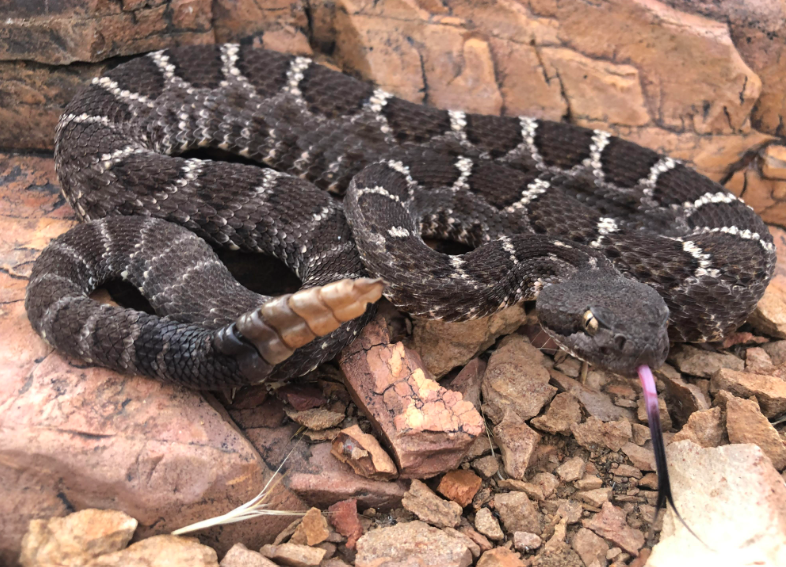
Different habitats are suitable for rattlesnake
There are many different types of habitats for black-tailed rattlesnakes, such as rocky terrain, grasslands, and deserts. They are found in portions of northern Mexico, Arizona, New Mexico, and Texas. Rocky outcrops are preferred by these snakes because they provide cover from predators. They are also known to live close to water sources, such as streams.
Hunting techniques of rattlesnake, including ambush and strike methods
As a voracious predator, the black-tailed rattlesnake mostly eats small animals, including rats, mice, and rabbits. They immobilise and consume their victim by injecting venom into it using their poisonous teeth. These snakes can identify warm-blooded food even in the dark because of a heat-sensing pit organ that is situated between their nose and eyes. They are ambush predators who wait patiently until their victim is close range before making a precise attack.
The venomous nature of the Black-Tailed Rattlesnake
The black-tailed rattlesnake uses its venom, like other rattlesnakes, for defence as well as hunting. The venom is a strong mixture of poisons and enzymes that may kill or seriously harm a prey’s tissue. Black-tailed rattlesnakes often vibrate their keratin-segmented rattle as a warning when they feel threatened. This gives possible predators an opportunity to flee by acting as a deterrent. The snake may attack and inject poison as a final option if the warning is disregarded.
The reproductive behavior of the Black-Tailed Rattlesnake
Black-tailed rattlesnakes, like ovoviviparous snakes, give birth to live offspring rather than laying eggs. The maturing embryos are carried within the females, who thereafter give birth to fully grown young snakes. A litter might include anything from five to fifteen juvenile snakes. From birth, the children are self-sufficient and have to fend for themselves. In the wild, black-tailed rattlesnakes are thought to live for ten to fifteen years.
Ongoing conservation initiatives and the importance of preserving the rattlesnake
The International Union for Conservation of Nature presently lists the black-tailed rattlesnake as a species of least concern (IUCN). But like many other reptiles, it is threatened by a number of factors, including habitat loss, road fatalities, and human persecution. To ensure the survival of these intriguing species, it is critical to protect their natural habitats and encourage cooperation.
Significant role of rattlesnake in ecosystem
The amazing black-tailed rattlesnake has developed special survival adaptations. With its unique look and deadly bite, this snake plays a significant role in the environment it lives in. We can support the protection of these amazing animals and the preservation of biodiversity by learning about and enjoying them.
FAQ (Frequently Asked Questions) about Black-Tailed Rattlesnake
Q: What is a Black-Tailed Rattlesnake?
Ans: The Black-Tailed Rattlesnake (*Crotalus molossus*) is a venomous species of rattlesnake found in the southwestern United States, primarily in the deserts and rocky areas of Arizona, New Mexico, and Mexico. It is easily recognizable by its black or dark-colored tail, which is a distinctive feature of this species.
Q: Where is the Black-Tailed Rattlesnake found?
Ans: Black-Tailed Rattlesnakes are primarily found in the southwestern United States, including Arizona, New Mexico, and parts of Texas. They are also present in northern Mexico. These snakes prefer arid environments, such as deserts, rocky hillsides, and scrublands.
Q: What does a Black-Tailed Rattlesnake eat?
Ans: Black-Tailed Rattlesnakes are carnivores, feeding on small mammals such as rodents, birds, and lizards. They use their venom to subdue prey before swallowing it whole. The venom contains both neurotoxins and hemotoxins, which help immobilize and digest their prey.
Q: How dangerous is the Black-Tailed Rattlesnake?
Ans: The Black-Tailed Rattlesnake is venomous, and while bites can be dangerous, they are rarely fatal to humans if treated promptly. The venom can cause pain, swelling, and tissue damage. It is important to avoid approaching or handling these snakes, as they may bite if threatened.
Q: How big does the Black-Tailed Rattlesnake get?
Ans: Black-Tailed Rattlesnakes can grow to be about 3 to 5 feet (0.9 to 1.5 meters) in length, though some individuals may exceed 6 feet (1.8 meters). They have a stout, thick body and are often a bit larger than some other rattlesnake species.
Q: What does the Black-Tailed Rattlesnake look like?
Ans: The Black-Tailed Rattlesnake has a characteristic color pattern with light to medium brown or grayish body scales that are marked with darker, diamond-shaped patterns. Its tail is dark brown or black, and it has a rattle at the end of its tail, which it uses as a warning when threatened.
Q: How does the Black-Tailed Rattlesnake defend itself?
Ans: The Black-Tailed Rattlesnake uses a combination of warning sounds and venom to defend itself. It will rattle its tail to warn potential threats of its presence. If a predator or human gets too close, the snake may strike. Its venom is used to immobilize and begin the process of digestion before it consumes its prey.
Q: How do Black-Tailed Rattlesnakes reproduce?
Ans: Black-Tailed Rattlesnakes reproduce sexually, with mating occurring in the spring. Females typically give birth to live young, which is characteristic of many rattlesnake species. A litter may consist of anywhere from 4 to 20 babies. The young snakes are born fully formed and can strike immediately after birth.
Q: Are Black-Tailed Rattlesnakes endangered?
Ans: Black-Tailed Rattlesnakes are not currently considered endangered, but they face threats from habitat loss, human encroachment, and illegal collection for the pet trade. Conservation efforts to protect their habitats and raise awareness about their importance in ecosystems are ongoing.
#BlackTailedRattlesnake, #Rattlesnake, #VenomousSnake, #DesertSnakes, #SnakeFacts, #WildlifeConservation, #NorthAmericanSnakes, #SnakeCare, #Reptiles, #WildlifeProtection, #SnakesOfAmerica
Our sources and references about Black-Tailed Rattlesnake
1: Arizona Game and Fish – Black-Tailed Rattlesnake
2: IUCN Red List – Black-Tailed Rattlesnake
3: Snakes for Pets – Black-Tailed Rattlesnake
4: Reptiles Magazine – Black-Tailed Rattlesnakes