Quick Top 10 Facts about Blacktip Reef Shark
| SCIENTIFIC NAME | Carcharhinus melanopterus |
| CLASSIFICATION |
KINGDOM: Animalia PHYLUM: Chordata CLASS: Chondrichthyes ORDER: Carcharhiniformes FAMILY: Carcharhinidae GENUS: Carcharhinus SPECIES: C. melanopterus |
| SIZE | Typically around 1.6 meters (5.2 feet), can reach up to 2 meters (6.6 feet) |
| HABITAT | Shallow coral reefs, lagoons, and coastal waters of the Indo-Pacific region |
| DIET | Small fish, crustaceans, mollusks, and occasionally squid |
| SPECIES | Blacktip reef shark is a distinct species within the Carcharhinus genus |
| COUNTRY | Found across the Indo-Pacific region – from South Africa to Hawaii and French Polynesia |
| GESTATION PERIOD | 10–11 months; gives birth to 2–5 live young (viviparous) |
| LIFE SPAN | Typically 10–13 years in the wild |
| CONSERVATION STATUS | Vulnerable – Threatened by overfishing and habitat degradation |
Amazing Facts About Blacktip Reef Shark
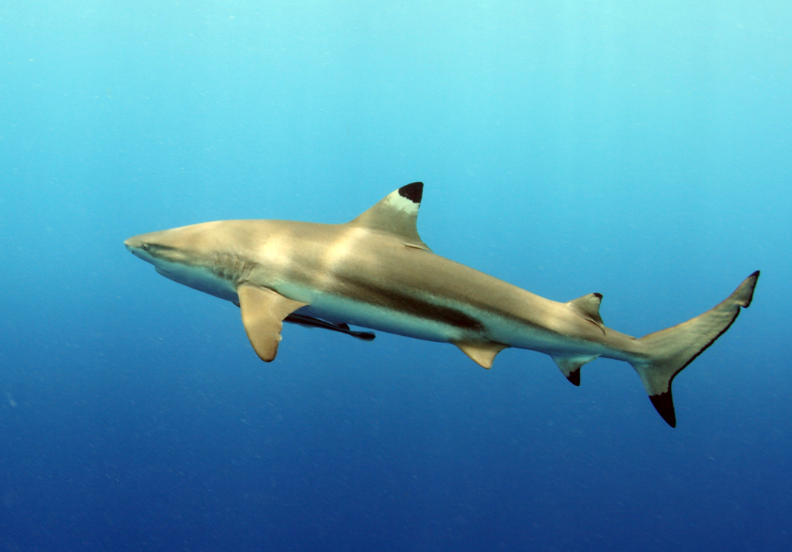
1. Easily recognized by their black-tipped fins
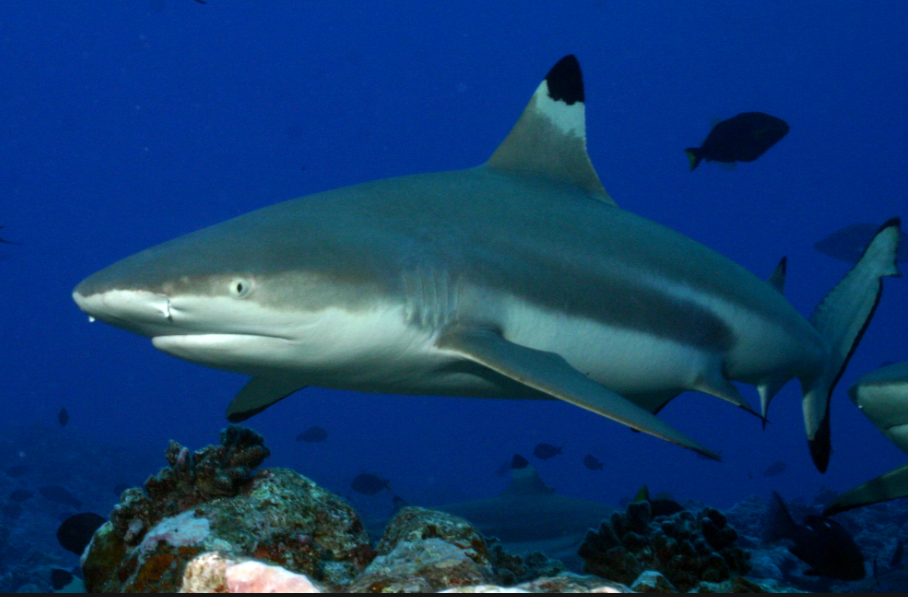
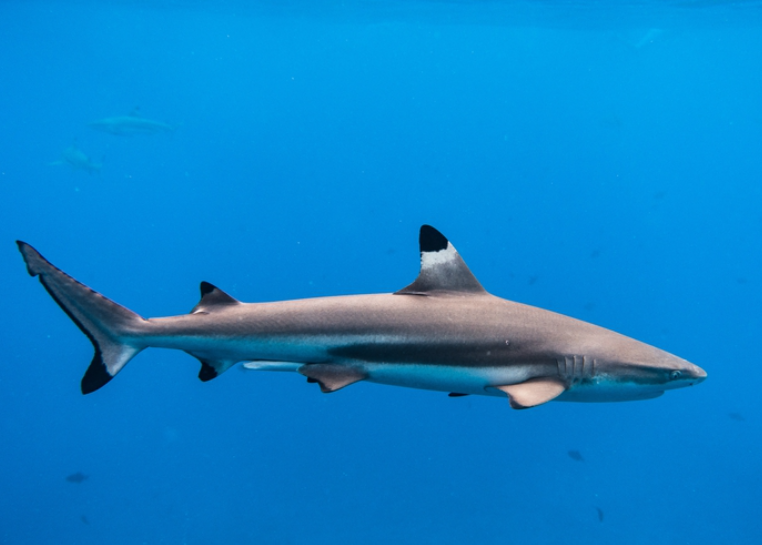
Their name comes from the distinct black markings on the tips of their fins, especially the dorsal fin.
2. They prefer shallow waters
Blacktip reef sharks are often seen swimming in very shallow water, even in knee-deep lagoons.
3. Non-aggressive toward humans
Though curious, they are generally shy and pose little threat to humans unless provoked or cornered.
4. They give birth to live young
Unlike egg-laying sharks, blacktip reef sharks are viviparous, meaning they give birth to fully formed pups.
5. Social swimmers
These sharks are often seen in small groups or schools, especially near reef drop-offs.
6. Important reef predators
As mid-level predators, they help maintain the balance of reef ecosystems by preying on smaller fish.
7. They can jump out of the water
Blacktip reef sharks have been known to leap out of the water, especially when feeding or startled.
8. Sensitive to environmental changes
Due to their reliance on shallow reef habitats, they are highly vulnerable to coral bleaching and pollution.
9. They use electroreception
Like many sharks, they can detect electrical signals from prey using special sensory organs called ampullae of Lorenzini.
10. They have excellent eyesight
Their keen vision helps them spot prey and navigate complex coral reef environments efficiently.
Intriguing facts about Blacktip Reef Shark fish as a species
The Blacktip Reef Shark is a fascinating species that may be found in the warm coastal waters of the Indo-Pacific region. This shark’s name comes from the fact that its distinctive black-tipped fins help to identify it and that it is often seen near coral reefs. Its length often falls between five and six feet, making it a lesser species of shark.
Physical Characteristics of blacktip reef shark fish
One interesting aspect of blacktip reef sharks is their dietary patterns. It is a ferocious predator since it eats small fish, crabs, and cephalopods. It also has a reputation for using a strange kind of hunting called “sharking,” when it herds schools of fish towards the shore, traps them in shallow water, and creates a feeding frenzy. Given that other shark species do not often display this behaviour, the Blacktip Reef Shark is very unique among shark species.
Reproductive behaviour of the Blacktip Reef Shark fish
Another interesting characteristic of the Blacktip Reef Shark is its reproductive patterns. Like many shark species, it is viviparous, meaning the embryos develop within the female’s body and get nutrition via the placenta. The female gives birth to live offspring after a gestation period of around ten to twelve months, usually between two and four pups. Blacktip Reef Sharks are able to create offspring that are relatively well-developed and have a higher chance of surviving in the harsh marine environment because of this reproductive strategy.
Fascinating facts and unique characteristics of the Blacktip Reef Shark fish
All things considered, the Blacktip Reef Shark is a fascinating species that has unique characteristics that enable it to flourish in its natural habitat. A frequent reef shark species in the Indo-Pacific area is the blacktip reef shark (Carcharhinus melanopterus). It gets its name from the characteristic black points on its fins, which are especially noticeable in young fish. The following are some fascinating facts about blacktip reef sharks:
Preferred habitat and range of the Blacktip Reef Shark fish
The shallow coastal waters close to coral reefs and lagoons are home to blacktip reef sharks. They may often be seen in the western Pacific, Indian Ocean, and Red Seas, which include places like the Maldives and the Great Barrier Reef. These sharks are seldom seen in areas that are less than 30 metres (98 feet) deep, and they prefer warm, tropical environments.
Body and size of the Blacktip Reef Shark fish
The blacktip reef shark can move quickly through the water because of its streamlined body and thin structure. Males often grow to be somewhat smaller than females, with a maximum length of 1.6 metres (5.2 feet). They are distinguished by the black points on their caudal fin (tail), pectoral fins, and dorsal fins, as their name implies. This trait becomes less noticeable as people age and is more noticeable in younger people.
Defensive mechanisms and specific prey species of the Blacktip Reef Shark fish
As opportunistic hunters, blacktip reef sharks mostly consume tiny fish, crabs, and cephalopods. Their hunting method, which they term “bump and bite,” involves them bumping against their victim before chomping it. It is thought that by acting in this way, they confuse their victims and facilitate their capture. Additionally, particularly during the mating season, they have been known to go on an eating frenzy.
The reproductive behaviour of the Blacktip Reef Shark fish
Although they are usually solitary, blacktip reef sharks may sometimes be seen in small groups or aggregations. Usually, these groups develop during mating season or for eating. They do not act aggressively towards other sharks or aquatic life, nor are they territorial. Within their own species, they do, however, have a hierarchy of dominance, with bigger animals often claiming superiority over smaller ones.
Mating rituals and gestation period of the Blacktip Reef Shark
For blacktip reef sharks, the spring and summer months are usually when mating happens. After around 10 to 12 months of gestation, females give birth to live young. There is a range in litter size from two to ten puppies. Puppies are instantly autonomous and fully grown at birth. Every two years, the females undergo a biannual reproductive cycle and give birth.
Human activities that impact population of of the Blacktip Reef Shark fish
The International Union for Conservation of Nature presently lists the blacktip reef shark as “near threatened” (IUCN). Numerous factors pose a danger to them, including overfishing for fins, unintentional entrapment in fishing nets, and habitat deterioration brought on by coastal development. However, there is some optimism for their long-term survival because of their extensive spread and relative resilience.
Economic significance of the Blacktip Reef Shark fish to ecosystems
An intriguing creature that is crucial to preserving the wellbeing of coral reef ecosystems is the blacktip reef shark. These sharks and their environments are being protected and conserved in spite of the difficulties they confront. Through increasing knowledge and putting into practice sustainable fishing methods, we can guarantee this amazing species’ survival for future generations to enjoy and respect.
FAQ (Frequently Asked Questions) about Blacktip Reef Shark
Q: What is a Blacktip Reef Shark?
Ans: The Blacktip Reef Shark (Carcharhinus melanopterus) is a species of requiem shark found in shallow, tropical coral reefs across the Indo-Pacific region. It’s named for the distinct black tips on its dorsal and caudal fins and is known for its sleek, torpedo-shaped body and agility in the water.
Q: Where do Blacktip Reef Sharks live?
Ans: Blacktip Reef Sharks are commonly found in shallow coastal waters, coral reefs, lagoons, and sandy flats throughout the Indian and Pacific Oceans. They are often seen swimming close to shore and are one of the most frequently observed reef sharks by snorkelers and divers.
Q: What do Blacktip Reef Sharks eat?
Ans: Their diet primarily consists of small fish, crustaceans, cephalopods like squid, and occasionally smaller sharks and rays. They are opportunistic feeders and use their speed and agility to catch prey in reef environments.
Q: Are Blacktip Reef Sharks dangerous to humans?
Ans: Blacktip Reef Sharks are generally not dangerous to humans. They are timid and will usually avoid people. However, they may become aggressive if provoked or if food is present, such as during spearfishing. Bites are extremely rare and typically not life-threatening.
Q: How big do Blacktip Reef Sharks get?
Ans: These sharks usually grow up to 5.2 feet (1.6 meters) in length, although some individuals can reach up to 6 feet (1.8 meters). They are relatively small compared to other shark species.
Q: How can you identify a Blacktip Reef Shark?
Ans: They are easily recognized by the prominent black tips on their fins, especially the dorsal fin. They have a streamlined, light gray body with a white underside and are often seen cruising in shallow water.
Q: Are Blacktip Reef Sharks endangered?
Ans: The Blacktip Reef Shark is currently listed as Near Threatened by the IUCN due to habitat degradation, overfishing, and bycatch. While still relatively common in some areas, their populations are declining in others.
Q: Do Blacktip Reef Sharks migrate?
Ans: They are generally resident in their local reef systems and do not migrate long distances like some other shark species. However, they may move around locally in search of food or for breeding purposes.
Q: How do Blacktip Reef Sharks reproduce?
Ans: Blacktip Reef Sharks are viviparous, meaning they give birth to live young. After a gestation period of around 10–11 months, females typically give birth to 2–5 pups in shallow nursery areas, which provide safety from larger predators.
Q: Can you see Blacktip Reef Sharks while snorkeling or diving?
Ans: Yes! Blacktip Reef Sharks are one of the most commonly encountered sharks by snorkelers and scuba divers in reef environments. They are often seen patrolling the shallows in places like the Maldives, French Polynesia, and parts of Southeast Asia.
#BlacktipReefShark, #ReefSharks, #MarineLife, #CoralReef, #SharkConservation, #OceanPredators, #UnderwaterWorld, #SnorkelingAdventures, #ScubaDiving, #TropicalWaters, #SharkFacts, #SharkAwareness
Our sources and references about Blacktip Reef Shark
1: Wikipedia – Blacktip Reef Shark
2: National Geographic – Blacktip Reef Shark
3: Oceana – Blacktip Reef Shark
4: IUCN Red List – Blacktip Reef Shark