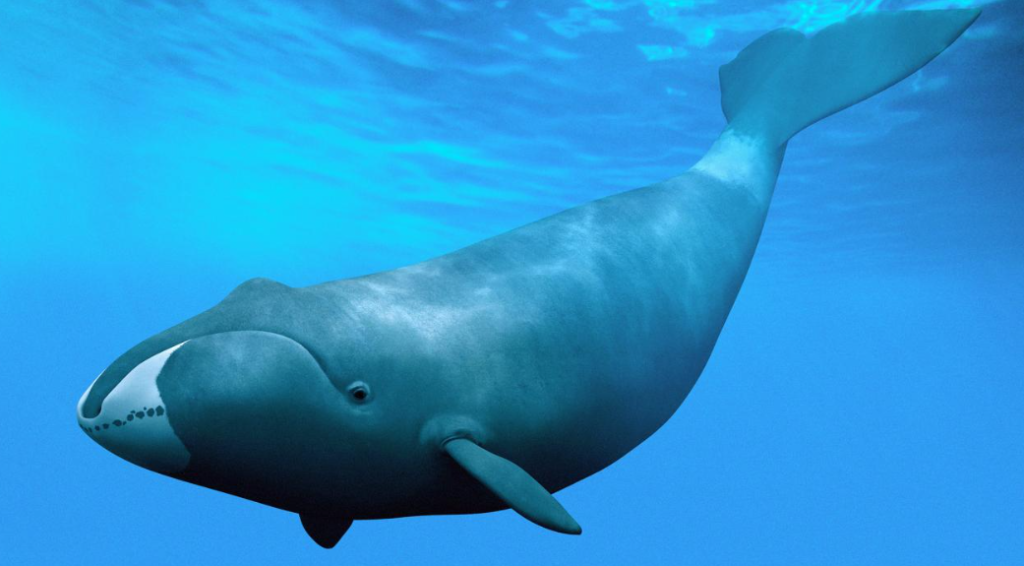
Quick Top 10 Facts about Bowhead Whale
| SCIENTIFIC NAME | Balaena mysticetus |
| CLASSIFICATION |
KINGDOM: Animalia PHYLUM: Chordata CLASS: Mammalia ORDER: Cetacea FAMILY: Balaenidae GENUS: Balaena |
| SIZE | Up to 66 feet (20 meters) in length; can weigh up to 75 tons |
| HABITAT | Arctic and subarctic regions, often found in icy waters near the coast |
| DIET | Filter-feeders – primarily feeds on zooplankton, particularly copepods and krill |
| SPECIES | Bowhead Whale |
| COUNTRY | Found in Arctic waters, primarily around Greenland, Canada, and Alaska |
| GESTATION PERIOD | About 13-14 months |
| LIFE SPAN | Up to 200 years, making them one of the longest-living mammals |
| CONSERVATION STATUS | Least Concern – populations have recovered since the ban on commercial whaling |
Amazing Facts About Bowhead Whales
1. Bowhead whales are one of the longest-living mammals
These whales can live up to 200 years, making them one of the longest-living animals on Earth.
2. They have the thickest blubber
Their thick blubber helps them survive in the cold Arctic waters, with some individuals having blubber up to 18 inches (45 cm) thick!
3. They have massive heads
The bowhead whale’s head makes up about one-third of its total body length.
4. Bowhead whales are filter feeders
They feed by swimming through water with their mouths open and using their baleen plates to filter out small organisms like krill and copepods.
5. They are excellent swimmers
Despite their large size, they are agile swimmers, capable of swimming through thick ice and long distances.
6. Bowhead whales were heavily hunted
Bowhead whales were once a target of commercial whaling, which severely reduced their populations. Thankfully, hunting has been banned, allowing populations to recover.
7. They live in icy Arctic waters
Bowhead whales are well-adapted to living in cold, Arctic, and subarctic waters, where they migrate between feeding and breeding grounds.
8. Bowhead whales are endangered
While their populations are recovering, they are still considered vulnerable, particularly due to climate change and the impacts of sea ice loss.
9. They have a distinctive bow-shaped head
The bowhead whale’s head is uniquely shaped, which helps it break through thick Arctic ice as it swims.
10. They are highly vocal
Bowhead whales produce a variety of sounds for communication, which can be heard over long distances in their icy habitat.
Origin and history of Bowhead Whales
A species of baleen whale found in the Northern Hemisphere’s Arctic and subarctic regions is the bowhead whale. It is often called the Greenland right whale or the Arctic whale. Mature individuals of one of the largest creatures in the world may reach lengths of 60 feet and weights of up to 75 tonnes. Bowhead whales are named for their enormous heads, powerful bodies, and distinctive bow-shaped mouths.
Information on the lifespan of bowhead whales
One of the most amazing things about the bowhead whale is how long it lives. These amazing creatures have been known to live for almost 200 years, making them among the longest-living mammals on Earth. Their long lifetime is attributed to a combination of characteristics such as their thick coating of fat, slow metabolism, and lack of natural predators in their Arctic habitat. The Bowhead Whale’s long lifetime is of interest to scientists studying longevity because it provides valuable insights into the ageing process.
Diet, which mainly consists of zooplankton and small fish
The primary food source for bowhead whales is zooplankton, which they filter-feed via their baleen plates. This includes copepods and krill. These plates made of keratin may be used as a sieve by the whale to remove its prey from the water. Bowhead whales eat a lot of these minute invertebrates to maintain their massive size and energy requirements. They are known for undertaking protracted food-seeking migrations, often travelling thousands of miles between their winter breeding grounds and their summer feeding grounds. Their ability to adapt to changing food sources is essential for their survival in the harsh Arctic environment.
Fascinating facts about Bowhead whale
The world’s most amazing marine animal, the bowhead whale (scientific name: Balaena mysticetus), lives in the Arctic and subarctic areas. The bowhead whale is one of the biggest animals on Earth and has a number of distinctive qualities that make it a very interesting species. Let’s explore some fascinating information about these magnificent marine creatures.
1. Outstanding Dimensions and Lifespan:
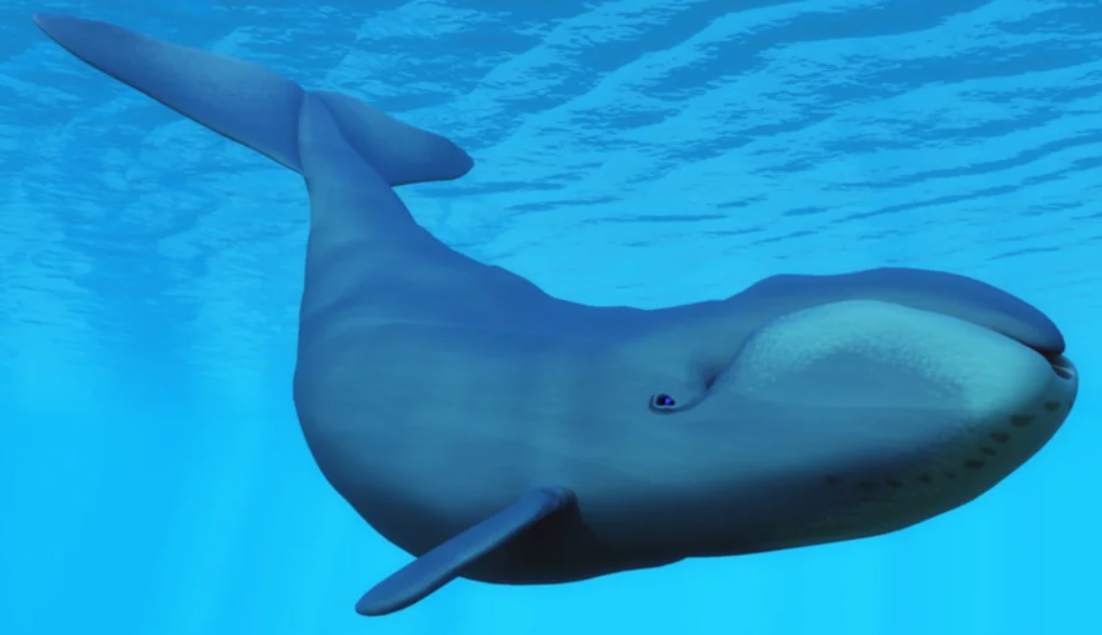
Adult bowhead whales may grow up to 60 feet (18 metres) in length and weigh up to 100 tonnes, making them famous for their enormous size. Approximately one-third of their whole body length is made up of their huge heads. In addition, these whales are the only marine mammals with blubber that is thicker than any other, reaching up to 1.5 feet (46 cm) in thickness.
The extraordinary longevity of the bowhead whale distinguishes it from other whale species. These amazing animals are among the planet’s longest-living mammals, with a potential lifespan of over 200 years. By examining the growth layers in their earwax, scientists have been able to establish their age and have gained important knowledge about how long they have lived.
Distinctive features, such as its massive head and bumpy skin
Bowhead whales are able to survive in the harsh Arctic climate due to a number of adaptations. Their enormous, bow-shaped head, which aids in breaking through thick sea ice, is what sets them apart from other species. Their greater baleen plate surface area due to their head shape also enables them to filter feed on plankton and tiny crustaceans.
In addition, these whales have a unique breathing mechanism that enables them to stay underwater for prolonged periods of time. They can dive to depths of more than 600 feet (183 metres) in pursuit of food, and they can hold their breath for up to 40 minutes.
Complex songs and their importance in communication
The songs of bowhead whales are renowned for being intricate and eerily beautiful. They are thought to use these hours-long songs as a vital component of their mating and communication rituals. They are able to interact with other members of their pod because of the long-range communication capabilities of their low-frequency noises in the water.
It’s interesting to note that each bowhead whale has a distinct song that varies with time. They differ from other whale species, such as the humpback whale, in that their songs are communal and ingrained in the whole group.
Cultural significance of bowhead whales to indigenous communities
For thousands of years, indigenous Arctic people have relied heavily on bowhead whales to maintain their way of life. The flesh, fat, and bones of whales are essential to these societies since they are used for food, tools, and a variety of cultural rituals.
Moreover, other Arctic species have depended on the bowhead whale’s capacity to breach sea ice for their survival. These whales break through the ice to allow air to reach seals and other marine creatures who rely on these openings for life.
Conservation efforts and initiatives aimed at protecting this species
Despite serious threats from commercial whaling in the past, the bowhead whale population has recently shown indications of recovery. They are now included on the International Union for Conservation of Nature’s (IUCN) Red List as a species of least concern.
Bowhead whale populations have rebounded thanks in part to conservation measures, which also include tight hunting restrictions and protected areas. To guarantee their long-term survival and the preservation of their Arctic environment, however, continued observation and conservation efforts are still required.
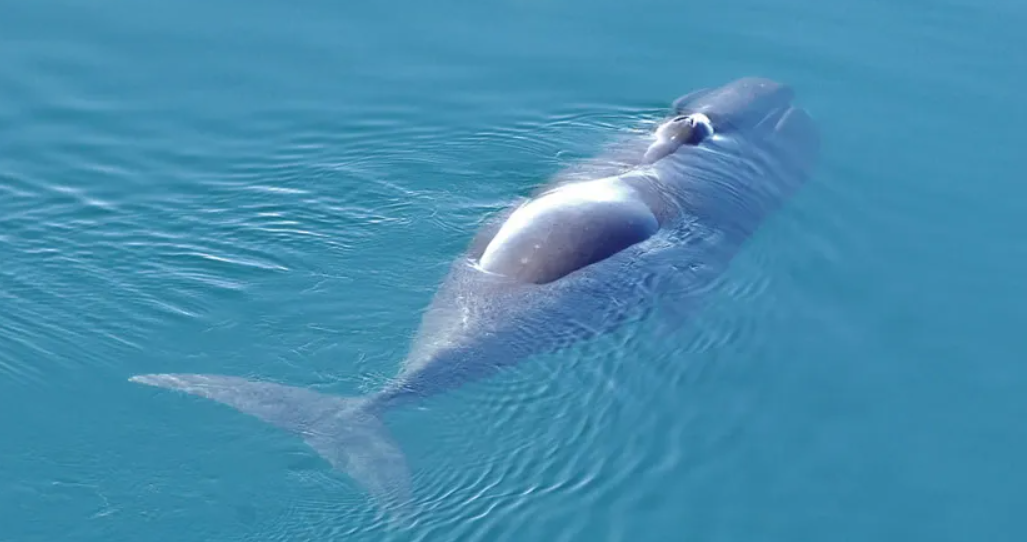
Importance of preserving cultural traditions while ensuring the conservation of bowhead whales
With its vast size, lengthy life span, unusual adaptations, beautiful singing, and cultural importance, the bowhead whale is a really amazing animal. Bowhead whales are among the most recognisable creatures in the Arctic, so protecting them and their fragile ecology is crucial. We can guarantee the survival of these magnificent giants for future generations by carrying out research and providing protection.
FAQ (Frequently Asked Questions) about Bowhead Whale
Q: What is a Bowhead Whale?
Ans: The Bowhead Whale (Balaena mysticetus) is a large, Arctic species of baleen whale known for its massive head, which can be up to one-third of its body length. These whales are distinguished by their thick blubber, which helps them survive in the frigid waters of the Arctic and sub-Arctic regions.
Q: How big do Bowhead Whales get?
Ans: Bowhead Whales are one of the largest whale species. They can grow up to 60 feet (18 meters) in length and weigh up to 75-100 tons. Their massive head accounts for a significant portion of their overall size.
Q: Where do Bowhead Whales live?
Ans: Bowhead Whales are primarily found in the Arctic and sub-Arctic waters, including the Bering Sea, Hudson Bay, and the waters around Greenland, Canada, and Russia. They migrate seasonally, moving between feeding grounds in colder waters and breeding grounds in warmer waters.
Q: What do Bowhead Whales eat?
Ans: Bowhead Whales are filter feeders. They feed primarily on tiny organisms like zooplankton, including copepods and krill, using their baleen plates to strain food from the water. Their diet consists mainly of small marine invertebrates found in the Arctic waters.
Q: How long do Bowhead Whales live?
Ans: Bowhead Whales are known for their longevity. They can live up to 200 years or more, making them one of the longest-living mammals on Earth. This remarkable lifespan has been confirmed through the analysis of eye lenses and other biological markers.
Q: Are Bowhead Whales endangered?
Ans: While Bowhead Whales were once heavily hunted, they are now considered a species of least concern due to conservation efforts. Their populations are slowly recovering, but they are still vulnerable to threats such as climate change, shipping traffic, and noise pollution.
Q: What is the appearance of a Bowhead Whale?
Ans: Bowhead Whales have a distinctive appearance, with a large, rounded head that makes up about one-third of their body length. Their bodies are dark, with some white markings on the belly. They have long, arching baleen plates in their mouths used to filter food from the water.
Q: How fast do Bowhead Whales swim?
Ans: Bowhead Whales are not particularly fast swimmers compared to other whale species. They typically swim at speeds of 3-5 mph (5-8 km/h), but they can reach bursts of speed up to 10 mph (16 km/h) when they feel threatened.
Q: How do Bowhead Whales communicate?
Ans: Bowhead Whales are known to communicate through a variety of sounds, including moans, groans, and whistles. These vocalizations are used for social interaction and possibly navigation in the dark Arctic waters.
Q: Can Bowhead Whales breach?
Ans: Bowhead Whales are not known for breaching as frequently as other whale species, but they can occasionally leap out of the water or “spyhop,” where they raise their heads above the surface to observe their surroundings.
#BowheadWhale #BaleenWhale #ArcticWhale #WhaleConservation #MarineMammals #ArcticWildlife #LongLivedWhales #WhaleWatching #OceanLife #MarineConservation
Our sources and references about Bowhead Whale
1: Wikipedia – Bowhead Whale
2: NRDC – Bowhead Whales
3: WDC – Bowhead Whale
4: Smithsonian Ocean – Bowhead Whale


