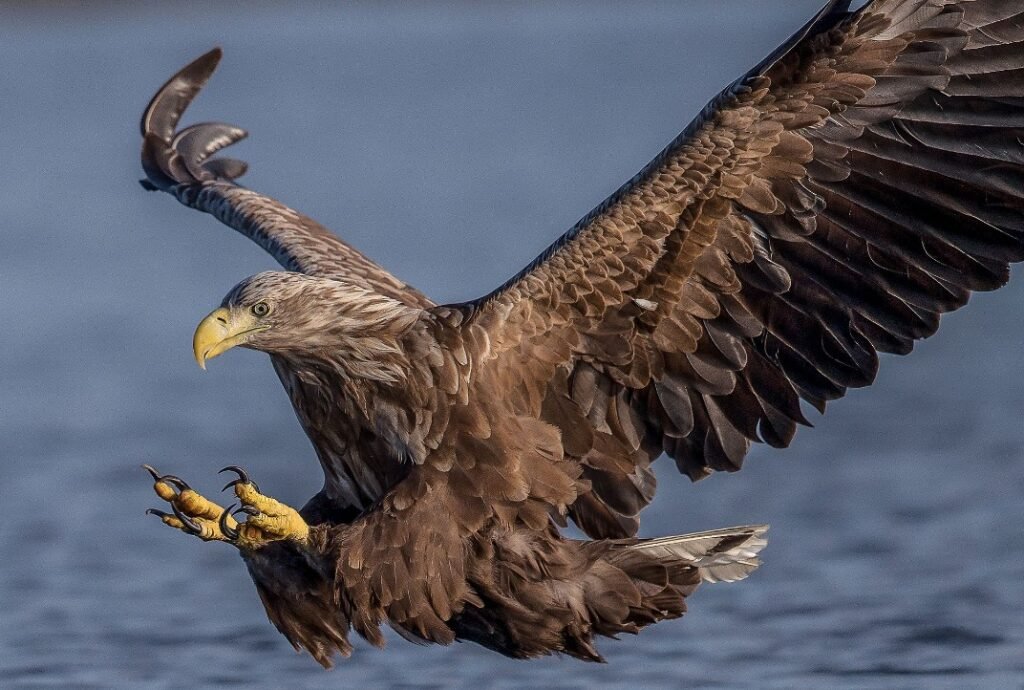
Sea eagles, also known as fish eagles, are powerful birds of prey found near large bodies of open water, particularly in coastal regions and along rivers and lakes. They are skilled hunters, primarily feeding on fish, which they capture with their sharp talons. Known for their impressive size, powerful flight, and striking appearance, sea eagles are among the most formidable birds in the raptor family. They are also known for their large, hooked beaks, keen eyesight, and ability to soar gracefully over water in search of prey.
Quick Top 10 Facts about Sea Eagle
| SCIENTIFIC NAME | Haliaeetus species, such as Haliaeetus leucoryphus (Pallas’s fish eagle) and Haliaeetus leucoryphus (Bald eagle) |
| CLASSIFICATION | KINGDOM: Animalia PHYLUM: Chordata CLASS: Aves ORDER: Accipitriformes FAMILY: Accipitridae |
| SIZE | Wingspan: 1.8–2.5 meters (5.9–8.2 feet), Weight: 3–6 kg (6.6–13.2 pounds), depending on species |
| SPECIES | The Bald Eagle, Pallas’s Fish Eagle, Steller’s Sea Eagle, and the White-Tailed Sea Eagle are among the most well-known species |
| APPEARANCE | Sea eagles have large, powerful bodies, hooked beaks, and long, broad wings. They are typically characterized by a dark brown or blackish plumage, with some species like the Bald Eagle having a distinctive white head and tail. |
| LIFE SPAN | Typically 20–30 years in the wild, with some individuals living longer under favorable conditions |
| HABITAT | Coastal regions, large lakes, rivers, and wetlands across the world. They are often found in temperate and tropical regions, particularly in North America, Europe, and Asia. |
| DIET | Primarily fish, but also some small mammals, birds, and carrion. They are skilled hunters, diving from great heights to catch their prey. |
| NATURAL PREDATORS | Adult sea eagles have few natural predators, though their eggs and chicks may be vulnerable to large birds of prey, foxes, and other mammals. |
| COUNTRY | North America, Europe, Asia, and parts of Australia, depending on the species |
| GESTATION PERIOD | Incubation period for eggs: 35–45 days, with chicks hatching after this period |
| CONSERVATION STATUS | Various species have different conservation statuses, with some, like the Bald Eagle, having recovered from near extinction, while others are still considered threatened or near threatened. |
Amazing Facts About Sea Eagle
1. Masterful Fish Hunters
Sea eagles are superb fish hunters. They dive at high speeds to capture fish with their powerful talons, sometimes plunging into the water to retrieve their prey. They are also known to snatch fish from the water while flying just above the surface.
2. Impressive Wingspan
Sea eagles have an impressive wingspan, with some species like the Steller’s Sea Eagle reaching up to 2.5 meters (8.2 feet). This allows them to soar gracefully over vast bodies of water in search of food.
3. Keen Eyesight
Sea eagles are known for their exceptional eyesight. Their vision is estimated to be four to eight times more powerful than that of humans, allowing them to spot fish from high in the sky.
4. Solitary or Monogamous
Sea eagles are generally solitary birds, though they are monogamous, often forming lifelong pairs. They usually only come together during the breeding season, with both parents taking part in raising the chicks.
5. Powerful Talons and Beak
The talons of a sea eagle are incredibly powerful and can exert tremendous pressure to hold onto their catch. Their hooked beaks are designed to tear into the flesh of their prey with ease.
6. Coastal and Freshwater Dwellers
Sea eagles are found near coastal waters, but some species, such as the White-Tailed Sea Eagle, also inhabit freshwater lakes and rivers. They prefer habitats with easy access to food sources like fish and waterfowl.
7. Long Lifespan
Sea eagles have a long lifespan, typically living for 20 to 30 years in the wild. Some individuals have even been known to live longer, especially in protected areas.
8. Incredible Flight Skills
Sea eagles are strong fliers and can travel long distances in search of food. Their powerful wings allow them to glide effortlessly for hours, using thermal updrafts to stay airborne with minimal effort.
9. Eggs and Nesting
Sea eagles build large, impressive nests in tall trees or cliffs, which can be up to 2 meters (6.5 feet) wide. They lay 1–3 eggs, and both parents help incubate the eggs and care for the chicks after they hatch.
10. Conservation Success Story
The Bald Eagle, once on the brink of extinction due to hunting and habitat destruction, has made a remarkable recovery due to conservation efforts. It is now a symbol of American wildlife conservation.
Stunning Marine Raptors of the Sky: Sea Eagles
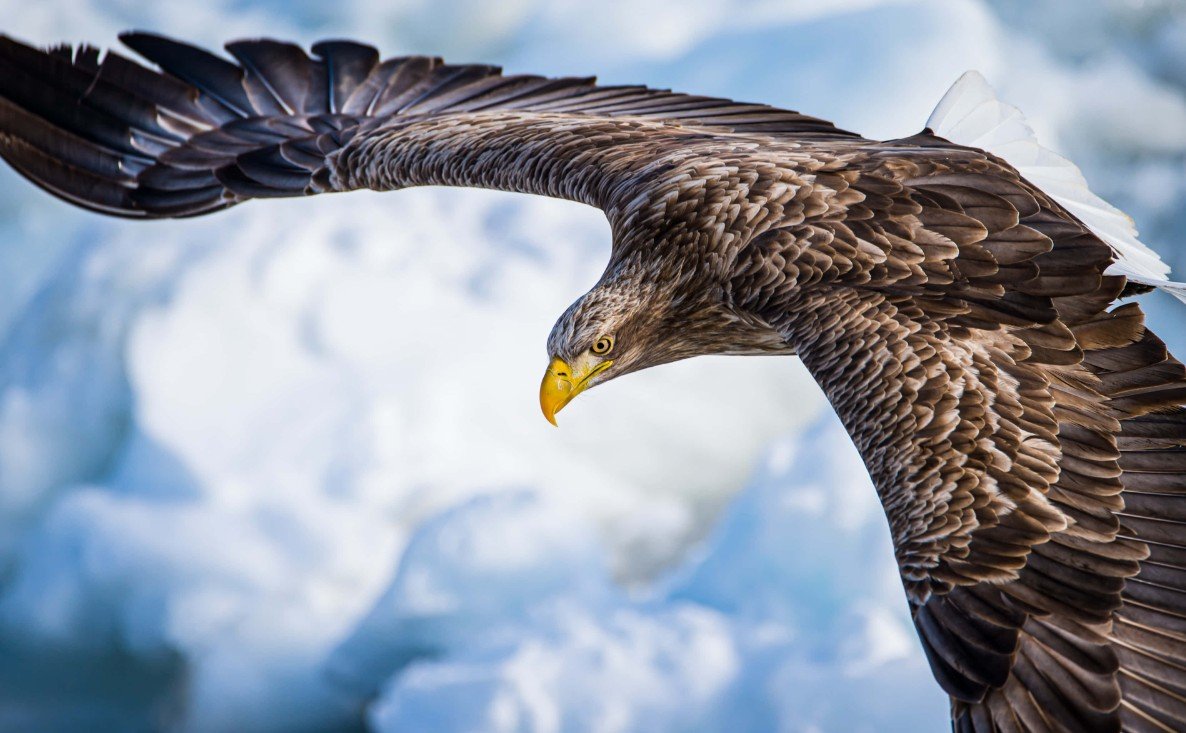
A spectacular type of bird of prey, the sea eagle—also called the fishing eagle or ocean eagle—is renowned for its magnificent size, strong flying, and exceptional hunting skills. These birds are members of the genus Haliaeetus, which has a number of species that are all mostly found around the shore and have excellent fishing skills. Sea eagles have established themselves as one of the most formidable and magnificent birds in the avian world because to their remarkable wingspans, sharp talons, and acute vision.
In order to explain why sea eagles are both feared and adored in the wild, we shall examine their traits, habitats, behaviour, and conservation in this article.
1. What is a Sea Eagle?
A sea eagle is a huge predatory bird that may be found all over the globe. They are well-known for their preference for coastal environments, especially lakes, rivers, and coastal communities, where they mostly seek fish and other aquatic prey. Although certain species may live in freshwater, sea eagles are most often seen in maritime areas, as their name implies.
Characteristics and Species of Sea Eagles
Sea eagles are distinguished by their size, strong beaks, and outstanding hunting abilities. The genus Haliaeetus has a number of species that are often found in areas with a lot of water bodies. Each species of sea eagle has evolved to its own environment and prey preferences, even though they all use similar hunting techniques.
Famous Types of Sea Eagles
- White-tailed Eagle (Haliaeetus albicilla): Known for its characteristic white tail feathers, found across parts of Asia and Europe.
- Bald Eagle (Haliaeetus leucocephalus): Recognized by its golden beak and white head; the national bird of the United States.
- Steller’s Sea Eagle (Haliaeetus pelagicus): One of the largest eagles in the world, native to Eastern Russia.
- Philippine Eagle (Pithecophaga jefferyi): A massive raptor indigenous to the Philippine Islands.
- Eastern and Australian Sea Eagles (Haliaeetus leucoryphus and Haliaeetus australis): Found across Asia and Australia.
2. Sea Eagles’ Physical Attributes
One of the biggest and strongest predatory birds in the world is the sea eagle. There are a few physical qualities that all sea eagles have in common, while there are also subtle differences across species.
Dimensions and Wingspan
Depending on the species, sea eagles may have wingspans of up to 2.5 meters (8.2 feet) or 1.8 meters (5.9 feet), making them huge birds. One of the biggest is the Steller’s sea eagle, which may weigh up to 9 kilogrammes (20 pounds) and have a wingspan of about 2.5 meters (8.2 feet).
Wings Designed for Soaring
With long, broad wings, sea eagles can move over vast stretches of water with ease while foraging for food. Their soaring-adapted wings allow them to save energy as they glide effortlessly over oceans and rivers for extended periods.
Talons and Beak Structure
- Powerful Beak: The sea eagle’s massive, hooked beak enables it to capture and rip apart prey efficiently.
- Sharp Talons: These curved claws allow sea eagles to grasp fish from the water and carry them to perches or nests.
Plumage and Coloration
Sea eagles typically have dark plumage accented with white or lighter markings on their heads and tails. For instance, the White-tailed Eagle has a dark brown body and white tail, while the Bald Eagle’s iconic white head and tail contrast with its deep brown body.
Adaptation and Vision
Sea eagles’ plumage helps them blend seamlessly into ocean or forest environments. Their eyesight—four to eight times stronger than a human’s—allows them to detect prey from astonishing distances, a crucial adaptation for successful hunting.
3. Distribution and Habitat of Sea Eagles
Sea eagles inhabit a wide range of environments across the globe, primarily along freshwater and coastal regions. They thrive in places rich with open water sources like lakes, rivers, and estuaries.
Geographical Range
- Bald Eagle: Found in North America, particularly the United States and Canada.
- White-tailed Eagle: Distributed across Europe, Asia, and Scandinavia.
- Steller’s Sea Eagle: Native to eastern Russia and one of the rarest species.
- Australian and Eastern Sea Eagles: Found across the northern and eastern coastlines of Australia and Asia.
Preferred Nesting Locations
Sea eagles prefer remote habitats where they can establish expansive territories. They build large nests atop tall trees, cliffs, or rocky outcrops near water. Territorial and protective by nature, they guard nesting areas fiercely from intruders.
4. Hunting Methods and Diet
Sea eagles are skilled carnivores whose diets consist mostly of fish, though they occasionally hunt mammals, ducks, and crabs. Their hunting prowess and aerial agility make them apex predators in their ecosystems.
Hunting Techniques
- Fishing: Their primary hunting method involves soaring over water and diving swiftly to seize fish with powerful talons.
- Perching: They often wait patiently atop cliffs or trees for prey to appear before swooping down for the catch.
- Scavenging: Sea eagles will also feed on carrion or wounded animals when the opportunity arises.
Dietary Preferences
Fish make up the bulk of their diet, though they supplement it with small mammals and birds when necessary. Their powerful beaks and claws ensure they can efficiently tear apart prey of various sizes.
5. Lifespan and Reproduction
Sea eagles are known for strong family bonds and intricate nesting behaviors. Their reproductive patterns ensure the survival of their young and maintain population stability.
Nesting and Breeding Habits
Using twigs, branches, and other available materials, sea eagles construct enormous, sturdy nests—often reused for years. These nests can reach several feet across and are typically located near bodies of water.
Egg Laying and Chick Rearing
- Female sea eagles lay between one and three eggs per season.
- Both parents share incubation duties and actively care for hatchlings.
- After 35–45 days of incubation, chicks hatch and are fed fresh fish and small animals until fledging at 10–12 weeks.
Lifespan of Sea Eagles
In the wild, many sea eagle species live 20–30 years, with some reaching even older ages in captivity under ideal conditions.
6. Conservation Status and Human Impact
Although most sea eagles are not currently endangered, human activity—habitat loss, pollution, and illegal hunting—continues to threaten their populations in certain regions.
Conservation Success Stories
For example, the Bald Eagle was once listed as endangered in the U.S. due to DDT pesticide poisoning, habitat destruction, and hunting. Thanks to dedicated conservation programs, it has recovered and been removed from the Endangered Species List.
Ongoing Threats and Preservation Efforts
Conservation remains essential for maintaining sea eagle populations, especially in regions facing ongoing habitat degradation. Sustainable fishing practices, pollution control, and habitat protection are vital for ensuring these majestic birds continue to dominate coastal skies.
FAQ (Frequently Asked Questions) about Sea Eagle
Q: What is a Sea Eagle?
Ans: A Sea Eagle is a large bird of prey that lives near bodies of water, including coasts, rivers, and lakes. They are skilled hunters that primarily feed on fish and other aquatic creatures.
Q: What do Sea Eagles eat?
Ans: Sea Eagles primarily feed on fish, but they may also hunt small mammals, birds, and carrion when fish is not readily available.
Q: Where are Sea Eagles found?
Ans: Sea Eagles are found in coastal regions, large lakes, rivers, and wetlands around the world. Their range includes North America, Europe, Asia, and parts of Australia.
Q: How long do Sea Eagles live?
Ans: Sea Eagles typically live for 20–30 years in the wild, with some individuals living longer in protected environments.
Q: Are Sea Eagles endangered?
Ans: Some species of Sea Eagles, such as the Bald Eagle, were once endangered but have since made a remarkable recovery. However, other species, like the Pallas’s Fish Eagle, are still considered vulnerable or near-threatened.
Q: How do Sea Eagles hunt?
Ans: Sea Eagles hunt by diving at high speeds to catch fish with their talons. They are also capable of flying low over water and snatching fish while still in flight.
Q: Do Sea Eagles live in flocks?
Ans: No, Sea Eagles are solitary birds, although they may congregate in the same area if food is abundant. They are monogamous and usually form lifelong pairs.
Q: Can Sea Eagles fly long distances?
Ans: Yes, Sea Eagles are strong fliers and can travel great distances in search of food. Their large wings allow them to glide effortlessly over vast expanses of water.
Q: How do Sea Eagles communicate?
Ans: Sea Eagles communicate using calls that are often loud and sharp, especially during the breeding season when they may defend their territories.
Q: How big are Sea Eagles?
Ans: Sea Eagles are large birds, with some species having a wingspan that can reach up to 2.5 meters (8.2 feet). They are among the largest birds of prey in the world.
#SeaEagle #FishEagle #Raptors #BirdOfPrey #WildlifeConservation #BirdWatching #FlyingHunters #EagleFacts #ConservationSuccess
Our sources and references about Sea Eagle
1: Wikipedia – Sea Eagle
2: National Geographic – Sea Eagle
3: Britannica – Sea Eagle
4: Audubon – Sea Eagle