Quick Top 10 Facts about Brachiosaurus Dinosaur
| SCIENTIFIC NAME | Brachiosaurus altithorax |
| CLASSIFICATION | KINGDOM: Animalia PHYLUM: Chordata CLASS: Sauropsida ORDER: Saurischia SUBORDER: Sauropodomorpha FAMILY: Brachiosauridae GENUS: Brachiosaurus SPECIES: B. altithorax |
| SIZE | Length: Approximately 80–85 feet (24–26 meters), Height: Up to 40–50 feet (12–15 meters), Weight: Estimated 30–50 tons |
| HABITAT | Prehistoric, found in what is now North America (primarily western United States) |
| DIET | Herbivorous; fed on plants, including conifers and cycads |
| SPECIES | Brachiosaurus, a massive, long-necked sauropod dinosaur from the Late Jurassic period |
| COUNTRY | Fossils found in North America, primarily in Colorado, Utah, and Wyoming, USA |
| TIME PERIOD | Late Jurassic period, around 154 to 153 million years ago |
| LIFE SPAN | Estimated life span of up to 100 years |
| CONSERVATION STATUS | Extinct |
Amazing Facts About Brachiosaurus Dinosaurs
1. Brachiosaurus was one of the largest dinosaurs
With an estimated length of up to 85 feet and a weight of 30–50 tons, Brachiosaurus was an enormous herbivorous dinosaur.
2. They had a unique body structure
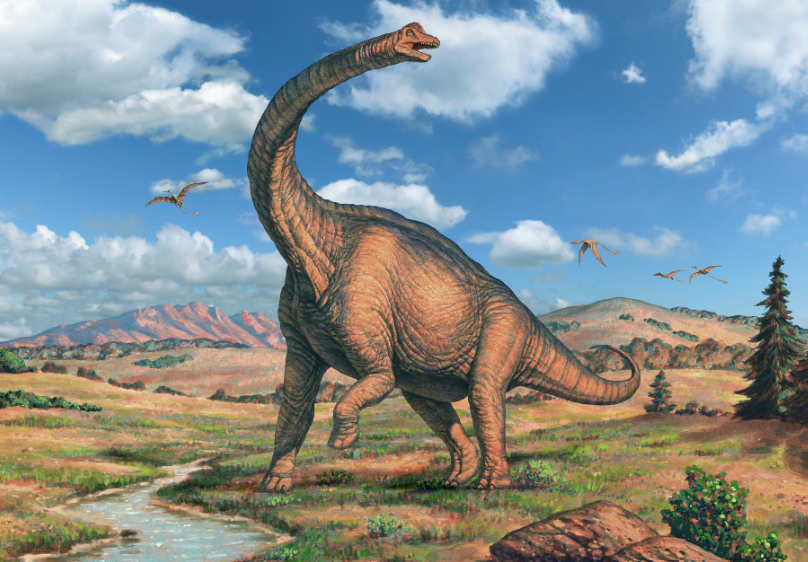
Unlike many other sauropods, Brachiosaurus had longer front legs than hind legs, giving it a more upright posture and allowing it to reach higher vegetation.
3. Brachiosaurus had a long neck
The long neck of Brachiosaurus allowed it to feed on treetop vegetation that other herbivores couldn’t reach.
4. They lived during the Late Jurassic period
Brachiosaurus lived around 154 to 153 million years ago, during the Jurassic period, when the Earth was dominated by large reptiles.
5. They were herbivores
Brachiosaurus had a plant-based diet, primarily feeding on conifers, cycads, and other types of plant matter.
6. They had a long life span
Brachiosaurus likely lived up to 100 years, similar to modern-day large reptiles like tortoises.
7. Their massive size helped deter predators
The sheer size of Brachiosaurus made it less vulnerable to predators, although juveniles would have been more at risk.
8. Brachiosaurus had a massive heart
It is believed that Brachiosaurus required a large, strong heart to pump blood to its long neck, which would have been a challenge for its size.
9. Fossils of Brachiosaurus were first discovered in 1900
Fossils were discovered in North America, and the species was formally described by paleontologist Elmer S. Riggs in 1903.
10. Brachiosaurus had a slow metabolism
Despite its size, Brachiosaurus likely had a relatively slow metabolism, similar to other large herbivorous dinosaurs, relying on its large body to store energy.
Intriguing facts about Brachiosaurus as a dinosaur species
Brachiosaurus, a fascinating dinosaur from the Late Jurassic period, is well-known for its massive size and peculiar anatomical traits. Some 150 million years ago, the Earth was home to this herbivorous mammal. Because of the abundant fossil record it left behind, scientists have discovered a wealth of intriguing facts about it.
Important facts about the Brachiosaurus dinosaur
One of the most remarkable features of the Brachiosaurus is its enormous height. At up to 85 feet in length and 40 feet in height, it was one of the largest dinosaurs that had ever been seen in the wild. It could reach vegetation that other dinosaurs could not because of its thirty-foot-long neck. This adaptation let the brachiosaurus find food and survive in its environment, which was a big help.
The Distinctive appearance of the Brachiosaurus dinosaur
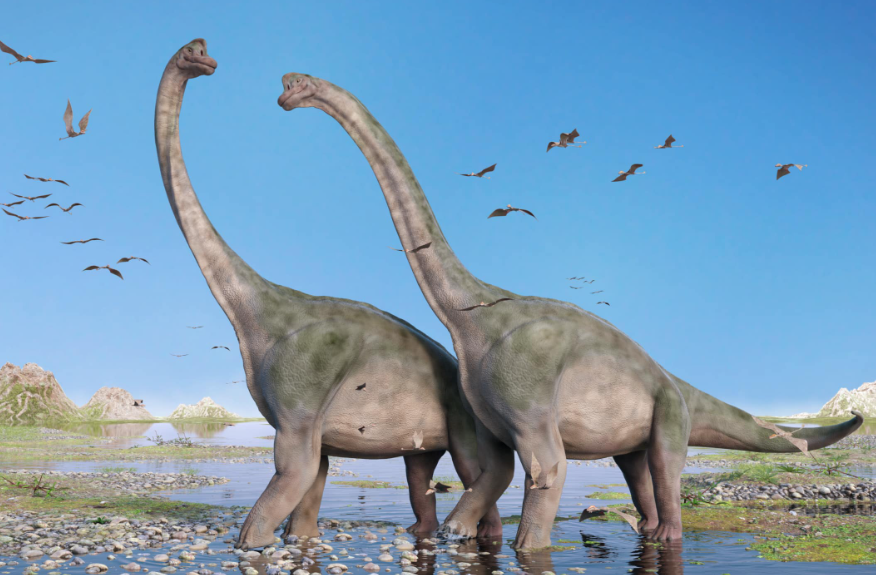
The unique body structure of the Brachiosaurus sets it apart from other dinosaurs. Its front legs were longer than its back legs, giving it a distinctive appearance with a sloping back. Because of its physical characteristics and long neck, Brachiosaurus was able to reach plants at heights that other dinosaurs were not able to reach and feed on trees. Because its nostrils were on top of its head, it could breathe when partially submerged in water; therefore, it might have spent time in lakes or rivers. The remarkable information on the Brachiosaurus sheds insight on the dinosaur’s adaptations and behaviours.
Brachiosaurus historical facts and Duration of the Late Jurassic period
Approximately 155 to 140 million years ago, during the Late Jurassic era, the famous dinosaur Brachiosaurus thrived. With its name translating to “arm lizard” in Greek, it was a huge herbivorous dinosaur that formerly roamed the Earth. The following are some amazing facts about Brachiosaurus:
Size, weight and overall appearance of Brachiosaurus
One of the biggest dinosaurs that has ever existed was the Brachiosaurus. It weighed around 50 tonnes and could reach lengths of up to 85 feet (26 metres). It was able to reach plants that other dinosaurs were not able to because of the length of its neck, which could reach up to thirty feet (9 metres).
Distinctive Anatomy and distinguishing characteristics of Brachiosaurus
The long neck and tiny skull of the Brachiosaurus were two of its most distinguishing characteristics. It was able to forage on the tops of trees because its neck was kept straight. Brachiosaurus had a sloping back because of the length of its front legs relative to its hind legs. It was distinguished from other dinosaurs by its distinct body structure.
Vegetarian Diet and feeding habits of Brachiosaurus
Being an herbivore, Brachiosaurus exclusively consumed plants. The leaves, ferns, and other flora in its surroundings were its primary food sources. Brachiosaurus required a daily diet high in plant matter to sustain its vast size and energy needs.
Longevity and lifespan of the Brachiosaurus
In comparison to other dinosaurs, the lifetime of Brachiosaurus was comparatively lengthy. Its estimated lifespan of 80 years is based on fossil data. Its large size may have contributed to its longer life by providing some protection from predators.
Origin and distribution of Brachiosaurus dinosaur
Elmer Riggs found the first fossilised Brachiosaurus in the Colorado River basin in 1900. Since then, a great deal of fossil material has been discovered in North America, Africa, and Europe, among other regions of the globe. These findings have shed important light on the morphology and behaviour of this amazing dinosaur.
Habitat and Distribution of Brachiosaurus
Brachiosaurus lived in a variety of habitats, including floodplains and woodlands. It had an edge over rivals in locations with big trees because of its long neck and tiny head, which enabled it to reach plants far above the ground. It is said to have moved when the seasons changed in search of food and water.
The social behavior of Brachiosaurus
Evidence points to the possibility that Brachiosaurus engaged in social interactions. These dinosaurs travelled in groups, as shown by fossilised footprints, and several bones have been discovered near one another. This implies that they could have coexisted and relocated for mating or protection.
Extinction and Legacy of Brachiosaurus
Brachiosaurus became extinct approximately 140 million years ago, near the end of the Jurassic era, along with many other dinosaurs. Although the precise reason for its demise is still unclear, a number of causes, including resource competition, climate change, and the emergence of new predators, are thought to have contributed.
Paleontological Discoveries of Brachiosaurus
The amazing Brachiosaurus dinosaur piques our curiosity with its gigantic size and unusual body composition. For palaeontologists, its long neck, herbivorous diet, and potential social behaviour make it an intriguing topic of research. The finding of fossilised Brachiosaurus remains a vital source of information about the old world and the variety of species that were once there, even though the dinosaur may no longer be roaming the planet.
FAQ (Frequently Asked Questions) about Brachiosaurus Dinosaur
Q: What is a Brachiosaurus?
Ans: Brachiosaurus is a large herbivorous dinosaur that lived during the Late Jurassic period, approximately 154 to 153 million years ago. It was known for its enormous size and distinctive body shape, with a long neck and large, barrel-shaped body. Unlike most other dinosaurs, its front legs were longer than its hind legs, giving it a unique posture among sauropods.
Q: Where did Brachiosaurus live?
Ans: Brachiosaurus lived in what is now North America and Africa. Fossils of this massive dinosaur have been found in regions that were once part of the shallow seas and lush landscapes of the Jurassic period, such as present-day Colorado and Utah in the United States.
Q: What did Brachiosaurus eat?
Ans: Brachiosaurus was a herbivore, meaning it ate plants. With its long neck, it could reach high into trees to feed on foliage, particularly conifers and other vegetation that grew high above the ground. Its large body and long neck helped it access food sources that other dinosaurs could not reach.
Q: How big was Brachiosaurus?
Ans: Brachiosaurus was one of the largest dinosaurs to ever walk the Earth. It is estimated to have been about 80 feet (24 meters) long and 40 feet (12 meters) tall. It weighed between 30 to 60 tons, making it one of the most massive herbivores of the Jurassic period.
Q: How did Brachiosaurus move?
Ans: Brachiosaurus was a quadrupedal dinosaur, meaning it walked on all four legs. However, unlike most sauropods, its front legs were longer than its hind legs, which gave it a more upright posture and allowed it to reach high vegetation. It is believed that Brachiosaurus moved slowly, but its massive size provided it with protection from most predators.
Q: What did Brachiosaurus look like?
Ans: Brachiosaurus had a long neck, a large, barrel-shaped body, and a relatively small head compared to its size. Its front legs were significantly longer than its hind legs, giving it a giraffe-like posture. It had relatively short tails compared to other sauropods. Its skin was likely covered in scaly textures, although evidence of its appearance is mainly based on fossilized bones and skeletal reconstructions.
Q: Was Brachiosaurus the biggest dinosaur?
Ans: While Brachiosaurus was one of the largest dinosaurs, it was not the absolute largest. Other sauropods, such as Argentinosaurus, were even larger. However, Brachiosaurus stood out due to its height and unique body shape. Its ability to reach high vegetation made it different from other long-necked dinosaurs.
Q: How did Brachiosaurus defend itself?
Ans: Brachiosaurus likely did not have many natural predators due to its immense size. Its height allowed it to feed from tall trees and stay out of reach of most ground-based predators. If threatened, it may have relied on its massive size and strength to ward off attackers, though there is no evidence to suggest it was particularly aggressive.
Q: How did Brachiosaurus reproduce?
Ans: Like other dinosaurs, Brachiosaurus likely reproduced by laying eggs. Fossilized nests and eggs of other sauropods suggest that these dinosaurs would have laid their eggs in safe, relatively secluded areas and possibly cared for them in some way. However, the specifics of Brachiosaurus reproduction are not well-known due to a lack of preserved egg fossils for this species.
Q: Is Brachiosaurus extinct?
Ans: Yes, Brachiosaurus went extinct around 66 million years ago at the end of the Cretaceous period, during the mass extinction event that wiped out most dinosaurs. The extinction of Brachiosaurus and other dinosaurs was likely due to a combination of climate change, volcanic activity, and the impact of a massive asteroid.
#Brachiosaurus, #Dinosaur, #JurassicPeriod, #Sauropod, #Herbivore, #PrehistoricLife, #Dinosaurs, #AncientAnimals, #Fossils, #Paleontology, #DinosaurFacts, #Paleontologists, #JurassicPark, #PrehistoricCreatures, #MassiveDinosaurs
Our sources and references about Brachiosaurus
1: Wikipedia – Brachiosaurus
2: Britannica – Brachiosaurus
3: National Geographic – Brachiosaurus
4: Smithsonian Magazine – Brachiosaurus