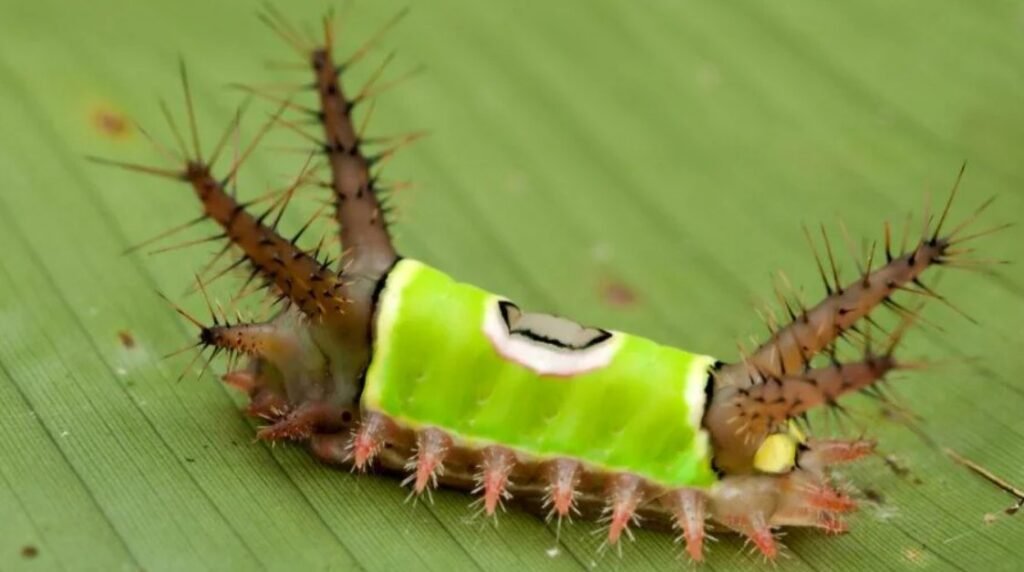
The Saddleback Caterpillar is one of the most distinctive and striking caterpillars, known for its unique appearance and venomous spines. Found in North America, it is a member of the Lonomia family and goes through several life stages before it becomes a moth. Despite its beauty, it can be quite dangerous to humans, making it a fascinating creature for study.
Quick Top 10 Facts about Saddleback Caterpillar
| SCIENTIFIC NAME | Acharia stimulea |
| CLASSIFICATION | KINGDOM: Animalia PHYLUM: Arthropoda CLASS: Insecta ORDER: Lepidoptera FAMILY: Limacodidae |
| SIZE | Length: 4–5 cm (1.6–2 inches) |
| SPECIES | Saddleback Caterpillar (Acharia stimulea) |
| APPEARANCE | The caterpillar is green with a large, brown “saddle” shape on its back, surrounded by venomous spines, making it easily recognizable. It also has a pair of prominent, horn-like structures on its head. |
| LIFE SPAN | Varies; typically several weeks in the caterpillar stage, and 2–3 weeks in the pupal stage before emerging as a moth. |
| HABITAT | Woodlands, gardens, and areas with deciduous trees, primarily in North America. |
| DIET | The caterpillar feeds on the leaves of various trees and shrubs, particularly oaks, birches, and willows. |
| NATURAL PREDATORS | Birds, rodents, and other insects that are immune to its venom. |
| CONSERVATION STATUS | Not endangered, but populations can be affected by habitat loss and environmental changes. |
Amazing Facts About Saddleback Caterpillar
1. Venomous Spines
The Saddleback Caterpillar is known for its venomous spines that can cause extreme pain, swelling, and allergic reactions in humans. These spines are capable of injecting venom when touched.
2. Distinctive Appearance
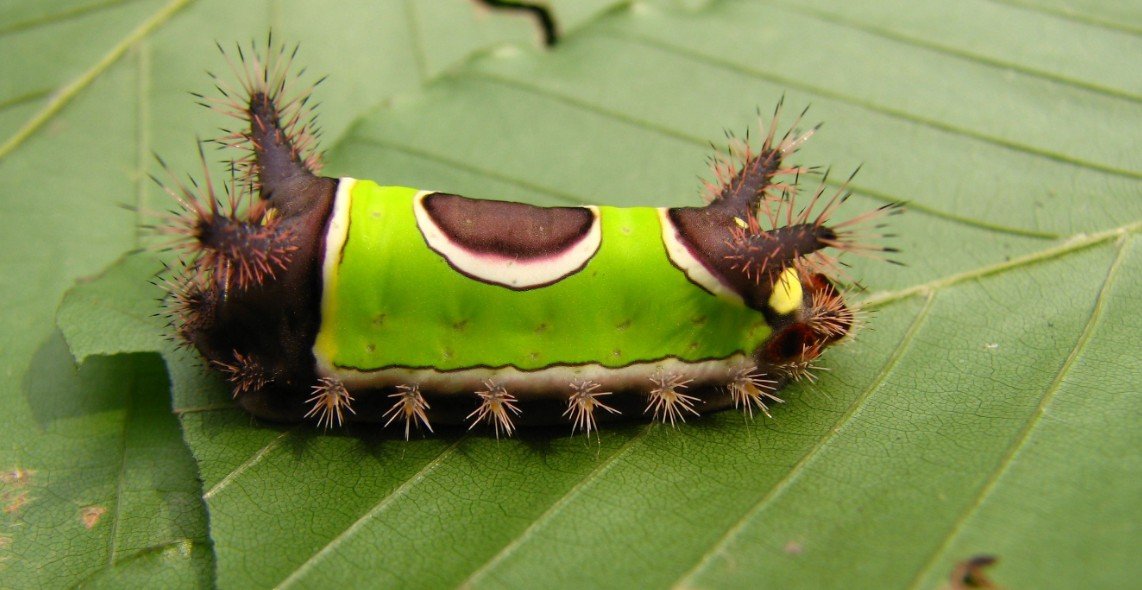
Its green body with a brown, saddle-like shape makes the Saddleback Caterpillar easy to identify. Its horn-like structures at both ends of the body add to its striking look.
3. Poisonous Defense
The venomous spines serve as a defense mechanism against predators. These spines are not only painful but can also be dangerous to small animals that try to attack the caterpillar.
4. Fast Growers
Saddleback caterpillars can grow quickly, reaching their full size in just a few weeks. This rapid development helps them survive and transform into moths before predators become a significant threat.
5. Moth Transformation
After completing the caterpillar stage, the Saddleback Caterpillar spins a cocoon and becomes a moth. The moth has a less menacing appearance but is equally fascinating.
6. Found in North America
The Saddleback Caterpillar is native to parts of North America, particularly the eastern and southern United States, where it thrives in wooded areas and gardens.
7. Threat to Humans
While the Saddleback Caterpillar is not typically aggressive, its venomous spines can cause significant pain if touched. It is best to avoid handling them.
8. Not Endangered
Although the Saddleback Caterpillar is not currently endangered, its populations are influenced by the availability of host plants like oaks and willows. Loss of habitat can impact its numbers.
9. Specialized Diet
Saddleback Caterpillars have a very specific diet, feeding on the leaves of certain trees, with a preference for hardwoods like oak, birch, and willow.
10. Key Role in the Ecosystem
As herbivores, Saddleback Caterpillars help control the growth of plants, especially the leaves of trees. They also serve as food for other animals, forming an important part of the food chain.
Saddleback Caterpillar: The Fascinating Yet Dangerous Larvae
Introduction to the Saddleback Caterpillar
The saddleback caterpillar (Acharia stimulea) is a strikingly beautiful yet potentially dangerous insect in its larval stage. This caterpillar, often seen in wooded areas across North America, is renowned for its vivid green body adorned with a distinct brown saddle-like marking on its back. While its appearance might make it seem like a harmless creature, the saddleback caterpillar’s defensive mechanisms can make it a real threat to unsuspecting individuals.
Understanding the Saddleback Caterpillar
The saddleback caterpillar belongs to the family Limacodidae, commonly known as slug caterpillars. This particular species is native to the United States and Canada and can be found in a variety of habitats, including forests, gardens, and suburban areas. It is known for its unique and eye-catching appearance, which is an effective strategy for defence rather than attracting mates.
Physical Characteristics of the Saddleback Caterpillar
The saddleback caterpillar’s appearance is one of the most distinctive features of this insect. Here are some details about its physical characteristics:
Body Colouration
The caterpillar’s body is primarily a bright green, which helps it blend in with the leaves and vegetation of its environment. The most notable feature is the brownish “saddle” shape that sits across its back, resembling the shape of a saddle used on horseback. This pattern is what gives the caterpillar its name. The saddle marking is typically a rich, reddish-brown or dark brown colour and is surrounded by a lighter green area.
Spines and Projections
One of the most interesting and potentially dangerous aspects of the saddleback caterpillar is its spine-covered body. The caterpillar is equipped with long, sharp spines protruding from its body. These spines are not only a defence mechanism but also play a role in deterring predators. The most distinctive spines are located on the front and rear of the caterpillar, which resemble horns or points.
Dangerous Bristles
The saddleback caterpillar has specialised bristles that contain venom. When a predator (or a curious human) makes contact with these spines, the venom can be injected into the skin, causing an immediate and painful reaction. These bristles serve as a warning to potential predators, signalling that the caterpillar is not to be messed with. In fact, despite its appearance, the saddleback caterpillar has few natural predators due to its defensive mechanisms.
Size of the Caterpillar
Adult saddleback caterpillars can grow to about 2.5 inches (6.35 cm) in length. While this might seem small, their striking appearance and painful defence mechanisms make them hard to miss.
Behaviour and Defence Mechanisms
The saddleback caterpillar’s primary method of defence is its venomous spines. However, it also relies on camouflage and other tactics to avoid predators. Here are some key behaviours associated with the saddleback caterpillar:
Camouflage
The saddleback caterpillar’s green body and saddle marking are designed to help it blend into the natural environment. Its colouration allows it to camouflage effectively on leaves, branches, and other green foliage, reducing its visibility to predators. By remaining motionless and using its green body as a disguise, the caterpillar can avoid detection by birds and other potential threats.
Venomous Spines
The most well-known defence mechanism of the saddleback caterpillar is its venomous spines. These spines are equipped with toxic substances that can cause a painful reaction upon contact. When touched, the bristles break off and embed into the skin, injecting venom. The venom can cause intense pain, swelling, and irritation, making it one of the most dangerous caterpillars in North America.
In addition to the pain, the venom can cause a rash or irritation that may last several hours. In more severe cases, some individuals may experience allergic reactions, including difficulty breathing, dizziness, or swelling of the throat. It is essential to seek medical attention if these symptoms occur.
Mimicry and Defensive Posture
While the saddleback caterpillar is not an aggressive insect, it may react defensively if it feels threatened. If a predator or human comes too close, the caterpillar may rear up on its hind end, revealing its venomous spines in an effort to scare off the intruder. This posture is often enough to deter most predators, as the sight of the caterpillar’s sharp spines serves as a clear warning sign.
Habitat and Distribution of the Saddleback Caterpillar
Saddleback caterpillars are found throughout North America, from the southern United States to parts of Canada. They are commonly spotted in woodlands, gardens, and areas with abundant vegetation. Their preferred habitats are typically areas where they can find an abundance of leaves and plants to feed on, such as hardwood trees like oak, hickory, and maple.
Saddleback caterpillars are most commonly found in the warmer months of the year, from late spring through summer. During this time, they are in their larval stage and are actively feeding and growing. Once they complete their larval stage, they will transform into the pupa stage, and eventually emerge as adult moths.
Preferred Plants for Feeding
The saddleback caterpillar is a herbivore and feeds primarily on the leaves of deciduous trees and shrubs. Some of its preferred plants include:
- Oak trees
- Hickory trees
- Birch trees
- Maple trees
- Sumac
The caterpillar’s diet mainly consists of these types of trees, and their feeding can sometimes lead to noticeable damage to plants in areas where they are abundant. However, it is important to note that saddleback caterpillars do not typically cause significant long-term damage to trees or plants.
Life Cycle of the Saddleback Caterpillar
The saddleback caterpillar undergoes a complete metamorphosis, moving through four distinct stages: egg, larva (caterpillar), pupa, and adult.
Egg Stage
The adult female saddleback moth lays its eggs on the leaves of various trees, usually in the late summer or early fall. These eggs are small and round, often laid in clusters.
Larval Stage
After the eggs hatch, the larvae begin feeding on the leaves of their host plants. The larval stage is the most recognisable stage of the saddleback caterpillar, with its distinctive green and brown colouration and venomous spines. This stage lasts several weeks as the caterpillar grows and molts.
Pupa Stage
After the caterpillar reaches its full size, it will enter the pupa stage, where it forms a protective casing around itself. The pupa remains in this stage for several weeks, undergoing metamorphosis.
Adult Moth
The adult saddleback moth emerges from the pupa as a small, brown moth with a distinctively patterned body. The moth’s primary purpose is reproduction, and after mating, the female lays eggs to begin the cycle anew. Adult saddleback moths do not feed and live for only a short period.
Health Risks and First Aid for Saddleback Caterpillar Stings
The most significant risk associated with saddleback caterpillars is the venomous sting caused by their spines. If you are stung by a saddleback caterpillar, the following first aid steps can help alleviate discomfort:
- Remove the Caterpillar: If you come into contact with a saddleback caterpillar, remove it from your skin immediately. Be sure to wear gloves or use a tool to avoid further contact with the spines.
- Clean the Affected Area: Wash the affected area with soap and water to remove any residual venom from the skin.
- Apply a Cold Compress: To reduce pain and swelling, apply a cold compress or ice pack wrapped in a cloth to the affected area.
- Use Pain Relievers: Over-the-counter pain relievers such as ibuprofen or acetaminophen can help manage pain and inflammation.
- Seek Medical Attention: If the sting causes severe pain, swelling, difficulty breathing, or other allergic reactions, seek medical help immediately.
FAQ (Frequently Asked Questions) about Saddleback Caterpillar
Q: What happens if you touch a Saddleback Caterpillar?
Ans: Touching a Saddleback Caterpillar can result in a painful reaction due to its venomous spines. The venom can cause intense pain, swelling, and allergic reactions, so it’s important to avoid touching them.
Q: Where can I find a Saddleback Caterpillar?
Ans: You can find Saddleback Caterpillars in wooded areas, gardens, and on plants like oak, willow, and birch trees in North America, particularly in the eastern and southern regions.
Q: How do Saddleback Caterpillars defend themselves?
Ans: Saddleback Caterpillars have venomous spines on their bodies that act as a defense against predators. These spines can inject venom into attackers, causing pain and discomfort.
Q: What do Saddleback Caterpillars eat?
Ans: They feed on the leaves of hardwood trees such as oak, birch, and willow. They are selective feeders and require these specific plants for their diet.
Q: How long does the Saddleback Caterpillar live?
Ans: The caterpillar stage typically lasts several weeks before the caterpillar spins a cocoon and transforms into a moth. The moth stage lasts for a few weeks.
Q: Are Saddleback Caterpillars dangerous to humans?
Ans: Yes, the venomous spines of the Saddleback Caterpillar can cause serious pain and allergic reactions if touched. It’s best to handle them with extreme caution or not at all.
Q: How does the Saddleback Caterpillar transform into a moth?
Ans: After completing the caterpillar stage, the Saddleback Caterpillar enters the pupal stage, spinning a cocoon. It then emerges as a moth, which is less venomous and more harmless in appearance.
Q: What is the life cycle of the Saddleback Caterpillar?
Ans: The life cycle of the Saddleback Caterpillar includes the egg stage, followed by the caterpillar stage, where it feeds on leaves. It then enters the pupal stage and eventually transforms into a moth.
Q: Can I handle a Saddleback Caterpillar safely?
Ans: It’s not advisable to handle a Saddleback Caterpillar, as it has venomous spines that can inject venom and cause serious discomfort. Always observe them from a distance.
Q: Are Saddleback Caterpillars rare?
Ans: No, Saddleback Caterpillars are not rare but are generally found in wooded areas with suitable host plants. However, they should be handled with caution due to their venomous nature.
#SaddlebackCaterpillar #VenomousCaterpillars #InsectFacts #Nature #Lepidoptera #CaterpillarDefense #Wildlife #InsectWorld
Our sources and references about Saddleback Caterpillar
1: Britannica – Saddleback Caterpillar
2: iNaturalist – Saddleback Caterpillar
3: Purdue University – Pest Management