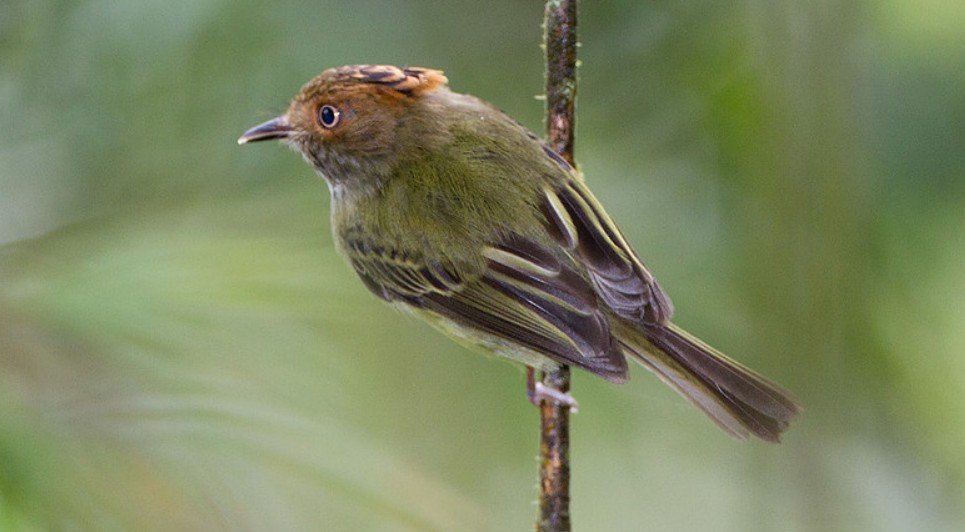
The Scale-Crested Pygmy Tyrant is a small, colorful bird native to the forests of South America. Known for its striking crest and tiny size, this bird is often a favorite among birdwatchers and researchers. Despite its small stature, it is an energetic and agile bird that inhabits the lower levels of tropical forests, particularly in the countries of Ecuador and Peru. This species is a part of the tyrant flycatcher family, and its diet consists mainly of insects, which it catches in flight or from foliage. The scale-like feathers on its crest give it a distinctive and unique appearance, making it easily recognizable among other flycatchers.
Quick Top 10 Facts about Scale-Crested Pygmy Tyrant
| SCIENTIFIC NAME | Lophotriccus pileatus |
| CLASSIFICATION | KINGDOM: Animalia PHYLUM: Chordata CLASS: Aves ORDER: Passeriformes FAMILY: Tyrannidae GENUS: Lophotriccus ORDER: Passeriformes |
| SIZE | Length: 9–11 cm (3.5–4.3 inches), Weight: 6–8 g (0.21–0.28 oz) |
| SPECIES | Found in forests of Ecuador and Peru, typically in the subtropical or tropical regions |
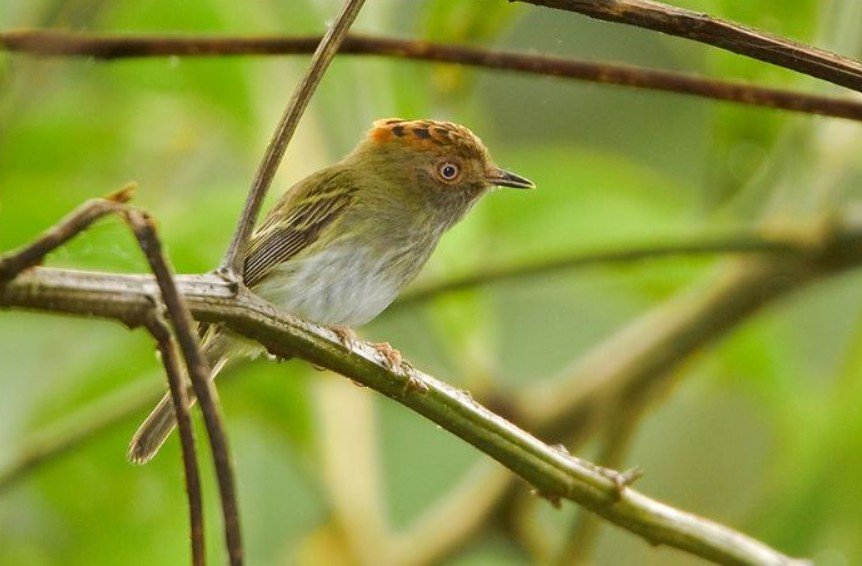
| APPEARANCE | Colorful with a distinctive scale-like crest on its head and a bright yellow-greenish plumage on the body |
| LIFE SPAN | Typically 5–7 years in the wild |
| HABITAT | Tropical and subtropical forests, primarily in the lowland and montane forests of Ecuador and Peru |
| DIET | Insects, small arthropods, and occasionally fruit or nectar from plants |
| NATURAL PREDATORS | Birds of prey, snakes, and larger mammals that may pose a threat |
| COUNTRY | Primarily found in Ecuador and Peru |
| GESTATION PERIOD | Scale-Crested Pygmy Tyrants lay eggs, and the incubation period is around 14–18 days |
| CONSERVATION STATUS | Listed as “Least Concern” by the IUCN, but habitat destruction poses a long-term threat to their population |
Amazing Facts About Scale-Crested Pygmy Tyrant
1. A Tiny Bird with a Bold Appearance
Despite its small size, the Scale-Crested Pygmy Tyrant is easily recognizable thanks to its scale-like crest and bright plumage, which stands out in its forest habitat.
2. Excellent Insect Hunter
The Scale-Crested Pygmy Tyrant is an adept hunter, catching small insects in flight or from foliage using its quick reflexes and agility.
3. Limited Geographic Range
This bird is endemic to the forests of Ecuador and Peru, primarily inhabiting lowland and montane tropical forests.
4. Males and Females Look Similar
Both males and females have a similar appearance, with the striking yellow-greenish plumage and scale-like crest that is characteristic of the species.
5. Small, But Mighty
Despite their tiny size (only 9–11 cm in length), Scale-Crested Pygmy Tyrants are agile and energetic, easily maneuvering through dense undergrowth in search of food.
6. Active Year-Round
These birds are active year-round, and they do not migrate. They are consistently found in their native forests, where they nest and forage for food.
7. Vocal and Communicative
Scale-Crested Pygmy Tyrants are known for their vocalizations, which help them communicate with mates and establish territory in their forest habitats.
8. Agile Flyers
As typical of tyrant flycatchers, they are excellent at catching flying insects and can navigate swiftly through dense forest foliage.
9. A Bright Presence in the Forest
The bright plumage of the Scale-Crested Pygmy Tyrant adds a splash of color to the otherwise green and brown hues of the rainforest, making it a standout species for birdwatchers.
10. Symbol of Biodiversity
The Scale-Crested Pygmy Tyrant serves as a reminder of the incredible biodiversity found in South American rainforests, with its specialized adaptations and unique features.
Introduction to the Scale-Crested Pygmy Tyrant Bird
Originating in South American jungles, the Scale-Crested Pygmy Tyrant (Lophotriccus pileatus) is an intriguing and rare bird species. Because of its distinctive physical characteristics, behaviour, and preferred environment, this bird has captured the interest of both ornithologists and bird lovers despite its little size. Despite its unique crest, delicate plumage, and reticent disposition, the Scale-Crested Pygmy Tyrant is nevertheless a difficult bird to see in the wild. Offering insights into one of the most mysterious species of the tyrant flycatcher family, this article explores the physical traits, behaviour, habitat, and conservation status of the bird.
1. Summary and Taxonomy
Scientific Classification and Overview
The Tyrannidae family, often known as the tyrant flycatchers, includes the Scale-Crested Pygmy Tyrant. These birds are noted for their aggressive hunting methods, are usually tiny, and eat insects. But because of its unusual look and nocturnal eating habits, the Scale-Crested Pygmy Tyrant stands out among the other members of the family.
Taxonomic Details of the Scale-Crested Pygmy Tyrant
This species, which was initially reported in the 19th century, is distinguished by its diminutive size and mysterious way of living. The species name pileatus is derived from the Latin word for “capped,” alluding to its characteristic crown of feathers, while the genus name, Lophotriccus, alludes to the bird’s conspicuous crest.
2. Physical Attributes
Size and General Appearance
With a length of around 8 to 9 cm (3 to 3.5 inches), the Scale-Crested Pygmy Tyrant is one of the smallest birds in the tyrant flycatcher family. Despite its small size, it has a few unique characteristics that aid in environmental adaptation.
Important Physical Characteristics
- Size: Measuring just 7 to 10 grammes, the Scale-Crested Pygmy Tyrant is very tiny. Because of its size, it can move quickly and nimbly, which makes it perfect for chasing insects through the forest’s thick underbrush.
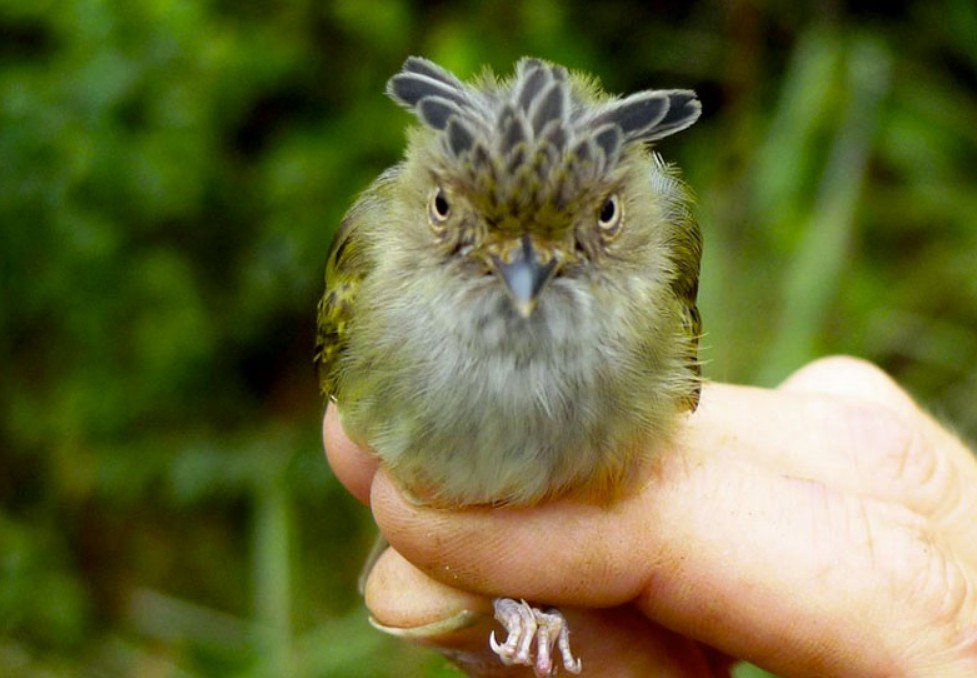
- Crest: The bird’s scaled crest, a cluster of feathers on its head that gives it a striking, almost regal look, is one of its most distinguishing characteristics. Each feather has a unique, scaled look because of its texture, and the crest is usually dark brown or grey. Depending on how the bird is feeling or how it interacts with other birds, its crest may rise or fall.
- Plumage: The Scale-Crested Pygmy Tyrant’s overall plumage is often grayish-green or olive-green, which helps it blend in with the thick canopy of the rainforest. Its concealment is enhanced by the underparts, which are usually a softer, more muted shade of grey.
- Eyes and Beak: In the low light of the forest floor, the bird’s comparatively big, dark eyes allow it to see insects well. Its slightly hooked beak is ideal for snagging tiny prey like insects and arthropods.
3. Habits of Behaviour and Feeding
Diet and Hunting Behaviour
Primarily an insectivore, the Scale-Crested Pygmy Tyrant consumes spiders and other small arthropods in addition to small insects including flies, beetles, and ants. Being an active predator, it spends a large portion of its time scuttling among the leaves and branches of its forest environment, either grabbing its food in mid-air or foraging along tree trunks, like many other members of the tyrant flycatcher family.
Feeding Practices
- Foraging: In order to find insects, the bird usually forages low to mid-canopy, remaining near the forest floor or in the understory. It tracks its next meal by flitting between perches and utilises its keen eyesight and fast reflexes to capture prey.
- Flycatching Technique: The Scale-Crested Pygmy Tyrant hunts by waiting on a perch and launching itself after passing insects. This technique is known as flycatching. It is a superb predator in its thick environment because of its agility in flight, which allows it to make abrupt directional changes and swift aerial chases.
- Camouflage and Stealth: Instead of energetically pursuing insects from their perch as some other flycatchers do, the Scale-Crested Pygmy Tyrant takes a more subdued approach, often utilising its crest to break up the contour of its body in the thick undergrowth. It can stay concealed from predators and prey because to this.
4. Distribution and Habitat
Geographical Range and Ecosystem
South American lowland rainforests, including those in Brazil, Venezuela, and Colombia, are home to the Scale-Crested Pygmy Tyrant. It flourishes in thick tropical woods where the foliage provides cover and an abundance of insects. Usually found in humid, tropical settings, these habitats provide the bird the resources it needs to live and flourish.
Preferences for Habitat
- Rainforest Canopies: This species may hunt and find cover amid the branches and vines in the middle and lower levels of the forest canopy. In addition to providing food, the thick foliage also shields the area from predators.
- Altitude Range: Although it has been seen up to 1,000 metres (3,280 feet) above sea level, the Scale-Crested Pygmy Tyrant is usually found at low altitudes. Because these conditions encourage the establishment of insect populations that the bird feeds on, it favours locations with high levels of humidity and rainfall.
- Seasonal Movements: The Scale-Crested Pygmy Tyrant, like many other birds of the rainforest, may travel periodically within its habitat in pursuit of food, although it does not migrate across great distances. The availability of insect food and rainfall patterns probably have an impact on its mobility.
5. Lifespan and Reproduction
Breeding and Parental Behaviour
Due to the Scale-Crested Pygmy Tyrant’s elusiveness and difficulty in the wild, little is known about its breeding behaviours. But like many other tyrant flycatchers, it is likely to construct a tiny, cup-shaped nest, usually on tree branches, using twigs, grass, and other plant materials.
Breeding Practices
- Nest Construction: Although specifics are not well recorded, it is believed that the female builds the nest with assistance from the male. To keep predators away, these nests are often positioned in obscure areas, either among prickly bushes or amid thick foliage.
- Clutch Size: Although this may vary, a species of this size typically has a clutch of two to three eggs.
- Parental Care: It’s expected that both parents will help incubate the eggs and feed the chicks once they hatch. Like the adults, the chicks are most likely given a diet based on insects.
Regarding longevity, it is believed that these birds have a comparatively short lifetime, which is characteristic of tiny insectivorous species. In their natural environment, snakes, birds of prey, and even bigger predators often feed on them.
6. Status of Conservation
Threats and Conservation Efforts
Although the Scale-Crested Pygmy Tyrant is not considered threatened or critically endangered, it is susceptible to environmental changes because of its small range and the loss of its forest habitat. The existence of the Scale-Crested Pygmy Tyrant is under danger due to deforestation, habitat fragmentation, and climate change, all of which are having an increasing impact on tropical rainforests, particularly in South America.
Conservation Initiatives
- Habitat Protection: Preserving the species’ rainforest habitat is a major component of conservation efforts. In order to stop more deforestation and guarantee the species’ long-term existence, national parks and reserves within its natural area are essential.
- Ecotourism Promotion: Promoting ecotourism in regions home to the Scale-Crested Pygmy Tyrant may increase public knowledge of the species and provide funding for regional conservation efforts.
Despite not being on the endangered list at the moment, the Scale-Crested Pygmy Tyrant’s population is seriously threatened by the ongoing destruction of its rainforest habitat. To make sure the species is preserved, conservationists keep an eye on it and its environment.
FAQ (Frequently Asked Questions) about Scale-Crested Pygmy Tyrant
Q: What is the Scale-Crested Pygmy Tyrant?
Ans: The Scale-Crested Pygmy Tyrant is a small, colorful bird from the tyrant flycatcher family, known for its distinctive scale-like crest and vibrant plumage.
Q: Where can I find the Scale-Crested Pygmy Tyrant?
Ans: This bird is native to the forests of Ecuador and Peru, where it inhabits lowland and montane tropical forests.
Q: What do Scale-Crested Pygmy Tyrants eat?
Ans: They primarily eat insects, small arthropods, and occasionally nectar or fruit from plants.
Q: How long do Scale-Crested Pygmy Tyrants live?
Ans: These birds typically live for 5 to 7 years in the wild.
Q: Are Scale-Crested Pygmy Tyrants endangered?
Ans: While currently listed as “Least Concern,” their population may be threatened in the future due to habitat destruction.
Q: How do Scale-Crested Pygmy Tyrants communicate?
Ans: These birds are vocal and use calls to communicate with each other, especially for mating and territorial purposes.
Q: Are there any predators of the Scale-Crested Pygmy Tyrant?
Ans: Natural predators include birds of prey, snakes, and larger mammals.
Q: Do Scale-Crested Pygmy Tyrants migrate?
Ans: No, they are non-migratory and remain in their forest habitats year-round.
Q: What makes the Scale-Crested Pygmy Tyrant unique?
Ans: Its scale-like crest and small size make it a distinctive and easily recognizable species within the tyrant flycatcher family.
Q: Can Scale-Crested Pygmy Tyrants be kept as pets?
Ans: These birds are wild species and are not typically kept as pets. They thrive best in their natural habitats, where they can maintain their role in the ecosystem.
#ScaleCrestedPygmyTyrant #TyrantFlycatchers #Birdwatching #SouthAmericanBirds #TropicalRainforestSpecies #EndemicBirds #BirdConservation #WildlifeInEcuador #ExoticBirds
Our sources and references about Scale-Crested Pygmy Tyrant
1: Wikipedia – Scale-Crested Pygmy Tyrant
2: BirdLife International – Scale-Crested Pygmy Tyrant
3: Audubon – Scale-Crested Pygmy Tyrant