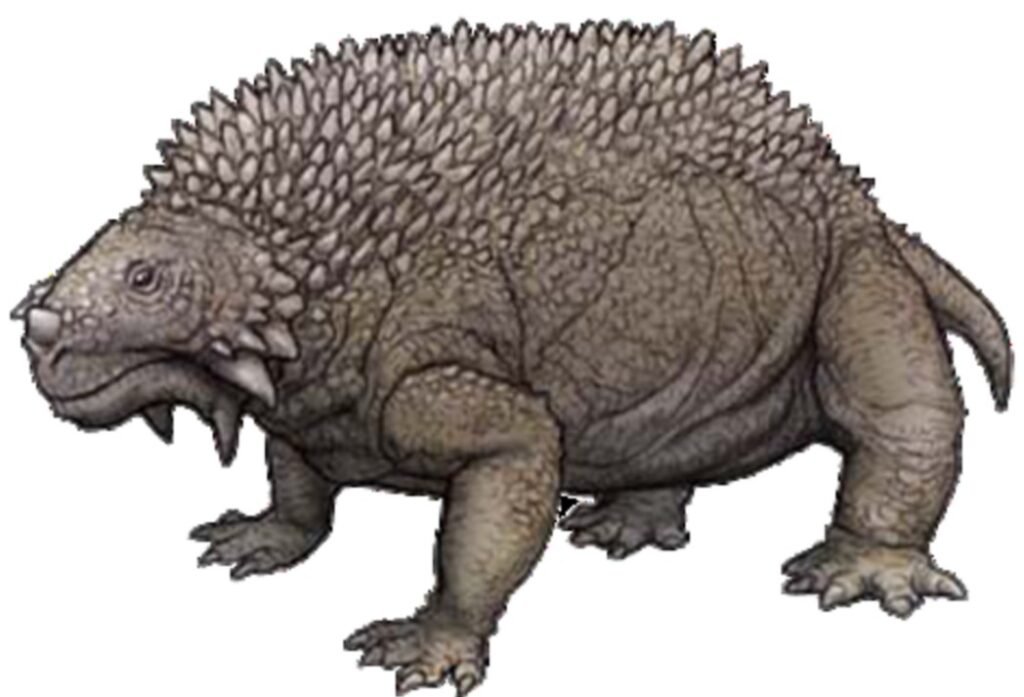
Scutosaurus was a large, herbivorous reptile that lived during the late Permian period, around 260 million years ago. Known for its heavily armored body and massive size, Scutosaurus is one of the most distinctive creatures of its time. It belongs to the family Pareiasauridae, a group of ancient reptiles that were among the earliest large herbivores on Earth. Despite its intimidating armor, Scutosaurus was not a predator, but instead fed on plants and possibly small vegetation. It was well-adapted to the harsh conditions of the Permian, and its armored body likely helped protect it from predators. Fossils of Scutosaurus have been found in regions of what is now Russia and other parts of the ancient supercontinent of Pangaea.
Quick Top 10 Facts about Scutosaurus
| SCIENTIFIC NAME | Scutosaurus |
| CLASSIFICATION | KINGDOM: Animalia PHYLUM: Chordata CLASS: Reptilia ORDER: Parareptilia FAMILY: Pareiasauridae |
| SIZE | Approximately 3 meters (10 feet) in length |
| SPECIES | Scutosaurus is a single species, with no known direct descendants. |
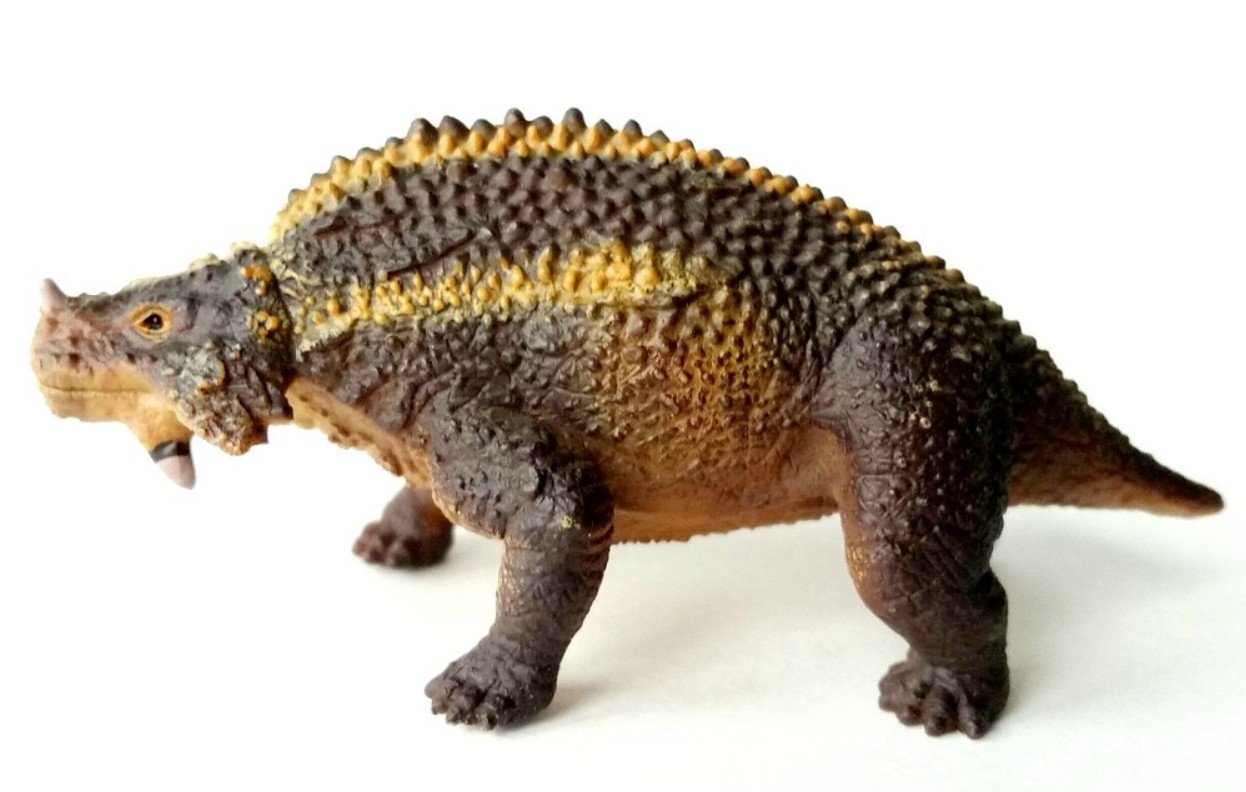
| APPEARANCE | Scutosaurus had a bulky, stocky body covered with thick armor, including large bony plates along its back and sides. It had a relatively small head with a short, blunt snout. |
| LIFE SPAN | While exact figures are unknown, Scutosaurus likely had a life span of 20–30 years based on similar reptiles of the era. |
| HABITAT | Scutosaurus lived in arid to semi-arid environments of the Permian period, particularly in areas that are now part of Russia and surrounding regions. |
| DIET | Herbivorous, feeding on plants, including ferns, cycads, and other vegetation that grew in the Permian landscapes. |
| NATURAL PREDATORS | Scutosaurus was likely preyed upon by large carnivorous reptiles, such as the gorgonopsids, although its armor provided significant protection. |
| COUNTRY | Fossils of Scutosaurus have been found in parts of what is now Russia, particularly in the region of the ancient supercontinent Pangaea. |
| GESTATION PERIOD | Exact details about Scutosaurus’ reproduction are unknown, but it is believed to have laid eggs, like most reptiles of its time. |
| CONSERVATION STATUS | Extinct. Scutosaurus went extinct by the end of the Permian period, likely due to changes in climate and ecosystems associated with the mass extinction event. |
Amazing Facts About Scutosaurus
1. Heavily Armoured
Scutosaurus had thick bony armour that covered its back and sides. This protective layer helped it resist attacks from the large predators of its time.
2. Early Herbivore
Unlike many reptiles of its era that hunted for meat, Scutosaurus fed on plants. It was one of the earliest herbivorous reptiles that helped shape the ecosystems of the Permian period.
3. Stocky and Slow
Scutosaurus had a strong and stocky body that made it move slowly on land. Its heavy armour likely helped it defend itself from predators instead of depending on speed to escape.
4. Adaptation to Harsh Environments
Scutosaurus adapted well to the dry and harsh conditions of the Permian landscape. Its body structure enabled it to survive the intense heat and lack of water in that era.
5. Large Size
Scutosaurus measured up to 3 metres in length and appeared as a sizeable reptile. It was much larger than many other herbivores that lived during the Permian period.
6. Close Relatives to Modern Tortoises
Scientists often consider Scutosaurus a distant relative of modern tortoises. Its similar body structure and protective shell-like armour show this evolutionary connection.
7. Part of the Ancient Pareiasaur Family
Scutosaurus belonged to the Pareiasaur family of reptiles. This group was among the first to evolve large body sizes and plant-based diets.
8. No Direct Descendants
Scutosaurus left behind no direct descendants. However, it played an important evolutionary role in the rise of large herbivorous reptiles.
9. Fossil Discovery
Fossils of Scutosaurus have revealed valuable details about late Permian ecosystems. They provide evidence of the creatures that lived before the great extinction event.
10. Extinction and Legacy
Scutosaurus became extinct at the end of the Permian period. Its legacy continues through studies of prehistoric reptiles and early herbivorous evolution.
Scutosaurus: The Late Permian Armoured Herbivore
During the late Permian epoch, about 260 million years ago, the extinct parareptile genus Scutosaurus thrived. Researchers recognise Scutosaurus for its distinctive armoured body and view it as one of the first reptiles to evolve defensive adaptations against predators.
This ancient herbivore belonged to the parareptiles, a group of reptiles related to both synapsids and diapsids.
Scutosaurus remains famous for its strong armour and physical features that set it apart from its peers. Below we will explain physical characteristics, habitat, diet, and ecological importance. It also discusses its evolutionary significance and explains why palaeontologists studying late Permian fauna find this reptile fascinating.
1. Scutosaurus’s Physical Attributes
Scutosaurus moved on four sturdy legs and grew between two and three metres long. Despite its massive size, its thick armour made it well protected against predators. Unlike many early reptiles, Scutosaurus relied on a natural physical defence system.
The Armoured Body of Scutosaurus
Scutosaurus had a body covered in thick osteoderms, which were bony plates embedded in its skin. These plates resembled the armour seen in modern reptiles such as armadillos and crocodiles. They protected most of the animal’s back and sides. In some places, the bone plates were so large that they resembled a shield-like covering.
Spines and Scales: Extra Protection
In addition to its armour plates, Scutosaurus developed spiny projections along its body. These spines provided an extra line of defence against predators. Such features made it harder for carnivores to bite or swallow this heavily armoured reptile.
Body Structure: Limbs and Tail
Scutosaurus had short but powerful limbs that supported its heavy frame. These limbs allowed it to walk slowly and steadily on land.
Its long, relatively stiff tail helped maintain balance and stability while moving. With armour covering its body, Scutosaurus could resist faster predators rather than outrun them.
Teeth and Head: Herbivorous Adaptations
Scutosaurus had a small head compared with its large, muscular body. Its skull was short and broad, equipped with blunt, flat teeth ideal for grinding vegetation. Unlike carnivorous reptiles with sharp teeth for tearing flesh, Scutosaurus used its dental structure to chew tough plant material. This adaptation helped it eat low-growing ferns and hardy plants that thrived in the Permian landscape.
2. Distribution and Habitat
Scutosaurus lived during the late Permian period, when the Earth’s climate and geography changed dramatically. It inhabited the Cisuralian region of what is now Russia, once part of the vast supercontinent Pangaea. The landscape featured hot deserts and coastal plains that experienced extreme temperature shifts.
Environmental Conditions of the Permian Epoch
The Permian period experienced scorching summers and comparatively cooler winters. Scutosaurus likely depended on the tropical vegetation of that era for food. It consumed plants such as seed ferns, horsetails, and other early seed-bearing flora.
The Landscape of the Cisuralian Region
The Cisuralian landscape consisted of open plains, river valleys, and rocky regions. These areas provided feeding grounds and natural hiding places from predators. The environment balanced access to vegetation and protective spaces for survival.
Adaptation to Environmental Challenges
Scutosaurus adapted to both physical threats and harsh weather conditions. It likely sought shelter under rock formations or in shaded areas to escape the intense sunlight. Its thick skin and bony plates helped it conserve moisture and endure the dry heat. These adaptations gave it an advantage over less protected reptiles in the same region.
3. Nutrition and Feeding Practices
Scutosaurus lived as a dedicated herbivore, consuming mainly tough plant material. Its well-developed jaw muscles and tooth structure indicate it fed on fibrous vegetation. The warm, humid areas of its habitat supported a variety of ferns, conifers, and seed plants
that formed the main part of its diet.
Feeding Method: Grinding and Chewing
Scutosaurus used its powerful jaws to tear and grind coarse plant matter. Its broad teeth were designed for crushing leaves, stems, and seeds into digestible pieces. These adaptations made it an efficient grazer in the dense Permian vegetation.
Feeding Behaviour: Grazing on Low-Lying Plants
As a slow-moving reptile, Scutosaurus likely spent long hours grazing close to the ground. It probably ate low-lying plants, such as ferns and shrubs, that grew near riverbanks and wetlands. Its blunt teeth and strong jaw enabled it to chew and process a large amount of food daily.
This steady feeding behaviour suited its slow metabolism and heavy build.
4. Mechanisms of Defence and Predation
The armoured body of Scutosaurus served as its primary defence mechanism against predators. Although it lacked speed, its protective plates allowed it to survive attacks from larger carnivores. Predators found it difficult to pierce its bony armour or bite through its tough exterior.
Predators of the Scutosaurus
Large predatory reptiles such as Gorgonopsids and therapsids probably hunted Scutosaurus. These fearsome carnivores dominated the Permian landscape and preyed on slower herbivores. However, the Scutosaurus’s spines and armour made it a challenging target to capture.
Behavioural Adaptations for Avoiding Predators
Scutosaurus may have used its environment to hide from predators. It could have taken shelter among rocks, in burrows, or near water sources for protection. Its heavy armour also made it difficult for predators to consume or carry it away. This combination of physical defence and cautious behaviour helped it survive longer in dangerous environments.
5. Evolutionary Importance
Scutosaurus holds an important place in the study of reptilian evolution. Its distinctive traits and evolutionary position help scientists understand how early reptiles adapted to land life. It belonged to the Parareptilia group, which included creatures that split from other reptiles early in evolution. This group also contained the ancestors of turtles and other armoured reptiles.
Evolutionary Significance of Scutosaurus
Scutosaurus represents one of the earliest steps in the evolution of armoured reptiles. Its body structure shows how reptiles began developing defensive features to survive predatory threats. Although it shares no direct link with modern armadillos or crocodiles, its heavy armour shows how early reptiles evolved protection mechanisms.
Herbivory Evolution in Reptiles
Scutosaurus also played a role in the evolution of herbivory among reptiles. Its plant-based diet marked a major shift from carnivorous feeding habits common in early reptiles. This transition highlights how certain reptile lineages adapted to new ecological roles as plant eaters.
The species demonstrates how herbivorous diets evolved to exploit available vegetation during the Permian era.
Relation to Turtles: Insights into Evolution
Some palaeontologists believe Scutosaurus may help explain the origins of turtles. Its strong bony plates resemble the early stages of shell development in turtle ancestors. Both reptiles share the Parareptilia classification, hinting at a distant evolutionary connection.
The similarities between Scutosaurus’s osteoderms and modern turtle shells offer valuable evolutionary insights.
6. Extinction and the Finding of Fossils
Scutosaurus disappeared at the end of the Permian era, during the massive extinction event about 252 million years ago.
This catastrophe wiped out a large portion of life on Earth. Researchers believe volcanic activity, climate change, and atmospheric shifts triggered this extinction. These environmental changes likely destroyed the habitats that sustained Scutosaurus and other large herbivores.
Evidence from Fossils
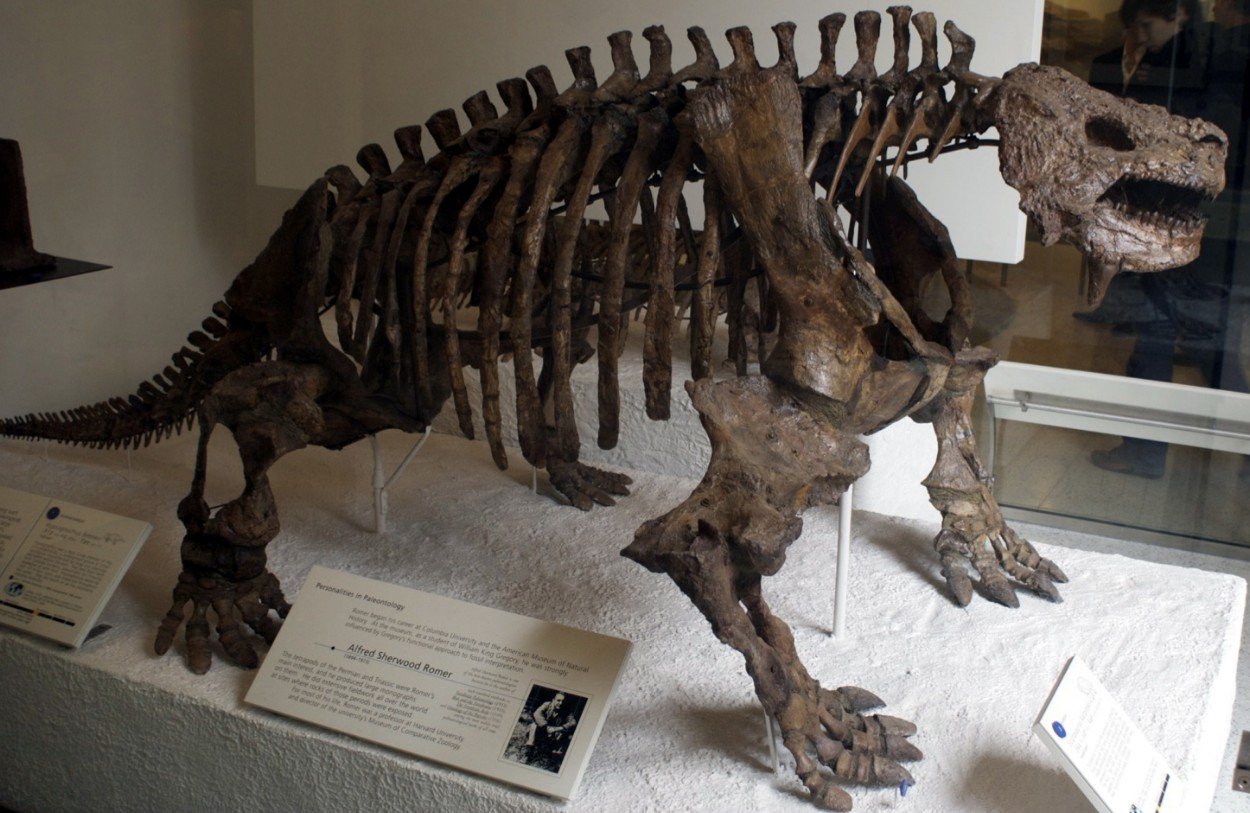
Palaeontologists have discovered Scutosaurus fossils in the Cisuralian region of Russia. Most come from the Dzhulfian Formation, where well-preserved skeletons display its characteristic armour plates. These fossils reveal details about its body structure, defensive features, and plant-eating habits. They also help scientists reconstruct the late Permian ecosystems in which Scutosaurus lived.
Rarity of Scutosaurus Fossils
Fossilised remains of Scutosaurus are rare, making each discovery scientifically valuable. When researchers find complete skeletons, they can study the animal’s posture, movement, and feeding behaviour. Each fossil provides insight into how this remarkable reptile survived in its changing environment.
FAQ (Frequently Asked Questions) about Scutosaurus
Q: What is Scutosaurus?
Ans: Scutosaurus was a large, herbivorous reptile that lived during the late Permian period.
It is best known for its heavily armoured body and stocky build.
Q: Where did Scutosaurus live?
Ans: Scutosaurus lived in what is now Russia and nearby regions during the late Permian, about 260 million years ago.
Q: What did Scutosaurus eat?
Ans: Scutosaurus was a herbivore that fed on ferns, cycads, and other plants that grew during the Permian period.
Q: How big was Scutosaurus?
Ans: Scutosaurus reached about 3 metres in length, making it one of the largest reptiles of its time.
Q: Was Scutosaurus a predator?
Ans: No, Scutosaurus was not a predator.
It was a plant-eating reptile that relied on its armour for protection.
Q: How did Scutosaurus protect itself from predators?
Ans: Scutosaurus used thick bony armour covering its back and sides to defend itself from large carnivores.
Q: How did Scutosaurus reproduce?
Ans: Scutosaurus probably reproduced by laying eggs, as most reptiles of that period did.
Q: When did Scutosaurus go extinct?
Ans: Scutosaurus went extinct at the end of the Permian period,
likely due to the mass extinction event around 252 million years ago.
Q: What is the significance of Scutosaurus?
Ans: Scutosaurus provides crucial insight into early reptile evolution and the adaptation of herbivorous species to land life.
Q: Are there any descendants of Scutosaurus?
Ans: No, Scutosaurus has no direct descendants.
However, it represents an important evolutionary stage in the development of later herbivorous reptiles such as tortoises.
#Scutosaurus #PrehistoricReptiles #PermianPeriod #HerbivorousReptiles #ArmouredReptiles #Pareiasauridae #Palaeontology
Our sources and references about Scutosaurus
1: Wikipedia – Scutosaurus
2: Britannica – Scutosaurus
3: Nature – Scutosaurus
4:
Palaeontological Society – Scutosauru