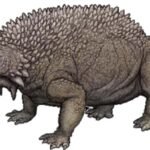
Seymouria is an extinct genus of amphibian-like reptiles that lived during the late Carboniferous and early Permian periods, approximately 290 million years ago. Seymouria was one of the first vertebrates to make the transition from an aquatic lifestyle to a more terrestrial one, an important evolutionary step in the history of life on Earth. It is known for its reptilian characteristics, such as a sturdy, fully terrestrial body, and is considered a precursor to early reptiles. Despite its amphibian roots, Seymouria was adapted to land life with strong limbs, a long tail, and a body designed for moving efficiently on land. It likely inhabited wetlands and swamps, where it fed on plants and small animals.
Quick Top 10 Facts about Seymouria
| SCIENTIFIC NAME | Seymouria baylorensis |
| CLASSIFICATION | KINGDOM: Animalia PHYLUM: Chordata CLASS: Amphibia (later evolved into Reptilia) ORDER: Seymouriamorpha FAMILY: Seymouridae |
| SIZE | Length: Up to 1.2 meters (4 feet) |
| SPECIES | Seymouria baylorensis (the most well-known species) |
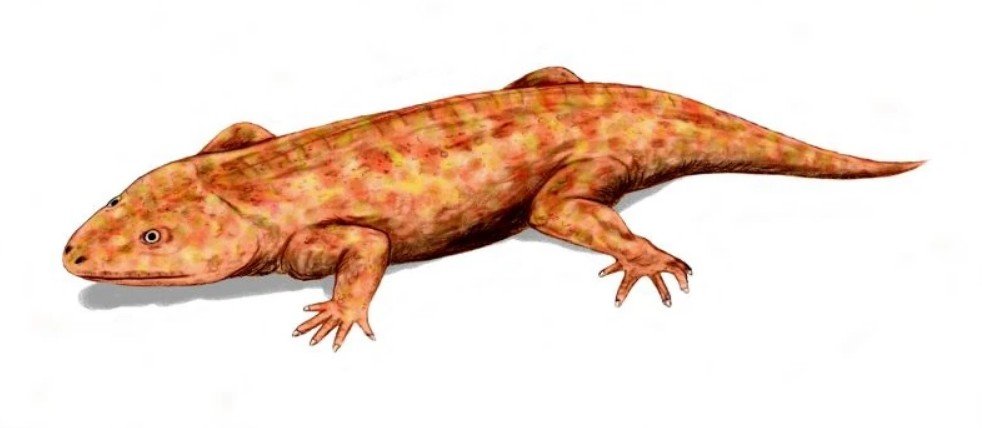
| APPEARANCE | Seymouria had a lizard-like appearance, with a long tail, robust limbs, and a head with a long, narrow snout. It had a reptilian body adapted to life on land but retained some amphibian features. |
| LIFE SPAN | Approximately 10-20 years, based on the life expectancy of similar ancient amphibians and reptiles. |
| HABITAT | Seymouria lived in swampy environments, wetlands, and possibly river floodplains, where it could find both aquatic and terrestrial food sources. |
| DIET | Omnivorous; likely fed on plants, small invertebrates, and possibly small vertebrates in its swampy environment. |
| NATURAL PREDATORS | Large predatory reptiles and early amphibians, as well as larger carnivorous species that shared its environment during the late Carboniferous period. |
| COUNTRY | Fossils of Seymouria have been found in what is now North America, particularly in the southwestern United States (Texas). |
| GESTATION PERIOD | The exact gestation period for Seymouria is unknown, but it likely laid eggs, as was typical of early reptiles and amphibians. |
| CONSERVATION STATUS | Extinct; Seymouria went extinct during the early Permian period, likely due to changing environmental conditions and competition with more evolved reptiles. |
Amazing Facts About Seymouria
1. Transition from Aquatic to Terrestrial
Seymouria stands as one of the earliest vertebrates to adapt to life on land. This marked an important stage in the evolution of amphibians and reptiles.
2. Reptilian Features
Although Seymouria retained some amphibian traits, such as laying eggs, it displayed more reptilian features. These included a sturdy body, strong limbs, and a long tail, all adapted for land life.
3. A Precursor to Early Reptiles
People often regard Seymouria as a precursor to the first true reptiles. It bridged the gap between amphibians and reptiles in the evolutionary timeline.
4. Lizard-Like Appearance
Seymouria had a body resembling that of modern lizards, with a long, narrow head and a long tail. However, its size was much larger than most modern lizards.
5. Adapted for Both Land and Water
Though primarily terrestrial, Seymouria likely spent time in water. It probably hunted for prey and sought shelter in the aquatic environments of its swampy habitat.
6. Herbivorous and Carnivorous Diet
Seymouria had an omnivorous diet, feeding on plants and smaller animals in its swampy ecosystem. This included invertebrates and possibly small vertebrates.
7. Important Evolutionary Step
Seymouria represents a vital step in vertebrate evolution. It exhibited traits that contributed to the development of fully terrestrial reptiles, such as dinosaurs and modern reptiles.
8. Lived in Wetlands
Seymouria’s habitat likely consisted of wetland areas with abundant vegetation and aquatic food sources. These resources were essential for its survival.
9. Early Evolution of Limbs
Seymouria had strong, muscular limbs that enabled efficient movement on land. This key adaptation helped it transition from an amphibious lifestyle to a fully terrestrial one.
10. Extinct in the Early Permian
Despite its unique adaptations, Seymouria went extinct in the early Permian period. Environmental changes and the rise of more advanced reptiles likely led to its extinction.
An Extinct Amphibian from the Carboniferous Era: Seymouria
Seymouria is an intriguing example of an ancient reptiliomorph that helped bridge the gap between amphibians and reptiles. This species, which lived around 300 million years ago during the late Carboniferous and early Permian eras, plays a crucial role in understanding the evolutionary shift from amphibians to early reptiles. Studying this genus offers valuable insights into the adaptive mechanisms of early land-dwelling vertebrates.
In this article, we will explore the history, physical traits, behaviour, and evolutionary significance of Seymouria. We will also discuss its place in the fossil record and its broader role in paleontological research.
1. Overview and Seymouria’s Discovery
Seymouria’s Origins and Fossil Location
Seymouria was first discovered in North America, with the majority of its fossil remains located in the southern United States. The genus was initially described in the 19th century, and the most significant fossils have been found in Texas and other regions that were once part of the supercontinent Pangaea. Seymouria is classified as a reptiliomorph, a group that includes both amphibians and reptiles.
Significance of Seymouria in Evolutionary Studies
The species’ physical characteristics highlight the transition between amphibians and reptiles, making it particularly noteworthy. This has attracted considerable interest from palaeontologists studying the evolution of land-dwelling vertebrates.
Age of Seymouria
- Seymouria lived around 300 million years ago, during the late Carboniferous to early Permian eras.
- The emergence of the first true reptiles and the development of terrestrial environments during this time make Seymouria essential for understanding vertebrate evolution.
2. Physical Attributes of Seymouria
Size and Shape of the Body
Seymouria was a small animal, growing to around 30 centimetres (12 inches) in length. It had an elongated body with four limbs and a tail, resembling an amphibious lizard. Although it likely favoured shallow aquatic environments near wetlands, rivers, and marshes, its body form enabled it to move efficiently in both water and on land.
Leg Structure: Walking and Swimming Adaptations
Seymouria could walk on land thanks to its four well-developed limbs. Its body structure, however, indicates it was also well-suited for swimming. Its robust, comparatively short limbs allowed effective land movement. These limbs were longer and more muscular than those of modern amphibians, like salamanders, reflecting a more reptilian limb structure.
Skull and Head: Features for Predation
Seymouria’s long, reptilian-looking skull featured a powerful jaw with fangs designed to catch small prey. Its conical, sharp teeth were perfect for gripping and holding onto tiny animals. The large eye sockets allowed it to see well enough to evade predators and detect potential food in both terrestrial and aquatic environments. The robust structure of its skull suggests a powerful bite, aiding survival in a competitive ecosystem.
Tail Function: Balance and Swimming
With its length and potential flattening, Seymouria likely used its tail for swimming or maintaining balance while walking on land.
Skin Adaptations for Survival
Seymouria’s skin was probably covered in a keratinised coating, typical of early reptiles. This adaptation helped retain moisture, making it better equipped to survive in arid, terrestrial environments compared to its amphibian relatives.
3. Habitat and Way of Life
Habitat: Wetlands and Marshes
During the late Carboniferous and early Permian periods, Seymouria likely lived in a variety of habitats, mostly marshes, rivers, and shallow lakes. These areas featured abundant plant life and a healthy environment that developed during these times.
Terrestrial and Aquatic Lifestyle: Adaptability to Different Environments
Seymouria was likely semi-aquatic, spending time both on land and in water. It probably bred in its aquatic environments but also ventured onto land to hunt and avoid predators. Its amphibious lifestyle allowed it to access both terrestrial and aquatic prey, including insects, small vertebrates, tiny fish, and aquatic invertebrates. Seymouria may have used its aquatic habitat for food and shelter while also hunting on land.
Diet and Nutrition: What Seymouria Ate
Seymouria likely fed on small fish or amphibians and invertebrates such as insects. It was an active predator, hunting in both terrestrial and aquatic habitats. Its sharp, conical teeth suggest it hunted smaller creatures that lived near the water’s edge.
4. Evolutionary Importance of Seymouria
Seymouria as a Transitional Species
Seymouria is a crucial transitional species in evolutionary history, connecting early amphibians and reptiles. This makes it essential in the study of vertebrate evolution, particularly the shift from aquatic to terrestrial life.
Seymouria’s Role in the Evolution of Reptiles
Seymouria belongs to the reptiliomorph group of amphibians, sharing several traits with reptiles. Although it was not a true reptile, it exhibited several features more developed than those of typical amphibians. Its reptilian skull and limb structure suggest it was on the path to becoming a true reptile.
The Evolutionary Shift: From Amphibians to Reptiles
With its sturdy bones, reptilian head, and ability to adapt to land, Seymouria seems crucial to the development of early reptiles. More advanced reptiles, which would dominate terrestrial ecosystems during the Permian period, emerged from this early form of terrestrial animal. Seymouria’s ability to move on land and live in water places it at a key evolutionary juncture between fully terrestrial reptiles, such as early dinosaurs, and fully aquatic amphibians like ichthyosaurs.
Adaptations to the Environment: Survival in Changing Conditions
Seymouria’s many adaptations enabled it to thrive in semi-aquatic habitats. It would have been an effective predator, surviving the transition from the Carboniferous to the Permian period by living in both terrestrial and aquatic environments. As a reptiliomorph, Seymouria played an essential role in the evolution from amphibians to reptiles, a milestone in vertebrate history.
5. Fossil Record and Extinction
The Extinction of Seymouria
Seymouria went extinct around 250 million years ago at the end of the Permian period. This extinction was likely due to global environmental and climate changes. The Permian-Triassic extinction event, which wiped out several species worldwide, including Seymouria, played a key role in this.
Fossil Evidence: Insights into Seymouria’s Life
Seymouria fossils primarily appear in limestone deposits and sedimentary rock formations from areas that were once swampy and marshy. These fossils offer valuable information on Seymouria’s morphology and lifestyle. They reveal that Seymouria was not only an integral part of its ecosystem but also made a lasting impression on the fossil record, owing to its unique features.
FAQ (Frequently Asked Questions) about Seymouria
Q: What is Seymouria?
Ans: Seymouria is an extinct genus of amphibian-like reptiles that lived during the late Carboniferous and early Permian periods. It is known for being a transitional species between amphibians and reptiles.
Q: Where were Seymouria fossils found?
Ans: Fossils of Seymouria have been discovered in North America, particularly in the southwestern United States, including Texas.
Q: What did Seymouria eat?
Ans: Seymouria was omnivorous, feeding on plants, small invertebrates, and possibly small vertebrates in its swampy environment.
Q: How big was Seymouria?
Ans: Seymouria grew up to 1.2 metres (4 feet) in length, with a lizard-like body and a long tail.
Q: Was Seymouria an amphibian or a reptile?
Ans: Seymouria was an amphibian-like reptile, possessing both amphibian characteristics, such as laying eggs, and reptilian traits, such as a sturdy body and adapted limbs for land movement.
Q: How long did Seymouria live?
Ans: Seymouria likely lived for about 10 to 20 years, similar to other early amphibian-like reptiles.
Q: Did Seymouria live in water?
Ans: Seymouria likely spent time in wetland environments but was primarily a terrestrial animal adapted for life on land with amphibian origins.
Q: Was Seymouria a fast animal?
Ans: Seymouria was relatively slow, but its strong limbs allowed it to move effectively on land, especially when compared to other amphibians of its time.
Q: Is Seymouria extinct?
Ans: Yes, Seymouria went extinct during the early Permian period, likely due to environmental changes and competition from more advanced reptiles.
Q: What role did Seymouria play in evolution?
Ans: Seymouria is an important evolutionary species, representing a bridge between amphibians and reptiles. It showcased early adaptations that helped the evolution of fully terrestrial reptiles.