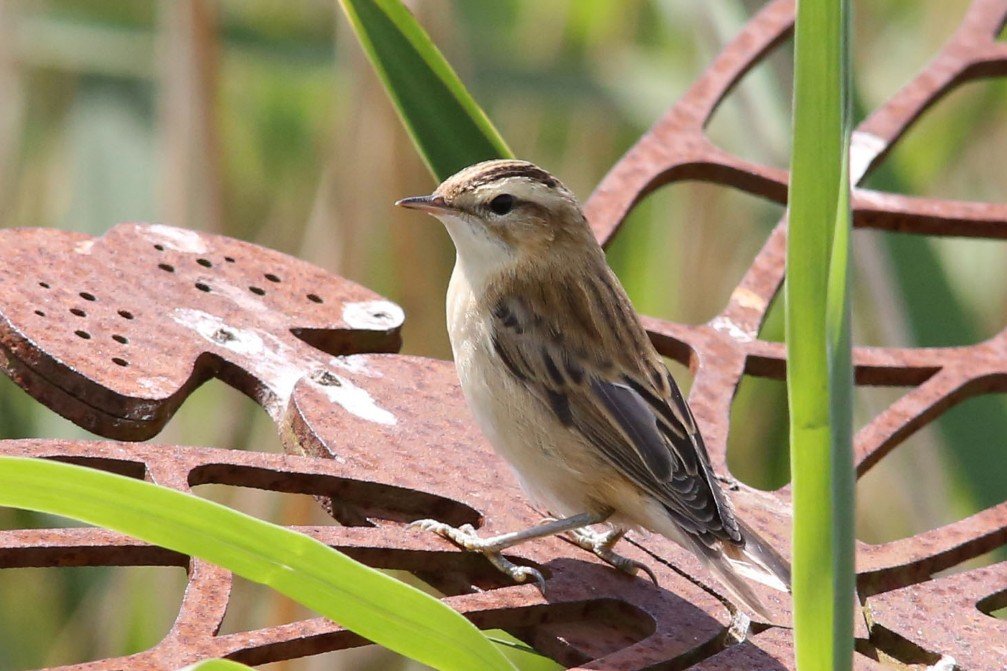
The Sedge Warbler (Acrocephalus schoenobaenus) is a small migratory bird belonging to the warbler family, widely distributed across Europe and parts of Asia. Known for its energetic and musical song, this bird is often found in reed beds, wetlands, and marshy areas, where it feeds on insects and other invertebrates. The Sedge Warbler is a strong migrant, traveling long distances to sub-Saharan Africa during the winter months. Despite its wide range, the species is facing threats from habitat loss due to drainage of wetlands and climate change.
Quick Top 10 Facts about Sedge Warbler
| SCIENTIFIC NAME | Acrocephalus schoenobaenus |
| CLASSIFICATION | KINGDOM: Animalia PHYLUM: Chordata CLASS: Aves ORDER: Passeriformes FAMILY: Sylviidae |
| SIZE | Length: 12–13 cm (4.7–5.1 inches); Wingspan: 18–22 cm (7–8.7 inches); Weight: 10–13 grams |
| SPECIES | The Sedge Warbler is a migratory species found in reed beds and marshlands across Europe, Asia, and parts of Africa. |
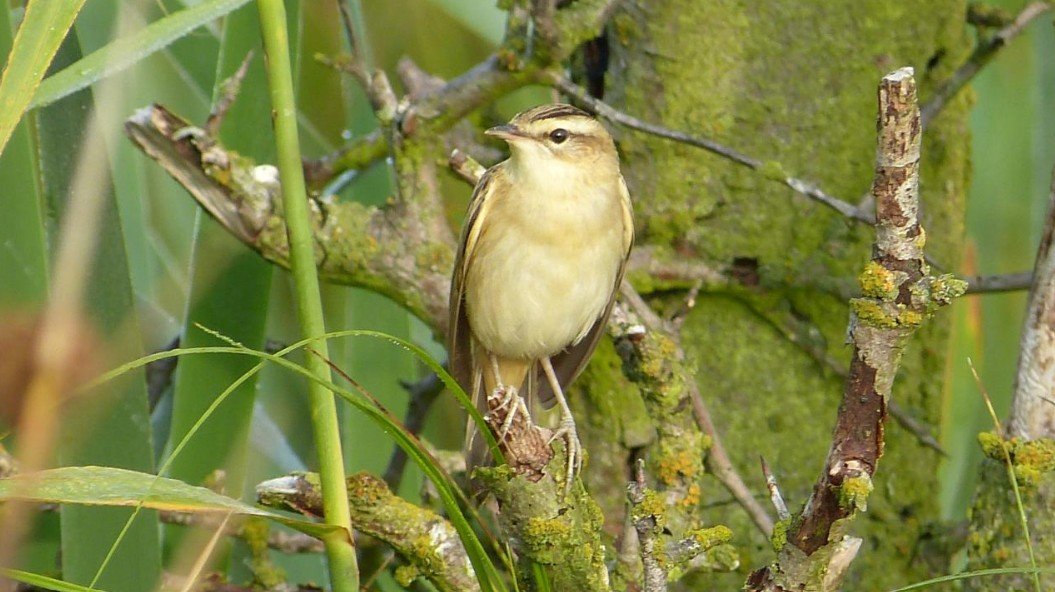
| APPEARANCE | Small, streaked brown bird with a white belly, pale eyebrow, and a sharp, pointed beak. The Sedge Warbler’s plumage helps it blend into reed beds and other marshy habitats. |
| LIFE SPAN | Typically 2–3 years, though some individuals can live longer, especially in areas with fewer predators. |
| HABITAT | Reed beds, wetlands, and marshy areas in Europe and Asia, with migratory patterns extending to sub-Saharan Africa during winter. |
| DIET | Insects, spiders, and other invertebrates found in marshy environments, including larvae and small aquatic creatures. |
| NATURAL PREDATORS | Birds of prey, including kestrels and sparrowhawks, as well as mammals such as stoats and weasels. |
| COUNTRY | Europe, Asia, and sub-Saharan Africa (during migration) |
| GESTATION PERIOD | The Sedge Warbler lays eggs that hatch in 10–14 days, with the female typically laying 4–6 eggs per clutch. |
| CONSERVATION STATUS | Least Concern (IUCN). However, the species is still affected by habitat loss, wetland drainage, and climate change, which pose ongoing risks to its population. |
Amazing Facts About Sedge Warbler
1. Expert Songster
The Sedge Warbler is known for its energetic, varied, and complex song, which is used by males to establish territory and attract mates.
2. Migratory Master
This species is highly migratory, traveling from Europe and Asia to sub-Saharan Africa to escape the cold winters.
3. Camouflage in Reed Beds
Its streaked brown and tan plumage provides excellent camouflage, allowing the Sedge Warbler to blend into its reed bed habitat and avoid predators.
4. Master of Insect Hunting
The Sedge Warbler is an expert at catching insects, spiders, and larvae in marshy environments, which make up most of its diet.
5. Rapid Reproduction
The Sedge Warbler can breed as early as its first year of life, often producing 2–3 broods per breeding season to increase the chances of survival for its young.
6. Long-Distance Migration
Each year, Sedge Warblers migrate thousands of kilometers, using the stars and Earth’s magnetic field to navigate accurately.
7. Vocal Communication
Males use their distinctive song not only to attract mates but also to defend their territory from rival males.
8. Aiding Wetland Ecosystems
By controlling insect populations, the Sedge Warbler plays an important role in maintaining the balance of its wetland ecosystem.
9. Sensitive to Climate Change
Like many migratory birds, the Sedge Warbler is vulnerable to the effects of climate change, which can affect its migratory patterns and food sources.
10. Increasing Population in Certain Areas
While the Sedge Warbler is facing some population declines due to habitat loss, it remains relatively stable in some parts of its range, thanks to conservation efforts.
An Intriguing Wetland Songbird – Sedge Warbler Identification & Wetland Bird Facts
A tiny, energetic songbird, the Sedge Warbler (Acrocephalus schoenobaenus) is often found in wetland settings across Asia and Europe. This bird is well-known for its lively disposition and unique singing, making it a fascinating topic for both ornithologists and birdwatchers. The Sedge Warbler is a hardy bird that can survive in a range of habitats despite its little size. In order to shed light on this amazing bird species, below are the details for Sedge Warbler’s physical traits, behaviour, habitat, food, and conservation status.
1. The Sedge Warbler’s Physical Features – Sedge Warbler Size, Appearance & Plumage Details
The Acrocephalidae family includes the little passerine bird known as the Sedge Warbler. Its aggressive and lively presence, particularly while vocalising, makes it clearly apparent despite its small size.
Dimensions & Size – Sedge Warbler Length, Wingspan & Weight
- Length: The Sedge Warbler is considered a little bird in its family, with a length of 12 to 14 cm (4.7 to 5.5 inches).
- Wingspan: Like other warblers of its size, it has a wingspan of 19 to 22 cm (7.5 to 8.7 inches).
- Weight: Usually weighing between 10 and 15 grammes (0.35 and 0.53 ounces), the bird is nimble and light, making it ideal for its active lifestyle.
Colour and Plumage – Warbler Plumage Pattern & Field Marks
In its native environment of tall grasses and reed beds, the Sedge Warbler’s brownish, streaked, and somewhat rufous plumage effectively blends in with its surroundings.
- Upperparts – Brown Streaked Warbler Features: It has a brown back with little greenish flecks. While the tail is often a shade darker and has rufous margins, the wings are likewise brown with darker streaks.
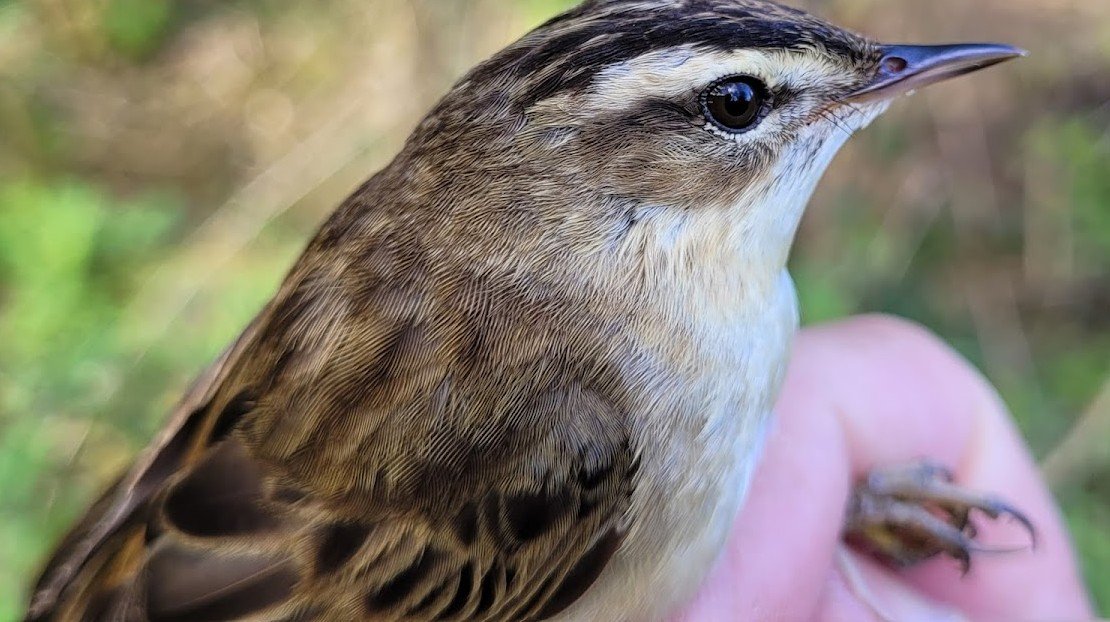
- Underparts – Buff and White Warbler Underparts: In contrast to the darker top portions, the underparts are light and have a buffy or white tone. The supercilium, or eyebrow line, which runs from the beak to the rear of the eye, is equally bright in colour.
- Face and Beak – Warbler Facial Markings & Insectivorous Beak: The Sedge Warbler seems “masked” due to a noticeable black line that passes across the eye on its face. Its slender, somewhat pointed beak makes it perfect for capturing insects and other small invertebrates.
2. Habitat and Distribution – Sedge Warbler Range, Wetland Habitat & Migration
The migratory Sedge Warbler breeds mostly in wetland environments including reed beds, marshes, and sedgy grasslands throughout Europe and portions of Asia. The temperate and boreal areas with an abundance of reed-rich environments are where these birds are most often found.
Grounds for Breeding – European Wetlands & Breeding Sites
From the Iberian Peninsula to the Russian Ural Mountains, the Sedge Warbler is widespread throughout spring and summer over most of Europe. They like areas close to water, such lakeshores, riverbanks, and damp meadows, where tall grasses and reeds provide plenty of food and cover.
The warbler may build its nest near to the ground and out of sight of predators in the breeding environment, which usually comprises of thick vegetation including bulrushes, tall grasses, and reed beds.
Migration – Sedge Warbler Migration Route & Africa Wintering Grounds
Between its breeding grounds in Europe and its wintering habitats in sub-Saharan Africa, the Sedge Warbler travels hundreds of km. These birds travel a trans-Saharan path during migration, crossing the Mediterranean and then Central Africa before arriving at their destination.
They usually migrate southward from late summer to early fall, returning to Europe in the spring, usually in late April or early May.
3. Social Structure and Behaviour – Sedge Warbler Behaviour, Song & Feeding Habits
An vigorous and vivacious bird, the Sedge Warbler is renowned for its agility and audacious actions. It has behaviours that are intriguing to see and is a very territorial species, especially during the mating season.
Song and Vocalisation – Sedge Warbler Song Patterns & Bird Calls
The Sedge Warbler’s loud, diverse, and melodic singing is one of its most remarkable characteristics. A complex and fast-paced song with a variety of trills, chattering notes, and whistling noises is produced by the male Sedge Warbler. Males employ this song to mark their territory and entice potential mates.
Among European warblers, the Sedge Warbler is said to have one of the most complex and diverse songs. It is especially unique because, in addition to its usual melodic phrases, it often includes imitations of other bird species.
Males often sing when sitting on reeds or other plants, and the singing is typically accompanied by the bird’s vigorous motions. The fact that they often perform at dawn and dusk adds to the bird’s exuberance.
Feeding Patterns – Insect Diet of Sedge Warblers & Wetland Foraging
As an insectivore, the Sedge Warbler mostly consumes tiny insects, arachnids, and other invertebrates that it may locate in the thick underbrush of its wetland environment.
These birds forage on insects such as beetles, grasshoppers, flies, and moths in the underbrush of reeds and grasses during the mating season. They could also search for aquatic invertebrates by foraging near the water’s edge.
The Sedge Warbler’s agility and capacity for both on-land and aerial hunting are shown by its ability to capture tiny flying insects while in flight.
Breeding Practices – Sedge Warbler Nesting Behaviour & Reproduction
A loud and frequent song is used by the male Seelyham Warbler to indicate and defend a territory during the mating season. When a female and a male are interested, they court for a short time before the female chooses a nesting location.
In thick foliage, generally close to the base of a reed or grass stem, the female constructs a tiny, cup-shaped nest. The nest is well-hidden to keep predators away and is made of soft materials like reeds and grasses.
A clutch of four to six eggs is laid by the female after mating, and they are incubated for twelve to thirteen days. The chicks are altricial, or helpless at birth, and depend on the mother for sustenance and safety. The chicks, who are fed a diet of insects until they are old enough to fledge and leave the nest, are fed by both parents.
4. Status of Conservation – Sedge Warbler Conservation Status & Threats
Because of its wide range and substantial population, the Sedge Warbler is now classified as a species of Least Concern on the International Union for Conservation of Nature’s (IUCN) Red List. Threats to the species do exist, however, especially in relation to habitat loss and climate change.
Loss of Habitat – Wetland Destruction & Threats to Sedge Warblers
Due to drainage, urbanisation, and agriculture, wetland habitats—which are essential to the Sedge Warbler’s survival—have been rapidly disappearing. A decrease in appropriate breeding and foraging locations may result from the degradation of these ecosystems.
This species’ access to food and refuge is threatened by the spread of fascinating plant species and the draining of wetlands for agricultural purposes.
Changes in Climate – Climate Change Effects on Wetland Birds
Climate change may have long-term effects on wetland ecosystems, especially if it results in altered seasonal patterns and more frequent floods. Changes in rainfall patterns may cause nest flooding and plant loss, while warmer temperatures may affect the availability of food supplies.
Due to their migratory nature, Sedge Warblers are especially susceptible to the effects of climate change, which may cause disruptions to their breeding and migration patterns.
Conservation Initiatives – Wetland Restoration & Bird Protection Efforts
Wetland habitat protection is the main focus of efforts to save the Sedge Warbler. This involves rehabilitating damaged wetlands, establishing new wetland regions, and safeguarding already-existing wetlands.
To guarantee the species’ future existence, population monitoring and study on the consequences of habitat damage and climate change are crucial.
FAQ (Frequently Asked Questions) about Sedge Warbler
Q: What is a Sedge Warbler?
Ans: The Sedge Warbler is a small migratory bird from the warbler family, known for its energetic song and ability to live in reed beds and wetlands.
Q: How long do Sedge Warblers live?
Ans: Sedge Warblers typically live 2–3 years, though some individuals may live longer in areas with fewer predators.
Q: What do Sedge Warblers eat?
Ans: Sedge Warblers are insectivores, feeding on a variety of insects, spiders, and small invertebrates found in marshy habitats.
Q: Where are Sedge Warblers found?
Ans: Sedge Warblers are found across Europe and Asia during the breeding season and migrate to sub-Saharan Africa for the winter.
Q: Are Sedge Warblers endangered?
Ans: No, the Sedge Warbler is classified as Least Concern by the IUCN. However, habitat loss and climate change remain ongoing threats.
Q: How do Sedge Warblers communicate?
Ans: Males use their distinctive songs to communicate with potential mates and to defend their territory from rival males.
Q: How far do Sedge Warblers migrate?
Ans: Sedge Warblers migrate thousands of kilometers between their breeding grounds in Europe and Asia and their wintering grounds in sub-Saharan Africa.
Q: What is the breeding behavior of Sedge Warblers?
Ans: Sedge Warblers breed as early as their first year, often producing 2–3 broods during the breeding season to increase the survival rate of their young.
Q: What threats do Sedge Warblers face?
Ans: The primary threats to Sedge Warblers include habitat loss due to wetland drainage, climate change, and the destruction of their breeding grounds.
Q: How does the Sedge Warbler help the ecosystem?
Ans: The Sedge Warbler plays a role in controlling insect populations, helping to maintain the balance of its wetland ecosystem.
#SedgeWarbler #MigratoryBirds #WetlandBirds #Warblers #Birdwatching #Songbirds #Conservation #BirdMigration #Wildlife
Our sources and references about Sedge Warbler
1: Wikipedia – Sedge Warbler
2: BTO – Sedge Warbler
3: RSPB – Sedge Warbler
4: Britannica – Sedge Warbler