Quick Top 10 Facts about Shoebill Stork
The Shoebill Stork is a large, prehistoric-looking bird found in the swamps and wetlands of central tropical Africa. It is known for its massive, shoe-shaped bill and its ability to catch and eat large prey, including fish and amphibians.
| SCIENTIFIC NAME | Balaeniceps rex |
| CLASSIFICATION | KINGDOM: Animalia PHYLUM: Chordata CLASS: Aves ORDER: Pelecaniformes FAMILY: Balaenicipitidae GENUS: Balaeniceps SPECIES: B. rex |
| SIZE | Height: 3.5–5 feet (1.1–1.5 meters); Wingspan: up to 8 feet (2.4 meters) |
| HABITAT | Freshwater swamps and wetlands in tropical East Africa, particularly in South Sudan, Uganda, and Zambia |
| DIET | Carnivorous; primarily feeds on fish, but also eats amphibians, reptiles, and small mammals |
| SPECIES | Shoebill Stork, a large bird noted for its massive, shoe-shaped bill |
| COUNTRY | Native to parts of East Africa |
| GESTATION PERIOD | Incubation of eggs lasts about 30 days; chicks fledge at around 95–105 days |
| LIFE SPAN | Up to 35 years in the wild |
| CONSERVATION STATUS | Vulnerable; threatened by habitat destruction and human disturbance |
Amazing Facts About Shoebill Storks
1. Shoebill Storks have an enormous bill
Their distinctive, shoe-shaped bill is perfectly adapted for catching and holding slippery prey like fish.
2. They are incredibly patient hunters
Shoebills can stand motionless for hours, waiting for the perfect moment to strike their prey.
3. They are not true storks
Despite their common name, Shoebill Storks are more closely related to pelicans than to true storks.
4. Their call sounds like a machine gun
During courtship or nest defense, Shoebills produce loud bill-clattering sounds that resemble machine gun fire.
5. Solitary by nature
Shoebills are usually solitary birds, preferring to hunt and live alone except during the breeding season.
6. Expert fish hunters
They primarily hunt lungfish, tilapia, catfish, and even young crocodiles.
7. They have a prehistoric appearance
With their large size, slow movements, and massive beaks, Shoebills look remarkably dinosaur-like.
8. Vulnerable species
Habitat loss and disturbances from humans are major threats to their survival in the wild.
9. They are revered in some cultures
In parts of East Africa, Shoebills are considered sacred or symbols of good luck.
10. They require vast wetland habitats
Shoebills depend on large, undisturbed swamps for nesting and hunting, making conservation of wetlands crucial for their survival.
The Shoebill Stork: Africa’s Magnificent and Mysterious Bird
The Shoebill Stork (Balaeniceps rex) is one of the world’s most amazing and intriguing bird species. Often regarded as one of the most frightening birds, the shoebill stork is renowned for its distinctive and ancient appearance. Ornithologists, birdwatchers, and nature lovers favour this bird because of its enormous, shoe-shaped beak, towering appearance, and rudimentary behaviour. This extensive guide will cover everything you need to know about the shoebill stork, including its physical traits, habitat, behaviour, nutrition, conservation status, and much more.
1. The Shoebill Stork’s Physical Features
The shoebill stork stands out from other bird species due to a variety of distinctive characteristics. One of the main features contributing to its attraction is its appearance, particularly the massive, shoe-like bill.
Dimensions and Form
Shoebill storks are huge birds, with a height ranging from 4.5 to 5.5 feet (1.4 to 1.7 metres). Their intimidating appearance is enhanced by their wingspan, which can reach up to 8 feet (2.4 metres). In their marshy surroundings, they are formidable predators due to their strong bodies and tall, muscular legs.
Head and Bill
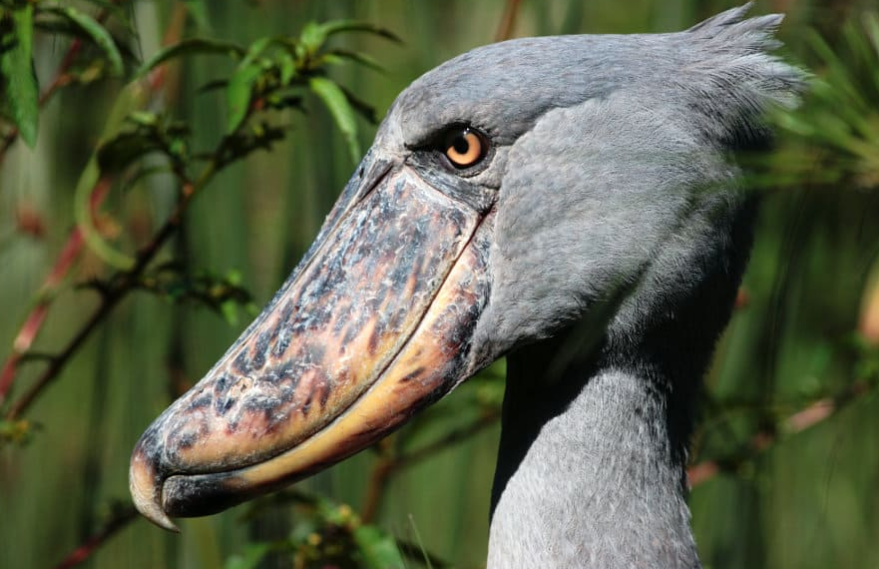
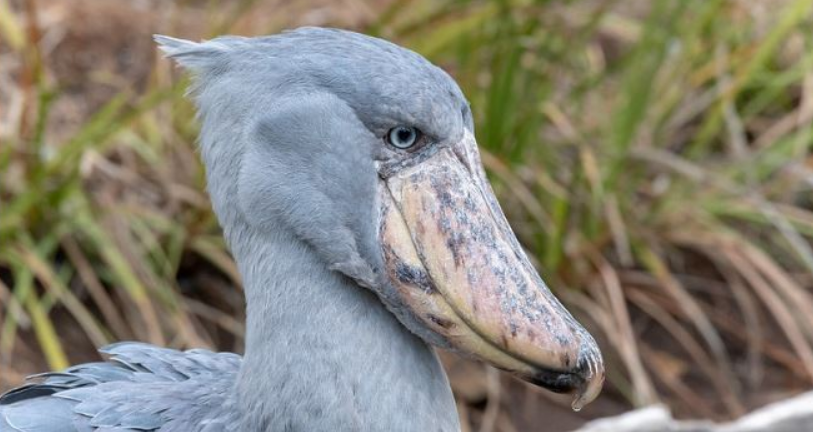
The shoebill stork’s name comes from its enormous bill, which is its most distinguishing feature and resembles a shoe or clog. At its base, the bill can measure up to 9.4 inches (24 cm) in length and about 5.5 inches (14 cm) in width. This large, heavy bill is not just ornamental; it is a vital tool for catching prey and cutting through the marshes’ hardy vegetation. The shape of the shoebill’s bill helps it capture and hold onto fish, amphibians, and other prey.
The top of the shoebill’s bill has a noticeable ridge, and its head is large. Its big yellow eyes give it a fierce, even menacing appearance. In the murky waters of its habitat, these eyes help the bird see its prey from a distance.
The Plumage and Feathers
The greyish-blue feathers covering shoebill storks give them an ancient look. They have coarse, stiff feathers, especially around the neck. The bird’s feathers are less neat than those of other storks, and they often appear unkempt, adding to its mysterious appearance. Although they prefer to wander and wade through marshes, shoebill storks can still fly despite their size.
2. Range and Habitat
Shoebill storks inhabit the wetlands, marshes, and tropical swamps of central tropical Africa. They are most commonly found in Ethiopia, Uganda, South Sudan, Kenya, and the southeast of Sudan. They thrive in densely vegetated, shallow, marshy areas like shallow lakes, reed beds, and papyrus swamps.
Preferred Wetlands and Slow-moving Waterways
These storks prefer wetlands with slow-moving waterways and abundant aquatic life, as they provide a consistent food source. Shoebill storks are solitary birds, rarely seen in large groups. They are often spotted alone or in pairs. Typically, they live in hard-to-reach areas, such as flooded forests or deep marshes, where they can remain relatively hidden from both humans and predators.
3. Ecology and Behaviour
The shoebill stork is well known for being a solitary and resolute bird. It is renowned for its focused, intense behaviour and does not socialise as much as some other stork species. Their survival in the wild depends on their patience, stealth, and keen predatory instincts, which are reflected in much of their behaviour.
Hunting and Nutrition
Shoebill storks are carnivorous birds and excellent hunters. They primarily eat fish, amphibians, reptiles, and even small mammals. They especially favour large fish like catfish, tilapia, and lungfish. Their enormous bills are perfectly suited for catching and holding onto their prey.
Shoebills often stand still for long periods, waiting for fish to approach. They strike swiftly, propelling their bills forward to accurately capture or stab their prey. Their ability to wait patiently and strike precisely makes them excellent hunters in their environment.
In addition to fish, shoebills often eat small crocodiles, frogs, and even newborn turtles. Their ability to hunt reptiles and amphibians gives their diet more flexibility, allowing them to thrive in various wetland habitats.
Nesting and Breeding
Shoebill storks form monogamous pairs during the mating season and usually establish lasting bonds with a single mate. They typically breed during the rainy season when food is plentiful and water levels are ideal for nesting.
In the dense vegetation of the marshes, shoebills build large nests from wood, grass, and reeds. These nests are often located near bodies of water to ensure easy access to food. The female typically lays one or two eggs, and both parents participate in nest building.
Both parents take turns incubating the eggs for about 30 days after laying. Once the eggs hatch, both parents feed the chicks regurgitated fish. It can take up to three months for the chicks to reach flight age as they develop slowly. During this time, they rely on their parents’ protection and care.
4. Threats and the Status of Conservation
The shoebill stork is currently classified as vulnerable on the International Union for Conservation of Nature’s (IUCN) Red List due to several factors threatening its survival in the wild. Some of these threats include:
Habitat Loss
Commercial development, agricultural expansion, and human settlements have drained or damaged much of the Shoebill’s marsh habitat. Wetland environments are essential for their survival as they provide both food and nesting sites.
Pollution
Water pollution from industrial activities, chemical waste, and agricultural runoff poses a significant threat to the health of the shoebill’s habitat. Polluted waterways can disrupt the delicate ecosystem and affect prey availability.
Human Disturbance and Poaching
Although shoebill storks are not typically targeted by poaching, human disturbances—particularly from hunting, fishing, and tourism—can harm their populations. These birds are highly sensitive to disturbances, which may cause them to abandon their nests and reduce their chances of successful reproduction.
Conservation efforts are actively protecting the shoebill stork and its habitat. Numerous wildlife organisations are conducting studies to better understand the birds’ ecology and population dynamics while working on habitat restoration initiatives. The species’ long-term survival also depends on educating local populations about the importance of preserving wetlands and minimising human disturbance in these areas.
5. Interest and Cultural Importance
The shoebill stork has intrigued photographers, birdwatchers, and the general public alike. Many are fascinated by its peculiar, ancient appearance and solitary behaviour. With its focused gaze and unique hunting tactics, the bird has earned the nickname “the King of the Swamp”.
Symbol of Mystery and Power
The shoebill is a symbol of mystery and power in various African cultures. Its intimidating appearance and ability to survive in harsh marsh environments have made it a symbol of tenacity. Although locals rarely encounter the bird in the wild due to its elusiveness, some believe it possesses supernatural powers in certain regions.

FAQ (Frequently Asked Questions) about Shoebill Stork
Q: What is a Shoebill Stork?
Ans: The Shoebill Stork (Balaeniceps rex) is a large, prehistoric-looking bird known for its massive, shoe-shaped bill. Despite its name, it is not a true stork but is more closely related to pelicans and herons. Shoebills are solitary birds that inhabit swamps and wetlands in tropical East Africa.
Q: Where does the Shoebill Stork live?
Ans: Shoebill Storks are primarily found in central tropical Africa, particularly in countries like South Sudan, Uganda, and Zambia. They prefer freshwater swamps, marshes, and wetlands rich in dense vegetation where they can hunt for fish and amphibians.
Q: What does the Shoebill Stork eat?
Ans: Shoebill Storks are carnivorous and primarily feed on fish such as lungfish, tilapia, and catfish. They are also known to eat amphibians, reptiles, and occasionally small mammals and birds. They hunt by standing motionless and striking swiftly when prey comes close.
Q: How big does a Shoebill Stork get?
Ans: Shoebill Storks are large birds, standing about 3.5 to 5 feet (1.1 to 1.5 metres) tall with a wingspan of up to 8 feet (2.4 metres). They typically weigh between 11 and 15 pounds (5 to 7 kilograms), making them one of the heavier bird species.
Q: Are Shoebill Storks dangerous?
Ans: Shoebill Storks are not considered dangerous to humans. They are shy and prefer to avoid human contact. However, they can display aggressive behaviour when defending their territory or young from perceived threats.
Q: How does a Shoebill Stork behave?
Ans: Shoebills are solitary and territorial birds. They are known for their slow, deliberate movements and their patience while hunting. Their behaviour is often described as statuesque, as they can remain perfectly still for long periods while stalking prey.
Q: What does the Shoebill Stork look like?
Ans: The Shoebill Stork has a greyish-blue plumage, long legs, and a massive, shoe-shaped bill with a sharp hook at the end. Their striking appearance, with a large head and piercing eyes, gives them a prehistoric look that fascinates bird enthusiasts worldwide.
Q: How long do Shoebill Storks live?
Ans: Shoebill Storks can live up to 35 years in the wild and even longer in captivity. Their longevity depends on factors such as habitat quality, food availability, and protection from threats like habitat destruction and human interference.
Q: Can you keep a Shoebill Stork as a pet?
Ans: No, Shoebill Storks are wild birds and are not suitable as pets. They require specific wetland habitats and have specialised dietary and environmental needs. Additionally, they are protected by international laws and conservation efforts due to their vulnerable status.
Q: Are Shoebill Storks endangered?
Ans: Shoebill Storks are listed as Vulnerable by the IUCN Red List due to habitat loss, disturbance, and illegal capture for the pet trade. Conservation efforts are focused on protecting their wetland habitats and raising awareness about the threats they face.
#ShoebillStork, #BirdWatching, #WildlifeConservation, #ExoticBirds, #AfricanWildlife, #NatureLovers, #BirdPhotography, #Shoebill, #WetlandBirds, #RareBirds
Our sources and references about Shoebill Stork
1: Wikipedia – Shoebill
2: National Geographic – Shoebill
3: IUCN Red List – Shoebill
4: BirdLife International – Shoebill