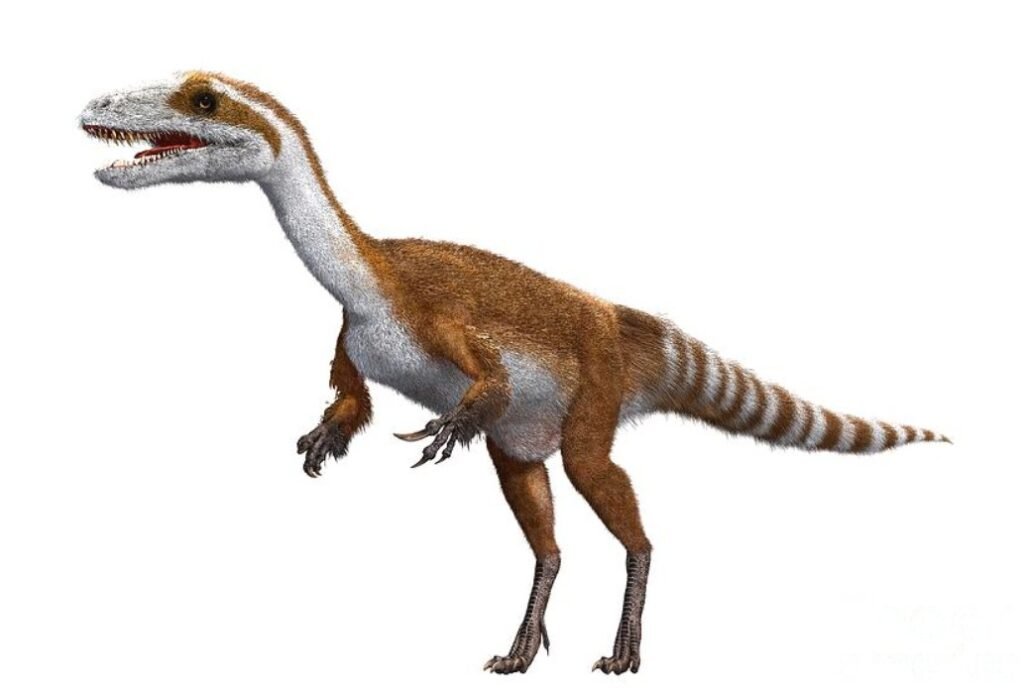
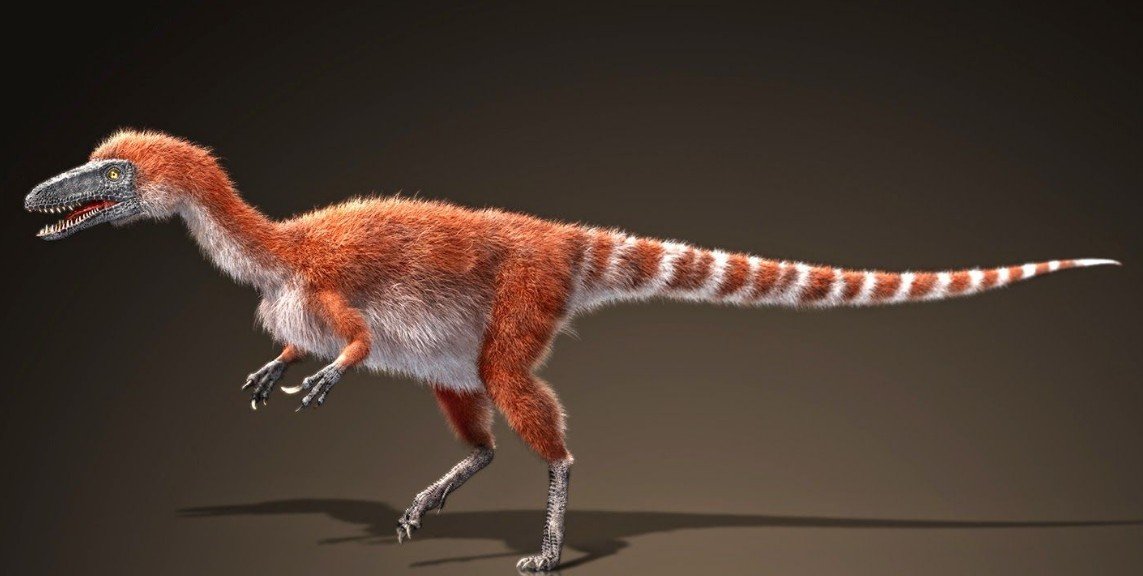
Sinosauropteryx is an extinct genus of small theropod dinosaurs from the Early Cretaceous period. It is notable for being one of the first dinosaurs discovered with evidence of feathers, making it a significant piece in the puzzle of dinosaur evolution and the origin of birds. Sinosauropteryx was a small, carnivorous dinosaur, measuring about 1 meter (3.3 feet) in length, with a slender, lizard-like body. Its feathers, which appear to have been used for insulation and display, help us understand the connection between dinosaurs and modern birds. Sinosauropteryx lived in what is now China, during a time when the Earth’s ecosystems were undergoing major changes.
Quick Top 10 Facts about Sinosauropteryx
| SCIENTIFIC NAME | Sinosauropteryx prima |
| CLASSIFICATION | KINGDOM: Animalia PHYLUM: Chordata CLASS: Reptilia ORDER: Saurischia SUBORDER: Theropoda FAMILY: Compsognathidae |
| SIZE | Length: About 1 meter (3.3 feet); Weight: Around 1 kilogram (2.2 pounds) |
| SPECIES | Sinosauropteryx is known primarily by its type species Sinosauropteryx prima. |
| APPEARANCE | Sinosauropteryx had a slender, lightweight body. It is famous for the feather-like structures found along its body, tail, and head, and it had a long, scaly tail and small, sharp teeth. |
| LIFE SPAN | As with many prehistoric dinosaurs, the exact lifespan of Sinosauropteryx is not well known, but it is believed to have lived for around 10–15 years. |
| HABITAT | Sinosauropteryx lived in what is now northeastern China. It inhabited forested regions and was likely a terrestrial predator. |
| DIET | Sinosauropteryx was carnivorous, preying on small vertebrates, insects, and possibly smaller reptiles in its environment. |
| NATURAL PREDATORS | Due to its small size, Sinosauropteryx may have been preyed upon by larger theropod dinosaurs, such as early tyrannosaurs and other carnivorous dinosaurs. |
| COUNTRY | Sinosauropteryx was discovered in the Liaoning Province of northeastern China, where many other well-preserved fossils from the Early Cretaceous period have been found. |
| GESTATION PERIOD | Details about the exact gestation period of Sinosauropteryx are unknown, but it would likely have been similar to other small theropod dinosaurs. |
| CONSERVATION STATUS | Sinosauropteryx is extinct, with no living relatives today. It lived during the Early Cretaceous period, around 125 million years ago. |
Amazing Facts About Sinosauropteryx
1. Feathered Dinosaur
Sinosauropteryx is famous for being one of the first dinosaurs discovered with evidence of feathers, showing that feathers evolved earlier than previously thought and were possibly used for display or insulation.
2. Early Theropod
As a small theropod, Sinosauropteryx was a part of the group of dinosaurs that eventually gave rise to modern birds, providing important clues to the evolution of flight.
3. Small but Fearsome
Though it was small, Sinosauropteryx was a skilled predator, using its sharp teeth to catch and consume smaller prey such as insects, lizards, and small vertebrates.
4. Well-Preserved Fossils
The fossils of Sinosauropteryx are exceptionally well-preserved, with clear impressions of feathers on its body and tail, providing valuable insights into the early evolution of feathers.
5. A Link Between Dinosaurs and Birds
Sinosauropteryx plays a crucial role in understanding the relationship between non-avian dinosaurs and modern birds. Its feather-like structures suggest that feathers were not exclusively for flight but may have had other purposes.
6. Agile Hunter
With its small size and fast movements, Sinosauropteryx was an agile hunter that likely relied on speed and stealth to capture its prey.
7. Tail Feathers
In addition to body feathers, Sinosauropteryx had feather-like structures along its tail, providing further evidence of the diversity of feathered dinosaurs.
8. Early Cretaceous Resident
Sinosauropteryx lived during the Early Cretaceous period, around 125 million years ago, when the Earth’s ecosystems were rapidly changing and evolving.
9. The First Dinosaur with Feathers
Sinosauropteryx was one of the first dinosaurs discovered to have feathers, and its discovery revolutionized the way scientists think about the evolution of dinosaurs and birds.
10. Fossilized in Ancient Lakes
The remarkable preservation of Sinosauropteryx fossils is due to the fact that they were fossilized in ancient lakebeds, where minerals and sediment quickly covered the remains, preserving fine details such as feathers.
What Is Sinosauropteryx?
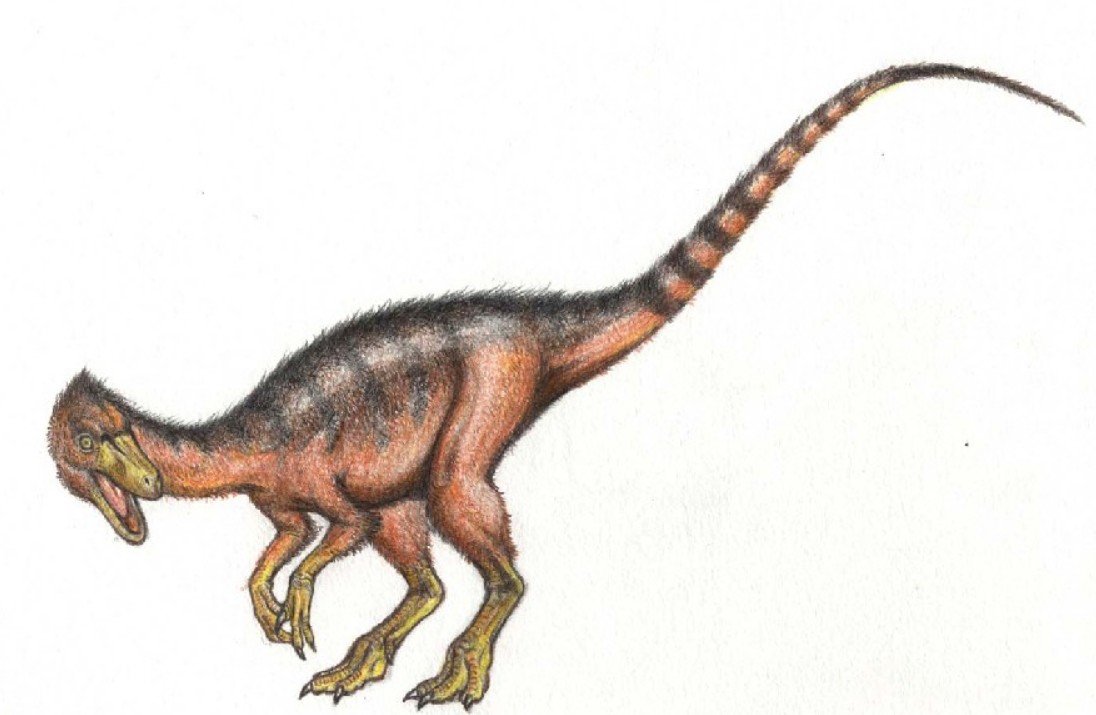
One of the most significant discoveries in palaeontology is Sinosauropteryx, which provides vital evidence linking theropod dinosaurs to modern birds. This small, feathered Early Cretaceous dinosaur offers a clear window into the evolutionary transition from non-avian dinosaurs to the first birds. Scientists gained a clearer understanding of this connection through fossils discovered in China, which reveal that feathers evolved long before the emergence of modern birds.
Sinosauropteryx Discovery and Fossil Evidence
Discovery of Sinosauropteryx in China, Liaoning
Chinese palaeontologists first discovered Sinosauropteryx in 1996 within Liaoning Province in northeastern China, an area famous for exceptionally preserved dinosaur fossils. Fine-grained sediment preserved the dinosaur’s feathers and other delicate anatomical features, allowing scientists to study them in remarkable detail.
Why the Discovery of Sinosauropteryx Was Revolutionary
The discovery proved revolutionary because Sinosauropteryx provided some of the earliest direct evidence that feathers existed before birds evolved. This finding placed Sinosauropteryx among the most important species for understanding the dinosaur-to-bird evolutionary transition.
Early Evidence of Feathered Dinosaurs
Sinosauropteryx represents the earliest dinosaur with confirmed feather-like structures, preserved as impressions alongside incomplete skeletons. This discovery transformed scientific understanding of dinosaur and bird relationships and strongly supported the theory that birds descended from theropod dinosaurs.
Physical Characteristics of Sinosauropteryx
Size, Weight, and Classification of Sinosauropteryx
Sinosauropteryx was a small dinosaur that weighed about 1 kilogramme (2.2 pounds) and measured roughly 1 metre (3.3 feet) in length. It belonged to the theropod group of predatory, bipedal dinosaurs, which also includes famous species such as Velociraptor and Tyrannosaurus rex.
Dimensions and Body Construction of Sinosauropteryx
Although small by theropod standards, Sinosauropteryx possessed agility and speed. Its long tail and slender body likely supported balance during fast movement and hunting. Like other theropods, it had smaller forelimbs and powerful hind legs built for rapid locomotion.
Diet Indicated by Skull and Teeth Structure
The dinosaur was carnivorous, as shown by its narrow skull and sharp teeth. Its small size suggests it hunted insects and small vertebrates. Some fossil evidence also indicates that it may have scavenged opportunistically.
Feathers of Sinosauropteryx and Their Significance
Feather Impressions in Sinosauropteryx Fossils
Sinosauropteryx stands apart from other theropods due to the clear presence of feathers. Filament-like structures covered its body and tail, forming its most striking feature. These simple feathers likely served different purposes than the complex flight feathers found in modern birds.
Tail Feathers and Filament Structures
The tail displayed the most prominent feather impressions, consisting of long, hair-like filaments. These filaments formed clustered tufts, similar to feathers in some modern bird species. Scientists suggest they functioned for insulation or visual display.
Feathers Before Flight Evolution
Although Sinosauropteryx could not fly, its feathers represent an early stage in feather evolution. Their presence on a non-avian dinosaur supports the theory that feathers originally evolved for insulation, communication, or display before later adapting for flight.
Evolutionary Importance of Sinosauropteryx
Role in Dinosaur-to-Bird Evolution
The discovery of Sinosauropteryx significantly reshaped scientific understanding of dinosaur evolution and bird origins. It provides strong evidence that feathers first evolved for purposes unrelated to flight, such as insulation or mating displays.
Feathers as a Precursor to Flight
Sinosauropteryx offers valuable insight into the evolutionary stages that eventually produced flight in birds. Scientists now widely accept it as one of the earliest examples illustrating the transition from small theropod dinosaurs to birds.
Early Feathers and Adaptation
Palaeontologists believe the filament structures in Sinosauropteryx fossils represent rudimentary feathers. These early forms later evolved into complex, flight-capable feathers. The presence of feathers in non-avian dinosaurs highlights their importance long before modern birds emerged.
Connecting Birds and Theropod Dinosaurs
Sinosauropteryx ranks among the earliest known feathered dinosaurs and clearly demonstrates the connection between birds and theropods. Its discovery strengthened growing scientific consensus that modern birds evolved from theropod dinosaurs.
Stages of Feather Evolution
Scientists now recognise multiple stages in feather evolution, beginning with simple filaments like those of Sinosauropteryx. Over time, these structures became more complex and served display, camouflage, and insulation roles. Modern flight feathers represent the final stage of this evolutionary process.
Sinosauropteryx Diet and Behaviour
Feeding Habits of Sinosauropteryx
Sinosauropteryx was primarily carnivorous, based on its tooth shape and jaw structure. It likely consumed small vertebrates and invertebrates, with occasional plant matter. Its agility allowed it to catch fast-moving prey such as insects and small reptiles.
Hunting Behaviour and Lifestyle
Although scientists cannot observe its behaviour directly, evidence suggests Sinosauropteryx hunted opportunistically. Like other small theropods, it probably relied on speed and ambush tactics to capture prey efficiently.
Importance of the Sinosauropteryx Fossil Record
Exceptional Fossil Preservation
The exceptionally preserved fossils of Sinosauropteryx allow detailed examination of its anatomy. Fine preservation of feathers reveals early feather composition and function. These fossils provide rare structural detail, unlike most dinosaur feather remains, which survive only as faint impressions.
Liaoning Biota and Early Cretaceous Ecosystems
Sinosauropteryx fossils have also improved understanding of the Liaoning Biota, a diverse Early Cretaceous ecosystem from northeastern China. The richness and preservation of this fossil site make it essential for studying early dinosaur evolution.
FAQ (Frequently Asked Questions) about Sinosauropteryx
Q: What is Sinosauropteryx?
Ans: Sinosauropteryx is a small, extinct theropod dinosaur that lived during the Early Cretaceous period. It is famous for being one of the first dinosaurs discovered with evidence of feathers.
Q: Where was Sinosauropteryx found?
Ans: The fossils of Sinosauropteryx were discovered in the Liaoning Province of northeastern China, a region known for its well-preserved dinosaur fossils.
Q: How big was Sinosauropteryx?
Ans: Sinosauropteryx was about 1 meter (3.3 feet) long and weighed around 1 kilogram (2.2 pounds), making it a relatively small dinosaur.
Q: What did Sinosauropteryx eat?
Ans: Sinosauropteryx was carnivorous, preying on small vertebrates, insects, and possibly smaller reptiles in its environment.
Q: Did Sinosauropteryx have feathers?
Ans: Yes, Sinosauropteryx had feather-like structures along its body, tail, and head, providing important evidence for the evolutionary link between dinosaurs and birds.
Q: When did Sinosauropteryx live?
Ans: Sinosauropteryx lived during the Early Cretaceous period, around 125 million years ago.
Q: Is Sinosauropteryx related to birds?
Ans: Yes, Sinosauropteryx is considered an important link between non-avian dinosaurs and modern birds, with its feather-like structures suggesting that feathers evolved earlier than previously thought.
Q: What is the significance of Sinosauropteryx in dinosaur research?
Ans: Sinosauropteryx is significant because its fossils provide crucial evidence about the origin and evolution of feathers in dinosaurs, offering insights into the development of birds.
#Sinosauropteryx #FeatheredDinosaurs #TheropodDinosaurs #CretaceousDinosaurs #DinosaurEvolution #FossilFinds #EarlyCretaceous #DinosaurResearch
Our sources and references about Sinosauropteryx
1: Wikipedia – Sinosauropteryx
2: National Geographic – Sinosauropteryx
3: Britannica – Sinosauropteryx
4: Live Science – Sinosauropteryx