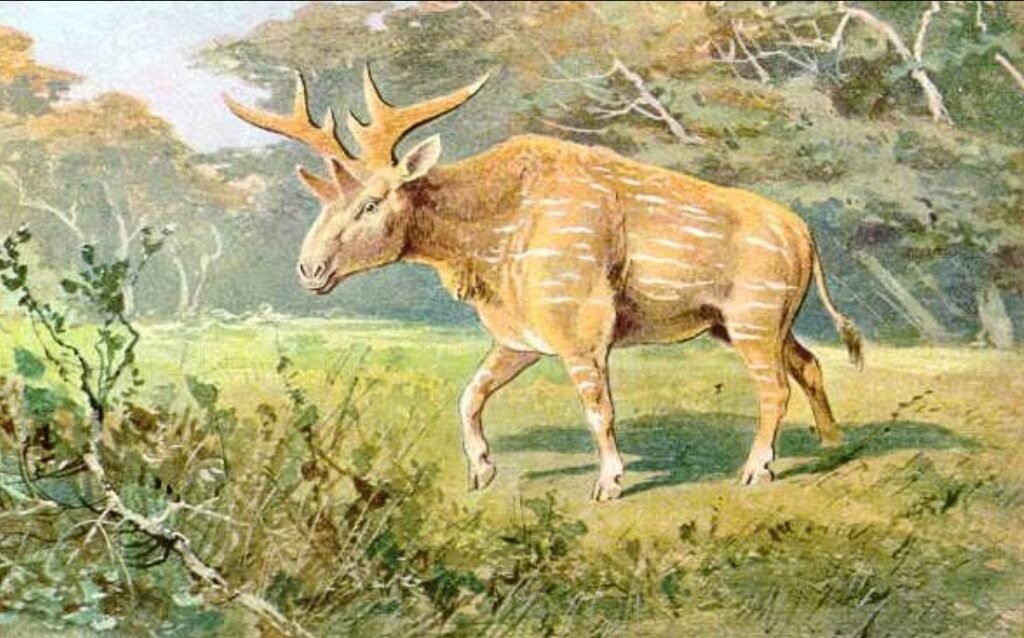
Sivatherium is an extinct genus of giraffid that lived during the Pleistocene and Pliocene epochs. Known for its impressive size, Sivatherium resembled a giant giraffe with antler-like horns on its head. These herbivorous creatures were among the largest members of the giraffe family, with males growing up to 5 meters (16.5 feet) tall. Sivatherium roamed the open woodlands and savannas of Africa and Asia. Though it shares similarities with modern giraffes, it was much bulkier and had a more robust body. Researchers believe its large, forked horns were used in combat or display, making Sivatherium one of the most fascinating prehistoric animals.
Quick Top 10 Facts about Sivatherium
| SCIENTIFIC NAME | Sivatherium giganteum |
| CLASSIFICATION | KINGDOM: Animalia PHYLUM: Chordata CLASS: Mammalia ORDER: Artiodactyla FAMILY: Giraffidae |
| SIZE | Height: Up to 5 meters (16.5 feet) tall; Length: About 6–7 meters (19.5–23 feet), depending on the species |
| SPECIES | Sivatherium had several species, with Sivatherium giganteum being the largest and most well-known. |
| APPEARANCE | Sivatherium had a large, stocky body similar to modern giraffes but was more robust. It had a pair of large, forked horns on its head and a long neck. Its body was covered with thick fur. |
| LIFE SPAN | Estimated lifespan of around 25–30 years, though exact details remain unclear due to its extinction. |
| HABITAT | Sivatherium lived in open woodlands and savannas across Africa and parts of Asia, particularly in regions that are now found in modern-day Kenya, India, and Pakistan. |
| DIET | Sivatherium was herbivorous, feeding on grasses, leaves, and shrubs. Its diet consisted mostly of plant material available in its savanna and woodland habitats. |
| NATURAL PREDATORS | Due to its size, Sivatherium had few natural predators, though it may have been preyed upon by large carnivores such as saber-toothed cats and large packs of wild dogs. |
| COUNTRY | Sivatherium roamed in areas that are now part of Africa and Asia, specifically regions that are today known as Kenya, India, and Pakistan. |
| GESTATION PERIOD | While no exact data is available for Sivatherium, it is believed that its gestation period was similar to that of modern-day giraffes, around 15 months. |
| CONSERVATION STATUS | Sivatherium is extinct. The species disappeared about 10,000 years ago, likely due to a combination of climate change and hunting pressures from early humans. |
Amazing Facts About Sivatherium
1. Giant Giraffe Relative
Sivatherium is often called a “giant giraffe” due to its impressive size, which was much larger than the modern giraffe. It was one of the largest mammals in its family.
2. Antler-Like Horns
One of the most distinctive features of Sivatherium was its pair of large, forked horns. These horns were likely used for defense, combat, or display during mating season.
3. Extinct Ancient Herbivore
Sivatherium was an herbivore, feeding on a variety of plant materials in open woodlands and grasslands. It likely lived in areas with abundant plant life.
4. Ancestor of Modern Giraffes
Sivatherium is considered one of the closest extinct relatives to modern giraffes. While it shares a similar body structure, it was much bulkier with a more robust physique.
5. Long Neck and Stout Body
Like the modern giraffe, Sivatherium had a long neck, which it used to feed on high branches. However, its body was much more powerful and stout, indicating a more robust lifestyle.
6. Mysterious Extinction
The cause of Sivatherium’s extinction remains unclear. It likely faced challenges from climate changes, competition with other herbivores, and hunting pressure from early humans.
7. Adapted to Different Environments
Sivatherium thrived in diverse environments, from dense woodlands to open savannas. Its ability to adapt to these different habitats helped it become one of the dominant herbivores of its time.
8. Unique Appearance
Its appearance set it apart from other prehistoric mammals. With a mix of giraffe-like features and the horns of other large mammals, Sivatherium’s unique look continues to intrigue scientists.
9. Slow-Moving Giant
Due to its large size, Sivatherium was likely a slow-moving herbivore, using its size to deter predators rather than speed.
10. Fascinating Fossils
Fossils of Sivatherium have provided valuable insights into its biology and ecology. The large horns and robust body structure are especially notable in the fossil record.
Sivatherium: The Giant Antelope of Ancient Times
Overview of Sivatherium and Its Ancient Range
Large ancient antelopes from the extinct genus Sivatherium lived across regions of Asia and Africa during the Pliocene and Pleistocene periods. Sivatherium possessed striking features, including enormous size, unusual horn structures, and a remarkable evolutionary background, which continue to fascinate palaeontologists and wildlife enthusiasts. Many researchers describe it as a giant relative of modern antelopes.
Sivatherium Discovery and Fossil Evidence
Early Identification and Scientific Naming
British palaeontologist Richard Lydekker first identified Sivatherium in 1869 using fossil remains found on the Indian subcontinent. The genus name “Sivatherium” combines “Siva,” the Hindu god of destruction, and “therium,” meaning beast or animal, reflecting the creature’s powerful and imposing appearance.
Geographic Distribution of Sivatherium Fossils
Researchers have uncovered Sivatherium fossils across parts of Asia, Africa, and the Middle East, including northeastern Africa, China, Pakistan, and present-day India. These remains, which include skulls, teeth, horns, and limb bones, have provided valuable insight into the animal’s appearance, lifestyle, and behaviour.
Sivalik Hills and the Fossil Timeline
The Sivalik Hills of India have yielded some of the most significant Sivatherium fossils, alongside many other ancient mammal remains. Fossil evidence indicates that Sivatherium survived for nearly 8 million years, from the late Miocene through to the Pleistocene epoch, before its eventual extinction.
Physical Characteristics of Sivatherium
Overall Appearance and Size Comparison
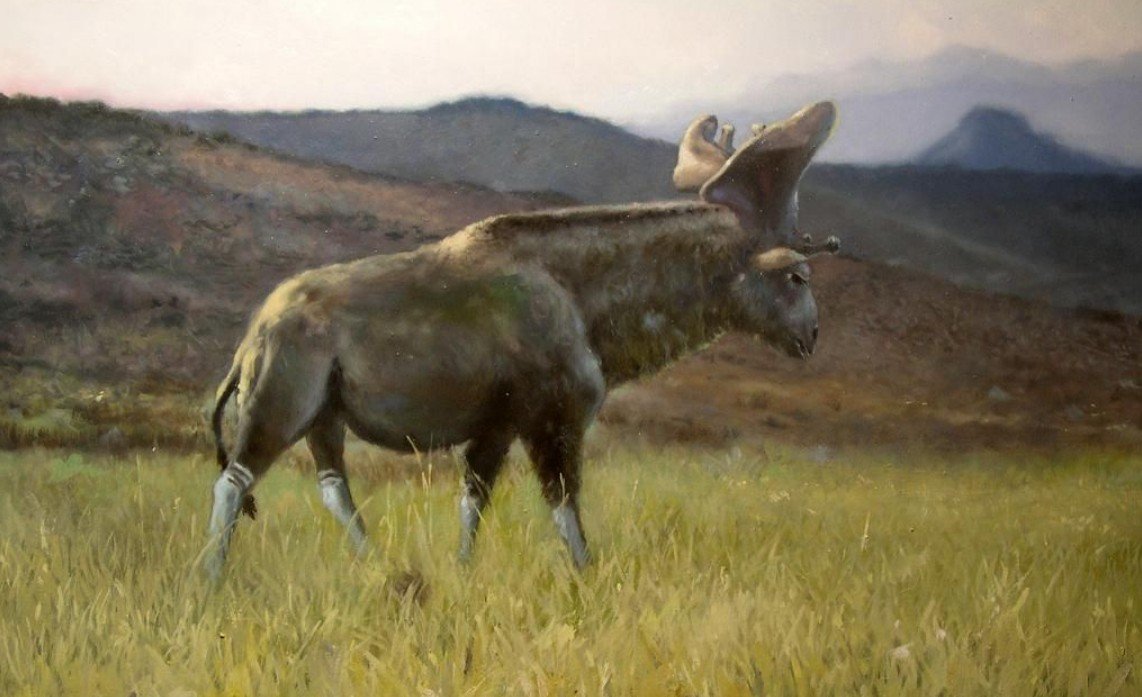
Sivatherium is often depicted as a massive, towering herbivore resembling an antelope, yet differing markedly from modern species. Although it shared a plant-based diet with present-day antelopes, its sheer size and distinct proportions set it apart from other members of its family.
Dimensions, Weight, and Body Structure
Sivatherium ranked among the largest antelopes to have ever existed. It stood around 1.8 metres (6 feet) at the shoulder, with some individuals likely growing even taller. Its total body length, including its long neck and legs, reached approximately 3.5 metres (11.5 feet).
Given its impressive size and strong build, Sivatherium likely fed as a grazing and browsing herbivore, consuming grasses, shrubs, and tree foliage. Scientists estimate its weight ranged between 600 and 800 kilogrammes (1,300 to 1,750 pounds), greatly exceeding that of most modern antelopes, including the eland.
In body shape and proportions, Sivatherium showed similarities to modern giraffes, with long, powerful limbs and a relatively short tail. This structure allowed it to move efficiently across open grasslands and wooded areas while reaching higher vegetation with ease.
Horns, Skull Structure, and Feeding Adaptations
The most striking feature of Sivatherium was its impressive horn structure. Unlike modern antelopes with straight or spiralled horns, Sivatherium displayed massive, broad, and widely branched horns that could reach up to one metre (3.3 feet) in length. These horns likely served purposes such as defence, mating competition, and dominance displays.
The animal’s skull supported strong jaw muscles, enabling it to chew tough vegetation effectively. Its broad, flat teeth, typical of browsing herbivores, suggest a diet that included leaves, branches, and woody plants.
Unlike modern giraffes with elongated necks designed for feeding high in trees, Sivatherium had a shorter, sturdier neck similar to that of large antelopes and bison. This adaptation indicates it probably fed at ground level as well as on mid-height vegetation.
Evolutionary Significance of Sivatherium
Classification Within the Giraffidae Family
Sivatherium belonged to the Giraffidae family, which also includes modern giraffes and okapis. However, Sivatherium represented an extinct branch of this family and was not a direct ancestor of today’s giraffes. The species disappeared around 10,000 years ago.
Relationship to Modern Giraffes and Okapis
Although Sivatherium shared ancestry with giraffes, notable differences existed between them. Sivatherium possessed a shorter neck and legs compared to modern giraffes, along with broader, spreading horns and a heavier body form.
Despite these differences, Sivatherium and modern giraffes shared similarities such as strong limbs and comparable skull features. These traits suggest both animals occupied similar ecological roles, even though they lived in different habitats.
The evolutionary importance of Sivatherium also appears in its relationship with the okapi. While Sivatherium inhabited open savannas and woodlands, the okapi adapted to dense Central African rainforests. This contrast highlights how the Giraffidae family diversified into varied ecological niches over millions of years.
Extinction of Sivatherium
Sivatherium became extinct around 10,000 years ago during the Pleistocene, as part of the broader Quaternary extinction event that affected many large mammals. Scientists believe a combination of climate change, habitat loss, and early human hunting contributed to its decline.
Environmental shifts likely reduced suitable habitats even before humans arrived in some regions. Sivatherium’s large size and dependence on specific vegetation probably made it especially vulnerable to changing climates and altered plant communities.
Sivatherium in Prehistoric Ecosystems
Ecological Role and Predator Interactions
During the late Miocene and Pleistocene epochs, Sivatherium played an important role within diverse prehistoric ecosystems. It likely lived alongside other large herbivores and powerful carnivores, helping shape vegetation patterns through its grazing and browsing behaviour.
Large predators such as sabre-toothed cats and hyenas probably hunted Sivatherium, while competition for food occurred with animals like elephants, bison, and other members of the Giraffidae family. Through these interactions, Sivatherium contributed significantly to maintaining ecological balance in its ancient environments.
FAQ (Frequently Asked Questions) about Sivatherium
Q: What was Sivatherium?
Ans: Sivatherium was an extinct genus of giraffid, closely related to modern giraffes. It had a giant body and distinctive forked horns on its head.
Q: When did Sivatherium go extinct?
Ans: Sivatherium is believed to have gone extinct around 10,000 years ago, during the late Pleistocene epoch.
Q: Where did Sivatherium live?
Ans: Sivatherium lived in Africa and parts of Asia, particularly in regions now found in Kenya, India, and Pakistan.
Q: What did Sivatherium eat?
Ans: Sivatherium was herbivorous and fed on grasses, leaves, and shrubs in its woodland and savanna habitats.
Q: What were the horns of Sivatherium used for?
Ans: The large, forked horns of Sivatherium were likely used in combat with other males or in display during mating season.
Q: How big was Sivatherium?
Ans: Sivatherium grew to be up to 5 meters (16.5 feet) tall, with a body length of 6–7 meters (19.5–23 feet).
Q: Why did Sivatherium go extinct?
Ans: The extinction of Sivatherium is likely due to a combination of climate change, habitat loss, and hunting pressures from early humans.
Q: How is Sivatherium related to modern giraffes?
Ans: Sivatherium is one of the closest extinct relatives to modern giraffes, sharing many physical traits such as a long neck, but it was bulkier and had larger horns.
Q: Did Sivatherium have any natural predators?
Ans: Due to its size, Sivatherium had few natural predators, but it may have been preyed upon by large carnivores such as saber-toothed cats or packs of wild dogs.
#Sivatherium #AncientMammals #PrehistoricCreatures #ExtinctSpecies #GiraffeRelatives #PleistoceneEpoch #AncientHerbivores #SivatheriumFacts
Our sources and references about Sivatherium
1: Wikipedia – Sivatherium
2: Britannica – Sivatherium
3: National Geographic – Sivatherium
4: Smithsonian – Sivatherium