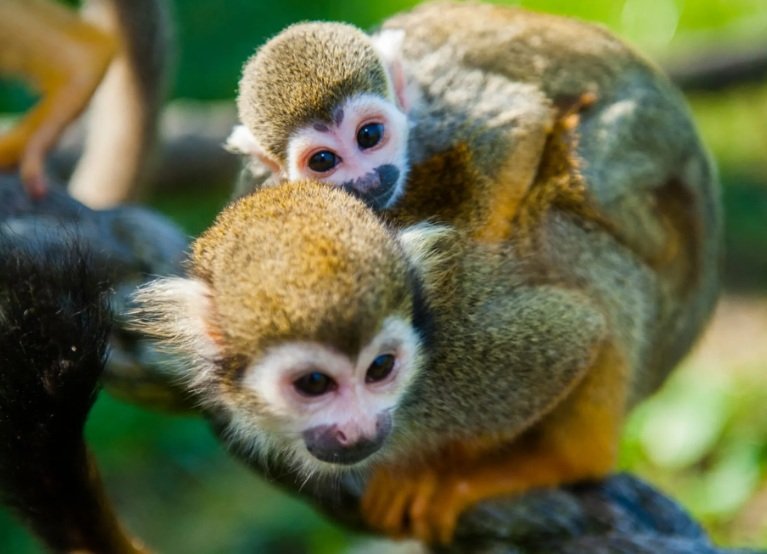
Squirrel monkeys are small primates native to Central and South America. They are highly social, living in large troops, and are known for their playful, energetic behavior. These monkeys have distinctive long tails and are often seen in the treetops of tropical rainforests, where they feed on fruits, insects, and small animals.
Quick Top 10 Facts about Squirrel Monkey
| SCIENTIFIC NAME | Saimiri sciureus |
| CLASSIFICATION | KINGDOM: Animalia PHYLUM: Chordata CLASS: Mammalia ORDER: Primates FAMILY: Cebidae GENUS: Saimiri SPECIES: S. sciureus |
| SIZE | Length: 16–24 inches (40–61 cm), with tails up to 25 inches (63 cm) Weight: 15–19 ounces (400–540 grams) |
| HABITAT | Tropical rainforests and lowland forests in Central and South America, particularly in the Amazon basin |
| DIET | Omnivorous; primarily feeds on fruits, insects, nuts, and small vertebrates such as birds and lizards |
| SPECIES | Squirrel Monkey, a small, agile primate known for its distinctive long tail and active social behavior |
| COUNTRY | Native to Central and South America, including countries like Brazil, Peru, Colombia, and Venezuela |
| GESTATION PERIOD | About 150–170 days |
| LIFE SPAN | 15–20 years in the wild |
| CONSERVATION STATUS | Least Concern; however, they face threats from habitat loss and illegal pet trade |
Amazing Facts About Squirrel Monkeys
1. They are incredibly social
Squirrel Monkeys live in large groups called troops, often with up to 500 individuals, and maintain strong social bonds within their communities.
2. They have excellent agility
With their long tails and nimble limbs, Squirrel Monkeys are excellent climbers and can leap between trees with impressive speed and dexterity.
3. They are active during the day
Squirrel Monkeys are diurnal, meaning they are active during the day, foraging for food and socializing with others in their troop.
4. They have a varied diet
Squirrel Monkeys have an omnivorous diet, feeding on fruits, insects, small animals, and even tree sap.
5. They are highly intelligent
These monkeys are known for their intelligence and ability to solve complex problems, making them highly trainable in captive environments.
6. They communicate with a variety of vocalizations
Squirrel Monkeys use a wide range of vocalizations to communicate with each other, including warning calls, food calls, and social bonding sounds.
7. They are great swimmers
Despite their small size, Squirrel Monkeys are capable swimmers and can cross rivers in their natural habitat.
8. They have a strong sense of smell
Squirrel Monkeys use their sense of smell to locate food and communicate with other members of their troop.
9. They are agile foragers
These monkeys are constantly on the move, foraging for fruits, seeds, and insects in the dense canopy of the rainforest.
10. They are important to their ecosystem
Squirrel Monkeys play a vital role in their ecosystem by dispersing seeds and pollens while foraging, which helps maintain the health of the rainforest.
Intriguing facts about Squirrel Monkey
Small primates called squirrel monkeys are indigenous to the tropical jungles of Central and South America. They are renowned for their unique look, nimble movements, and joyful disposition. Amazing animals such as squirrel monkeys have effectively evolved to live in their natural surroundings in tropical forests. They play a vital role in ecology because of their varied food, distinctive morphological traits, and social behavior. Gaining more insight into these primates may help us see the intricacy and splendor of the natural world.
With a diverse omnivorous diet consisting of fruits, insects, and small vertebrates, squirrel monkeys play a crucial role in their ecosystem’s balance. Conservation efforts aimed at preserving their natural habitats are vital to safeguarding these remarkable creatures from threats such as habitat degradation and deforestation.
Physical Attributes of Squirrel Monkeys
Among the smallest primates, squirrel monkeys typically measure 10–14 inches in length and weigh one to two pounds. Their body is slim, their tail is long, and their face is small, with big, wide eyes. They usually have short, thick fur that is speckled with shades of brown, black, and yellowish-orange.
The capacity of squirrel monkeys to turn their heads almost 180 degrees is one of their most distinctive characteristics. This skill assists them in their environment by scanning for any dangers or food sources.
Social Conduct of Squirrel Monkeys
Squirrel monkeys are gregarious creatures that live in large groups known as troops. These soldiers may include between ten and one hundred members, with a dominant guy serving as the group’s leader. There is a complicated social order in the squad, with women often occupying greater ranks than men.
For squirrel monkeys, communication is essential, and they communicate themselves to one another via a range of vocalizations, facial expressions, and body postures. They also practice grooming, which contributes to the group’s social relationships being strengthened.
Diet and Meal Routines of Squirrel Monkeys
Due to their omnivorous diet, squirrel monkeys consume both tiny animals and plant debris. Small vertebrates, fruits, seeds, insects, and spiders make up the majority of their food. They often travel great distances in quest of food, and they are known to enjoy ripe fruits.
With their unusual eating method, these nimble primates move food objects with their hands and feet. Additionally, they can shatter hard seeds and nuts thanks to the particular teeth they have.

Range and Habitat of Squirrel Monkeys
The tropical jungles of Central and South America, which include nations like Brazil, Colombia, Peru, and Ecuador, are home to squirrel monkeys. Because there is a steady supply of water and an abundance of food nearby, they choose lush woods that are close to rivers and lakes.
Because of their natural adaptation to living in trees, these monkeys spend the most of their time in the canopy, where their long tails allow them to travel with ease from branch to branch. They can jump up to 20 feet between trees, making them excellent climbers and leapers.
Lifespan and Reproduction of Squirrel Monkeys
In squirrel monkeys’ polygamous mating system, dominant males mate with many females within the group. Approximately 150–170 days pass during the female’s gestation period before she gives birth to one child. For the first few weeks of its existence, the young monkey, also known as an infant, clings to its mother’s back.
Squirrel monkeys may live up to fifteen years in the wild, but with the right food and care, they can live longer in captivity.
Fascinating facts about Squirrel Monkeys
Small primates, known as squirrel monkeys, are native to the tropical jungles of Central and South America. Their distinctive appearance, characterized by a round face with wide eyes, a slim body, and a long tail, makes them easily recognizable. These agile climbers spend a significant portion of their time in trees.
Social Behavior of Squirrel Monkeys
Squirrel monkeys are highly social animals, often found living in large groups called troops. These troops, consisting of up to 500 individuals, exhibit a complex social structure. Dominant males lead the group, while females play a crucial role in maintaining social cohesion.
Diet and Feeding Habits of Squirrel Monkeys
The diet of squirrel monkeys is diverse, comprising fruits, insects, and small vertebrates. With their powerful jaws and keen teeth, they can easily crack open nuts and seeds. Additionally, they display a unique feeding behavior known as “gum-feeding,” where they chew on tree bark to extract gum or sap for extra nutrition.
Communication Among Squirrel Monkeys
Squirrel monkeys possess an intricate communication system, employing vocalizations, facial expressions, and body postures to convey messages within their group. They produce a range of vocal sounds, including contact calls to maintain group cohesion and alarm calls to warn others of potential threats.

Reproduction in Squirrel Monkeys
The reproductive system of squirrel monkeys is closely linked to their social organization. Females typically give birth to a single offspring after a gestation period of approximately 150 days. Both parents and other members of the troop contribute to the care of the newborn, ensuring its survival and growth.
Conservation Efforts for Squirrel Monkeys
Squirrel monkeys face numerous threats in their native habitat, including habitat degradation, the illicit pet trade, and deforestation. Conservation efforts are crucial to safeguarding these primates and their ecosystems. Various organizations are actively involved in protecting their natural habitats and raising awareness about the importance of preserving these unique and fascinating animals.
FAQ (Frequently Asked Questions) about Squirrel Monkey
Q: What is a Squirrel Monkey?
Ans: The Squirrel Monkey (Saimiri sciureus) is a small, energetic primate native to Central and South America. Known for its playful behavior, high intelligence, and distinctive appearance, the Squirrel Monkey has a small body, a long tail, and a face with expressive features. It belongs to the family Cebidae and is one of the most common species of New World monkeys.
Q: Where do Squirrel Monkeys live?
Ans: Squirrel Monkeys are typically found in the tropical forests of Central and South America. They are mostly located in countries like Brazil, Venezuela, Ecuador, and Colombia, where they live in the canopies of rainforests. These monkeys are highly adaptable and can thrive in a variety of forested environments, including lowland forests and river edges.
Q: What do Squirrel Monkeys eat?
Ans: Squirrel Monkeys are omnivores and have a varied diet. They primarily eat fruits, seeds, flowers, and insects. They also consume small vertebrates like lizards and birds when available. Their diet is largely dependent on the availability of food in their environment, and they use their agility and intelligence to find and gather food in the treetops.
Q: How big does a Squirrel Monkey get?
Ans: Squirrel Monkeys are small in size. They typically weigh between 15 to 19 pounds (7 to 8.5 kg) and measure about 16 to 24 inches (40 to 60 cm) in body length. Their tail, which is not prehensile, adds an additional 24 to 30 inches (60 to 75 cm) to their total length. Despite their small size, they are agile and quick-moving creatures.
Q: How does a Squirrel Monkey defend itself?
Ans: Squirrel Monkeys rely on their agility and speed to escape from predators. They are excellent climbers and can quickly leap from tree to tree, evading threats. They also live in groups, which provides safety in numbers. When threatened, they may make loud vocalizations to alert the group or to intimidate potential predators.
Q: What is unique about the Squirrel Monkey?
Ans: Squirrel Monkeys are known for their social nature and highly cooperative behavior. They live in large troops that can number from 20 to 500 individuals. Their social structure is complex, and they rely on each other for protection and grooming. Additionally, Squirrel Monkeys are known for their intelligence and dexterity, which they use to solve problems and manipulate objects in their environment.
Q: Are Squirrel Monkeys endangered?
Ans: While Squirrel Monkeys are not currently listed as endangered, their populations are declining due to habitat loss, deforestation, and hunting. Some subspecies are considered at risk, and conservation efforts are underway to protect their natural habitats and prevent further declines in their numbers.
Q: How long do Squirrel Monkeys live?
Ans: Squirrel Monkeys have a lifespan of about 15 to 20 years in the wild. In captivity, they may live slightly longer, especially with proper care. Their lifespan can be affected by environmental factors, diet, and the presence of predators in the wild.
Q: Can Squirrel Monkeys be kept as pets?
Ans: While Squirrel Monkeys can be kept as pets in some regions, it is not recommended. They are highly social animals that require the company of other monkeys and a complex, enriching environment. Keeping them as pets can be challenging, as they have specific care needs, and their behavior may become problematic in captivity. In many places, it is illegal to own a Squirrel Monkey as a pet due to concerns about their welfare.
#SquirrelMonkey, #Primates, #MonkeySpecies, #NewWorldMonkeys, #RainforestAnimals, #WildlifeConservation, #MonkeyBehavior, #SocialAnimals, #TropicalAnimals, #EndangeredSpecies
Our sources and references about Squirrel Monkey
1: Wikipedia – Squirrel Monkey
2: Britannica – Squirrel Monkey
3: National Geographic – Squirrel Monkey
4: ARKive – Squirrel Monkey