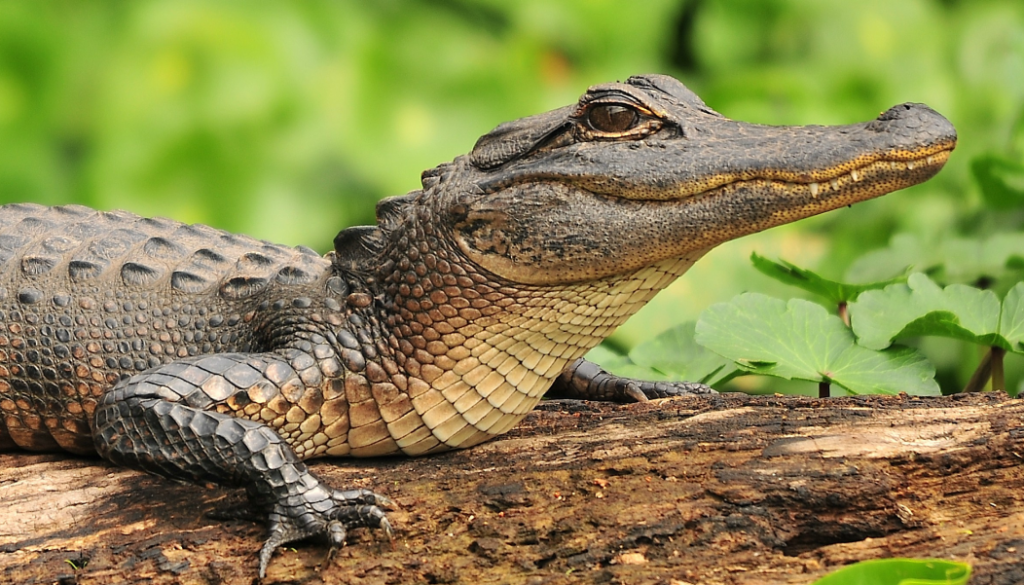
A large reptile native to the southeastern United States, recognized for its powerful jaws and aggressive behavior. Alligators thrive in freshwater environments such as swamps and rivers.
Quick Top 10 Facts about Alligator
| SCIENTIFIC NAME | Alligator mississippiensis (American Alligator) / Alligator sinensis (Chinese Alligator) |
| CLASSIFICATION | KINGDOM: Animalia CLASS: Reptilia ORDER: Crocodylia FAMILY: Alligatoridae PHYLUM: Chordata GENUS: Alligator |
| SIZE | 3–4.5 meters (10–15 feet) in length; up to 450 kg (990 lbs) |
| HABITAT | Freshwater wetlands, rivers, swamps, and marshes |
| DIET | Carnivorous – Fish, birds, turtles, mammals, and carrion |
| SPECIES | American Alligator (Alligator mississippiensis) and Chinese Alligator (Alligator sinensis) |
| COUNTRY | United States (Southeast) and China (Yangtze River region) |
| GESTATION PERIOD | Egg incubation period: about 65 days |
| LIFE SPAN | 35–50 years in the wild; up to 65–80 years in captivity |
| CONSERVATION STATUS | American Alligator: Least Concern; Chinese Alligator: Critically Endangered |
Amazing Facts About Alligator
1. Alligators have been around for millions of years
They are considered living fossils, having changed very little since the time of the dinosaurs.
2. They can replace lost teeth
Alligators can regrow lost teeth up to 50 times in their lifetime!
3. Alligators use tools
They’ve been seen using sticks to lure birds during nesting season – a rare example of tool use in reptiles.
4. They are fast swimmers
Alligators can swim up to 20 mph (32 km/h) in short bursts using their powerful tails.
5. They bask to regulate body temperature
Being cold-blooded, alligators often sunbathe to warm up.
6. They have a powerful bite
Their bite force is among the strongest in the animal kingdom – over 2,000 PSI.
7. Alligator mothers are attentive
They protect their eggs and even carry their babies in their mouths to water.
8. They can survive cold temperatures
Alligators go into a dormant state called brumation and can even survive frozen ponds by sticking their snouts out through the ice.
9. They play a key role in their ecosystems
By digging “gator holes” that retain water, they create habitats for other wildlife during dry seasons.
10. Not all alligators are aggressive
Despite their fearsome reputation, alligators are generally shy and will avoid humans unless provoked or threatened.
Introduction of alligators and their significance
Long members of the Crocodylia order, alligators are reptiles. They are renowned for being enormous and having strong jaws. In the southeast United States and some regions of China, alligators may be found in freshwater environments, including swamps, rivers, and lakes. In the wild, its lifetime may reach 50 years.
Interesting facts about Alligators
Having existed for millions of years, alligators are amazing animals. These reptiles are well-known for having strong jaws, extraordinary strength, and unique adaptations.
1. History of alligators with distinct physical characteristics and habitats
Due to their over 200 million-year evolutionary history, alligators are sometimes referred to as living fossils. These creatures are descendants of the dinosaur era and have withstood the test of time.
2. Physical features of alligators, such as their large size, powerful jaws, and armoured skin
The remarkable size and strength of alligators are well known. The typical adult alligator may reach a length of 13 feet and a weight of more than 800 pounds. They are among the strongest biters in the animal world because of their robust jaws, which can produce a biting force of more than 2,000 pounds per square inch.
3. Unique adaptation to regulate body temperature and survive in cold climates.
Being cold-blooded reptiles, alligators’ body temperature is influenced by their surroundings. Alligators have a unique adaptation known as brumation to live in colder climates. Alligators use the process of brumation to reduce body temperature and slow down metabolism in order to save energy for the winter.
4. The social behaviour of alligators, including their territorial nature and interactions with other alligators
Alligators are not isolated animals. They are known to live in groups called congregations and to display social behaviour. These gatherings are often established when resources are scarce or during the mating season. Infrasound, body language, and vocalisations are all ways that alligators interact with one another.
5. The process of egg-laying and the maternal care provided by female alligators
Mother alligators fiercely guard their offspring. Once the eggs are laid, the mother alligator will watch over the nest and defend it from any dangers. She will tenderly transfer the hatchlings to the water by holding them in her mouth when the eggs are ready to hatch. The survival of the next alligator generation is guaranteed by this mother instinct.
6. Feeding habits of alligators, which primarily consist of fish, turtles, birds, and mammals
With a large nose, pointed teeth, and a muscular physique, these animals have a unique physical appearance. With their exceptional swimming abilities, they can cover up to 20 miles per hour in water. Carnivores, fish, turtles, birds, and animals that approach the water’s edge are the main foods that alligators consume.
7. Relationship between alligators and humans, including their ecological role and biodiversity preservation
As the top predators in their ecosystems, alligators are vital to them. They contribute to maintaining the equilibrium of the food chain and regulating the population of their prey species. Alligators are normally shy and will avoid human interaction despite their threatening demeanour. But in order to protect both humans and alligators, it’s critical to be cautious and respectful of their personal space when you come across them in the wild.
8. Information on the classification of alligators as part of the crocodilian family
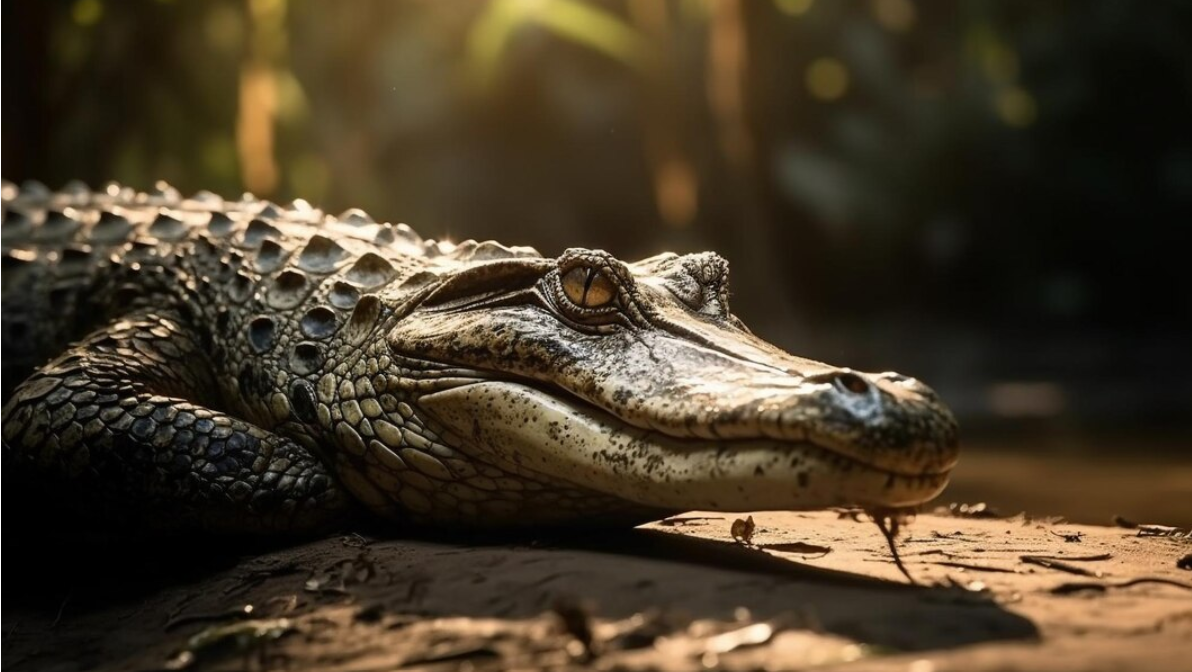
Large crocodilian reptiles, such as alligators, are widespread across the globe. Subtropical and tropical areas are home to them; the American alligator ranges from North Carolina to Florida and Louisiana. Freshwater wetlands near rivers, lakes, and ponds are usually home to alligators. The following are some fascinating facts about alligators:
1. In the wild, alligators have a 50-year lifespan.
2. In pursuit of food, alligators often move up to one or two kilometres from their breeding site.
3. Alligators may bite with force ranging from 3,000 to 4,000 pounds per square inch.
4. Although they may be seen soaking up the sun during the day, alligators are usually active at night.
5. With their excellent sense of smell, alligators can locate their prey up to thirty feet away.
6. Alligators are cold-blooded creatures that depend on outside heat sources, such as sunlight or warm water, to maintain their body temperature.
7. Alligators are important to the health and structure of their environment, which is why they are regarded as keystone species.
8. Alligators may reach a maximum length of 20 feet and a maximum weight of 1,000 pounds.
9. Being omnivores, alligators will consume fish, birds, and animals for sustenance.
10. Although they are a hunted species, alligators are protected by both limited hunting and culling initiatives that safeguard other wildlife and cattle.
With their long history and unique adaptations, alligators are really amazing animals. They continue to flourish in a variety of settings after managing to live for millions of years. We may appreciate and respect these amazing reptiles even more by knowing these intriguing facts about alligators.
FAQ (frequently asked questions) about Alligators
Q: What is an Alligator?
Ans: An alligator is a large reptile belonging to the family Alligatoridae. Known for their powerful jaws and armored bodies, alligators are primarily found in the southeastern United States and China.
Q: Where do Alligators live?
Ans: Alligators typically inhabit freshwater environments such as swamps, marshes, rivers, and lakes. The American alligator is mostly found in the southeastern U.S., especially Florida and Louisiana.
Q: What do Alligators eat?
Ans: Alligators are carnivores. They feed on fish, birds, turtles, mammals, and occasionally carrion. Juvenile alligators eat insects and small aquatic creatures.
Q: Are Alligators dangerous to humans?
Ans: Yes, alligators can be dangerous if provoked or if humans encroach on their territory. However, unprovoked attacks on humans are rare, and they typically avoid confrontation.
Q: How do Alligators reproduce?
Ans: Alligators reproduce by laying eggs. Females build a nest of vegetation and lay 20–50 eggs, which incubate for about 60–65 days. The temperature of the nest determines the sex of the hatchlings.
Q: How do Alligators defend themselves?
Ans: Alligators use their strong tails and powerful jaws to defend themselves. They are also excellent swimmers and can retreat quickly into the water when threatened.
Q: How long do Alligators live?
Ans: Alligators can live 35–50 years in the wild, and some individuals in captivity have lived over 65 years with proper care.
Q: What are the physical characteristics of Alligators?
Ans: Alligators have large, muscular bodies covered in tough, scaly skin. They have broad snouts, sharp teeth, and powerful tails. Adult males can reach over 13 feet in length.
Q: What’s the difference between Alligators and Crocodiles?
Ans: Alligators have broader, U-shaped snouts, and when their mouths are closed, only their upper teeth are visible. Crocodiles have V-shaped snouts and visible upper and lower teeth when closed.
Q: Are Alligators endangered?
Ans: The American alligator was once endangered but has made a significant recovery thanks to conservation efforts. Today, it is listed as “Least Concern” and is considered a conservation success story.
#Alligator, #WildlifePhotography, #AlligatorLove, #ReptilesOfInstagram, #NatureLovers, #WildlifeConservation, #FloridaAlligator, #AlligatorSwamp, #Herpetology, #CrocodileAndAlligator, #ReptileLovers, #WildlifeWatch, #AlligatorFacts, #DangerousWildlife, #AnimalKingdom
Our sources and references about Alligator
1: Wikipedia – Alligator
2: National Geographic – Alligator Facts
3: IUCN Red List – Alligator Conservation Status
4: U.S. Fish & Wildlife Service – Alligator