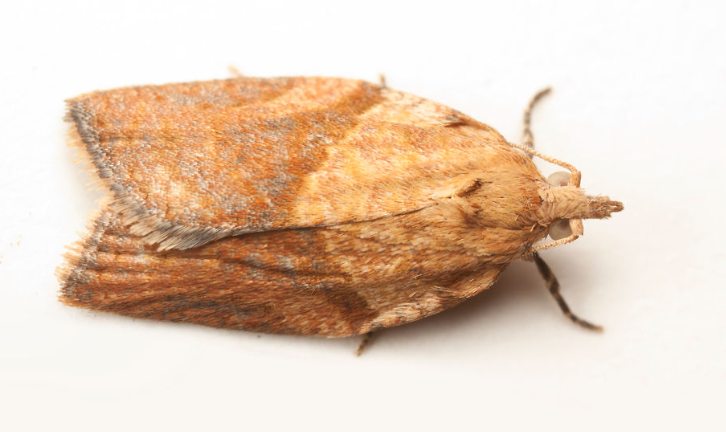
Interesting and informative facts about apple moths
Apple moths are little insects that are members of the Yponomeutidae family. Their scientific name is Argyresthia conjugella. These moths are often seen on fruit trees, such as apple orchards, where they may seriously harm the harvests. Their forewings are typically dark or grey with definite patterns, and they have a wingspan of around 10–15 mm.
Top 10 Facts about Apple Moth
| SCIENTIFIC NAME | Argyresthia conjugella (Apple Moth) |
| CLASSIFICATION | KINGDOM: Animalia CLASS: Insecta ORDER: Lepidoptera FAMILY: Argyresthiidae PHYLUM: Arthropoda GENUS: Argyresthia |
| SIZE | Wingspan of 10-12 mm |
| HABITAT | Primarily found in apple orchards and areas with apple trees, commonly in temperate regions |
| DIET | Larvae feed on the leaves, flowers, and fruits of apple trees |
| SPECIES | Apple Moth (*Argyresthia conjugella*) |
| COUNTRY | Found in Europe, parts of Asia, and introduced to North America |
| GESTATION PERIOD | Eggs hatch into larvae, which then go through several developmental stages, typically in a few weeks to months depending on the climate |
| LIFE SPAN | 1 to 2 months from egg to adult moth |
| CONSERVATION STATUS | Not threatened; considered a pest in apple orchards |
Mating behaviour and life cycle of apple moths
The four phases of an apple moth’s life cycle are the egg, larva, pupa, and adult. On the leaves or fruits of the host plant, generally close to the stem, the female moth deposits her eggs. The eggs are hard to see since they are small and transparent. The larvae hatch from the eggs and feed on plant tissues, especially the developing fruits and young leaves.
Factors that contribute to their habitat selection and distribution patterns
Because they have the ability to seriously harm their host plants, apple moth larvae are regarded as pests. They cause the leaves to shrivel and become brown by tunnelling or mining them. Regarding fruits, the larvae consume the flesh, resulting in ugly scars and a greater vulnerability to rot and other illnesses. Farmers may experience lower agricultural yields and financial losses as a result of these moths’ feeding activities.
Damage caused by apple moths, including the impact on fruit quality and yield
Apple moths and other fruit trees are often afflicted by this insect, which is sometimes referred to as the codling moth. This moth may also infest other fruit trees, including pears, plums, and cherries, despite its name seeming to imply otherwise. These trees’ fruit is consumed by the apple moth’s larvae, which damages the plants and lowers their productivity. A few fascinating facts about the apple moth will be covered in this post.
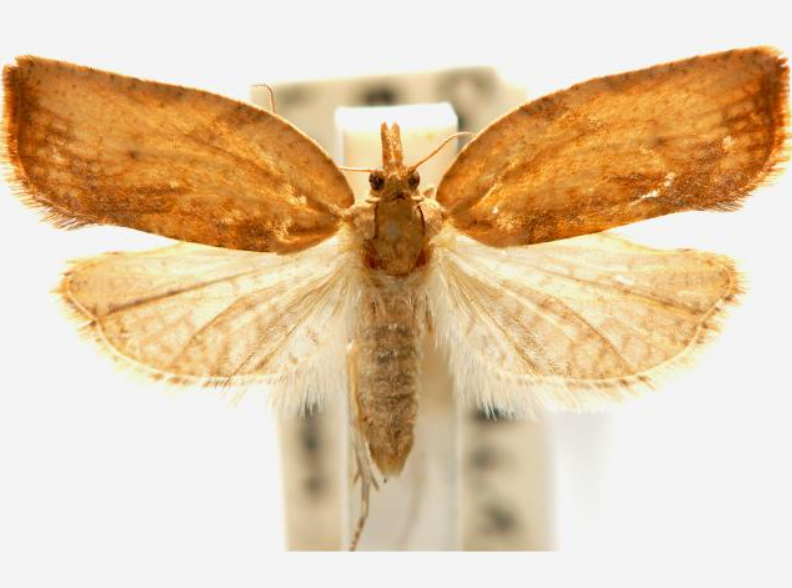
1. Identify apple moths based on their physical appearance:
The adult apple moth is distinguished by its unique pattern and light grayish-brown hue on its wings, which have a wingspan of around 1.5 cm. The Apple Moth’s caterpillars are pinkish-brown in colour with a darker head, and they range in length from 9 to 18 mm.
2. The life cycle of apple moths, starting from the egg stage:
The apple moth has four phases throughout its whole life cycle: the egg, larva, pupa, and adult. The female moth deposits her eggs on the fruit’s surface, on leaves that are adjacent to the fruit that is still forming, or at the calyx, or base. In ten to fourteen days, the eggs hatch into larvae, which dig into the fruit to eat. The adult moth emerges after around two weeks of the pupal stage.
3. Geographical distribution where they are particularly prevalent:
Although originally from Europe and Asia, the apple moth is now found over most of the globe. It may be found in every area of the United States that grows apples, as well as in Canada, Mexico, and a few locations in South America, Africa, and Australia.
4. Damage caused by apple moths, including the impact on fruit quality and yield:
The apple moth larvae crawl within the apple as they feed on it. The damaged fruit may have entrance and exit holes in addition to the tunnels, which are evident as brown streaks on the fruit’s surface. In addition to lowering the fruit’s quality, this damage exposes it to more bugs and illnesses. The crop may be lost entirely in cases of severe infestation.
5. Pest management strategies used to control apple moth populations:
There are several approaches to managing the apple moth infestation in orchards. Cultural, biological, and chemical control techniques are among them. Cultural practices include pruning to increase air circulation, removing and discarding damaged fruit, and maintaining good tree cleanliness.
6. Conventional methods and alternative approaches for pest control:
Biological control techniques include the introduction of the apple moth’s natural enemies, such as parasitic wasps, into the orchard. In chemical control measures, the larvae are killed by pesticides. To prevent hurting pollinators and helpful insects, this should only be used as a last option and with caution.
7. Mating disruption at different stages of their development, including larva, pupa, and adult:
Using pheromones, mating disruption lowers the likelihood of egg-laying and infestation by confusing and preventing male moths from locating females to mate with. This method of managing apple moth populations is both ecologically sound and successful.
8. Importance of integrated pest management practices for sustainable apple production:
Some farmers are now using integrated pest management (IPM) strategies to enhance sustainable pest management and reduce the use of hazardous pesticides. This entails keeping an eye on the number of pests and managing the infestation successfully by combining a variety of management techniques. This method saves the farmer money while also lessening the environmental impact.
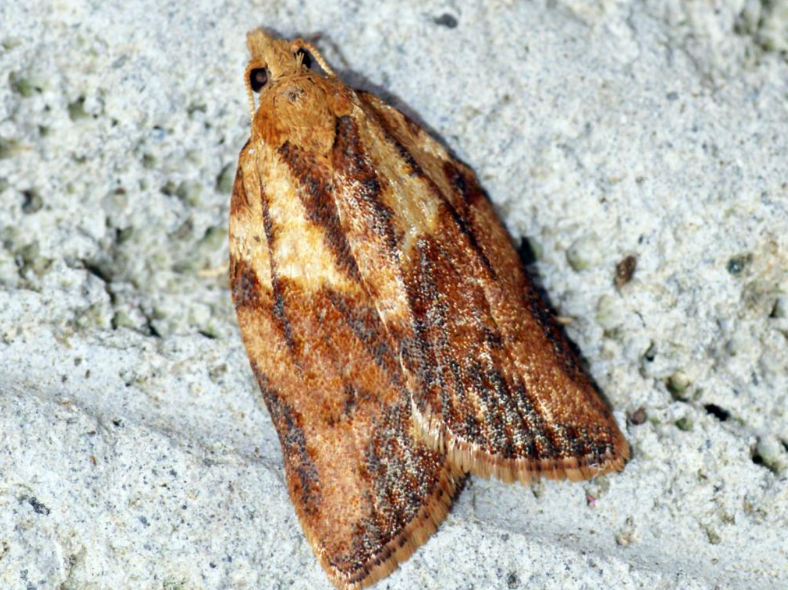
Specific symptoms or signs of apple moth infestation in apple orchards
The apple moth is a frequent pest that may seriously harm other fruit plants, including apple trees. Its influence may be reduced, however, with appropriate management and control techniques. Farmers and gardeners should take the appropriate precautions to avoid and manage infestations by being aware of this moth’s life cycle and habits. We can guarantee a healthier and more fruitful environment for our fruit trees and lessen the use of dangerous pesticides by using sustainable pest control approaches.
Feeding habits of apple moths, focusing on their preference for apple trees
In apple orchards and other fruit trees, apple moths are often considered a nuisance. They pose a risk to these plants’ health and output because of their tiny size and eating habits. Apple moth population control and crop damage reduction are often achieved by the use of efficient pest management techniques, such as pheromone trapping and targeted pesticides.
FAQ (frequently asked questions) about Apple Moth
Q: What is an Apple Moth?
Ans: The Apple Moth (Argyresthia conjugella) is a small moth species belonging to the family Yponomeutidae, known for its larval stage that feeds on apple trees and other fruit-bearing plants.
Q: Where do Apple Moths live?
Ans: Apple Moths are found in regions where apple trees and other related fruit plants grow. They are commonly found in orchards, gardens, and rural areas in Europe and parts of North America.
Q: What do Apple Moths eat?
Ans: The larvae of Apple Moths primarily feed on the leaves, flowers, and fruit of apple trees. They can also infest other fruit-bearing plants in the Rosaceae family.
Q: How do Apple Moths defend themselves?
Ans: Apple Moths rely on their small size and camouflage to avoid predators. They are not aggressive and use their ability to blend in with their surroundings for protection.
Q: How do Apple Moths reproduce?
Ans: Apple Moths reproduce by laying eggs on the leaves or fruit of apple trees. The eggs hatch into larvae, which then feed on the plant material before pupating and becoming adult moths.
Q: Are Apple Moths harmful to crops?
Ans: Yes, Apple Moths can be harmful to apple orchards and other fruit crops as their larvae damage leaves and fruit, potentially reducing crop yields.
Q: How long do Apple Moths live?
Ans: The adult Apple Moth has a relatively short lifespan, typically living for about 2 to 3 weeks, during which they mate and lay eggs before dying.
Q: What are the characteristics of Apple Moths?
Ans: Apple Moths are small, with white or light-colored wings often marked with dark spots. The larvae are tiny and can be difficult to spot, but they cause noticeable damage to apple trees.
Q: How do Apple Moths affect the environment?
Ans: Apple Moths can disrupt local ecosystems by damaging fruit crops, potentially affecting the food supply for other species that depend on those plants.
Q: Are Apple Moths a significant pest?
Ans: While Apple Moths are not usually a major pest, they can cause localized damage to apple orchards and other fruit crops, making them a concern for farmers and gardeners.
#AppleMoth, #MothsOfInstagram, #InsectLovers, #MothSpecies, #NaturePhotography, #WildlifePhotography, #InsectWorld, #InsectIdentification, #MothLife, #Pollinators, #PestControl, #MothLovers, #Entomology, #NatureLovers, #WildlifeConservation
Our sources and references about Apple Moth
1: Wikipedia
2: Encyclopaedia Britannica
3: ABC Education
4: Nature Scientific Reports