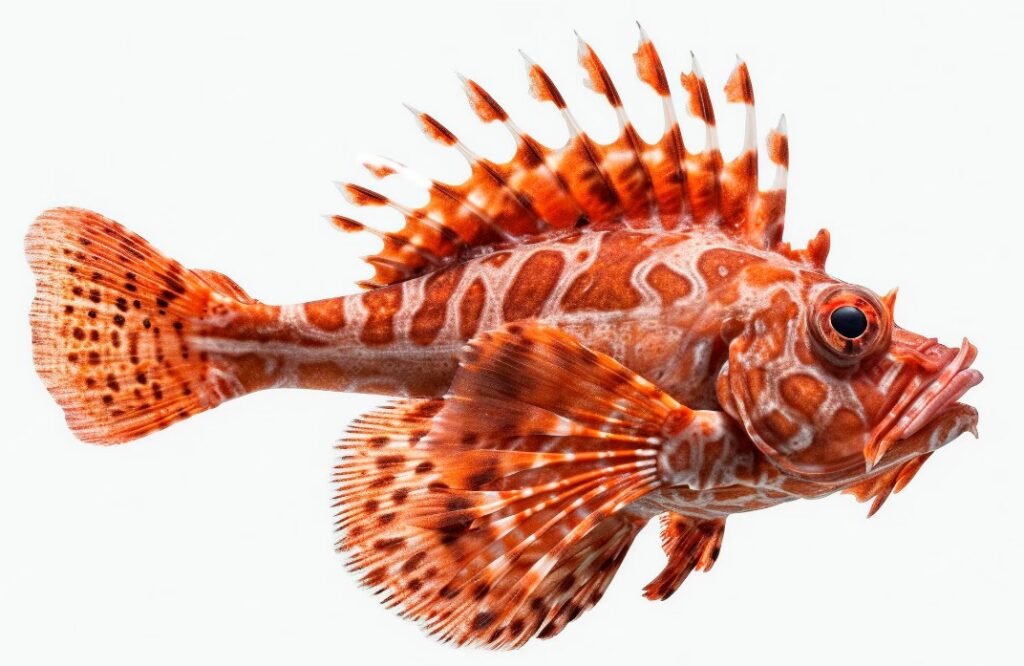
The Scorpion Fish is a fascinating and dangerous marine species known for its venomous spines and excellent camouflage. These fish belong to the Scorpaenidae family and are found in oceans around the world, especially in tropical and temperate waters. Scorpion fish use their cryptic appearance to blend into coral reefs and rocky seafloors, ambushing prey with lightning speed. While their sting can be painful and potentially dangerous to humans, they are rarely aggressive unless provoked.
Quick Top 10 Facts about Scorpion Fish
| SCIENTIFIC NAME | Scorpaenidae (family of various genera and species) |
| CLASSIFICATION | KINGDOM: Animalia PHYLUM: Chordata CLASS: Actinopterygii ORDER: Scorpaeniformes FAMILY: Scorpaenidae |
| SIZE | Length: 5–50 cm (2–20 inches), depending on species |
| SPECIES | Includes many species, such as the Devil Scorpionfish (Scorpaenopsis diabolus) and Bearded Scorpionfish (Scorpaenopsis barbata) |
| APPEARANCE | Rough, spiny body with camouflage patterns; can resemble rocks or coral; venomous dorsal spines used for defense. |
| LIFE SPAN | Up to 15 years in the wild |
| HABITAT | Warm, shallow coastal waters, coral reefs, rocky sea beds, and sometimes deep sea environments |
| DIET | Small fish, crustaceans, and other bottom-dwelling marine organisms |
| NATURAL PREDATORS | Larger predatory fish, sharks, and humans (through fishing) |
| COUNTRY | Found in tropical and temperate waters worldwide, especially in Indo-Pacific and Red Sea regions |
| GESTATION PERIOD | Oviparous; females lay eggs which are fertilized externally |
| CONSERVATION STATUS | Most species are not endangered; conservation status varies by region and species |
Amazing Facts About Scorpion Fish
1. Masters of Camouflage
Scorpion fish are experts at blending into their surroundings, using their textured skin and coloration to mimic rocks, coral, or seaweed.
2. Venomous Spines
They possess venomous spines along their dorsal fins, which can cause intense pain or even serious injury if stepped on or handled.
3. Ambush Predators
These fish lie motionless on the seafloor until unsuspecting prey comes close, then strike with astonishing speed.
4. Wide Distribution
Scorpion fish are found in oceans worldwide, from shallow reefs to depths of several hundred meters.
5. Not Aggressive
Though venomous, scorpion fish are not aggressive toward humans and only sting in self-defense when threatened.
6. Related to Lionfish
They are closely related to lionfish and stonefish, all members of the Scorpaenidae family.
7. Slow Movers
They typically move slowly and rely on stealth rather than speed, making them efficient hunters.
8. Used in Cuisine
In some regions, scorpion fish are caught and eaten, though their venomous spines must be carefully removed first.
9. Color-Changing Abilities
Some species can subtly change their color to better match their environment.
10. Important Reef Species
Scorpion fish play an important role in reef ecosystems by helping control populations of small fish and invertebrates.

Scorpion Fish (Scorpaenidae): An Examination of the Poisonous Marine Predator
The Scorpaenidae family of predatory fishes includes the scorpion fish, which is distinguished by its aggressive behaviour, camouflage, and poisonous spines. These fish may be found worldwide in warm coastal waters, although they are most common in the Mediterranean and Indo-Pacific areas. Because they are both predators and prey, scorpion fish are important to marine ecosystems, despite the fact that many people ignore them. The physical traits, habitat, nutrition, behaviour, reproduction, and conservation status of scorpion fish are given below:
1. Physical Attributes of Scorpion Fish
Spiny Appearance and Body Features
Scorpion fish are clearly identified by their characteristic spiky look, which aids in their ability to blend in with their environment and ward off predators. The size, shape, and colouration of the more than 30 species of scorpion fish vary.
Body Composition
- Venomous Spines: The scorpion fish’s most distinctive characteristic is its poisonous spines, which may be seen in the pectoral and dorsal fins as well as sometimes along the body. Predators or people who come into touch with these spines may be injected with venom. Although the venom seldom poses a danger to life, it may induce discomfort, swelling, and more serious responses in some situations. Unless provoked, scorpion fish typically do not act aggressively towards people.
- Camouflage: Scorpion fish mimic rocks, corals, or other marine features due to their rough, uneven bodies that are often covered with skin flaps, spines, or warty growths. They can conceal themselves from predators and surprise unwary victims thanks to their camouflaged look, which is an essential defence tactic.
- Mouth and Teeth: Scorpion fish are powerful predators due to their big jaws full of sharp teeth. They are able to swallow huge prey because their mouth expands wide. They are renowned for their ambush hunting strategy, in which they stay still and wait for their target to pass by by swimming before attacking.
- Size: Depending on the species, scorpion fish may range in size. Larger species, such as the gigantic scorpion fish (Scorpaenodes), may grow up to 1 metre (3 feet) in length, whereas the common scorpion fish (Scorpaena scrofa) can only reach approximately 40–50 cm (16–20 inches).
Coloration and Camouflage
The variety of colours that scorpion fish have—usually brown, red, yellow, or green—allows them to blend in with their surroundings. They are quite good at hiding from predators and prey because their colouring is often mottled with patterns that mimic the coral or bottom.
2. Distribution and Habitat of Scorpion Fish
Global Distribution
Temperate, tropical, and warm marine habitats are home to scorpion fish. Because they can blend in and conceal readily, they are usually found around reef systems, seagrass meadows, and rocky outcrops.
- Worldwide Presence: Although they are found all over the world, scorpion fish are most prevalent in the Indo-Pacific area, which includes the Great Barrier Reef in Australia, the Philippines, and the Red Sea.
- American and Mediterranean Waters: They may also be found along North American coasts, such as California and the Gulf of Mexico, and in the Mediterranean Sea.
Preferred Environment and Conditions
These fish are mostly bottom-dwellers, preferring sandy or muddy environments, rocky seabeds, and coral reefs. While certain species, such as Scorpaena scrofa, are known to live in deeper waters, others are found in coastal habitats that are shallow. Strong currents or settings with a lot of marine life are ideal for scorpion fish since they provide plenty of possibilities for both hunting and refuge.
3. Nutrition and Feeding Practices of Scorpion Fish
Ambush Hunting Techniques
Carnivorous predators, scorpion fish use their venom, sharp spines, and camouflage to capture their prey.
- Feeding Patterns: Scorpion fish are ambush predators, which means they wait for their victim to approach within striking distance while lying motionless. They are mostly visual hunters that depend on their capacity to stay still for long stretches of time in order to blend in with their environment and wait for a possible meal to swim by.
- Diet: They eat a broad range of aquatic life, such as octopuses, prawns, crabs, crustaceans, and tiny fish. Additionally, they could feed on invertebrates like molluscs and sea urchins.
- Swallowing Strategy: Because of their massively expanding mouths, scorpion fish may swiftly swallow anything that is significantly bigger than their heads. They usually consume their prey entire after catching it.
Venomous Spines in Defense and Hunting
In addition to being a defence mechanism, scorpion fish use their poisonous spines to subdue their prey. A scorpion fish will erect its spines in warning when it feels threatened, making it harder for predators to get close. In the event of a conflict, the spines sting the assailants, producing discomfort and deterring more violence.
Although scorpion fish venom seldom kills people, it may cause severe pain, swelling, and paralysis. The venom of some species, such as the red scorpion fish (Scorpaena cardinalis), is more powerful and may result in more severe responses.
4. Behaviour and Reproduction of Scorpion Fish
Solitary Nature and Territorial Behavior
Because they prefer to hunt alone and protect their hiding places from other predators, scorpion fish are usually solitary and territorial. When threatened, they are known to act aggressively and defend themselves by using their poisonous spines.
- Resting and Hiding: Due to their solitary nature, scorpion fish often hide in cracks or lie down on the bottom. Due to their nocturnal nature, they are more active while hunting at night.
- Defensive Response: When they are defending their territory or feel threatened by bigger predators, their aggressive behaviour is most noticeable. The principal defence mechanism of scorpion fish is their poisonous spines, which they often erect in a warning posture when they sense danger.
Reproductive Strategy and Egg Protection
Scorpion fish use external fertilisation, in which males release sperm to fertilise the eggs after females release their eggs into the water.
- Spawning Grounds: In safe, concealed places like caves, behind rocks, or on coral reefs, scorpion fish deposit their eggs.
- Larval Development: The larvae finally settle on the ocean bottom to continue developing after hatching after fertilisation.
- Parental Roles: Parental care is seen in some species, where the male protects the eggs and freshly born larvae until they can survive on their own.

5. Conservation Status and Human Interaction
Current Conservation Status
The extinction of scorpion fish is not presently seen to be a serious threat. However, pollution, habitat degradation, and overfishing pose dangers to certain species.
Environmental Threats and Fishing Impact
- Bycatch Risk: Although they are sometimes unintentionally captured as bycatch in fishing nets, scorpion fish are not often targeted for commercial fishing due to their aggressive nature and poisonous spines.
- Habitat Loss: Degradation of habitat, including harm to coral reefs from climate change, ocean acidification, and human activities, is the primary danger to populations of scorpion fish.
- Ecological Role: Because they aid in the management of lesser fish and invertebrate populations, scorpion fish are regarded as keystone species in many marine environments. Therefore, the health of marine food webs may be negatively impacted in a cascade of ways if they diminish.
Human Encounters and Cultural Significance
Because of its poisonous spines, divers and fisherman often consider scorpion fish to be dangerous. Inappropriate handling or stepping on these fish may result in accidental stings, which can cause excruciating and sometimes fatal injuries.
Because its venom is thought to provide a variety of medicinal benefits, certain species of scorpion fish are used in traditional medicine across Asia. The usefulness of scorpion fish venom in medicinal therapies is not well supported by science, and this practice is not common.
FAQ (Frequently Asked Questions) about Scorpion Fish
Q: What is a Scorpion Fish?
Ans: Scorpion fish are venomous marine fish known for their camouflage and spiny defenses, found in tropical and temperate seas worldwide.
Q: Are Scorpion Fish dangerous to humans?
Ans: Yes, their spines contain venom that can cause intense pain, swelling, and in rare cases, more serious symptoms.
Q: Can you eat Scorpion Fish?
Ans: Yes, some cultures eat scorpion fish, but they must be properly prepared to remove the venomous spines.
Q: How does a Scorpion Fish hunt?
Ans: It uses its camouflage to ambush prey like small fish and crustaceans by striking suddenly.
Q: Where do Scorpion Fish live?
Ans: They live in coral reefs, rocky seabeds, and sandy ocean floors in warm coastal waters.
Q: What do Scorpion Fish eat?
Ans: Their diet includes small fish, crustaceans, and other marine bottom dwellers.
Q: How long do Scorpion Fish live?
Ans: Many species live up to 15 years or more in the wild.
Q: Are they related to Lionfish?
Ans: Yes, both belong to the Scorpaenidae family and share similar traits like venomous spines and appearance.
Q: How can you avoid being stung?
Ans: Avoid touching or stepping near rocky or coral areas without protective footwear and never handle unfamiliar fish.
Q: Are Scorpion Fish endangered?
Ans: Most are not endangered, though habitat degradation and overfishing could impact certain populations.
#ScorpionFish #VenomousFish #MarineLife #OceanPredators #ReefCamouflage #TropicalFish #UnderwaterWildlife #Scorpaenidae
Our sources and references about Scorpion Fish
1: Wikipedia – Scorpaenidae
2: National Geographic – Scorpionfish
3: Britannica – Scorpionfish
4: Oceana – Scorpionfish