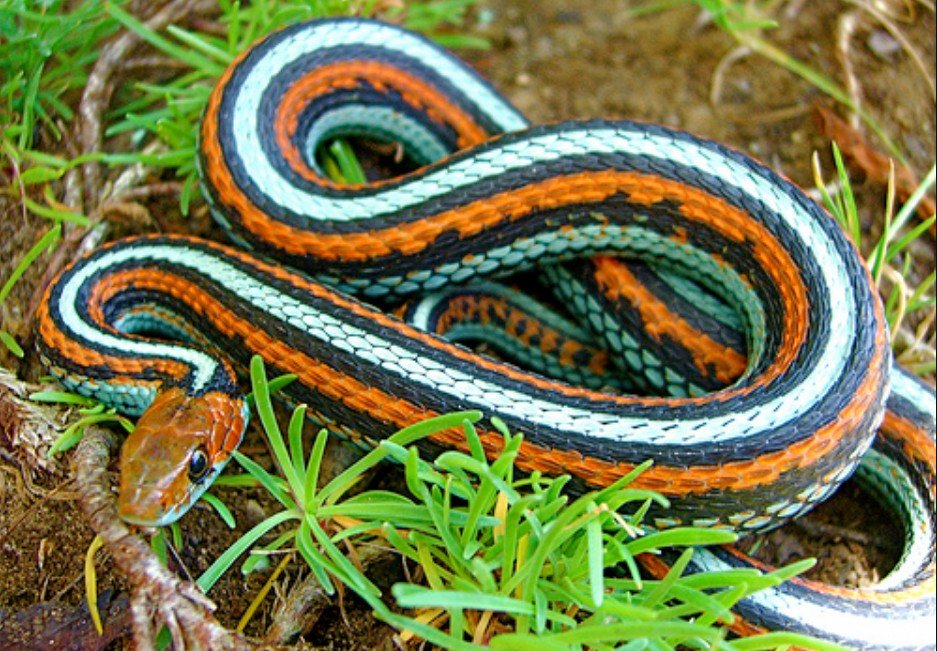
The San Francisco Garter Snake is one of the most striking and rare snakes in North America. Known for its vibrant colors and habitat specialization, it is critically endangered. Found only in a small region around the San Francisco Peninsula, this snake is highly protected. Despite its beauty, it faces numerous challenges in the wild due to habitat loss and human interference.
Quick Top 10 Facts about San Francisco Garter Snake
| SCIENTIFIC NAME | Thamnophis sirtalis tetrataenia |
| CLASSIFICATION | KINGDOM: Animalia PHYLUM: Chordata CLASS: Reptilia ORDER: Squamata FAMILY: Colubridae |
| SIZE | Length: 45–76 cm (18–30 inches) |
| SPECIES | Subspecies of the Common Garter Snake, Thamnophis sirtalis. |
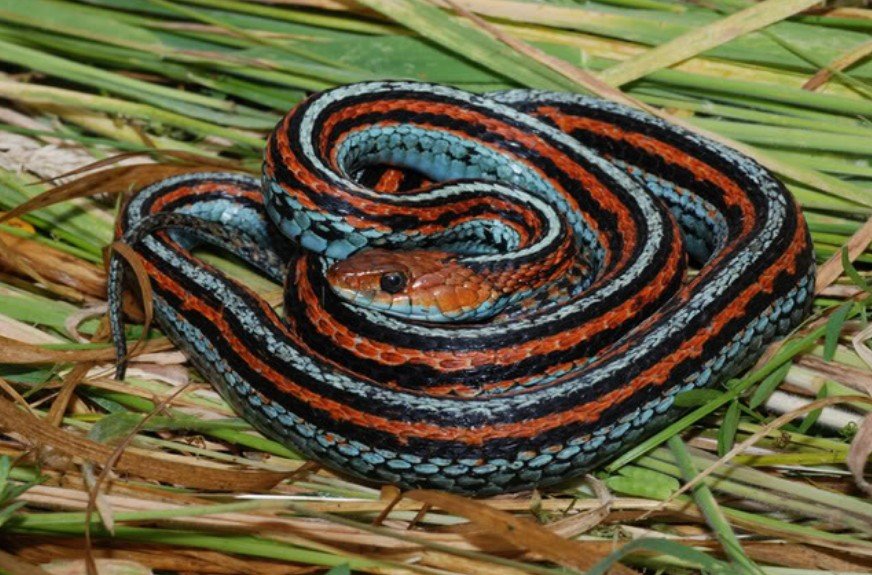
| APPEARANCE | Distinctive with vibrant blue, green, and red stripes along its body, bordered by black markings. It has a striking contrast of colors, making it easily recognizable. |
| LIFE SPAN | In the wild, the San Francisco Garter Snake can live up to 10–15 years, though this can be influenced by environmental conditions and predation. |
| HABITAT | Endemic to the coastal marshes and wetlands of San Mateo County, California, particularly around the San Francisco Peninsula. |
| DIET | The San Francisco Garter Snake primarily preys on amphibians, such as frogs, toads, and newts, along with small fish and invertebrates. |
| NATURAL PREDATORS | Predators of the San Francisco Garter Snake include birds of prey, raccoons, and other larger mammals that may pose a threat to these small snakes. |
| CONSERVATION STATUS | Listed as “Critically Endangered” on the IUCN Red List. Habitat loss, introduced species, and human activity have severely reduced their numbers. |
Amazing Facts About San Francisco Garter Snake
1. Vibrant Coloration
The San Francisco Garter Snake is renowned for its striking color pattern. Its blue, green, and red stripes make it one of the most beautiful snakes in North America.
2. Endemic Species
This snake is only found in a specific region on the San Francisco Peninsula in California, making it highly susceptible to habitat destruction.
3. Specialized Habitat
It prefers marshy, aquatic environments, especially those near ponds and wetlands, where it can find its primary food sources: amphibians and small fish.
4. Critically Endangered
The San Francisco Garter Snake is considered one of the most endangered snakes in the world, with a declining population due to habitat loss, invasive species, and human interference.
5. Amphibian Diet
San Francisco Garter Snakes are primarily amphibian eaters, consuming frogs, toads, and newts. Their diet helps control amphibian populations in their habitat.
6. Threatened by Predators
Due to its small size and brightly colored skin, the San Francisco Garter Snake is vulnerable to predation by birds of prey, mammals, and even other reptiles.
7. Sensitive to Habitat Change
The species’ dependence on specific marshy environments means that changes to its habitat, such as drainage or development, can have devastating effects on its survival.
8. Conservation Efforts
Efforts to protect the San Francisco Garter Snake include habitat restoration, captive breeding programs, and the prevention of invasive species that threaten its population.
9. A Symbol of Biodiversity
Despite its rare status, the San Francisco Garter Snake serves as a symbol for the conservation of California’s wetland and marsh ecosystems, helping raise awareness for other endangered species.
10. Icon of Local Heritage
Found exclusively in the San Francisco area, the San Francisco Garter Snake has become an iconic species for the region, often featured in local wildlife protection campaigns and conservation education.
California’s Vibrant and Mysterious San Francisco Garter Snake
One of North America’s most remarkable and unusual snake species is the San Francisco garter snake (Thamnophis sirtalis tetrataenia). Native to California’s coastal areas, particularly the San Francisco Bay Area, this snake is renowned for its striking colouring and ecological significance. However, its survival is threatened by human activities due to its specialised habitat needs, making it a highly endangered species.
Overview of the San Francisco Garter Snake
The San Francisco garter snake is a subspecies of the common garter snake (Thamnophis sirtalis), known for its wide distribution across North America. Unlike its widespread relatives, this snake is highly localised in California due to its unique morphological features and specific ecological requirements.
First described in the late 19th century, the San Francisco garter snake has become a symbol of California’s biodiversity and a focal point for conservation. Despite its name, it is not limited to San Francisco, with populations found in nearby areas, including parts of Santa Clara and San Mateo counties.
Physical Attributes of the San Francisco Garter Snake
The San Francisco garter snake is instantly recognisable due to its vibrant and unique colouring.
Colouration
- It displays a vivid blue-green hue with red-orange lateral stripes running from head to tail, creating a striking appearance.
- The belly is usually light, often white or cream, contrasting beautifully with the body.
- These colours may act as a warning to predators, signalling danger, despite the snake being non-venomous to humans.
Dimensions
- The snake averages 18–26 inches (45–66 cm) in length.
- Its slender, flexible body allows it to navigate dense vegetation and confined spaces efficiently.
- Its smaller size enhances agility and manoeuvrability in its wetland environment.
Eyes and Head
- The snake has large, dark, forward-facing eyes that detect prey and predators effectively.
- Its small, triangular head distinguishes it from its body and aids in hunting.
Distribution and Habitat
The San Francisco garter snake inhabits California’s coastal wetlands, particularly the San Francisco Peninsula and the Coastal Range. Historically widespread, its range has drastically reduced due to habitat loss and environmental pressures.
Habitat Requirements
- The snake thrives in marshes, wetlands, and streambeds with abundant vegetation.
- Semi-aquatic by nature, it relies on nearby water sources for hunting and shelter.
- Grasses, reeds, and shrubs provide protection and breeding grounds.
Restricted Range
- Populations are now limited to a few isolated areas such as the Golden Gate National Recreation Area and San Mateo County.
- Urbanisation, agriculture, and habitat fragmentation have caused population isolation.
- Only a few protected sites provide the conditions necessary for survival, making the species highly vulnerable.
Diet and Feeding Habits
The San Francisco garter snake is a carnivorous species that feeds primarily on small fish and amphibians.
- Frogs, especially the California red-legged frog (Rana draytonii), are a primary food source.
- It also preys on crustaceans, earthworms, and small fish opportunistically.
- The snake’s agility and swimming ability enable it to hunt effectively in wetlands.
- By controlling populations of prey species, it plays a key ecological role in wetland environments.
Life Cycle and Reproduction
San Francisco garter snakes breed in the spring, reaching sexual maturity at 2–3 years.
- Males compete for females through displays, rituals, and sometimes physical combat.
- Nuptial dances or gestures attract potential mates.
- Females lay 3–20 eggs in sheltered nests; hatchlings emerge in late summer or autumn as independent hunters.
- Young snakes must quickly adapt to survive in their delicate wetland habitats.
Threats and Conservation Status
The San Francisco garter snake is federally listed as endangered in the United States and classified as Critically Endangered by the IUCN. Its survival faces several key threats:
Habitat Destruction
- Urbanisation, agriculture, and industrial development have drastically reduced wetland habitats.
- Drained wetlands decrease shelter and hunting grounds.
- Habitat fragmentation reduces genetic diversity and mating opportunities.
Invasive Species
- Introduced species, such as bullfrogs, threaten native prey populations.
- Competition and predation from non-native species disrupt the snake’s food supply.
Climate Change
- Altered rainfall patterns, droughts, and rising temperatures impact wetland habitats.
- Water availability changes threaten the survival of this semi-aquatic species.
Conservation Efforts
- Population monitoring and habitat restoration are ongoing to protect the species.
- Protected areas, such as the San Francisco Bay National Wildlife Refuge, provide safe breeding and living spaces.
- Control of invasive species ensures a sustainable food supply for native snakes.
- Public education campaigns raise awareness of the importance of wetland preservation for species like the San Francisco garter snake.
FAQ (Frequently Asked Questions) about San Francisco Garter Snake
Q: What is the San Francisco Garter Snake?
Ans: The San Francisco Garter Snake is a rare, vibrantly colored snake found only in specific wetland areas around the San Francisco Peninsula in California. It is critically endangered.
Q: What does the San Francisco Garter Snake eat?
Ans: This species primarily feeds on amphibians, including frogs, toads, and newts. It also consumes small fish and invertebrates found in its aquatic habitats.
Q: Why is the San Francisco Garter Snake endangered?
Ans: Habitat destruction, human development, invasive species, and predation have significantly reduced the snake’s population, making it critically endangered.
Q: Where can I find the San Francisco Garter Snake?
Ans: The San Francisco Garter Snake is found in the marshes and wetlands of San Mateo County, California, specifically on the San Francisco Peninsula.
Q: What are the conservation efforts for the San Francisco Garter Snake?
Ans: Conservation efforts include habitat restoration, captive breeding programs, and efforts to control invasive species. These efforts aim to stabilize and increase the snake’s population.
Q: How long does the San Francisco Garter Snake live?
Ans: The San Francisco Garter Snake can live up to 10–15 years in the wild, depending on environmental factors and predation pressures.
Q: Is the San Francisco Garter Snake venomous?
Ans: No, the San Francisco Garter Snake is non-venomous. It captures its prey using constriction, similar to other garter snakes.
Q: How can I help protect the San Francisco Garter Snake?
Ans: Supporting conservation efforts, advocating for wetland habitat protection, and spreading awareness about the snake’s endangered status are ways you can help.
Q: Are there any other subspecies of Garter Snakes?
Ans: Yes, the San Francisco Garter Snake is a subspecies of the Common Garter Snake (Thamnophis sirtalis). There are several other subspecies of garter snakes found across North America.
Q: What is the San Francisco Garter Snake’s role in the ecosystem?
Ans: As a predator of amphibians, the San Francisco Garter Snake helps control the populations of frogs, toads, and other small creatures, maintaining the balance of its wetland ecosystem.
#SanFranciscoGarterSnake #EndangeredSpecies #ConservationEfforts #GarterSnakes #AmphibianPredator #WetlandEcosystems #CaliforniaWildlife #ProtectingWildlife
Our sources and references about San Francisco Garter Snake
1: Wikipedia – San Francisco Garter Snake
2: IUCN – San Francisco Garter Snake
3: US Fish and Wildlife Service – San Francisco Garter Snake