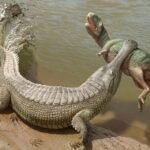
The Sarkastodon lived during the Paleogene period, roughly 50 to 33 million years ago, and was a genus of carnivorous mammal now extinct. It belonged to the order Carnivora and stood among the early members of the diverse group of meat‑eating mammals. Paleontologists have discovered Sarkastodon fossils in varied locations, which offer insight into the evolution of early carnivores. Though it is extinct now, it represents a key species in the development of modern carnivorous mammals.
Quick Top 10 Facts about Sarkastodon
| SCIENTIFIC NAME | Sarkastodon |
| CLASSIFICATION | KINGDOM: Animalia PHYLUM: Chordata CLASS: Mammalia ORDER: Creodonta FAMILY: Hyaenodontidae GENUS: Sarkastodon TYPE: Sarkastodon eocaenus |
| SIZE | Estimated length: 2–3 metres (6.5–10 feet) Weight: Estimated 100–300 kg (220–660 lbs) |
| SPECIES | It was an early carnivorous mammal that lived during the Paleogene and belonged to the extinct family Hyaenodontidae. |
| APPEARANCE | It had a large, robust body with strong jaws and sharp teeth, adapted to a carnivorous diet and a relatively short, muscular build. |
| LIFE SPAN | Its exact lifespan remains unknown, but similar‑sized carnivores suggest it may have lived 10–20 years. |
| HABITAT | It inhabited forests and plains in the Paleogene, in regions now part of modern Europe and Asia. |
| DIET | It was carnivorous and probably preyed on smaller mammals and early herbivores within its ecosystem. |
| NATURAL PREDATORS | As a large predator, Sarkastodon had few predators, though it may have faced competition from other large carnivores of its era. |
| COUNTRY | Fossils appear across Europe and Asia, especially in areas now known as Mongolia. |
| CONSERVATION STATUS | It is extinct. Sarkastodon vanished millions of years ago, likely due to ecosystem changes and competition from other carnivores. |
The Ancient Carnivore Sarkastodon
Carnivorous mammals of the genus Sarkastodon roamed the Earth between 37 and 33 million years ago, during the late Eocene. Sarkastodon became one of the most powerful predators of its era and belonged to the broader group known as Creodonta, which included many ancient carnivores. Though less famous than other extinct creatures, Sarkastodon plays an important role in the evolutionary path of carnivorous mammals.
Its significance in the ancient ecosystems it inhabited becomes clear when you examine its physical traits, habitat, diet, behaviour and extinction.
Fossil Discovery and Classification of Sarkastodon
Researchers first uncovered fossil bones of Sarkastodon in China and Pakistan, regions now spanning Asia and Europe. Because few complete skeletons exist, these fossil remains serve as the basis for reconstructing its biology.
The genus name “Sarkastodon” derives from the Greek words sarkos (flesh) and odon (tooth).
That name references its specialised carnivorous teeth, ideal for tearing flesh.
Though it belongs to the Creodonta order, it differs from relatives such as Hyaenodon or Dryptosaurus, which also represented notable lineages.
History of Sarkastodon
The Sarkastodon occupies a place in the Hyaenodontidae family, known for wolf‑like traits and powerful jaws used to bring down large prey. Its precise relationship to modern carnivores—dogs, cats, hyenas—remains uncertain, but scientists regard its family as among the early predators.
Physical Attributes of Sarkastodon
As a very large carnivorous animal, Sarkastodon exhibited morphological traits that affirmed its status as a top predator in its realm.
Body Dimensions and Structure
Estimates suggest Sarkastodon weighed 200 to 400 kg (440 to 880 lbs), comparable to a large wolf or small bear. Though smaller than some ancient predators, it remained a formidable animal capable of tackling large prey. Its build combined strength and agility, enabling it to pursue and overpower animals much larger than itself.
Teeth and Skull Characteristics
Its teeth and skull ranked among its most distinguishing features. It bore specialised, sharp teeth designed to slice flesh, typical of the Creodonta group. Its elongated, rather narrow skull resembled that of modern big cats or hyenas. Likely, it used its powerful bite to subdue prey, aided by well‑developed canine teeth.
Movement and Limb Adaptations
Muscular, sturdy limbs would have enabled Sarkastodon to sprint with considerable speed. It probably hunted smaller to medium mammals, as its limbs adapted for high‑speed pursuit. Its retractable claws enhanced its grip under varied conditions—climbing or chasing prey alike.
Distribution and Habitat of Sarkastodon
Earth underwent major biological and climatic shifts in the late Eocene. Large regions of what we now call Asia and Europe remained warm and lush, dominated by tropical and subtropical forests. Sarkastodon thrived in those areas, which supported a wide variety of flora and fauna.
Geographic Range and Fossil Locations
Palaeontologists have located Sarkastodon fossils mostly across Asia and Europe, especially in China and Pakistan. These regions hosted rich early mammalian fauna, providing Sarkastodon access to plenty of prey.
- Asia: Ancient Asian landscapes likely featured dense tropical forest or woodland. That environment supported many herbivores, which Sarkastodon preyed upon.
- Europe: Similarly, warmer paleo‑European regions housed diverse herbivores and other species that predators like Sarkastodon hunted.
Though primarily terrestrial, Sarkastodon may have used rivers or channels to ambush prey, similar to some modern predators adapted to land and water environments.
Nutrition and Behaviour of Sarkastodon
As a carnivore, Sarkastodon primarily ate meat. Its dental anatomy—long, sharp canines and strong molars—suited a protein‑rich diet. Given its size and power, scientists believe it preyed on creatures ranging from small mammals to larger herbivores.
Feeding Patterns and Hunting Techniques
Much like modern wolves, Sarkastodon may have hunted in groups and coordinated attacks on large prey. However, it might also have acted opportunistically, scavenging carcasses when available. Its strength and biting ability made it a formidable predator, able to tear through thick flesh and bone.
Although fossil evidence remains sparse, researchers infer it used both chase and ambush tactics.
On large prey, it likely employed endurance and team strategies.
Against smaller prey, its strong jaws and sharp teeth probably dispatched victims quickly.
Social Organisation and Group Dynamics
Whether Sarkastodon lived solitary or in packs remains unknown, but it may have resembled later carnivores in structure. Large prey demands could have encouraged cooperation. Alternatively, it may have hunted individually, gathering only at breeding or in times of abundant food.
Extinction of Sarkastodon
Scientists estimate Sarkastodon became extinct around 33 million years ago, near the close of the Eocene. That extinction coincided with dramatic climate shifts, especially the onset of the Oligocene, when global cooling began. Forests gave way to open savannas and grasslands, transforming habitats that once supported Sarkastodon.
Environmental Changes Leading to Extinction
- Cooling climates reduced tropical and subtropical forest cover.
- The spread of open grasslands made large‑scale predation more difficult.
- Prey suited to huge predators declined in number and diversity.
Many creodonts, including Sarkastodon, failed to adapt rapidly to changing environments.
Additionally, rising new carnivores—early dogs, cats and other mammals—may have outcompeted Sarkastodon.
Sarkastodon in Pop Culture
Though less famous than some extinct beasts, authors and documentaries sometimes feature Sarkastodon. They portray it as a fearsome Eocene predator, highlighting the diversity of carnivorous mammals before modern species emerged.
Amazing Facts About Sarkastodon
1. One of the Largest Early Carnivores
Sarkastodon represented among the largest early carnivores, with body length estimated at 2–3 metres and weight 100–300 kg.
2. Member of the Hyaenodontidae Family
It belonged to the extinct Hyaenodontidae family, a group once dominant before modern carnivores like cats and dogs arrived.
3. Powerful Jaws and Teeth
With robust jaws and razor‑sharp teeth, Sarkastodon adapted well for a carnivorous diet, capable of subduing large prey.
4. Lived During the Paleogene Period
This genus occupied Earth during the Paleogene, around 50 to 33 million years ago, when mammals diversified.
5. Top Predator of Its Time
As a large carnivore, Sarkastodon likely ruled its ecosystem, preying on smaller mammals and early herbivores.
6. Fossils Found Across Europe and Asia
Fossils appear across Europe and Asia, including present‑day Mongolia, offering clues about prehistoric ecosystems.
7. Likely Lived in Forests and Plains
It probably inhabited forests and plains of the Paleogene, where it hunted and scavenged across open landscapes.
8. Extinct Before Modern Carnivores Emerged
Sarkastodon vanished long before cats, dogs or hyenas evolved, leaving remains that inform carnivore evolution.
9. Evolved During the Rise of Mammals
It marks an early branch in the diversification of predators following dinosaur extinction, filling a niche of apex predator.
10. Mysterious Extinction
No single cause explains its demise; environmental change, competition and new predators likely all played roles.
FAQ (Frequently Asked Questions) about Sarkastodon
Q: What was Sarkastodon?
Ans: Sarkastodon constituted an extinct genus of large carnivorous mammals from the Paleogene, famed for its size and predatory power.
Q: When did Sarkastodon live?
Ans: Sarkastodon lived between about 50 and 33 million years ago, during the Paleogene epoch following dinosaur extinction.
Q: What did Sarkastodon eat?
Ans: It consumed meat, preying on smaller mammals and herbivores, using sharp teeth and powerful jaws in its hunts.
Q: Where have Sarkastodon fossils been found?
Ans: Scientists have found its fossils across Europe and Asia, notably in areas now known as Mongolia.
Q: What caused Sarkastodon’s extinction?
Ans: Though uncertain, its extinction likely resulted from ecosystem change, competition and the rise of new predators.
Q: How big was Sarkastodon?
Ans: It reached 2–3 metres in length and weighed between 100 and 300 kg.
Q: Was Sarkastodon a direct ancestor of modern carnivores?
Ans: No—while it belonged to Hyaenodontidae, it was not a direct ancestor of modern cats, dogs or hyenas.
Q: What family did Sarkastodon belong to?
Ans: Sarkastodon belonged to the extinct Hyaenodontidae family, once dominant prior to the rise of modern carnivores.
Q: How long did Sarkastodon live?
Ans: Its exact lifespan remains unknown, but comparisons suggest 10–20 years.
Q: Is Sarkastodon related to hyenas?
Ans: It occupied the same order as hyenas but belonged to a distinct, extinct family—Hyaenodontidae, separate from modern hyenas.
#Sarkastodon #PaleogenePredator #PrehistoricCarnivores #ExtinctMammals #Hyaenodontidae #AncientPredators #FossilDiscoveries #Paleontology #EarlyCarnivores
Our sources and references about Sarkastodon
1: Wikipedia – Sarkastodon 2: ScienceDirect – Sarkastodon Article 3: PaleoBlog – Sarkastodon Fossils 4: Britannica – Sarkastodon