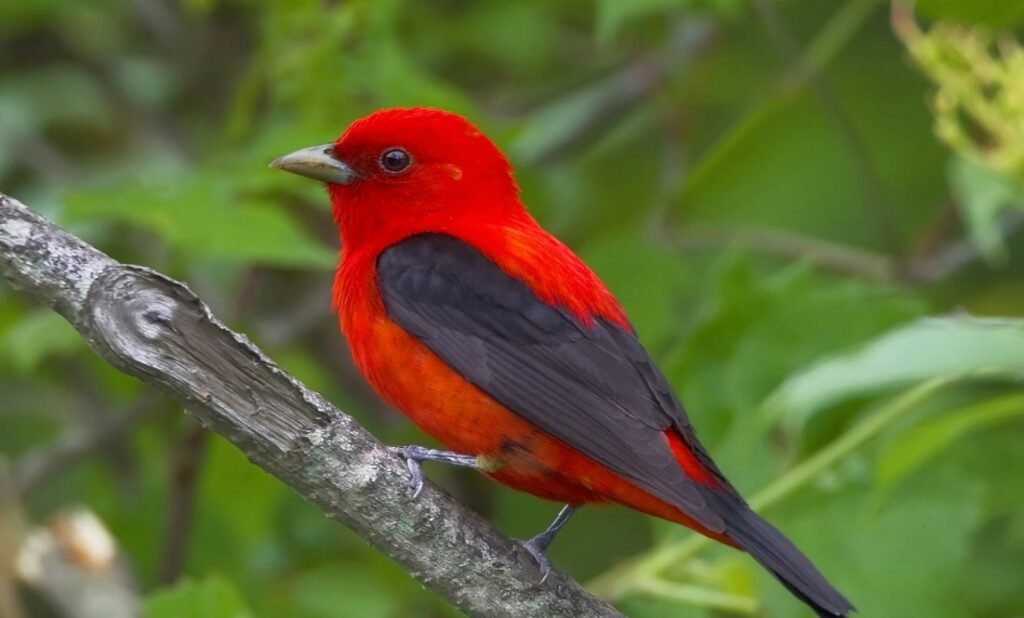
The Scarlet Tanager is a vividly colored songbird native to North America, particularly noted for the male’s brilliant red plumage and black wings. These birds are part of the cardinal family and are primarily found in deciduous forests during the breeding season. Scarlet Tanagers migrate long distances, spending winters in South America. Known for their distinctive song and insectivorous diet, they play an important ecological role in controlling forest insect populations.
Quick Top 10 Facts about Scarlet Tanager
| SCIENTIFIC NAME | Piranga olivacea |
| CLASSIFICATION | KINGDOM: Animalia PHYLUM: Chordata CLASS: Aves ORDER: Passeriformes FAMILY: Cardinalidae |
| SIZE | Length: 6.3–7.5 inches; Wingspan: 9.8–11.4 inches; Weight: 0.8–1.3 ounces |
| SPECIES | Scarlet Tanager |
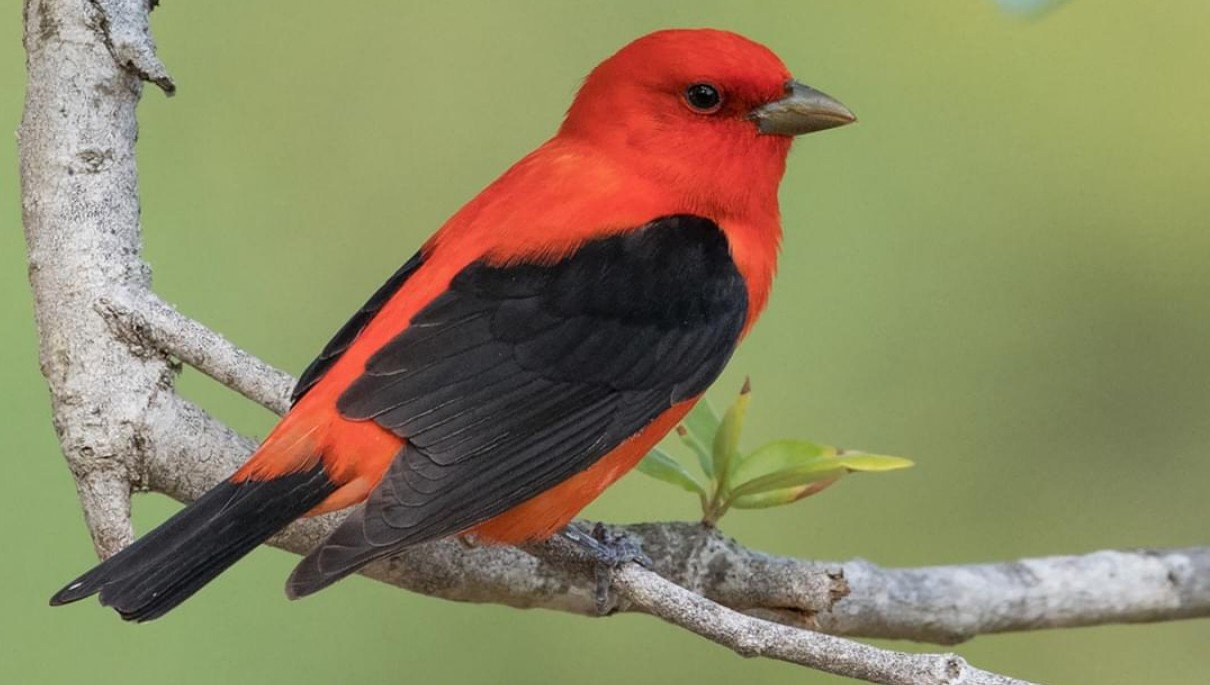
| APPEARANCE | Breeding males are bright red with black wings and tail; females and nonbreeding males are olive-yellow with darker wings |
| LIFE SPAN | Typically 5–10 years in the wild |
| HABITAT | Deciduous and mixed forests of eastern North America; tropical forests in South America during winter |
| DIET | Mainly insects (caterpillars, beetles, wasps); also fruits and berries, especially in fall and winter |
| NATURAL PREDATORS | Snakes, squirrels, blue jays, and domestic cats (nest predators); hawks and owls (adults) |
| COUNTRY | Breeds in the U.S. and Canada; winters in northwestern South America |
| GESTATION PERIOD | Egg incubation: 11–14 days; Nestling period: 9–15 days |
| CONSERVATION STATUS | Least Concern (IUCN), though populations are declining due to habitat loss and fragmentation |
Amazing Facts About Scarlet Tanager
1. Brilliant Breeding Plumage
Male Scarlet Tanagers are known for their bright scarlet-red bodies with jet-black wings, which they display only during the breeding sSet featured imageeason.
2. Dull in Disguise
Outside of breeding season, males molt into an olive-yellow color, similar to females, making them less visible to predators during migration.
3. Long-Distance Migrants
Scarlet Tanagers migrate over 3,000 miles between North America and South America twice a year.
4. Forest Canopy Specialists
They prefer to stay high in the treetops, making them more often heard than seen in their dense forest habitats.
5. Insect-Eaters Extraordinaire
Scarlet Tanagers help control insect populations by consuming large amounts of beetles, caterpillars, ants, and wasps.
6. Berry Bonus Diet
In late summer and fall, they supplement their diet with berries and other soft fruits before migration.
7. Song and Call
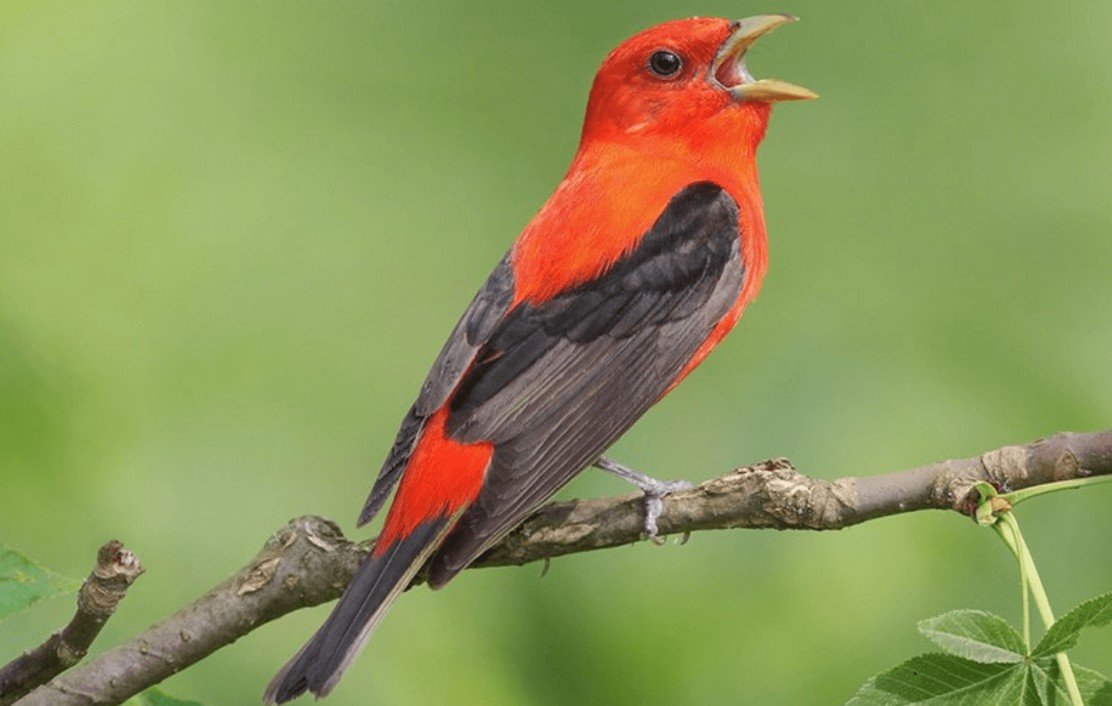
Their song is a hoarse, robin-like melody, while their call sounds like a distinctive “chip-burr” or “chick-brrr.”
8. Nest Builders
Females construct shallow cup-shaped nests on horizontal tree branches, using grass, bark, and twigs.
9. Vulnerable to Cowbird Parasitism
Brown-headed cowbirds often lay eggs in Scarlet Tanager nests, which can impact the tanager’s breeding success.
10. Symbol of Eastern Forests
The Scarlet Tanager is often used as a symbol of healthy eastern deciduous forests due to its sensitivity to habitat disturbance.
The Scarlet Tanager: An Amazingly Vibrant Bird of Migration
Males of the vividly coloured scarlet tanager (Piranga olivacea) are immediately identified by their bright red plumage, which contrasts with the females’ olive-green or yellowish colours. With its remarkable appearance, distinctive behaviour, and intriguing migratory patterns, this lovely bird enthrals both nature lovers and birdwatchers. In addition to being a beautiful bird, the scarlet tanager is an important member of the ecosystems in which it lives. The physical traits, behaviour, habitat, food, reproduction, migration, and conservation status of the scarlet tanager will all be covered below:
1. The Scarlet Tanager’s Overview
Classification and Geographic Range
The Thraupidae family, which comprises more than 200 species of tanagers mostly located in the Americas, contains the scarlet tanager. The scarlet tanager, which is indigenous to North and Central America, is renowned for its vivid scarlet-red plumage, making it one of the most colourful birds in the temperate woods of North America. In contrast, many tanager species are found in tropical and subtropical environments.
Key Physical Attributes
- Plumage: The vivid red body with black wings and tail makes the male scarlet tanager easy to see. Mature males stand out against the forest’s green background because of their strong red colouring. With olive-green or yellowish feathers that help her blend in with the greenery, the female, on the other hand, is less noticeable.
- Size: The scarlet tanager is a medium-sized songbird, with a wingspan of about 12 inches (30 cm) and a length of about 7.5 to 8 inches (19 to 20 cm). Females are somewhat lighter than males, which usually weigh between 22 and 30 grammes.
- Beak: The small, conical beak of the scarlet tanager is perfect for gathering fruits and insects. Many songbirds have this distinctive beak shape, which facilitates them access to a range of food sources.
2. Distribution and Habitat
Breeding Range and Seasonal Distribution
During the breeding season, scarlet tanagers are mostly found in eastern and central North America. Between their breeding habitats in North America and their wintering homes in the tropical forests of South America, these birds migrate thousands of kilometres.
Preferred Breeding Habitats
- Deciduous and Mixed Forests: Scarlet tanagers are found in mixed and deciduous woods during the breeding season, especially in old forests with thick canopies. Because they can find enough of food supplies and nesting places in places with dense tree cover and rich understory, they like these habitats.
- Regional Distribution: The Appalachian Mountains, the Great Lakes area, and portions of the Northeast and Midwest are among the eastern North American locales where these birds are often seen. They are often found in woods that include a variety of hardwood trees, including birches, oaks, and maples.
Wintering Grounds
- Tropical Forests: Scarlet tanagers migrate southward to tropical areas of Central and South America during the winter, especially in northern Peru, western Panama, Ecuador, and Colombia. During the months when the birds are not nesting, these places provide them the warmth and nourishment they need.
- Habitat Type: They can eat a wide range of fruits, insects, and other foods, and they are often found in lowland tropical and subtropical woods.
3. Social Structure and Behaviour
Solitary Nature and Mating Season Dynamics
With the exception of the mating season, the scarlet tanager is renowned for being elusive and lonely. Unlike several other bird species, these birds are usually solitary and do not live in huge groups. Although they are popular topics for birdwatchers due to their brilliant plumage and powerful songs, they are frequently difficult to find since they like to remain concealed in the deep canopy of trees.
Behavioural Characteristics
- Foraging: As insectivorous birds, scarlet tanagers mostly consume insects including grasshoppers, beetles, ants, and caterpillars. Additionally, they have been seen to eat fruits and berries, particularly when insects are scarcer during the non-breeding season. They go over the tree canopy to feed, often turning over leaves to expose insects that are buried.
- Mating Displays: In order to entice a mate, male scarlet tanagers perform courting displays, which include singing and displaying their vivid plumage. The male’s vivid colours are believed to indicate genetic fitness and overall health, two qualities that are important in luring females.
Communication and Vocalisation
- Singing: One important component of the scarlet tanager’s behaviour is its singing. Males make a succession of quick, piercing whistles while they sing to mark their territory and entice potential mates. These songs are sometimes described as having a “chip-chip-chip-chwee” sound or a rich, twittering trill.
- Body Language: Scarlet tanagers use body language and sounds in addition to singing, particularly during the mating season or while engaging with other members of their species.
4. Nutrition and Feeding Practices
Insect-Based Diet and Seasonal Variation
Scarlet tanagers are predominantly insectivores, as was previously indicated, and they eat a wide range of insects. They depend mostly on caterpillars, ants, beetles, and moths throughout the summer, when insects are abundant. These foods are high in vital minerals and protein.
Dietary Components in Detail
- Insects: Various kinds of caterpillars, which are plentiful in woods throughout the breeding season, are the main food source for scarlet tanagers. They also eat grasshoppers, beetles, and other little insects.
- Fruits and Berries: When they are available, scarlet tanagers consume fruits and berries in addition to insects. Particularly during migration and the non-breeding season, they like to eat a range of wild berries, such as blueberries, blackberries, and cherries.
- Seeds: Scarlet tanagers mostly consume high-protein insects and fruits, while they sometimes consume seeds as well.
5. Lifespan and Reproduction
Breeding Habits and Nesting Behaviour
Compared to other birds, scarlet tanagers reproduce at a very low rate. Courtship and nest construction are the first steps in the breeding process, and they usually produce one brood year.
Reproduction and Chick Development
- Nesting: The nest, which is usually constructed in the higher branches of trees, is the responsibility of the female scarlet tanager. To provide the eggs a cosy environment, the nest is lined with soft feathers and moss and constructed with twigs, grass, roots, and other plant components.
- Eggs and Incubation: Typically pale blue with brown markings, the female lays two to four eggs. While the male protects the area and assists in feeding the female, the female incubates the eggs for 12 to 14 days.
- Chicks: Following the hatching of the eggs, the chicks are fed a meal consisting of fruit and insects by both parents alternately. The chicks may remain close to the nest for a few more weeks until they are completely independent, although they usually fledge (leave the nest) 10 to 12 days after hatching.
Lifespan in the Wild
Scarlet tanagers typically live between eight and ten years in the wild. However, because of predators, inclement weather, or other environmental variables, many may not make it through its first year.
6. Patterns of Migration
Long-Distance Migration Behavior
The scarlet tanager’s long-distance migratory is among its most intriguing features. The scarlet tanager does not travel in big groups as some other birds do. They move either alone or in small groups instead.
Seasonal Migration Details
- Northward Migration: In order to breed in the temperate woods of North America, scarlet tanagers travel northward in the spring from their wintering homes in Central and South America. Usually, this movement occurs between March and May.
- Southward Migration: They typically migrate from August to October, heading south to their tropical homes in Central and South America following the mating season. Scarlet tanagers are often seen flying at night and migrate either alone or in small groups.
7. Status of Conservation
Conservation Status and Current Classification
The International Union for Conservation of Nature (IUCN) has designated the scarlet tanager as a species of Least Concern. But like many migratory birds, it has a number of conservation issues.
Threats to Scarlet Tanager Populations
- Habitat Destruction: The breeding and wintering grounds of the scarlet tanager are under danger owing to the loss of forest ecosystems brought on by logging, agriculture, and urbanisation.
- Climate Change: Shifts in the climate may cause the scarlet tanager’s migratory schedule or food supply to fluctuate.
- Pollution: The insect populations that scarlet tanagers depend on for sustenance may be adversely affected by pesticides and pollution in forests.
Conservation Strategies and Protection Efforts
The main goals of conservation programs are to maintain forests, safeguard migratory routes, and encourage sustainable land use. These initiatives are essential to preserving scarlet tanagers’ habitats and guaranteeing their existence.
FAQ (Frequently Asked Questions) about Scarlet Tanager
Q: What is a Scarlet Tanager?
Ans: The Scarlet Tanager is a North American songbird known for its vivid red-and-black male plumage and insect-based diet.
Q: Where do Scarlet Tanagers live?
Ans: They breed in deciduous forests across eastern North America and winter in the tropical forests of northwestern South America.
Q: What do Scarlet Tanagers eat?
Ans: Their diet includes insects like beetles and caterpillars, as well as fruits and berries.
Q: Are Scarlet Tanagers endangered?
Ans: No, but their populations are declining due to habitat loss and forest fragmentation.
Q: When can I see a Scarlet Tanager?
Ans: They are usually seen in North America from May to August during their breeding season.
Q: What do female Scarlet Tanagers look like?
Ans: Females are olive-yellow with darker wings, helping them blend into the forest canopy.
Q: Do Scarlet Tanagers sing?
Ans: Yes, males sing a hoarse, robin-like song to attract mates and defend territory.
Q: How long do Scarlet Tanagers live?
Ans: In the wild, they can live 5 to 10 years on average.
Q: How far do Scarlet Tanagers migrate?
Ans: They migrate around 3,000 miles between their breeding and wintering grounds.
Q: What kind of nests do they build?
Ans: They build shallow, open cup-shaped nests made of twigs and grasses in the tree canopy.
#ScarletTanager #BirdWatching #NorthAmericanBirds #Songbirds #Migration #ForestBirds #BrightBirds #WildlifeFacts
Our sources and references about Scarlet Tanager
1: Audubon – Scarlet Tanager
2: Cornell Lab – All About Birds
3: Wikipedia – Scarlet Tanager