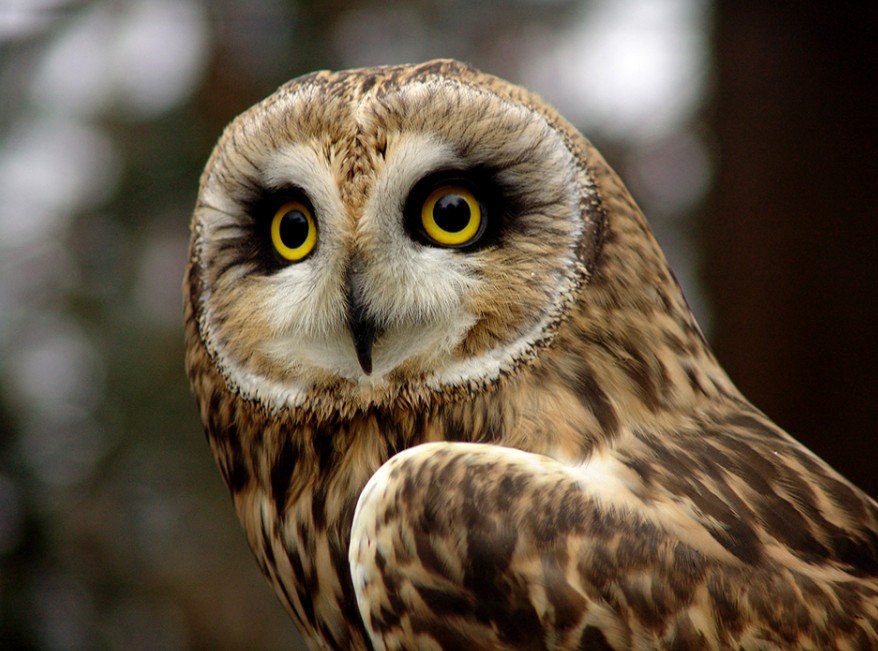
The Short-Eared Owl (Asio flammeus) is a distinctive owl species known for its relatively short ear tufts and round, flat face. This owl is widely distributed across North America, Europe, and Asia, often inhabiting open grasslands, prairies, and marshes. Unlike most owls, the Short-Eared Owl is often active during the day and can be seen hunting in the twilight hours. Their ability to fly silently, along with their keen hunting skills, makes them exceptional predators, typically preying on small mammals like voles and mice. Despite their widespread range, Short-Eared Owls are considered near-threatened in some areas due to habitat loss and other environmental factors.
Quick Top 10 Facts about Short-Eared Owl
| SCIENTIFIC NAME | Asio flammeus |
| CLASSIFICATION | KINGDOM: Animalia PHYLUM: Chordata CLASS: Aves ORDER: Strigiformes FAMILY: Strigidae |
| SIZE | Length: 33–43 cm (13–17 inches) Wingspan: 86–104 cm (34–41 inches) Weight: 180–450 grams (6.3–15.9 ounces) |
| SPECIES | The Short-Eared Owl is a species within the genus Asio. |
| APPEARANCE | The Short-Eared Owl has a round face, small ear tufts, and a mottled brown and white body. Its wings are broad, and it has distinctive yellow eyes. |
| LIFE SPAN | Typically 1–3 years in the wild, though some can live up to 9 years. |
| HABITAT | Grasslands, open prairies, marshes, and tundra; they prefer areas with low vegetation and open fields. |
| DIET | Primarily small mammals, such as voles, mice, and shrews. They also hunt birds and insects. |
| NATURAL PREDATORS | Large birds of prey, such as hawks, and mammalian predators like foxes and coyotes. |
| COUNTRY | Widespread across North America, Europe, Asia, and parts of South America. |
| GESTATION PERIOD | Owls do not have a gestation period as mammals do; instead, female owls lay eggs, which incubate for about 21–30 days before hatching. |
| CONSERVATION STATUS | Least Concern globally, but considered near-threatened in some areas due to habitat loss. |
Amazing Facts About Short-Eared Owl
1. Daytime Hunters
Unlike many owls, Short-Eared Owls are often active during the day, particularly at dawn and dusk, making them more visible to observers than other nocturnal species.
2. Silent Flight
The Short-Eared Owl has specialized wing feathers that help it fly almost silently, which makes it a stealthy and effective hunter of small mammals.
3. Excellent Hunters
With a keen sense of hearing and exceptional eyesight, the Short-Eared Owl can detect its prey, even in low light conditions, and swoop in for a quick capture.
4. Round Faces and Small Tufts
The distinctive round face and small ear tufts help the Short-Eared Owl focus sound, improving its ability to locate prey.
5. Migratory Behavior
Many Short-Eared Owls are migratory, flying south to warmer regions during the winter, while others stay in their breeding grounds year-round.
6. Favored Habitat: Open Fields
These owls prefer open habitats, such as grasslands, prairies, and marshes, where they can easily spot their prey and use their silent flight to hunt effectively.
7. Nesting on the Ground
The Short-Eared Owl often nests on the ground in tall grass or shrubs, where it is camouflaged and safe from most predators.
8. Powerful Talons
Short-Eared Owls have strong talons that allow them to catch and hold onto prey. They use these talons to capture small mammals and hold onto them during flight.
9. Social in Winter
While solitary during the breeding season, Short-Eared Owls often form large groups in the winter, especially in areas with abundant food.
10. Important Role in Ecosystem
As predators of small mammals, Short-Eared Owls help control populations of rodents, contributing to the balance of their ecosystem.

Introduction to Nocturnal bird: Short-Eared Owl
Because of its unique appearance and exceptional hunting skills, the Short-Eared Owl (Asio flammeus) is a fascinating and enigmatic bird of prey. This medium-sized owl is well known for its nocturnal habits, versatility, and broad range. Because of its unusual traits and reticent temperament, the Short-Eared Owl has long captivated both nature lovers and birdwatchers.
1. Features of the Short-Eared Owl’s Body — Short-Eared Owl Identification and Physical Traits
Because of the tiny, unnoticeable tufts of feathers on its head that are sometimes mistaken for ears, the Short-Eared Owl got its name. These “ears,” which give the owl its distinctive appearance, are really tufts of feathers rather than real hearing organs. A deeper look at this remarkable bird’s physical attributes is provided below:
Short-Eared Owl Size and Appearance — Wingspan, Weight, and Plumage
Dimensions and Look The Short-Eared Owl is a medium-sized owl, with a wingspan of 34 to 43 inches (86 to 110 cm) and a length of around 13 to 17 inches (33 to 43 cm). Weight: Females are somewhat bigger than males, and they usually weigh between 10 and 20 ounces (280 and 570 grammes). Colouration: The Short-Eared Owl’s buff-brown, grayish-tan, and darker-streaked plumage allows it to blend in with its surroundings, particularly in wide fields and grasslands. Like many other owls, its face has a distinctive spherical facial disc that aids in directing sound to its ears, and its underparts are often whitish with black streaks.
Short-Eared Owl Eyes and Head
The Short-Eared Owl’s big, golden eyes, which provide remarkable eyesight in low light, are among its most remarkable characteristics. This owl hunts primarily by using its keen eyesight, particularly at dawn and dusk. The owl’s ability to hunt at night is aided by the circular face disc that directs sound into its ears.
Short-Eared Owl Flight and Feathers
Because of its long tail feathers and soft, rounded wings, the Short-Eared Owl is far more manoeuvrable in flight than some other owls with more rigid wings. “Gliding” or “flapping in short bursts” are common descriptions of its flying mode, which enables the owl to seek for food across wide distances. It has been seen flying low over meadows and fields, looking for activity on the ground.
2. Distribution and Habitat of Short-Eared Owl
Because of its extreme adaptability, the Short-Eared Owl can live in a variety of environments. It is found in a wide variety of places, including temperate grasslands and the Arctic tundra. Open fields, meadows, marshes, coastal regions, and even prairies are typical habitats for these owls in North America. The owl’s preferred environment is broken down as follows:
Short-Eared Owl Geographic Range
- Populations of the Short-Eared Owl may be found in North America, Europe, and certain regions of Asia.
- They may be found across most of North America, from Canada to portions of the United States, especially in open, grassy places like marshes, farmlands, and prairies.
- Similar environments, such as moors, tundras, and agricultural fields, are home to the Short-Eared Owl in both Europe and Asia.
Short-Eared Owl Seasonal Movements
The Short-Eared Owl is renowned for its migratory habits, in contrast to many owl species that stay in one place all year round. Seasonal migration causes many populations to relocate to warmer regions in the winter. They could move southward in colder climates in search of better hunting and breeding situations.
3. Hunting Methods and Behaviour
The nighttime hunting activities and unique flying patterns of the Short-Eared Owl are well-known. The Short-Eared Owl is crepuscular, which means it is most active in the twilight hours of dawn and dusk, in contrast to many other owls that hunt exclusively at night. But it has also been seen to hunt throughout the day, particularly in wide spaces where it might benefit from the lack of light.
Short-Eared Owl Flight Pattern and Hunting Strategy
Methods of Hunting When it comes to hunting, the Short-Eared Owl is quite proficient. Its main methods of hunting are sound detection and ground search for prey. Because of its very acute hearing, noises are sent to its ears via its face disc, which acts as an amplifier. In low light, the owl’s big eyes aid in its ability to see tiny creatures.
The Short-Eared Owl’s flight pattern is gliding, meaning it flies low over the ground to hunt insects, birds, and small animals. Before diving to seize its prey, it often hovers or makes broad, circular motions.
- Prey: Small animals including voles, mice, and shrews make up the Short-Eared Owl’s main diet.
- But it can also hunt insects, tiny birds, and sometimes even amphibians.
- Its pointed beak is perfect for breaking apart food, and its strong talons are used to capture its prey.
Short-Eared Owl Calls, Hoots, and Mating Sounds
Interaction Short-Eared Owls use a range of vocalisations, such as screeches, whistles, and hoots, to communicate. These noises are less often heard outside of breeding seasons and are frequently used during mating season. Usually high-pitched, the owl’s sounds might be characterised as either barking or tweeting.
4. Reproduction and Breeding of Short-Eared Owl
Although the precise period might vary according on location and temperature, the Short-Eared Owl usually mates in the spring and early summer. An outline of the Short-Eared Owl’s reproductive cycle and breeding behaviours is provided below:
Short-Eared Owl Nesting Sites
Building a nest Nesting Sites: Although they have been seen to nest in scrublands or densely vegetated regions, the Short-Eared Owl usually builds its nests on the ground in grassy fields, meadows, or wetlands. To hide their nests, they often choose locations with lush foliage or long grasses. Nesting Behaviour: The female excavates a little hole in the ground and lines it with feathers, grass, and other vegetation to construct a nest. The building of the nest and the upbringing of the young may include both parents. Eggs and Incubation: Four to seven eggs are typically deposited over a few days in a clutch. The incubation period, which lasts between 21 and 30 days, is mostly carried out by the female. The male helps guard the nest and gives the female food throughout this period.
Short-Eared Owl Chick Development
Development of Chicks Hatching: After the eggs hatch, the chicks spend the first few weeks of their life in the nest and are altricial, meaning they are defenceless and reliant on their parents. Until they are mature enough to fledge (leave the nest), the parents feed them birds and small animals. Fledging: The young owls are prepared to leave the nest and start living on their own after four to five weeks, but they may still need their parents’ food and protection.
5. Status of Conservation
The International Union for Conservation of Nature’s (IUCN) Red List presently lists the Short-Eared Owl as Least Concern, meaning that the species is not immediately in danger of becoming extinct. However, habitat degradation and human activities are posing dangers to some local populations.
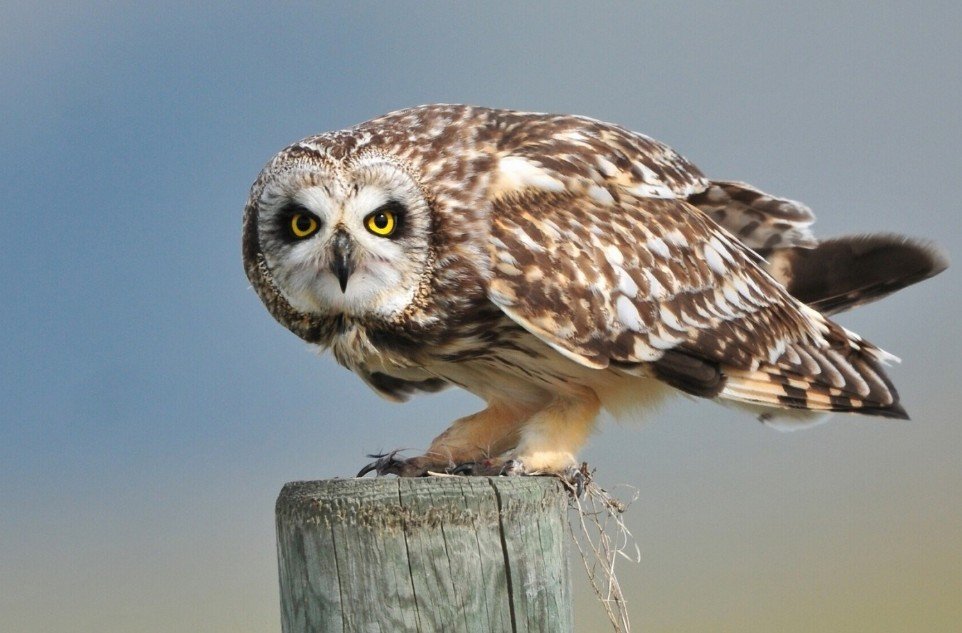
Short-Eared Owl Threats: Habitat Loss, Pesticides, and Climate Change
Dangers
- Loss of Habitat: The Short-Eared Owl’s acceptable habitat has decreased as a result of urbanisation, agricultural growth, and deforestation. Food and nesting places are impacted by the loss of grasslands, marshes, and open fields.
- Pesticides: The owl’s food source may be impacted if prey populations drop as a result of pesticide usage in agricultural regions. Toxins may also be consumed by owls via their prey.
- Climate Change: The Short-Eared Owl’s access to appropriate habitats and prey may be impacted by changes to the climate and weather patterns.
Short-Eared Owl Conservation Efforts
Conservation Activities Programs to conserve habitat and laws to limit pesticide use and disturbance in critical nesting grounds are among the measures taken to save the Short-Eared Owl. To provide the owl a suitable habitat, environmentalists are also restoring marshes and grasslands in certain areas.
FAQ (Frequently Asked Questions) about Short-Eared Owl
Q: What is the Short-Eared Owl?
Ans: The Short-Eared Owl (Asio flammeus) is a medium-sized owl species known for its short ear tufts and round, flat face. It is a skilled hunter of small mammals.
Q: What do Short-Eared Owls eat?
Ans: Short-Eared Owls primarily hunt small mammals, such as voles, mice, and shrews, but will also eat birds and insects.
Q: Where can you find Short-Eared Owls?
Ans: Short-Eared Owls are found across North America, Europe, Asia, and parts of South America, typically in open fields, grasslands, and marshes.
Q: Are Short-Eared Owls nocturnal?
Ans: While most owls are nocturnal, the Short-Eared Owl is often active during the day, particularly at dawn and dusk.
Q: How long do Short-Eared Owls live?
Ans: The average lifespan of a Short-Eared Owl is around 1–3 years, though some individuals can live up to 9 years.
Q: Why are Short-Eared Owls at risk?
Ans: Short-Eared Owls face threats from habitat loss, particularly the draining of wetlands and conversion of grasslands into agricultural land, which reduces their hunting grounds.
Q: How do Short-Eared Owls hunt?
Ans: Short-Eared Owls use their exceptional hearing and eyesight to detect prey, and their silent flight helps them hunt stealthily in open fields.
#ShortEaredOwl #BirdOfPrey #Owls #Wildlife #Raptors #Ecosystem #BirdWatching #NocturnalHunter
Our sources and references about Short-Eared Owl
1: Wikipedia – Short-Eared Owl
2: Audubon – Short-Eared Owl
3: All About Birds – Short-Eared Owl
4: Britannica – Short-Eared Owl