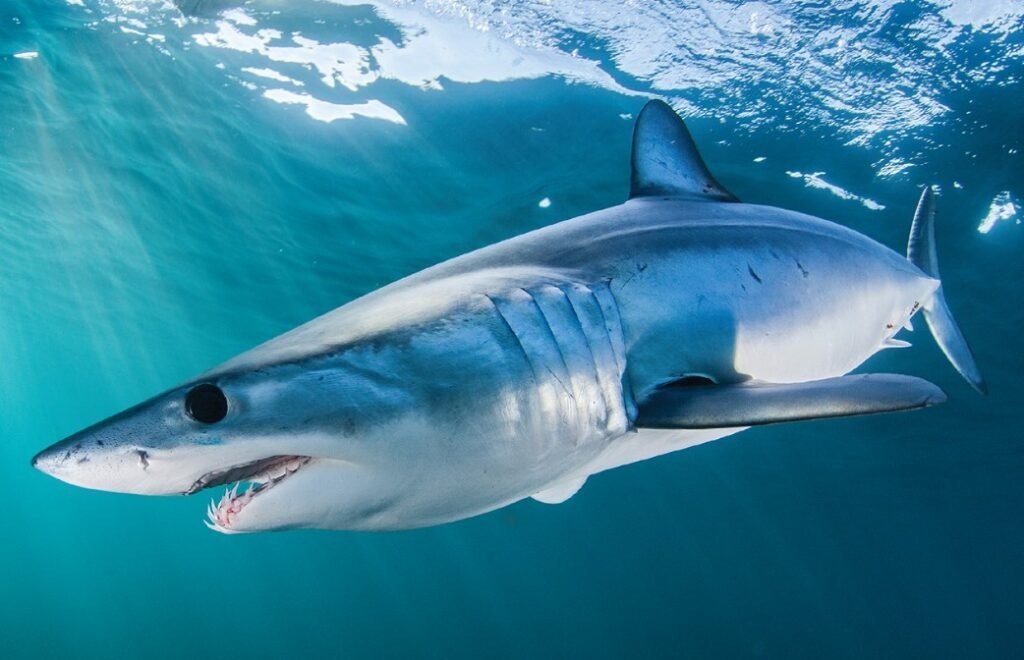
The Shortfin Mako Shark is one of the fastest and most powerful predators in the ocean. Known for its remarkable speed and agility, this shark is capable of reaching speeds of up to 60 mph (97 km/h). It has a streamlined body, sharp teeth, and a highly developed hunting instinct, which make it a formidable hunter of fish and squid. The Shortfin Mako is found in temperate and tropical waters worldwide and is a top predator in its ecosystem. Despite its powerful abilities, this species faces threats from overfishing and habitat loss.
Quick Top 10 Facts about Shortfin Mako Shark
| SCIENTIFIC NAME | Isurus oxyrinchus |
| CLASSIFICATION | KINGDOM: Animalia PHYLUM: Chordata CLASS: Chondrichthyes ORDER: Carcharhiniformes FAMILY: Lamnidae |
| SIZE | Length: 3–4 meters (10–13 feet) Weight: 500–600 kg (1,100–1,300 lbs) |
| SPECIES | The Shortfin Mako is the only species in the genus Isurus. |
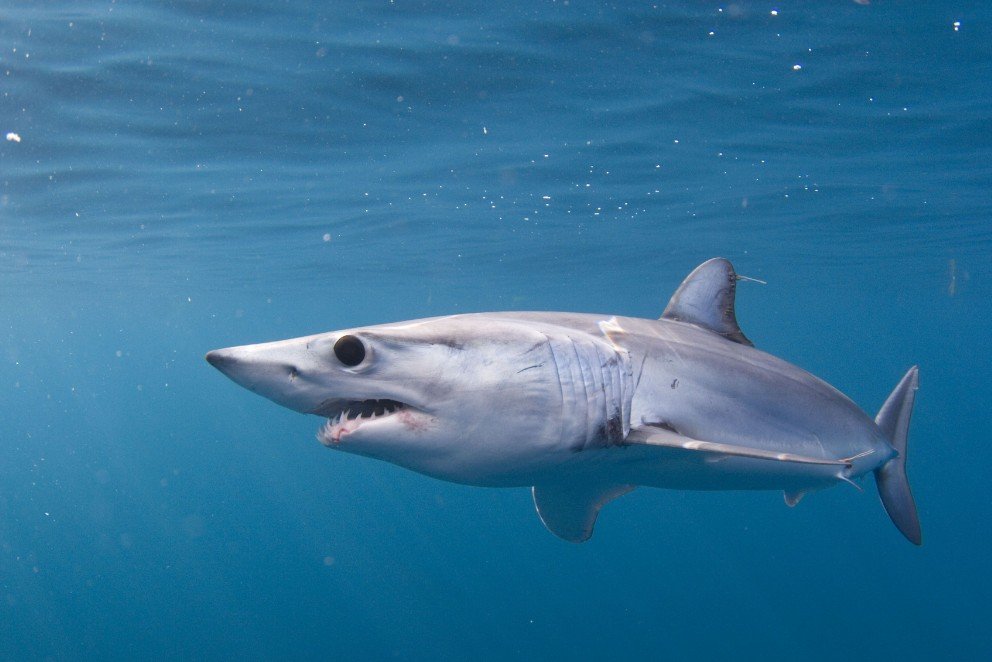
| APPEARANCE | Streamlined body with a pointed snout, large eyes, and a distinctive blue-gray coloration with a white underside. |
| LIFE SPAN | Typically 30–35 years, although some individuals may live longer. |
| HABITAT | Temperate and tropical oceans worldwide, primarily in deep waters, but also found in coastal regions. |
| DIET | Primarily fish (including tuna and swordfish), squid, and other marine animals. |
| NATURAL PREDATORS | Humans and occasionally larger sharks. |
| COUNTRY | Found in oceans worldwide, especially in temperate and tropical waters. |
| GESTATION PERIOD | 10–12 months |
| CONSERVATION STATUS | Endangered due to overfishing and habitat degradation. |
Amazing Facts About Shortfin Mako Shark
1. Speed Demons of the Ocean
The Shortfin Mako Shark is known for its incredible speed, reaching up to 60 mph (97 km/h) in short bursts, making it the fastest shark species in the world.
2. Powerhouse Predators
With its streamlined body and sharp teeth, the Shortfin Mako is a highly effective predator, capable of hunting large fish, such as tuna and swordfish.
3. Remarkable Agility
In addition to speed, the Shortfin Mako is known for its agility, executing quick turns and leaps, often seen jumping out of the water in an attempt to escape predators or to catch prey.
4. Large Eyes for Better Vision
The Shortfin Mako has large, well-developed eyes that help it see clearly in the deep, dark waters where it hunts.
5. Highly Efficient Hunter
The shark’s hunting behavior includes high-speed chases and precision strikes, making it one of the most efficient hunters in the ocean.
6. Long Lifespan
Despite its reputation for speed and aggression, the Shortfin Mako has a relatively long lifespan, living up to 35 years or more in some cases.

7. Migratory Behavior
Shortfin Makos are migratory, traveling great distances in search of food and breeding grounds, often crossing entire oceans.
8. Vulnerable to Overfishing
Despite their power and speed, Shortfin Makos are vulnerable to overfishing, especially from longline fishing and sport fishing, which target their size and meat.
9. Strong Maternal Care
Shortfin Mako sharks give birth to live young, and the mother carries her babies for 10–12 months before giving birth to one or two pups.
10. Key Role in Marine Ecosystems
As apex predators, Shortfin Makos play a vital role in regulating the populations of other marine species, maintaining balance in ocean ecosystems.
Mako Shark Facts & Fastest Shark in the World
One of the most well-known and breathtaking sharks in the world, the Shortfin Mako Shark (Isurus oxyrinchus) is admired for its agility, strength, and speed. This predator, which is sometimes referred to be the quickest shark in the water, is well-known for its exceptional physical prowess and hunting ability.
1. Shortfin Mako Shark Classification & Species Info
Both temperate and tropical seas are home to the huge shark species known as the Shortfin Mako Shark. It belongs to the Lamnidae family, which also contains porbeagle and great white sharks. Built for speed and endurance, the Shortfin Mako is distinguished by its long, narrow fins and sleek, hydrodynamic body.
2. Mako Shark Size, Teeth & Physical Characteristics
A strong and sleek predator, the Shortfin Mako Shark is designed to hunt down swift prey. These are a few of its most distinctive physical attributes:
Shortfin Mako Length and Weight
Dimensions Although most individuals of the Shortfin Mako are usually 8 to 10 feet (2.4 to 3 meters) long, they may grow up to 12 feet (3.6 meters) in length. Although it is still much smaller than the great white shark, it is one of the biggest species of mackerel sharks, weighing between 500 and 1,000 pounds (225 and 450 kilogrammes). In general, females attain the top end of the size range, while males are smaller.
Hydrodynamic Mako Shark Adaptations
Shape of Body Because of its torpedo-shaped body, the Shortfin Mako can cut through the water quite effectively. It can travel at amazing speeds because of its streamlined shape, which lowers water resistance. The shark is additionally stabilised while swimming at fast speeds by its triangular, pointed dorsal fin. Its caudal fin, or tail, is crescent-shaped and helps it sustain speed over long distances, while its long, thin pectoral fins assist with balance and manoeuvrability.
Sharp Shark Teeth for Hunting
The teeth The triangular, serrated teeth of the Shortfin Mako Shark are ideal for snagging and tearing apart prey. New teeth are constantly developing to replace damaged or old ones, and these teeth are placed in many rows. When the chance presents itself, it may catch and consume marine animals as well as fast-moving fish like tuna, mackerel, and squid thanks to its very keen teeth.
Mako Shark Coloration
The colour The colouring of the Shortfin Mako is intended for protection and concealment. Its top body is blue-gray or indigo, while its underside is white—a pattern called countershading. This makes it more difficult for prey to see the shark by blending it with the brighter waters below and the dark ocean depths above.
3. Fastest Shark Speed & Mako Hunting Behavior
Because of its extraordinary speed, the Shortfin Mako Shark is sometimes referred to as the cheetah of the ocean. It is the fastest shark species and is widely recognised for its ability to swim up to 60 miles per hour (97 km/h). This speed is helpful for exploring its surroundings and avoiding dangers in addition to hunting. A deeper look at the shark’s remarkable mobility and hunting strategies is shown below:
Mako Shark Speed
Maximum Velocity The Shortfin Mako’s muscularity, strong tail, and streamlined body allow it to reach a peak speed of 60 mph. Usually, this speed is used to pursue and pass swiftly moving prey, especially schooling fish like tuna. It attacks its target by using its ability to accelerate quickly. The Mako’s explosive power is shown by some claims that claim it can accelerate from 0 to 60 miles per hour in a matter of seconds.
Mako Shark Diet & Hunting Behavior
Behaviour in Hunting and Feeding As an apex predator, the Shortfin Mako mostly feeds on swift-moving species like mackerel, squid, and tuna. Shortfin Mako Shark is also known to hunt dolphins and seals, among other marine animals. It uses ambush-style assaults as part of its hunting strategy. Shortfin Mako Shark often lurks under schools of fish before striking with rapid speed to destroy its victim with its keen fangs. Similar to the great white shark, the Mako shark is known to breach, or leap out of the water, during an attack. This behaviour is thought to aid in confusing victims during a hunt.
4. Shortfin Mako Shark Habitat & Migration Patterns
The Atlantic, Pacific, and Indian Oceans’ temperate and tropical waters are home to the Shortfin Mako Shark, which has a broad worldwide range. Although it prefers to choose deeper, wider seas where it may pursue its favourite food, it is often seen in both coastal and offshore regions.
Where Do Shortfin Mako Sharks Live?
Range of Geography Both the Northern and Southern Hemispheres are home to the Shortfin Mako Shark. It is found in the Atlantic Ocean from Canada to Brazil and in the Pacific Ocean from California to Chile. It may be found around the shores of Australia, India, and South Africa in the Indian Ocean.
Long-Distance Shark Migration
Patterns of Migration The quest for food often motivates the Shortfin Mako Shark’s long-distance migrations. In a single migration, they may occasionally span hundreds of kilometres, traversing large swaths of the ocean. It is well known that mako sharks migrate seasonally, shifting to new locations based on mating habits, prey availability, and water temperature.
5. Mako Shark Reproduction & Life Cycle
The Shortfin Mako Shark’s reproductive strategy is remarkable. Compared to other shark species, it is known to reproduce at a very low rate, which has conservation issues.
Viviparous Shark Species
Gestation and Mating Because they are viviparous, shortfin mako sharks do not deposit eggs; instead, they give birth to live offspring. The shark has one of the longest gestation periods of any shark, lasting up to 18 to 24 months, and mates during the warmer months. In order to assist the young sharks survive in the wild, females give birth to four to eighteen pups every litter. Compared to other fish species, mako sharks attain sexual maturity somewhat late, between the ages of 8 and 18. They are susceptible to overfishing because of this and their poor rate of reproduction.
How Long Do Mako Sharks Live?
Duration of Life Although some may live even longer, the average lifetime of a Shortfin Mako shark is 20 to 30 years. Their populations are more vulnerable to the effects of overfishing, habitat loss, and environmental changes because of their lengthy lifetime and sluggish reproduction.
6. Threats and the Status of Conservation of Mako Shark
There are many dangers to the Shortfin Mako Shark, most of them are caused by human activities. Consequently, the International Union for Conservation of Nature (IUCN) has designated it as “Endangered”.
Threats to Mako Shark Population
Overfishing The flesh, fins, and hides of shortfin mako sharks are highly prized. They are often taken as bycatch in other fisheries and are targeted for commercial reasons by fisheries worldwide. The shark population is especially harmed by the fin trade, in which shark fins are extracted and sold for shark fin soup. Their population has significantly decreased as a result of overfishing, particularly in regions where they were often targeted.
Environmental Impacts on Mako Sharks
Changes in Climate The distribution and migratory habits of the Shortfin Mako Shark are being impacted by climate change-related changes in ocean currents and rising ocean temperatures. It could thus have trouble locating enough prey and appropriate environments.
Mako Shark Protection Measures
Conservation Activities Catch limitations, fishing quotas, and prohibitions on shark finning in several areas are some of the measures used to control the fishing of Shortfin Mako sharks. In an effort to conserve the habitat of the Shortfin Mako Shark and other marine species that are at risk, marine protected areas, or MPAs, are also being created.
FAQ (Frequently Asked Questions) about Shortfin Mako Shark
Q: How fast can a Shortfin Mako Shark swim?
Ans: The Shortfin Mako Shark is the fastest shark, capable of reaching speeds of up to 60 mph (97 km/h) in short bursts.
Q: What do Shortfin Mako Sharks eat?
Ans: They primarily feed on fish, including tuna and swordfish, as well as squid and other marine creatures.
Q: How long do Shortfin Mako Sharks live?
Ans: Shortfin Makos typically live for 30–35 years, although some individuals may live longer.
Q: Where can you find Shortfin Mako Sharks?
Ans: They are found in temperate and tropical oceans around the world, especially in deep waters but also along coastal regions.
Q: Are Shortfin Mako Sharks endangered?
Ans: Yes, they are classified as endangered due to overfishing, habitat loss, and accidental capture in fishing gear.
Q: How do Shortfin Mako Sharks hunt?
Ans: They are fast and agile hunters, using their speed to chase and catch large fish such as tuna and swordfish.
Q: How long is the gestation period of a Shortfin Mako Shark?
Ans: The gestation period lasts 10–12 months, after which the female gives birth to one or two pups.
#ShortfinMako #Sharks #MarineLife #FastestShark #OceanPredators #SharkFacts #Conservation
Our sources and references about Shortfin Mako Shark
1: Wikipedia – Shortfin Mako Shark
2: National Geographic – Shortfin Mako Shark
3: Britannica – Shortfin Mako Shark
4: Shark Sider – Shortfin Mako Shark