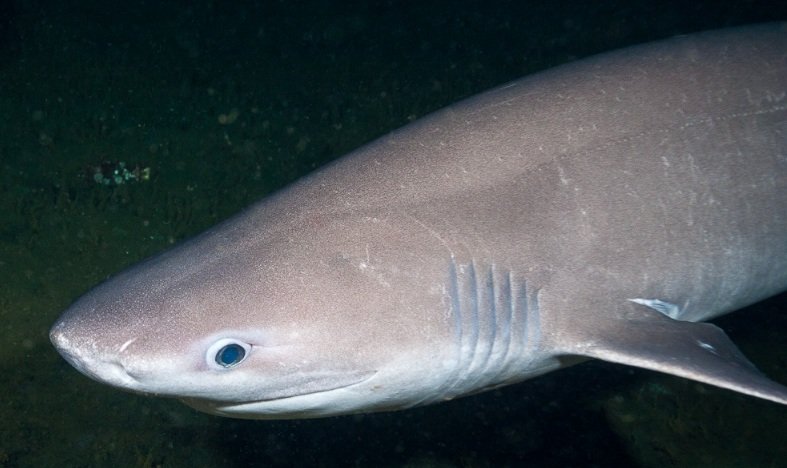
The Sixgill Shark is a deep-sea shark known for its six gill slits (most sharks have five). It is a slow-moving, nocturnal predator that feeds on fish and invertebrates. Sixgill sharks are found in deep waters off coastlines worldwide.
Quick Top 10 Facts about Sixgill Shark
| SCIENTIFIC NAME | Hexanchus griseus |
| CLASSIFICATION | KINGDOM: Animalia PHYLUM: Chordata CLASS: Chondrichthyes ORDER: Hexanchiformes FAMILY: Hexanchidae GENUS: Hexanchus SPECIES: H. griseus |
| SIZE | Length: Up to 20 feet (6 meters); Weight: Over 1,300 pounds (590 kg) |
| HABITAT | Deep-sea environments, continental shelves, slopes, and abyssal plains worldwide, typically at depths of 600–6,000 feet (180–1,830 meters) |
| DIET | Carnivorous; feeds on fish, rays, crustaceans, squid, and even carrion |
| SPECIES | Sixgill Shark, also known as the bluntnose sixgill shark, one of the largest deep-sea shark species |
| COUNTRY | Found in temperate and tropical oceans worldwide |
| GESTATION PERIOD | Estimates suggest 2 years; females give birth to live young (viviparous), with litters ranging from 20 to over 100 pups |
| LIFE SPAN | Up to 80 years or more in the wild |
| CONSERVATION STATUS | Near Threatened; affected by deep-sea fishing and habitat disturbance, though still relatively widespread |
Amazing Facts About Sixgill Sharks
1. They have six gill slits
Unlike most sharks that have five gill slits, Sixgill Sharks have six, giving them their name and early appearance.
2. They live in deep waters
Sixgill Sharks are typically found in the deep sea, often at depths exceeding 6,000 feet, though they occasionally come closer to the surface at night.
3. One of the oldest shark lineages
Their anatomical features closely resemble prehistoric sharks, making them one of the most ancient and early shark species alive today.
4. They are massive in size
Sixgill Sharks can grow up to 20 feet long, making them one of the largest predatory sharks in the ocean.
5. They are nocturnal
These sharks are more active at night, often rising to shallower depths under the cover of darkness to hunt.
6. Their teeth are unique
They have comb-like teeth on the lower jaw and sharper, pointed teeth on the upper jaw, ideal for tearing and grinding prey.
7. They have few natural predators
Due to their large size and deep habitat, adult Sixgill Sharks face few natural threats—mainly large sharks and orcas.
8. They give birth to live young
Unlike egg-laying fish, Sixgill Sharks are viviparous, with embryos developing inside the mother and being born as live pups.
9. They are slow swimmers
Despite their size, Sixgill Sharks tend to move slowly and stealthily through the water, conserving energy in the deep-sea environment.
10. They’re important to ocean ecosystems
As apex predators in deep-sea habitats, Sixgill Sharks play a vital role in maintaining balance within their ecosystem by regulating prey populations.
Intriguing facts about Six-Gill Shark: A Deep-Sea Predator
Six-gill sharks, known scientifically as Hexanchus griseus, are fascinating creatures inhabiting the ocean’s depths. With their distinctive hexanchiform morphology, these elasmobranchs have captured the attention of marine biologists and enthusiasts alike. As one of the few surviving members of the order Hexanchiformes, they possess unique physiological adaptations for deep-sea survival, including six gill slits instead of the more common five found in most shark species.
Their global distribution spans from the shallows to abyssal depths, making them subjects of intense research regarding their ecological role and behavior. Observations suggest they are apex predators, playing a crucial role in maintaining marine ecosystems’ balance. From their hunting strategies to their reproductive biology, every aspect of six-gill sharks is a subject of intrigue and ongoing scientific inquiry.
Discover the Fascinating World of Six-Gill Sharks
The Hexanchus griseus, commonly known as the six-gill shark, is an extraordinary species residing in the deepest realms of the world’s oceans. Distinguished by its six gill slits, this shark stands apart from most other shark species, which typically possess five gill slits. This unique trait lends the shark its name. With lengths reaching up to 16 feet (4.9 meters) and weights exceeding 1,000 pounds (450 kilograms), the six-gill shark commands attention as a massive and formidable predator.
Explore the Unique Habitat and Characteristics of Six-Gill Sharks
The six-gill shark’s preference for specific habitats constitutes one of its most intriguing features. Occupying oceanic depths that often exceed 3,000 feet (914 meters), the six-gill shark distinguishes itself from many other shark species typically found in shallow coastal regions. Sporting a sleek body and elongated, slender tail, this deep-sea inhabitant seamlessly navigates the chilly, murky waters of its environment.
Unveil the Diet and Behavior Patterns of Six-Gill Sharks
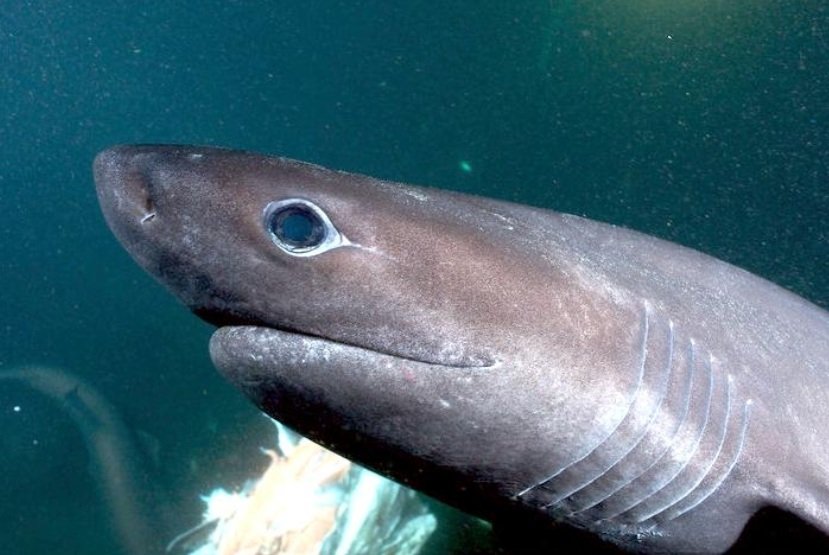
Principal among the marine species on the six-gill shark’s menu are fish, squid, and even other sharks. Its sizable mouth and sharp fangs equip it for efficient capture and consumption of prey. Despite its imposing size and aggressive tendencies, the six-gill shark is rarely perceived as a threat to humans. Its abode in the depths renders it a tranquil and relatively sluggish creature, minimizing human encounters. When encountering any shark species in their natural habitat, it is imperative to exercise caution and show respect for their environment and behavior.
Key Facts about Six-Gill Sharks: Insights into Their Prehistoric Origins
Six-gill sharks, deemed living fossils due to their minimal evolutionary changes over millions of years, trace their lineage back to the Jurassic era. As one of the earliest shark lineages, they represent an exceptionally ancient and distinct species.
Discover the Unique Physical Features of Six-Gill Sharks
Distinguishing six-gill sharks from the majority of other shark species are their six-gill slits, a notable characteristic. While most sharks possess five gill slits, six-gill sharks, as their name implies, boast an additional slit. This adaptation facilitates efficient extraction of oxygen from the water.
Unravel the Adaptation of Six-Gill Sharks to Deep Waters
Deep-sea inhabitants like six-gill sharks inhabit depths of up to 8,000 feet, often favoring open ocean expanses over coastal areas. Their ability to thrive in such profound waters underscores their remarkable adaptability. Unlike many other shark species, the speed and agility of six-gill sharks remain relatively unknown.
Explore the Global Distribution of Six-Gill Sharks
Six-gill sharks boast a worldwide presence, inhabiting both temperate and cold waters, thus enjoying a broad range of habitats. They have been documented in the Mediterranean Sea as well as the Atlantic, Pacific, and Indian oceans. This global distribution renders them a genuinely cosmopolitan species.
Conservation Status of Six-Gill Sharks: Understanding Threats and Preservation Efforts
Though not currently listed as endangered, six-gill sharks face threats that could impact their populations in the future. Overfishing, habitat loss, and climate change pose significant risks to these remarkable creatures. While efforts are underway to better understand the ecology and conservation needs of six-gill sharks, further research is imperative.
Scientists and conservation enthusiasts alike find themselves captivated by the enigmatic six-gill sharks. Their allure stems from a myriad of factors, including their extensive range, deep-sea habitat, ancient lineage, distinctive morphological features, and conservation status. Working towards the preservation and comprehension of species like the six-gill shark is paramount as we delve deeper into the ocean’s depths, ensuring the longevity of these extraordinary animals for generations to come.
FAQ (Frequently Asked Questions) about Sixgill Shark
Q: What is a Sixgill Shark?
Ans: The Sixgill Shark, specifically the Bluntnose Sixgill Shark (Hexanchus griseus), is a large, deep-sea shark known for its early features and six gill slits (most sharks have five). It is one of the largest extant shark species and is often found in deep ocean waters around the world.
Q: Where does the Sixgill Shark live?
Ans: Sixgill Sharks inhabit deep-sea environments and are typically found at depths ranging from 600 to over 3,000 feet (200 to 1,000 meters), although they may occasionally come to shallower waters at night. They are distributed globally in tropical and temperate seas, often near continental shelves and slopes.
Q: What does the Sixgill Shark eat?
Ans: Sixgill Sharks are opportunistic predators and scavengers. Their diet includes fish, rays, smaller sharks, crustaceans, squid, and carrion (dead animals). They use their powerful jaws and serrated teeth to capture and tear apart prey in the deep ocean.
Q: How big does a Sixgill Shark get?
Ans: Adult Sixgill Sharks can grow between 15 to 20 feet (4.5 to 6 meters) in length and weigh over 1,300 pounds (590 kg). They are among the largest deep-sea sharks and have robust, heavy bodies adapted for life in the depths.
Q: How can you identify a Sixgill Shark?
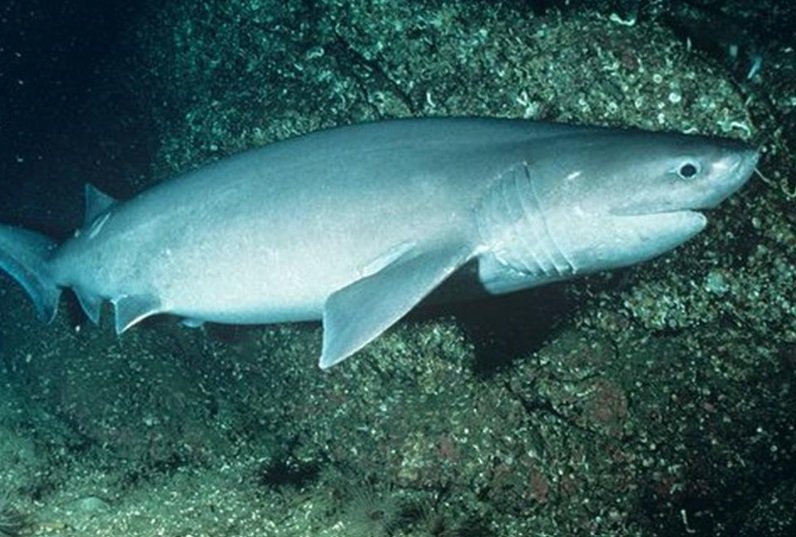
Ans: Sixgill Sharks are identified by their six pairs of gill slits (as opposed to five in most sharks), broad head, blunt snout, and small eyes. They also have a single dorsal fin located far back on their body and a long, slender tail. Their coloration is usually brownish-gray to dark gray.
Q: Are Sixgill Sharks dangerous?
Ans: Sixgill Sharks are not considered dangerous to humans. Because they live in deep-sea habitats, encounters with humans are rare. While they are large and powerful, they are typically shy and avoid confrontation.
Q: How do Sixgill Sharks reproduce?
Ans: Sixgill Sharks are ovoviviparous, meaning the embryos develop inside eggs that remain in the mother’s body until they are ready to hatch. Females can give birth to large litters, often exceeding 100 pups. Newborn sharks are typically about 2.5 feet (75 cm) long at birth.
Q: Are Sixgill Sharks endangered?
Ans: Sixgill Sharks are currently listed as “Near Threatened” by the IUCN due to slow reproductive rates and vulnerability to deep-sea fishing. As deep-sea fishing increases, their populations may be at risk from bycatch and habitat disruption.
Q: What is unique about the Sixgill Shark?
Ans: One of the most unique features of the Sixgill Shark is its early ancestry — it closely resembles prehistoric sharks that lived millions of years ago. Its six gill slits and skeletal structure suggest a lineage dating back to ancient times, making it a “living fossil” of the ocean.
Q: Can Sixgill Sharks be kept in aquariums?
Ans: Due to their large size, deep-sea habitat requirements, and complex care needs, Sixgill Sharks are generally not kept in public or private aquariums. A few institutions have attempted to display them temporarily, but long-term care is extremely difficult.
#SixgillShark, #DeepSea, #HexanchusGriseus, #SharkFacts, #MarineLife, #OceanPredators, #LivingFossil, #DeepOcean, #WildlifeConservation, #RareSharks
Our sources and references about Sixgill Shark
1: Wikipedia – Bluntnose Sixgill Shark
2: Oceana – Bluntnose Sixgill Shark
3: NOAA Fisheries – Sixgill Shark
4: National Geographic – Sixgill Shark