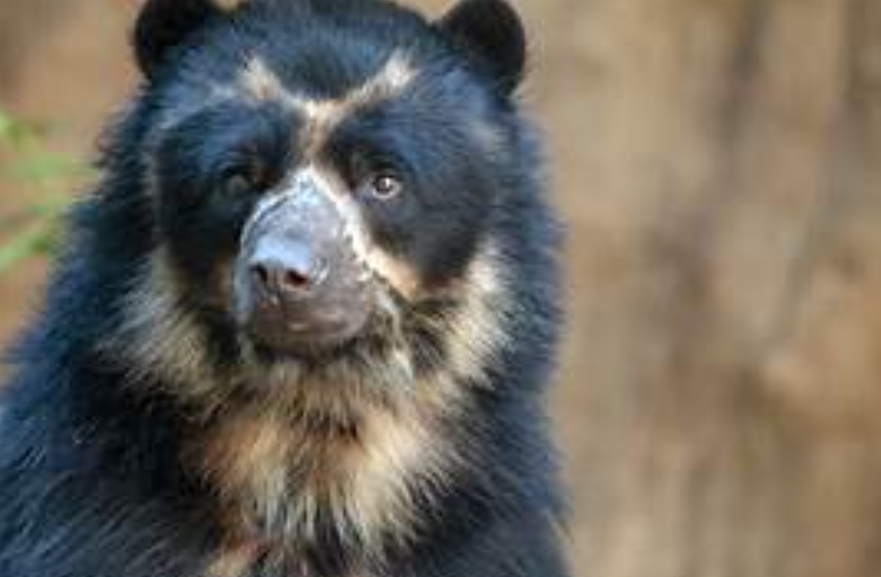
The Spectacled Bear, also known as the Andean Bear, is the only bear species native to South America. It is named for the pale markings around its eyes, which resemble spectacles. These bears are primarily herbivorous, feeding on fruits, leaves, and occasional small animals, and they are found in the Andes mountains.
Quick Top 10 Facts about Spectacled Bear
| SCIENTIFIC NAME | Tremarctos ornatus |
| CLASSIFICATION | KINGDOM: Animalia PHYLUM: Chordata CLASS: Mammalia ORDER: Carnivora FAMILY: Ursidae GENUS: Tremarctos SPECIES: T. ornatus |
| SIZE | Length: 4.6–6 feet (1.4–1.8 meters); Weight: 130–440 lbs (60–200 kg) |
| HABITAT | Andean cloud forests, high-altitude grasslands, and scrublands in South America |
| DIET | Omnivorous; eats fruits, berries, palm nuts, leaves, small mammals, and insects |
| SPECIES | Spectacled bear, also known as the Andean bear — the only bear species native to South America |
| COUNTRY | Primarily found in countries along the Andes Mountains such as Venezuela, Colombia, Ecuador, Peru, and Bolivia |
| GESTATION PERIOD | Approximately 5.5 to 8 months, including delayed implantation |
| LIFE SPAN | 20–25 years in captivity; 20 years or less in the wild |
| CONSERVATION STATUS | Vulnerable; threatened by habitat loss and illegal hunting |
Amazing Facts About Spectacled Bears
1. Only bear species in South America
The Spectacled bear is the continent’s only native bear and the last surviving species of the short-faced bear subfamily.
2. Named for their facial markings
They are called “spectacled” because of the light-colored rings around their eyes, which resemble glasses.
3. Excellent climbers
Spectacled bears are highly arboreal and can climb tall trees to search for food or rest.
4. Solitary animals
These bears are typically solitary, coming together only for mating or mothers caring for cubs.
5. Mostly herbivorous
Despite being classified as carnivores, over 80% of their diet consists of plant materials.
6. Live in diverse habitats
They are adaptable and found from sea level up to elevations over 14,000 feet in the Andes.
7. Quiet and elusive
They are shy animals that avoid human contact, making them difficult to observe in the wild.
8. Important seed dispersers
By consuming fruit and excreting seeds, they help maintain forest health and regeneration.
9. Play a cultural role
Spectacled bears appear in Andean folklore and traditional stories, often as symbols of strength or wisdom.
10. Facing conservation challenges
Deforestation and hunting have put pressure on wild populations, making conservation efforts vital for their survival.
The Spectacled Bear: Distinct Inhabitant of the Andean Mountains
The spectacled bear (Tremarctos ornatus) is the only bear species in South America. It is well known for its remarkable facial features, which give it the “spectacled” look. The Andean bear, one of the most intriguing and elusive animals in the region, lives in the high-altitude woods and grasslands of the Andes Mountains. The spectacled bear plays a crucial role in its ecosystem and deserves recognition for its distinct biology, behaviour, and conservation status, even though it is not widely known in global wildlife circles.
This article provides information about the spectacled bear’s physical traits, habitat, diet, behaviour, reproduction, and conservation efforts, highlighting the species’ significance in the ecosystems where it resides.
1. Introduction of The Spectacled Bear
The Andes Mountains in South America are home to the spectacled bear. It is the only bear species on the continent and the largest terrestrial animal in the region. The species’ scientific name, Tremarctos ornatus, reflects its unique traits compared to other bear species. The term “Tremarctos” comes from the Greek words “trem” (meaning “trembling”) and “arctos” (meaning “bear”).
This bear is easily recognised by its distinctive facial markings, which resemble eyeglasses. It is often described as having a “mask” of light fur around its eyes. Each bear has different patterns and intensities of these markings, adding to the species’ allure and mystery.
2. The Spectacled Bear’s Physical Features
Male spectacled bears tend to be slightly larger than females, and they are all medium-sized. The species is distinguished by its size, fur patterns, and unique characteristics, which suit its habitat.
Dimensions and Mass of the Spectacled Bear
- Height: Although it may vary somewhat, the spectacled bear typically stands between 1.2 and 1.5 metres (4 to 5 feet) long when on all fours.
- Weight: Adult spectacled bears generally weigh between 100 and 200 kilograms (220 to 440 pounds). Males are often larger than females, with some weighing up to 400 pounds.
- Limbs: The bear has relatively short legs compared to other bears, but its long, powerful limbs are built for climbing, which helps it navigate hilly and wooded areas.
Markings and Fur
The spectacled bear’s fur is typically dark brown or black, although some individuals may have a lighter, reddish tint.
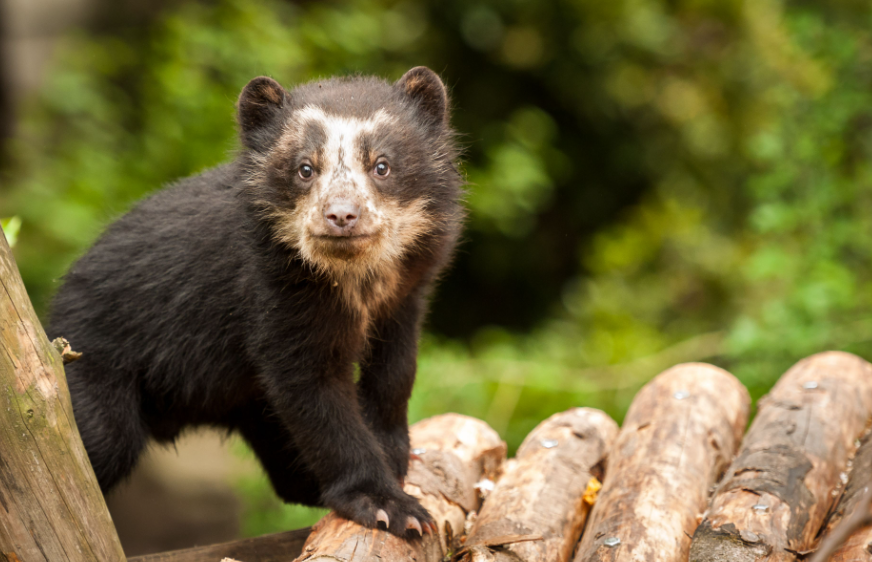
The facial patterns, resembling glasses or spectacles, are what distinguish the spectacled bear. These bright spots, which contrast with its black fur, are usually white or pale yellow. Because each bear’s facial markings are unique, it is possible to recognise individual bears by their patterns.
The spectacled bear’s coarse fur is adapted to its higher altitude habitats, which are cooler.
Teeth and Claws
Since it spends a significant amount of time in the tree canopy searching for food and shelter, spectacled bears possess wide, curved claws that are ideal for climbing trees.
The bear’s powerful jaws and sharp teeth enable it to consume harder foods, such as seeds and fruits, as well as to break foliage.
3. Range and Habitat of Spectacled Bears
The Andean mountain range, which stretches across Venezuela, Colombia, Ecuador, Peru, Bolivia, and Argentina along the western edge of South America, is home to most spectacled bears. This bear prefers the high-altitude grasslands, cloud forests, and rainforests of the Andes, as these areas provide the food, cover, and shelter it needs to survive.
Preferences for Habitat
- Elevation: Depending on the season and the availability of food, spectacled bears can be found at elevations ranging from 1,000 to 4,000 metres (3,300 to 13,100 feet) above sea level.
- Cloud Forests: These forests, characterised by a high concentration of mist and cloud cover, offer bears a cool, damp environment where they can thrive. The milder temperatures and abundance of trees and plants allow the bear to avoid the extreme heat found at lower elevations, providing both food and shelter.
- Mountain Terrain: The bear is well adapted to the hilly terrain of the Andes. Its ability to climb and navigate rugged areas helps it forage for food and avoid predators and human activities.
4. Nutrition and Feeding Practices of the Spectacled Bear
The spectacled bear is mainly herbivorous, consuming a wide range of plant-based foods, unlike several other bear species. However, it is opportunistic and may sometimes eat insects or small animals.
Principal Food Sources
- Fruits and Berries: Fruits, particularly those found in cloud forests, such as avocados, bananas, passion fruit, and tropical berries, are among the bear’s favourite foods. These fruits provide the bear with a high-energy diet, rich in sugars and minerals.
- Leaves, Flowers, and Seeds: A significant portion of the spectacled bear’s diet consists of various plant matter, including leaves, flowers, and seeds. The bear may also eat certain cacti and palm fruits and strip bark from trees.
- Insects and Small Animals: While mainly herbivorous, the spectacled bear has been observed eating insects, small animals, and bird eggs during periods when plant-based food is scarce.
Feeding Habits
As solitary feeders, spectacled bears may forage alone or in small family groups. Being skilled climbers, they spend much of their time in the canopy, where they can access leaves and fruits that are not reachable from the ground. They move slowly yet methodically in their search for food, using their keen sense of smell to locate ripe fruits or other food sources.
5. Social Structure and Behaviour of the Spectacled Bear
Except during mating season or when a mother is caring for her cubs, spectacled bears are solitary by nature and avoid social interactions with other bears. The following are some key aspects of their behaviour:
Climbing Ability
A key characteristic that sets the spectacled bear apart from many other bear species is its exceptional ability to climb. Trees provide food, shelter, and a way to escape predators. The spectacled bear is highly agile in the forest and can scale vertical trunks to access food, unlike many other bear species.
Behaviour in Territories
Although spectacled bears are not territorial by nature, they may defend their home ranges from other bears. The size of these ranges may vary depending on environmental conditions and the availability of food.
Interactions with Other Bears
Grunts, growls, and screams are just a few of the sounds that spectacled bears use to communicate. They produce these vocalisations when interacting with one another or when they feel threatened.
They also use scent marking to communicate with other individuals, particularly during the mating season or in areas where food is scarce.
6. Life Cycle and Reproduction of the Spectacled Bear
Like other bear species, spectacled bears reproduce slowly, which leaves their population vulnerable to environmental pressures.
Gestation and Mating
Mating typically occurs between May and September, during the dry season. After mating, the female undergoes a gestation period of around seven to eight months. Although twins are rare, the mother generally gives birth to one or two cubs.
Cubs and Parental Care
Cubs are born blind and rely entirely on their mother for survival. The mother protects them from predators and harsh weather during their early months, typically in a den or sheltered location.
During the 18 to 24 months they spend with their mother, cubs learn essential survival skills, such as climbing trees, finding food, and navigating the rugged terrain.
7. Threats and the Conservation Status of the Spectacled Bear
The International Union for Conservation of Nature (IUCN) has classified the spectacled bear as endangered due to habitat degradation, poaching, and human-wildlife conflict.
Main Threats
- Deforestation: The spectacled bear’s natural habitat has decreased due to deforestation and agricultural expansion, particularly in areas where forests are cleared for grazing and farming.
- Human-Wildlife Conflict: Conflict arises when bears enter human settlements in search of food, leading to confrontations with local residents and farmers.
- Poaching and Illegal Pet Trade: The bear faces further threats from the illegal pet trade and poaching for its body parts.
Conservation Efforts
Many regions have established national parks and protected areas to safeguard the spectacled bear’s habitat. Local conservation organisations are also working to raise awareness about the bear’s plight.
Research programmes and habitat restoration projects are being implemented to conserve the species and ensure that future generations of spectacled bears thrive in their natural habitats.
FAQ (Frequently Asked Questions) about Spectacled Bear
Q: What is a Spectacled Bear?
Ans: The Spectacled Bear (Tremarctos ornatus), also known as the Andean bear, is the only bear species native to South America. It is named for the distinctive light-colored markings around its eyes, which can resemble spectacles. These bears are shy, solitary, and primarily herbivorous.
Q: Where does the Spectacled Bear live?
Ans: Spectacled Bears inhabit the Andean mountain range, primarily in countries like Venezuela, Colombia, Ecuador, Peru, and Bolivia. They are usually found in cloud forests, high-altitude grasslands, and occasionally in dry forests or scrublands.
Q: What does the Spectacled Bear eat?
Ans: Spectacled Bears are omnivores, but they mainly eat plant-based foods. Their diet includes fruits, bromeliads, palm nuts, cactus, berries, and occasionally small animals, carrion, or insects. They are excellent climbers and often forage in trees.
Q: How big does a Spectacled Bear get?
Ans: Adult Spectacled Bears typically weigh between 140 to 340 pounds (64 to 154 kg), with males being significantly larger than females. They can stand about 5 to 6 feet (1.5 to 1.8 meters) tall when upright.
Q: Are Spectacled Bears dangerous?
Ans: Spectacled Bears are generally not dangerous to humans and are known for their shy and elusive behavior. However, like all wild animals, they can become aggressive if threatened or cornered, especially mothers with cubs.
Q: How does a Spectacled Bear behave?
Ans: Spectacled Bears are solitary and mostly active during the day (diurnal). They are peaceful and avoid humans. They are also excellent climbers and often build platforms in trees to rest or eat. Their secretive nature makes them hard to study in the wild.
Q: What does the Spectacled Bear look like?
Ans: Spectacled Bears have a stocky build with dark black or brown fur and lighter-colored facial markings that resemble glasses or “spectacles.” Each bear’s facial markings are unique. They have a short snout, strong limbs, and curved claws for climbing.
Q: How long do Spectacled Bears live?
Ans: In the wild, Spectacled Bears typically live around 20 years. In captivity, with proper care and no threats, they can live up to 30 years.
Q: Can you keep a Spectacled Bear as a pet?
Ans: No, Spectacled Bears are wild animals and cannot be kept as pets. They require large territories, specific diets, and are protected under various conservation laws due to their vulnerable status. It is illegal and unethical to keep one as a pet.
Q: Are Spectacled Bears endangered?
Ans: Spectacled Bears are classified as Vulnerable by the IUCN. Their populations are declining due to habitat loss, fragmentation, and poaching. Conservation efforts are underway in several countries to protect their habitats and reduce human-wildlife conflict.
#SpectacledBear, #AndeanBear, #SouthAmericanWildlife, #BearConservation, #WildlifeProtection, #CloudForest, #TremarctosOrnatus, #NatureLovers, #EndangeredSpecies, #MountainWildlife
Our sources and references about Spectacled Bear
1: Wikipedia – Spectacled Bear
2: WWF – Spectacled Bear
3: Smithsonian’s National Zoo – Spectacled Bear
4: IUCN Red List – Spectacled Bear