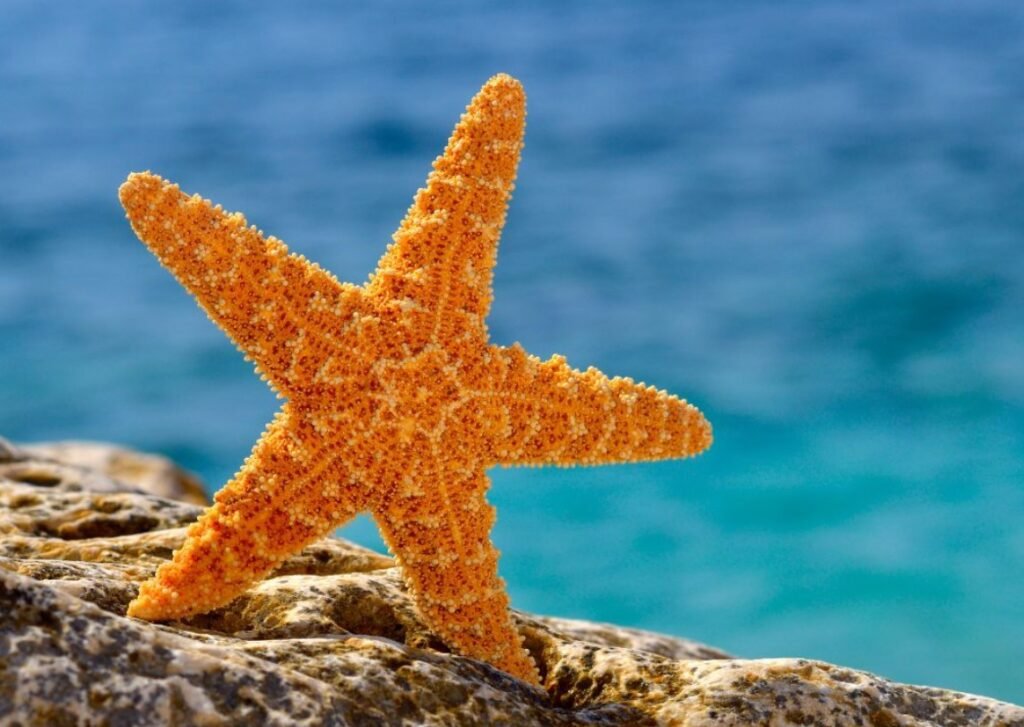
Starfish, also known as sea stars, are fascinating marine invertebrates found in oceans all over the world. Despite their name, they are not actually fish but echinoderms, closely related to sea urchins and sand dollars. They are known for their star-shaped bodies, typically with five arms, although some species can have more. Starfish have the remarkable ability to regenerate lost limbs and move using tiny tube feet located on their undersides. These creatures are vital to marine ecosystems and can be found on rocky shores, coral reefs, and ocean floors.
Quick Top 10 Facts about Starfish
| SCIENTIFIC NAME | Class Asteroidea |
| CLASSIFICATION | KINGDOM: Animalia PHYLUM: Echinodermata CLASS: Asteroidea |
| SIZE | Typically 5–10 inches (12–25 cm), though some species can reach up to 24 inches (60 cm) |
| SPECIES | Over 2,000 known species, including Pisaster ochraceus and Asterias rubens |
| APPEARANCE | Radially symmetrical body with five or more arms; rough, spiny skin; vibrant colors ranging from orange and red to purple and blue |
| LIFE SPAN | Typically 5–35 years, depending on the species |
| HABITAT | Oceans worldwide, especially in coastal waters, coral reefs, rocky shores, and the deep sea |
| DIET | Mostly carnivorous—feed on mollusks like clams, oysters, and mussels, using their tube feet to pry shells open |
| NATURAL PREDATORS | Fish, sea otters, birds, and large snails |
| COUNTRY | Found in oceans around the world; not specific to any one country |
| GESTATION PERIOD | They reproduce through spawning—external fertilization with no gestation; larvae are planktonic |
| CONSERVATION STATUS | Most species are not endangered, though some face threats from pollution, climate change, and disease |
Amazing Facts About Starfish
1. Not Actually Fish
Despite the name, starfish are not true fish; they lack gills, fins, and a backbone, making them echinoderms.
2. Incredible Regeneration
Starfish can regenerate lost arms, and in some cases, an entire new starfish can grow from a single severed limb.
3. Tube Feet for Movement
They move using hundreds of tiny tube feet located on the underside of their arms, operated by a unique water vascular system.
4. No Brain or Blood
Starfish don’t have a brain or blood; instead, they rely on a water-based circulatory system to transport nutrients.
5. External Stomach
They digest food externally by pushing their stomachs out through their mouths to engulf and break down prey.
6. Wide Variety of Species
There are over 2,000 species of starfish, ranging in color, size, and shape, adapted to a wide array of marine environments.
7. Sensitive to Light and Touch
Starfish can detect light and touch through specialized eye spots at the tips of their arms.
8. Vital to Ecosystems
Starfish play a key role in controlling the population of bivalves and maintaining balance in marine ecosystems.
9. Some Are Deep Sea Dwellers
While many live in shallow waters, others inhabit the deep ocean, adapted to extreme pressure and cold.
10. Asexual Reproduction
Some species can reproduce asexually by fission or arm autotomy, helping them regenerate populations quickly.
Introduction to the Fascinating World of Starfish
One of the most unusual and fascinating marine creatures that may be found in waters all over the globe are starfish, often referred to as sea stars. Starfish, which are members of the Asteroidea class and phylum Echinodermata, are distinguished by their remarkable adaptability and star-shaped bodies. Because of their remarkable regenerating ability, variety of species, and important function in marine ecosystems, these amazing animals have captivated marine researchers and ocean fans for decades. In order to explain why starfish continue to captivate the interest of people who research and appreciate marine life, this article offers a thorough examination of their biology, ecological significance, regeneration capabilities, nutrition, and conservation status.
Physical Attributes of Starfish
Unique Star-Shaped Body Structure
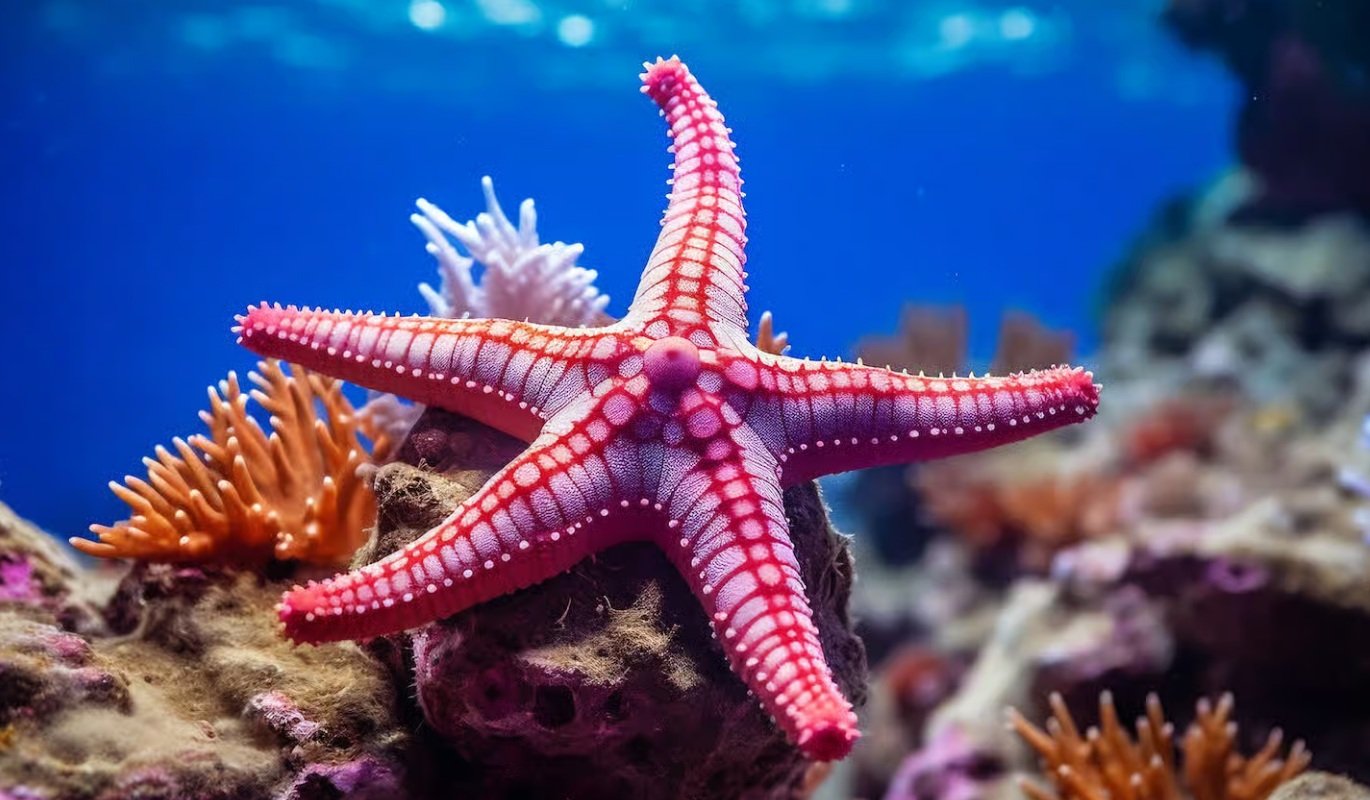
The most distinctive characteristic of starfish, which vary greatly in size, shape, and colour, is its star-shaped body, which usually has five limbs, however some species may have as many as 40.
Key Physical Features of Starfish
- Body Structure: A starfish’s limbs spread forth from a central disc, which is typically flat and centralised. The majority of the starfish’s essential organs, including as the nerve ring and digestive system, are located in the central disc.
- Arms: Starfish typically have five arms, but some species—like the sunflower starfish—have up to twenty-four or forty arms.
- Tube Feet: The tiny, tube-like appendages that run down the bottom of each arm enable the starfish to move, stick to surfaces, and snare prey.
- Skeleton: The hard, calcareous exoskeleton of starfish is composed of spicules or plates, offering both structure and protection.
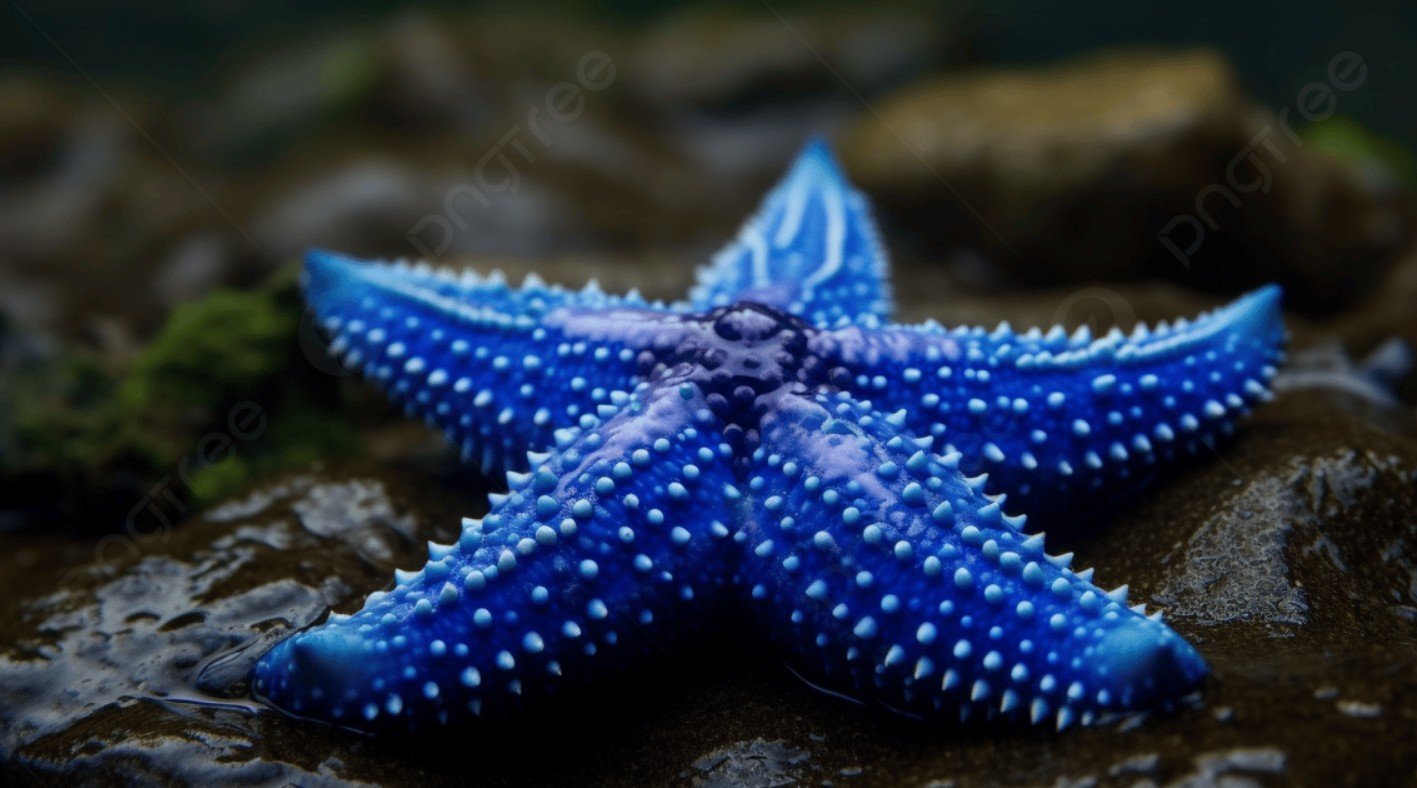
- Colours and Patterns: Starfish come in vivid colours like red, orange, purple, yellow, and blue, with patterns that help camouflage or warn predators.
Starfish Habitat and Global Distribution
Diverse Environments Where Starfish Thrive
From modest coastal regions to the deepest oceanic depths, starfish may be found in marine settings worldwide. Because of their extreme adaptability, they can live in a variety of environments, like as:
- Tidal Zones: Found in intertidal zones among coral reefs or in rock pools, starfish coexist with molluscs, crabs, and algae.
- Coral Reefs: Starfish flourish in coral reef ecosystems by hiding in crevices and feeding on invertebrates.
- Deep Ocean: Adapted species reside in benthic zones with high pressure and minimal light.
- Temperate and Tropical Waters: Starfish live in oceans ranging from the Arctic to the Antarctic, commonly found near coasts.
Nutrition and Feeding Practices of Starfish
Unconventional Feeding Strategy of Starfish
Starfish have an interesting eating strategy and are mostly carnivorous animals. Depending on the species and its surroundings, these opportunistic predators consume a wide range of creatures.
- Feeding Method: Starfish eject their stomachs into prey to digest food externally before ingestion, with their mouths located on the underside.
- Diet: Primarily molluscs like clams, oysters, and mussels, using tube feet to pry open shells.
- Additional Prey: Some species scavenge for dead fish or filter-feed plankton and microorganisms.
- Predators: Fish, birds, crabs, and octopuses are common threats; regeneration helps deter predation.
The Astounding Ability of Starfish to Regenerate
Regrowing Limbs and Internal Organs
Their remarkable capacity for regeneration is among the most intriguing features of starfish biology. Starfish are among the most resilient creatures in nature because of their capacity to heal from severe wounds.
- Arm Regeneration: Starfish can regrow arms in months to a year; some can regenerate an entire body from one limb.
- Regeneration Process: Involves new cell growth at the wound site, forming tissue, organs, and limbs.
- Why It Occurs: Supports survival against predators and natural threats; aids reproduction in some species.
Reproduction Methods of Starfish
Sexual and Asexual Reproduction in Starfish
Different species of starfish have different methods of reproduction, such as asexual or sexual:
- Sexual Reproduction: Most species spawn by releasing gametes into water, leading to external fertilisation and larval development.
- Asexual Reproduction: Some species regenerate a whole new starfish from a severed arm or body part.
The Function of Starfish in Marine Ecosystems
Key Ecological Roles Played by Starfish
In order to keep marine ecosystems in balance, starfish are essential:
- Mollusc Predators: They regulate mollusc populations, preventing ecosystem imbalance.
- Indicators of Biodiversity: Starfish populations can reflect the health of marine environments.
- Habitat Engineers: In coral reefs, they help maintain biodiversity by managing coral and invertebrate growth.
Conservation Status of Starfish in Today’s Oceans
Environmental Threats and Preservation Efforts
Although the majority of starfish species are not endangered, several are seriously threatened by environmental changes and human activity:
- Climate Disruption: Rising temperatures and ocean acidification threaten habitat and food availability.
- Overfishing: Harvesting for food or aquarium trade can disrupt local marine ecosystems.
- Diseases: Outbreaks like sea star wasting disease have caused mass die-offs, especially in sunflower starfish.
FAQ (Frequently Asked Questions) about Starfish
Q: What is a Starfish?
Ans: A starfish is a marine invertebrate belonging to the class Asteroidea, known for its star-shaped body and regeneration abilities.
Q: What do Starfish eat?
Ans: Starfish are mostly carnivorous and feed on mollusks such as clams, oysters, and mussels.
Q: Where are Starfish found?
Ans: They are found in oceans around the world, from shallow tidal pools to the deep sea.
Q: Can Starfish regrow arms?
Ans: Yes, most starfish can regenerate lost arms, and some can even regenerate a whole new body from a single arm.
Q: Do Starfish have a brain?
Ans: No, starfish do not have a brain or central nervous system, but they can still respond to stimuli.
Q: How do Starfish move?
Ans: They use tiny tube feet powered by a hydraulic system to move slowly across the seafloor.
Q: Are Starfish dangerous to humans?
Ans: Starfish are not dangerous to humans and are generally harmless when observed or gently handled.
Q: How do Starfish reproduce?
Ans: Most starfish reproduce sexually through external fertilization, but some can reproduce asexually.
Q: What are Starfish predators?
Ans: Natural predators include sea otters, certain fish, birds, and large snails.
Q: Are Starfish endangered?
Ans: Most are not endangered, but environmental threats have impacted some populations.
#Starfish #MarineLife #Echinoderms #SeaStars #OceanCreatures #MarineBiodiversity
Our sources and references about Starfish
1: Wikipedia – Starfish
2: National Geographic – Starfish
3: Britannica – Starfish