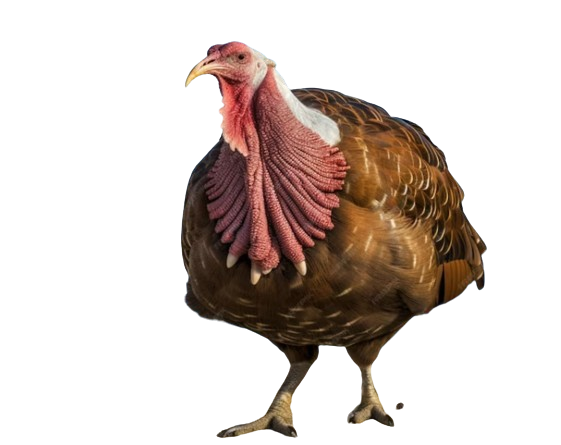
The turkey is a large bird native to North America, known for its fan-shaped tail and wattled neck. Wild turkeys are omnivorous and live in forests and grasslands. Domestic turkeys are raised for their meat, particularly in North America, where they are a staple food during holidays like Thanksgiving.
Quick Top 10 Facts about Turkey Bird
| SCIENTIFIC NAME | Meleagris gallopavo (Wild Turkey) |
| CLASSIFICATION | KINGDOM: Animalia CLASS: Aves ORDER: Galliformes FAMILY: Phasianidae PHYLUM: Chordata GENUS: Meleagris |
| SIZE | Height: 85–125 cm (33–49 inches) Weight: 5–11 kg (11–24 lbs) |
| HABITAT | Woodlands, forests, and grasslands in North America |
| DIET | Omnivorous – Feeds on seeds, berries, insects, and small reptiles |
| SPECIES | Turkey (genus Meleagris) – Includes the Wild Turkey (Meleagris gallopavo) and the Ocellated Turkey (Meleagris ocellata) |
| COUNTRY | Native to North America, particularly the United States and Mexico |
| GESTATION PERIOD | Egg incubation lasts 28 days (Turkey chicks are hatched, not born live) |
| LIFE SPAN | 3–4 years in the wild; up to 10 years in captivity |
| CONSERVATION STATUS | Least Concern – Populations are stable in the wild, but some subspecies are locally threatened |
A brief overview on facts about turkeys in the animal kingdom
A fascinating animal with some fascinating facts about it is the turkey, one of the most recognisable types of fowl. It was cultivated in Mexico around 1,500 years ago, yet it is native to North America. Most people associate turkeys with their long necks, rows of vibrant feathers, and unique ability to produce a wide range of noises, including yelps, squeaks, and even gobbling. Although domesticated turkeys are usually killed much earlier, wild turkeys may live up to ten years. More facts about turkeys are:
Description of a turkey’s appearance and differences between male and female turkeys
Gobblers, or “Toms,” are the male turkeys; they may weigh up to 24 pounds, while hens, or females, can only weigh up to 16 pounds. Turkeys can perceive two separate pictures at once because of a natural adaptation in their eyes termed “monocular vision.” This allows them to detect possible predators at a far longer range. Turkeys are mostly diurnal birds, meaning they are active throughout the day, yet in forested regions or when there are predators around, they may become nocturnal. Due to their omnivorous nature, turkeys may consume both plants and animals. In addition to hunting smaller creatures like frogs and lizards for sustenance, they mostly consume seeds, nuts, and berries. Even now, turkeys are hunted for sustenance, and their flesh is a staple in many countries.
Habitat and Distribution: Where turkeys can be found in the world
With a unique history and set of qualities, turkeys are intriguing animals. Native Americans tamed these birds thousands of years ago; they are native to North America. With their enormous bodies covered in feathers that may vary in hue from brown to black, they are recognised for their unique look. A fleshy protrusion known as a snood hangs down from the turkey’s beak and changes colour according to the bird’s mood.
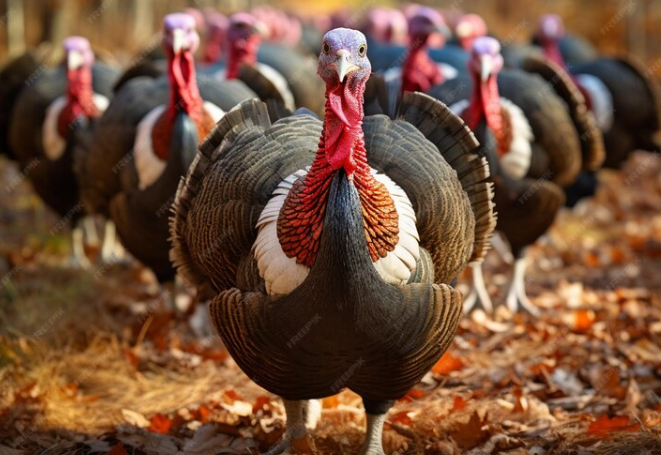
Natural habitat, mating rituals, and surprising adaptability facts about turkeys
The capacity to fly is one fascinating characteristic of turkeys. Wild turkeys can fly up to 55 miles per hour over short distances, despite not being very good flyers. They travel through woodlands on their wings, and they seek cover at night by sleeping in trees. However, domesticated turkeys are unable to fly because of their bigger bodies, which have been bred into them.
Living in flocks, turkeys are gregarious creatures. Their social structure is hierarchical, with toms—dominant males—leading the group. Toms are renowned for their intricate displays of courting that include gobbling sounds, extending their tail feathers, and puffing up their feathers to entice females. Hens, or female turkeys, are in charge of caring for the eggs in their ground nests until they hatch. Because they eat a wide range of things, including seeds, nuts, insects, and small reptiles, turkeys are omnivores. Their ability to hear well and distinguish noises at a distance aids in keeping them aware of any predators.
Fascinating facts about turkeys, from their unique behaviour to their impressive intelligence
The intriguing turkey bird has long been associated with human history and culture. Here are some fascinating facts about turkeys, which may be useful while planning your Thanksgiving meal or just because you want to know more about these amazing animals.
1. Wild vs. Native
Turkeys come in two primary varieties: wild turkeys and domesticated turkeys. Native to North America, wild turkeys are more slender in form, but domesticated turkeys are raised to be larger and have a plumper look.
2. Anatomy of Turkey
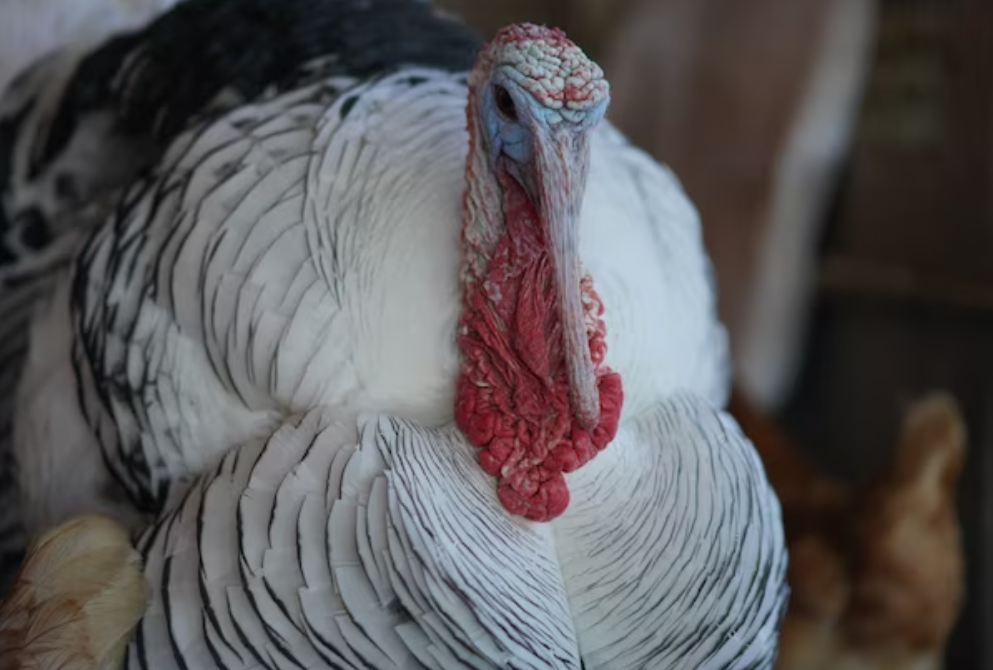
The anatomy of turkeys is unique. Their beak is covered by a long, fleshy appendage called a snood, which drapes down over their small, featherless head. Depending on the turkey’s attitude, the snood might change colour. Additionally, turkeys have a wattle, a thick, wrinkly flap of skin that hangs down from their neck.
3. Gobbling Sound
The gobbling sound that turkeys make is what most people think of when they think of turkeys. Gobbling is reserved for male turkeys, or toms. They vocalise in order to establish dominance, draw in females, and interact with other turkeys in their flock.
4. Turkey Vision
Turkeys can see quite well. Their eyes are on the sides of their heads, giving them a vast field of vision that almost allows them to see 360 degrees. This enables them to recognise predators and maintain awareness of their environment.
5. Journey to Turkey
Turkey is capable of flying, contrary to common assumptions. Flying at up to 55 miles per hour, wild turkeys are nimble aerial performers. Nevertheless, domesticated turkeys cannot fly because of their enormous size.
6. The social structure of Turkey
Living in flocks, turkeys are gregarious creatures. A dominant male, a few females, and their young make up a normal turkey flock. The tom, or dominant male, is in charge of luring mates and guarding the flock.
7. Turkey Lifespan
A turkey’s lifetime varies based on whether it is domesticated or wild. While domesticated turkeys may live 2–8 years, wild turkeys can live up to 10 years or more.
8. Turkey Feathers
Turkeys have lovely feathers that are often utilised as décor. The tom, or male turkey, has iridescent feathers that shift in colour depending on the lighting angle. Their courting display heavily relies on these feathers.
9. Diet of Turkey
Turkeys eat a variety of foods and are omnivores. Nuts, seeds, insects, and small reptiles are their main sources of food. Turkeys also take pleasure in gorging on fruits and berries in the autumn.
10. Turkey Allusions
In many cultures, turkeys are a sign of thanksgiving, fertility, and plenty. Thanksgiving, a US national festival honouring the bounty of the harvest season, is strongly linked to turkeys.
FAQ (frequently asked questions) about Turkey Bird
Q: What is a Turkey Bird?
Ans: The Turkey Bird, commonly known as the wild turkey (Meleagris gallopavo), is a large bird native to North America. It is famous for its fan-shaped tail and colorful plumage, especially in males.
Q: Where do Turkey Birds live?
Ans: Wild turkeys are found across North America, from southern Canada to northern Mexico. They prefer forests, woodlands, and grasslands, where they can find food and shelter.
Q: What do Turkey Birds eat?
Ans: Turkeys are omnivores and eat a varied diet that includes seeds, nuts, berries, plants, insects, small amphibians, and even small reptiles. They forage on the ground, using their keen eyesight to spot food.
Q: How do Turkey Birds defend themselves?
Ans: Wild turkeys defend themselves primarily by fleeing. They can run at speeds of up to 20 miles per hour on the ground and fly short distances at speeds of up to 55 miles per hour to escape predators.
Q: How do Turkey Birds reproduce?
Ans: Turkey birds reproduce by laying eggs. Females (hens) lay a clutch of eggs in a nest, and after about 28 days of incubation, the eggs hatch. The chicks, called poults, are precocial and can walk and feed themselves shortly after hatching.
Q: Are Turkey Birds endangered?
Ans: Wild turkeys were once near extinction due to hunting and habitat loss, but conservation efforts have helped their populations rebound. Currently, they are not endangered and are considered a success story in wildlife conservation.
Q: How long do Turkey Birds live?
Ans: In the wild, turkeys typically live for 3 to 5 years, though some can live up to 10 years or more if they are not preyed upon or hunted.
Q: What are the physical characteristics of Turkey Birds?
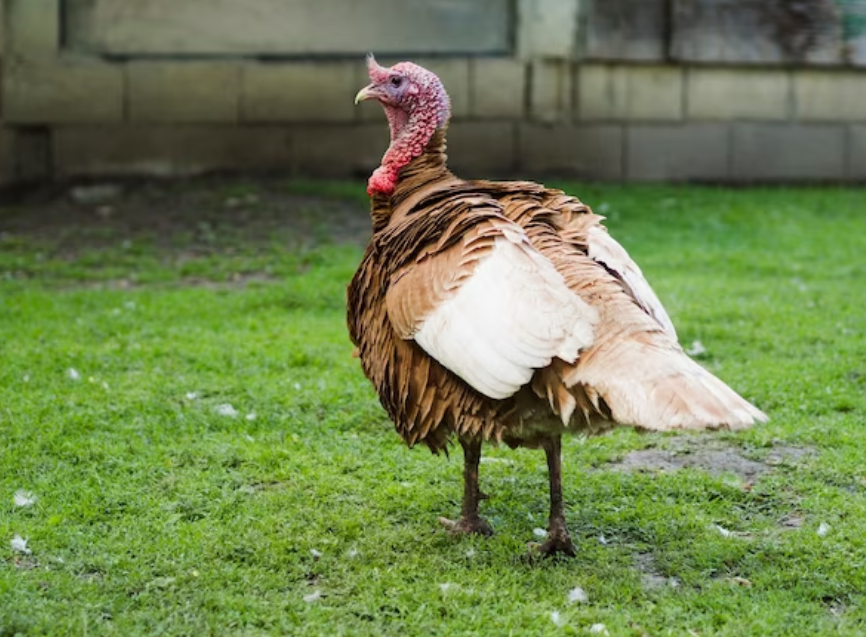
Ans: Wild turkeys have large, muscular bodies, long legs, and a long neck. Males (toms) have a colorful plumage with iridescent feathers, and a distinctive fleshy wattle that hangs from their beaks, called a snood. They also have a fan-shaped tail that is spread during courtship displays.
Q: Do Turkey Birds migrate?
Ans: While wild turkeys do not migrate long distances like some birds, they do move to different areas depending on the season. In colder months, they may shift to lower elevations where food is more plentiful and the weather is milder.
Q: Why are Turkey Birds associated with Thanksgiving?
Ans: Turkey birds became associated with Thanksgiving because of their availability and size. They were commonly eaten by early settlers in North America, and over time, became a traditional dish for Thanksgiving feasts in the United States.
#TurkeyBird, #WildTurkey, #BirdWatching, #BirdLovers, #TurkeyLove, #NatureLovers, #BirdPhotography, #FeatheredFriends, #BackyardBirding, #BirdLife, #WildlifePhotography, #NaturePhotography, #TurkeysOfInstagram, #Birding, #FarmAnimals
Our sources and references about Turkey Bird
1: Wikipedia – Wild Turkey
2: All About Birds – Cornell Lab
3: National Geographic – Wild Turkey Facts
4: IUCN Red List – Wild Turkey