Yellow Crazy Ants are a species of invasive ants known for their erratic and unpredictable movement patterns. These ants are often found in tropical regions and have been known to disrupt local ecosystems. They are called “crazy” due to their unusual, fast, and erratic movements when searching for food.
Quick Top 10 Facts about Yellow Crazy Ant
| SCIENTIFIC NAME | Anoplolepis gracilipes |
| CLASSIFICATION | KINGDOM: Animalia PHYLUM: Arthropoda CLASS: Insecta ORDER: Hymenoptera FAMILY: Formicidae GENUS: Anoplolepis SPECIES: A. gracilipes |
| SIZE | Length: 3–4 mm |
| HABITAT | Found in tropical and subtropical regions, often in disturbed environments such as human settlements, plantations, and rainforests |
| DIET | Omnivorous; feeds on a variety of food sources, including nectar, seeds, and small invertebrates |
| SPECIES | The Yellow Crazy Ant is an invasive species known for its erratic, unpredictable movements and its impact on ecosystems it invades |
| COUNTRY | Native to Africa but now found in tropical and subtropical regions worldwide, especially in Southeast Asia, Australia, and the Pacific Islands |
| LIFE SPAN | Worker ants live up to a few months, while queens can live for several years |
| CONSERVATION STATUS | Least Concern; however, it is an invasive species in many areas, often causing significant ecological damage |
Amazing Facts About Yellow Crazy Ants
1. Erratic movements
Yellow Crazy Ants are known for their unpredictable, “crazy” movements, which is how they got their name. Their fast and erratic behavior is often a defense mechanism.
2. Invasive species
Originally from Africa, the Yellow Crazy Ant is an invasive species in many parts of the world, where it displaces native species and disrupts local ecosystems.
3. Impact on ecosystems
These ants can cause significant ecological damage, especially in islands and tropical regions, by outcompeting native species for resources and nesting sites.
4. Omnivorous diet
Yellow Crazy Ants have a varied diet, feeding on nectar, seeds, dead animals, and other invertebrates, making them opportunistic feeders.
5. Colonies can grow large
Yellow Crazy Ant colonies can contain thousands of ants, and their queens can produce large numbers of offspring, contributing to their rapid spread.
6. Can disrupt agriculture
In areas where Yellow Crazy Ants are invasive, they can damage crops by attacking the crops directly or by disturbing the balance of the local ecosystem, which affects pollination.
7. Dangerous to small wildlife
These ants can attack and overwhelm small animals, particularly birds and other small wildlife, due to their large numbers and aggressive nature.
8. Poor nest builders
Unlike many other ant species, Yellow Crazy Ants do not build sophisticated nests. Instead, they often nest in tree hollows, under rocks, or in other sheltered locations.
9. They can form supercolonies
Yellow Crazy Ants can form massive “supercolonies” that span vast areas, allowing them to dominate the landscape and outcompete other species.
10. Active all year round
These ants are active throughout the year, and in tropical regions, they can cause year-round disruption to local ecosystems due to their constant foraging and colonization.
Introduction to Yellow Crazy Ants
An ant species known for its extreme invasiveness, violent tendencies, and capacity to devastate habitats is the Yellow Crazy Ant (Anoplolepis gracilipes). Originating in Africa, it has proliferated all over the world, especially in tropical and subtropical areas, where it poses a serious threat to the environment and competes with local species. It has drawn a lot of interest from academics and environmentalists because of its unnerving qualities. This article will examine the Yellow Crazy Ant’s physical traits, preferred habitats, behavioural patterns, ecological effects, management initiatives, and conservation issues. It is essential to comprehend this species, particularly in light of the harm it poses to the ecosystem and the spread of invasive species throughout the world.
Physical Features of the Yellow Crazy Ant
Despite being a very tiny species, the Yellow Crazy Ant may be readily identified because of a variety of distinctive characteristics.
Colouration
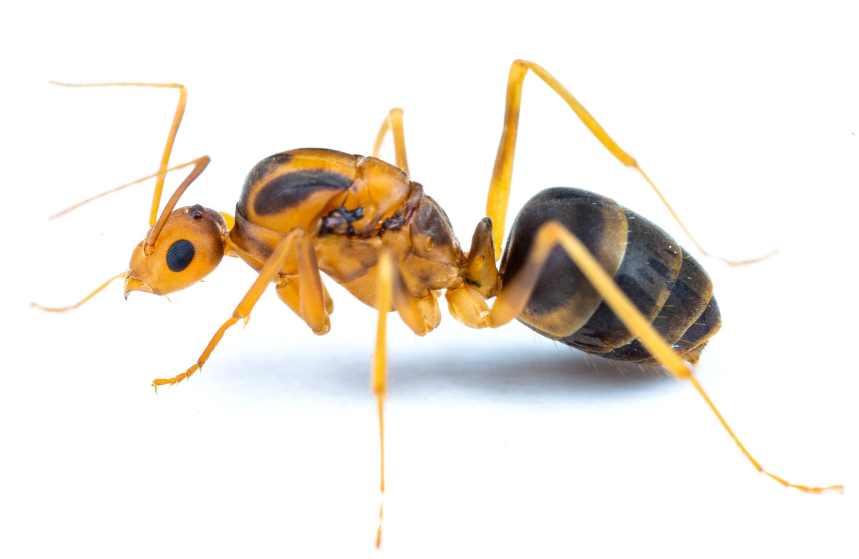
The Yellow Crazy Ant has a recognisable yellowish-brown colour, as its name implies. Although the overall look is usually a pale, almost transparent yellowish-brown, the colour may vary significantly according to environmental variables and age. When present in high quantities, Yellow Crazy Ants stand out due to their lighter colour compared to other ant species.
Size
At 5 to 10 millimetres in length, these ants are quite tiny. They may establish sizable colonies with hundreds to millions of members, regardless of their size. The species has winged reproductive ants (males and females) that are bigger and more robust in size, while the workers are the most often seen variety.
Antennal Structure
The Yellow Crazy Ant’s frantic motions are facilitated by its long, thin antennae. In order to navigate and communicate with other ants in the colony, these antennae are essential.
Legs and Movement
Known for its unpredictable movements, the Yellow Crazy Ant is sometimes referred to as “crazy” because of its quick and apparently random motions. Instead of being arbitrary, this behaviour is an adaptive trait that aids the ants in locating resources and avoiding predators. They can move and change direction with incredible speed because of their long, wiry legs.
Mandibles
The Yellow Crazy Ant’s mandibles are crucial for both defence and food acquisition, even though they are not as big or strong as those of certain other ants. They are capable of capturing and killing tiny animals.
Distribution and Habitat of Yellow Crazy Ants
Sub-Saharan Africa, especially parts of East and Central Africa, is home to the Yellow Crazy Ant. But throughout time, the species has dispersed around the world, especially in areas with tropical and subtropical temperatures, including:
- Southeast Asia
- Australia
- Islands in the Pacific
- Islands in the Caribbean
- South American regions
Yellow Crazy Ants’ versatility allows them to flourish in a variety of settings. They are especially prevalent in metropolitan areas where human endeavours like farming, shipping, and transit have inadvertently contributed to their proliferation.
Preferences for Habitat
The most typical habitats for yellow crazy ants are savannas, tropical rainforests, and artificial environments like cities and agricultural regions. They often construct their nests within wooden buildings, in leaf litter, and under rocks because these materials provide stability and protection. Additionally, the ants are known to build their nests on tree surfaces or in tree hollows, especially in places with a lot of plants and food. They do well in conditions that are reasonably steady in temperature and have high humidity. They pose a major danger to ecosystems worldwide, however, because of their ability to adapt to a variety of environments.
Social Structure and Behaviour of Yellow Crazy Ants
The Yellow Crazy Ant is a very gregarious insect that may live in colonies of up to millions of people. There are distinct divisions of labour among the many ant castes in their intricately structured colonies. These consist of drones, workers, and the queen.
Erratic Movement
The word “crazy” originates from the Yellow Crazy Ant’s quick and erratic movement, which is one of its distinguishing characteristics. They are often seen darting in different directions in pursuit of food, water, or other ants with whom to interact. Ants often employ this chaotic movement as a defence technique to mislead attackers or predators and make it more difficult for them to anticipate the ants’ next move.
Pheromone Communication
Pheromones are the primary means of communication for yellow crazy ants. These chemical cues help them find food, spot dangers, and enlist more ants to protect the colony. They leave behind a trail of pheromones to direct other ants to the meal after they have located it.
Feeding Behaviour
Tiny insects, arthropods, and even tiny vertebrates make up the majority of the Yellow Crazy Ants’ carnivorous diet. They are opportunistic eaters, often using resources and foraging for food leftovers. They have been known to assault and kill local animals in certain places, especially smaller mammal, avian, and reptilian species.
Reproduction
Males and queens are the means by which yellow crazy ants procreate. Males are only used to mate with queens during the breeding season; queens are the fertile females. Thousands of eggs will be laid by the queen after fertilisation, and these eggs will develop into larvae. These larvae grow into workers or, sometimes, queens and drones, which are reproductive ants.
Impact on the Environment and Invasiveness of Yellow Crazy Ants
One of the Yellow Crazy Ant’s most alarming traits is how invasive it is. These ants have a reputation for uprooting local ant species and upsetting ecosystems because of their enormous colonies, aggressive behaviour, and high rate of reproduction.
Ecological Disruption
The biodiversity of the areas that Yellow Crazy Ants infiltrate is greatly impacted. Because of their aggressive nature and sheer numbers, they often outcompete local ants and other insects in their competition for food and resources. Native insect populations may drop as a result, which might have repercussions for the whole food chain.
Predation on Species
Yellow Crazy Ants have been known to feed on local species, such as birds and tiny reptiles, in locations like Australia. They have even been known to attack in big numbers. These ants may seriously disrupt local ecosystems and food webs by attacking and killing young chicks and other susceptible animals.
Agricultural Damage
Agriculture may suffer as a result of yellow crazy ants. Because they often collect and shield sap-sucking parasites like aphids and scale insects, their presence on farms and plantations may result in crop devastation. These pests have the potential to seriously harm plants, and since ants often protect them from natural predators, pest populations tend to rise.
Management and Control of Yellow Crazy Ants
Because of the species’ resilience and widespread range, controlling infestations of yellow crazy ants is a difficult undertaking. Numerous control strategies have been investigated, with differing levels of effectiveness.
Chemical Control
Yellow Crazy Ant populations are often managed using insecticides and other chemical treatments. These techniques may not be able to reach the ants’ nests in trees or deep underground; therefore, their efficacy may be restricted. Furthermore, non-target species, such as nearby insects and animals, may suffer negative consequences from chemical treatments.
Biological Control
The use of biological control techniques, including importing Yellow Crazy Ants’ natural predators, has been studied in some detail. This strategy is still in its experimental phase, however, and it is risky since bringing in non-native species might sometimes have unintended consequences.
Mechanical and Manual Control
By disturbing their nests and lowering their food supply, Yellow Crazy Ants have been manually driven out of contaminated areas in certain localities. However, these approaches are time-consuming and could not provide lasting fixes.
Future Prospects and Conservation Issues
There are serious conservation issues about the expansion of yellow crazy ants. The introduction of a highly invasive species like the Yellow Crazy Ant may be the last straw that causes irreparable ecological harm in regions where native species are already under pressure from habitat loss, climate change, and other causes. Yellow Crazy Ants must be kept from spreading to new locations, and their effects in areas where they are already established must be minimised as part of conservation efforts.
FAQ (Frequently Asked Questions) about Yellow Crazy Ant
Q: What is a Yellow Crazy Ant?
Ans: The Yellow Crazy Ant (Anoplolepis gracilipes) is an invasive species of ant native to Africa, but it has spread to many tropical and subtropical regions around the world. These ants are known for their erratic, “crazy” movements and are recognized by their yellowish color. They are considered a major pest due to their aggressive behavior and ability to displace native species.
Q: Where does the Yellow Crazy Ant live?
Ans: Yellow Crazy Ants are typically found in tropical and subtropical environments. They are native to Africa but have spread to places such as Southeast Asia, Australia, the Pacific Islands, and parts of the Americas. These ants thrive in disturbed habitats, including urban areas, agricultural fields, and rainforests. They are commonly found in areas with high humidity and warm temperatures.
Q: What does the Yellow Crazy Ant eat?
Ans: Yellow Crazy Ants are omnivorous and opportunistic feeders. They eat a wide range of food, including sugars, proteins, and fats. Their diet consists of nectar, dead insects, small animals, and food scraps. They are also known to forage on honeydew produced by other insects, such as aphids, and can even attack and consume native species in some areas.
Q: How big does a Yellow Crazy Ant get?
Ans: Yellow Crazy Ants are relatively small, with workers typically measuring about 4 to 5 millimeters in length. They have a slender, elongated body with long legs and antennae, which give them their “crazy” appearance. Their yellowish color distinguishes them from many other ant species.
Q: Are Yellow Crazy Ants dangerous?
Ans: While Yellow Crazy Ants are not directly dangerous to humans in terms of bites or stings, they can cause significant ecological damage. They are highly aggressive and can displace native species by overwhelming them with large colonies. In some cases, they can also harm crops and damage infrastructure. Their rapid spread and ability to form large colonies make them a threat to biodiversity in invaded regions.
Q: How do Yellow Crazy Ants defend themselves?
Ans: Yellow Crazy Ants defend their colonies aggressively. They can swarm in large numbers to overwhelm threats, and they may spray a formic acid substance to deter predators. They are also highly mobile and can quickly relocate their colonies to evade danger. Their erratic movements and large numbers make them a formidable presence in their habitats.
Q: What do Yellow Crazy Ants look like?
Ans: Yellow Crazy Ants have a distinctive appearance with a yellowish or light brown color. They have long, thin legs and large antennae that are characteristic of many ant species. Their most notable feature is their erratic movement, which is where they get their “crazy” name. Their bodies are slender, and they have a small head with large compound eyes.
Q: How long do Yellow Crazy Ants live?
Ans: The lifespan of a Yellow Crazy Ant varies depending on the role within the colony. Worker ants typically live for a few months, while queens can live for several years if the colony is successful. Queen ants are responsible for reproduction, and they can lay thousands of eggs in their lifetime, which contributes to the rapid growth of the colony.
Q: How do Yellow Crazy Ants reproduce?
Ans: Yellow Crazy Ants reproduce through a process known as colony fission. Queens are responsible for laying eggs, which hatch into larvae that eventually develop into workers or new queens. The colonies can grow rapidly, especially in the absence of natural predators. Queen ants typically produce large numbers of offspring, contributing to the expansion of the colony and the species’ invasive nature.
Q: Are Yellow Crazy Ants invasive?
Ans: Yes, Yellow Crazy Ants are considered one of the most invasive ant species in the world. They can outcompete and displace native species of ants and other insects, leading to ecological imbalances. Their aggressive behavior and rapid reproduction rates make them a significant pest in many regions, particularly in tropical and subtropical areas. Management of their populations is crucial for protecting local biodiversity.
#YellowCrazyAnt, #InvasiveSpecies, #AntPest, #Wildlife, #InsectControl, #AntColony, #EnvironmentalImpact, #AntSpecies, #Biodiversity, #InsectLovers, #PestManagement
Our sources and references about Yellow Crazy Ant
1: Wikipedia – Yellow Crazy Ant
2: CABI – Yellow Crazy Ant
3: Britannica – Yellow Crazy Ant
4: National Geographic – Yellow Crazy Ant