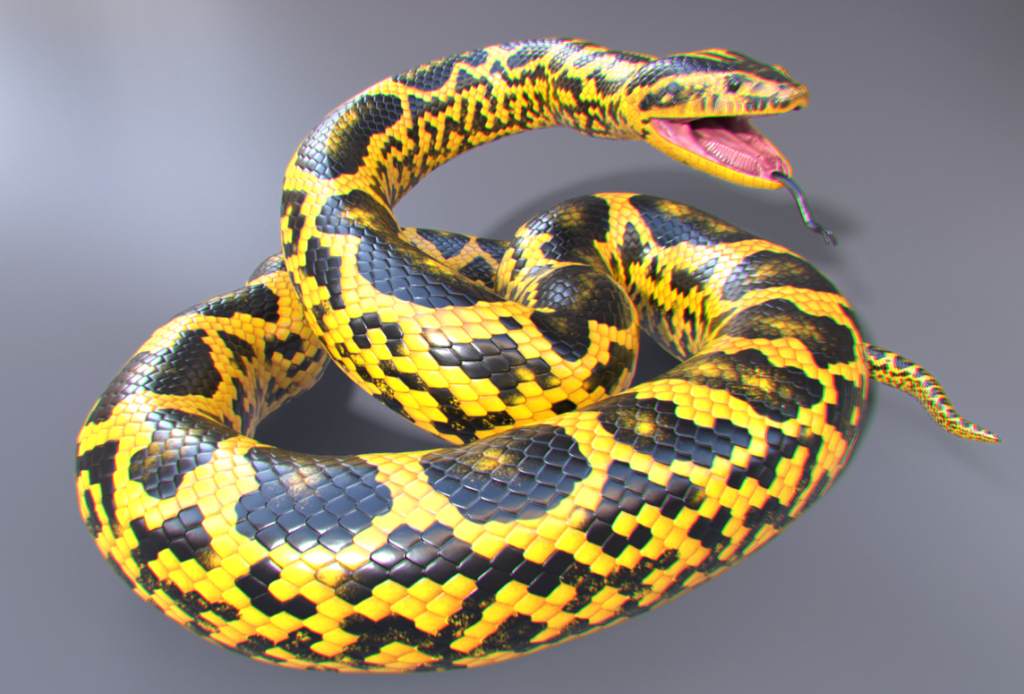
The yellow anaconda (Eunectes notaeus) is a non-venomous, semi-aquatic snake native to South America, particularly found in Paraguay, Bolivia, northern Argentina, and southern Brazil. It is the smaller cousin of the green anaconda but still ranks among the largest snakes in the world, growing up to 10–13 feet in length. Known for its striking yellow and black patterned skin, the yellow anaconda thrives in swamps, marshes, and slow-moving rivers. It is a powerful constrictor, feeding on fish, birds, and small mammals.
Quick Top 10 Facts about Yellow Anaconda
| SCIENTIFIC NAME | Eunectes notaeus |
| CLASSIFICATION | KINGDOM: Animalia PHYLUM: Chordata CLASS: Reptilia ORDER: Squamata FAMILY: Boidae GENUS: Eunectes SPECIES: E. notaeus |
| SIZE | Length: 10–15 feet (3–4.5 meters), females are larger than males |
| HABITAT | Swamps, marshes, and slow-moving rivers in South America, primarily in Paraguay, Bolivia, and northern Argentina |
| DIET | Carnivorous; feeds on fish, birds, reptiles, and small to medium-sized mammals |
| SPECIES | The Yellow Anaconda is a non-venomous constrictor and the second-largest species of anaconda after the Green Anaconda |
| COUNTRY | Native to South America, especially in Paraguay and Argentina |
| REPRODUCTION | Ovoviviparous; females give birth to live young after embryos develop inside eggs within the mother’s body |
| LIFE SPAN | 15–20 years in the wild; longer in captivity |
| CONSERVATION STATUS | Not currently endangered, but habitat destruction and hunting affect some populations |
Amazing Facts About Yellow Anacondas
1. They’re excellent swimmers
Yellow Anacondas spend much of their time in or near water and are powerful swimmers.
2. Females are bigger
In this species, females can be significantly larger and heavier than males.
3. Ambush predators
They lie in wait in water or vegetation and strike quickly to constrict their prey.
4. Not as large as green anacondas
While still massive, Yellow Anacondas are generally smaller and less bulky than their green relatives.
5. Constrictors, not venomous
They kill by wrapping around and suffocating their prey, not by injecting venom.
6. Live birth
Females give birth to live young, with litters ranging from 10 to 40 snakes.
7. Yellow and black coloration
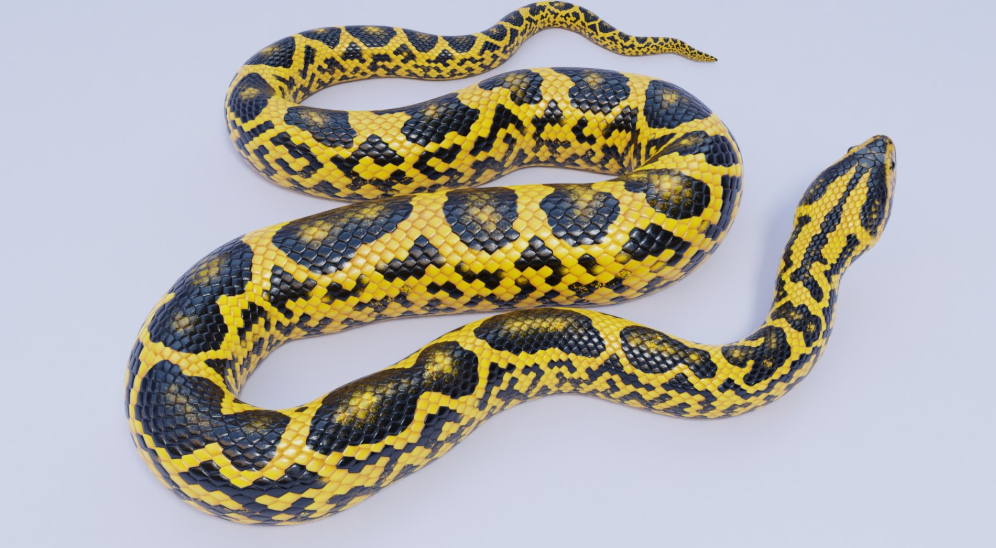
Their striking yellow body with black or dark brown blotches provides camouflage in watery habitats.
8. Solitary lifestyle
They are solitary creatures except during the mating season.
9. Can go without food for weeks
After a large meal, Yellow Anacondas can fast for extended periods while digesting.
10. Important in the ecosystem
They help regulate populations of aquatic and semi-aquatic animals, maintaining ecological balance.
Introduction to Yellow Anaconda: largest snake species in the world
One of the most intriguing and powerful snake species in the world is the yellow anaconda (Eunectes notaeus). This South American native snake has drawn interest from conservationists, scientists, and wildlife lovers. An apex predator in its native environment, the yellow anaconda is distinguished by its enormous size, vivid colouring, and distinctive behavioural characteristics. The physical traits, habitat, food, behaviour, and conservation measures needed to preserve the yellow anaconda are all examined and given below:
The Yellow Anaconda’s Physical Features
Despite being one of the biggest snake species, the green anaconda (Eunectes murinus), a close cousin, often eclipses the yellow anaconda. Even yet, the yellow anaconda is a remarkable animal in its own right, with some individuals growing up to 4 meters (13 feet) in length, while most are only 3 to 4 meters. These snakes are great swimmers and ambush predators because of their strong, muscular bodies.
The Yellow Anaconda’s Colour and Camouflage
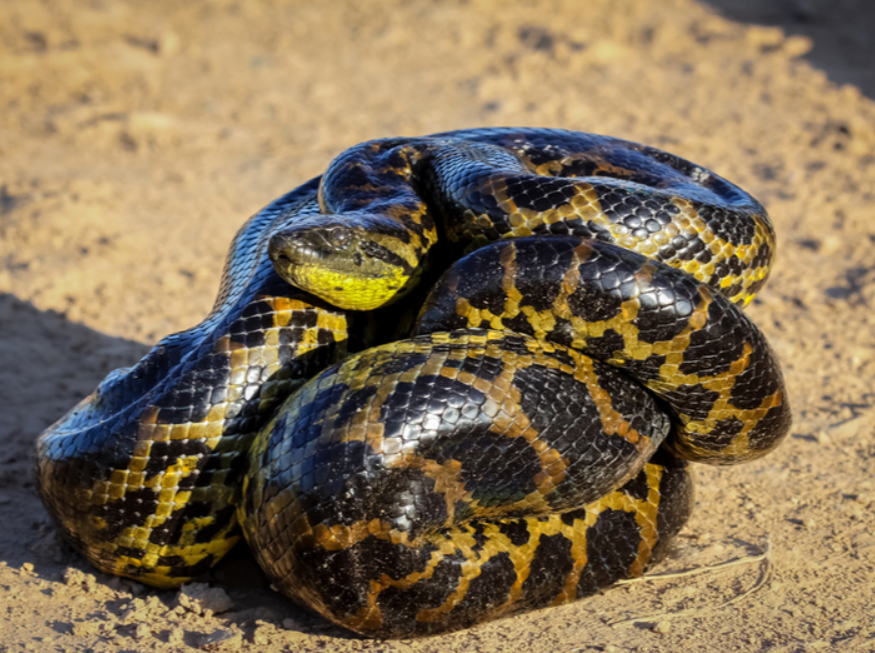
The colouration of the yellow anaconda is what sets it apart. The snake’s body is mostly yellow or light green with darker patches and dots, which aids in its ability to blend in with its woodland and marsh habitats. Individuals differ in their scale pattern, but the species as a whole has the same yellow and black colouring. The snake is an effective predator on land and in water because of its large head and tiny, beady eyes, which are perched atop a lengthy neck.
Yellow Anaconda Size and Physical Strength
With an average girth of almost 30 cm (12 inches) in circumference, the yellow anaconda is still a huge snake despite being shorter than the green anaconda. The snake can effectively constrict and overpower huge prey because of its robust bulk. Additionally, they have unique heat-sensing holes close to their mouths that aid in seeing prey in low light or underwater.
Yellow Anaconda Habitat and Distribution
The slow-moving rivers and marshes of South America are the main habitats of the yellow anaconda. It prefers locations close to water sources and may be found across Brazil, Paraguay, and Bolivia. This species spends a large portion of its time underwater or hiding close to the water’s edge since it is suited to live in and around aquatic habitats.
Federal Aquatic Life Adaptations
Yellow anacondas are semi-aquatic animals that do well in environments with plenty of vegetation and water. The snake may find food and shelter in these settings. The yellow anaconda’s food includes a wide range of species that are found in wetlands and waterlogged places. These snakes have excellent swimming skills and move through the water with ease because of their muscular bodies. They have become so adapted to the water that they can stay underwater for long periods of time, inhaling via eyes and nostrils that are above the water’s surface.
Yellow Anaconda Diet and Feeding Practices
The opportunistic and voracious yellow anacondas pursue prey. Fish, amphibians, birds, and even mammals like capybaras, juvenile caimans, and tiny deer are among the huge prey they may kill. Warm-blooded and cold-blooded creatures make up the majority of their food, which they ambush using their skilled concealment and meticulous hunting methods.
Constriction and Hunting Strategy
The snake waits in the water or along riverbanks while hiding in the surrounding foliage as part of its feeding strategy. They use their heat-sensing skills to identify possible prey by observing the warmth that the animal’s body emits. The yellow anaconda rapidly attacks after locating its victim, encircling it with its strong bulk and squeezing it to death—a technique known as constriction.
Dietary Methods and the Digestive Process
In contrast to other snake species, yellow anacondas are known to overwhelm their victim with a single, strong constriction rather than striking repeatedly. Once the animal has been subdued, the snake uses its pliable jaws to wrap itself around the victim and devour it completely. Depending on the amount of the dish, this procedure may take many hours.
Yellow Anaconda Lifespan and Reproduction
Because yellow anacondas are ovoviviparous, they do not lay eggs; instead, they give birth to live offspring. Since most snake species lay eggs, this reproductive strategy is somewhat uncommon. Males engage in ritualised warfare as they vie for females throughout the breeding season. In an effort to pin one another down, the males will coil around one another. The fertilised eggs are carried into the female’s body after mating, where they develop until hatching.
Progeny and Birth Procedure
Although some bigger females may give birth to as many as 70 kids, a female yellow anaconda normally gives birth to 20 to 40 live offspring. Soon after birth, the babies are fully developed and ready to swim. The majority of yellow anacondas live between 10 and 15 years in the wild, which is a short lifetime considering their size. However, since they are not as threatened in captivity, they may live longer.
Yellow Anaconda Behavioural Features
Unless provoked, yellow anacondas are mostly isolated creatures that do not act aggressively towards people. Their urge to hunt and maintain their camouflage in the wild is what mostly drives their behaviour. Although they are mostly nocturnal predators, these snakes may be active during the day if the circumstances are right.
Social Conduct and Aloneness
Yellow anacondas are semi-aquatic snakes that often lounge in the sun to control their body temperature. After spending some time in cold water, they usually come out of the water to warm themselves by basking on rocks, logs, or banks. Because of its size and strength, the snake can effectively hunt prey that is much bigger than it is.
Apex predator role
In their natural habitat, yellow anacondas play a vital role as predators. By keeping their ecosystem in balance, they aid in managing the numbers of smaller creatures. Though their small size and ability to conceal themselves in aquatic surroundings help them evade these risks, they are nonetheless threatened by bigger predators like caimans and jaguars.
Yellow Anaconda Conservation Status
The International Union for Conservation of Nature (IUCN) now has the yellow anaconda listed as near threatened. Human encroachment, wetland draining, and habitat damage from deforestation are the yellow anaconda’s primary threats. The snake’s native habitat is disturbed by these activities, which makes it more difficult for the species to locate appropriate areas for breeding and hunting.
Dangers Associated with Human Activity
Yellow anacondas are also in serious danger from the illicit pet trade because of the rise in poaching brought on by their appeal among fascinating pet owners. Their populations are disturbed, and the genetic diversity of the species is diminished when they are captured and taken from their native environment.
Programs for Conservation and Protection of Habitat
Nonetheless, conservation measures are being taken to save the yellow anaconda. To preserve the snake’s native environment, many national parks and animal sanctuaries have been created across South America. Environmental groups are also trying to increase public awareness of the need to protect forests and wetlands, which are essential to the survival of several species, including the yellow anaconda.
The Yellow Anaconda’s Function in the Environment
In the environments it lives in, the yellow anaconda is essential. Being an apex predator, it aids in managing prey species populations to prevent any one species from becoming too dominant. This enhances the wetland and river ecosystems’ total richness. The yellow anaconda indirectly promotes the health of the vegetation in its environment by controlling prey numbers, which prevents herbivores from overgrazing.
A measure of the health of an ecosystem
The ecosystem’s general health is also shown by the presence of yellow anacondas in their native habitats. The survival of animals like the yellow anaconda is often a good indication of the health of wetlands, rivers, and marshes, which are some of the most ecologically fragile places. The preservation of several other species that coexist with the yellow anaconda depends on efforts to safeguard it.
FAQ (Frequently Asked Questions) about Yellow Anaconda
Q: What is a Yellow Anaconda?
Ans: The Yellow Anaconda ( Eunectes notaeus) is a large, non-venomous snake species native to South America. It is a member of the boa family and is known for its impressive size, yellow and green coloration, and semi-aquatic lifestyle. Yellow anacondas are primarily found in the wetlands, swamps, and rivers of the Paraguay, Paraná, and Uruguay river basins.
Q: Where does the Yellow Anaconda live?
Ans: Yellow Anacondas are found in the wild in the tropical and subtropical regions of South America, especially in countries like Argentina, Brazil, and Paraguay. They thrive in wetlands, rivers, swamps, and marshes where they can easily access both water and land.
Q: What does the Yellow Anaconda eat?
Ans: Yellow Anacondas are carnivorous and feed on a variety of prey, including fish, amphibians, birds, small mammals, and reptiles. They are constrictors, meaning they kill their prey by wrapping around it and squeezing until it suffocates before swallowing it whole.
Q: How big does a Yellow Anaconda get?
Ans: Yellow Anacondas are one of the largest snake species in the world, although smaller than their famous relative, the Green Anaconda. They can grow up to 10 feet (3 meters) in length, although most individuals are around 6 to 8 feet (1.8 to 2.4 meters). They can weigh up to 100 pounds (45 kg) or more.
Q: Are Yellow Anacondas dangerous?
Ans: Yellow Anacondas are non-venomous constrictors, and while they are capable of overpowering large prey, they generally do not pose a threat to humans. Their powerful constriction can cause injury if provoked or threatened, but they typically avoid human contact unless cornered.
Q: How does the Yellow Anaconda hunt?
Ans: The Yellow Anaconda is an ambush predator. It uses its camouflage to blend into the surrounding environment and patiently waits for prey to approach. When the opportunity arises, the snake strikes quickly and constricts its prey before swallowing it whole.
Q: What does the Yellow Anaconda look like?
Ans: The Yellow Anaconda has a distinctive appearance with a yellow or tan base color covered in dark, irregular spots or markings. These markings help it camouflage in the wetlands. Its thick, muscular body and large head are characteristic features of this powerful snake.
Q: How long do Yellow Anacondas live?
Ans: Yellow Anacondas have a lifespan of about 15 to 30 years in the wild, depending on environmental factors and predation. In captivity, with proper care, they can live even longer.
Q: Can you keep a Yellow Anaconda as a pet?
Ans: Yes, Yellow Anacondas can be kept as fascinating pets, though they require a large, secure enclosure with both aquatic and dry areas. Due to their size and strength, they are not recommended for beginner snake keepers. They also require a diet of whole prey items and proper veterinary care.
Q: Are Yellow Anacondas endangered?
Ans: Yellow Anacondas are not currently listed as endangered, but their populations are threatened by habitat destruction, hunting, and the illegal pet trade. Conservation efforts are ongoing to preserve their natural habitats and protect them from exploitation.
#YellowAnaconda, #NonVenomousSnake, #Anaconda, #Constrictor, #Wildlife, #SouthAmericanSnakes, #SnakeLovers, #Reptiles, #ExoticPets, #NatureConservation, #Herpetology
Our sources and references about Yellow Anaconda
1: Wikipedia – Yellow Anaconda
2: Reptiles Magazine – Yellow Anaconda
3: World Animal Foundation – Yellow Anaconda
4: Animalia – Yellow Anaconda


