Quick Top 10 Facts about Black Crappie Fish
| SCIENTIFIC NAME | Pomoxis nigromaculatus |
| CLASSIFICATION |
KINGDOM: Animalia PHYLUM: Chordata CLASS: Actinopterygii ORDER: Perciformes FAMILY: Centrarchidae GENUS: Pomoxis |
| SIZE | Typically 4–12 inches (10–30 cm) in length; can weigh up to 2 pounds (0.9 kg) |
| HABITAT | Freshwater lakes, rivers, ponds, and reservoirs with clear water and abundant vegetation |
| DIET | Carnivorous – feeds on small fish, aquatic insects, and crustaceans |
| SPECIES | One of two species of crappie; the other being the White Crappie (Pomoxis annularis) |
| COUNTRY | Native to North America, especially widespread in the United States and parts of Canada |
| GESTATION PERIOD | Eggs hatch in 2–5 days after being laid in nests constructed by males |
| LIFE SPAN | Up to 7 years in the wild |
| CONSERVATION STATUS | Least Concern – widely distributed and commonly fished recreationally |
Amazing Facts About Black Crappie Fish
1. Known for their speckled appearance
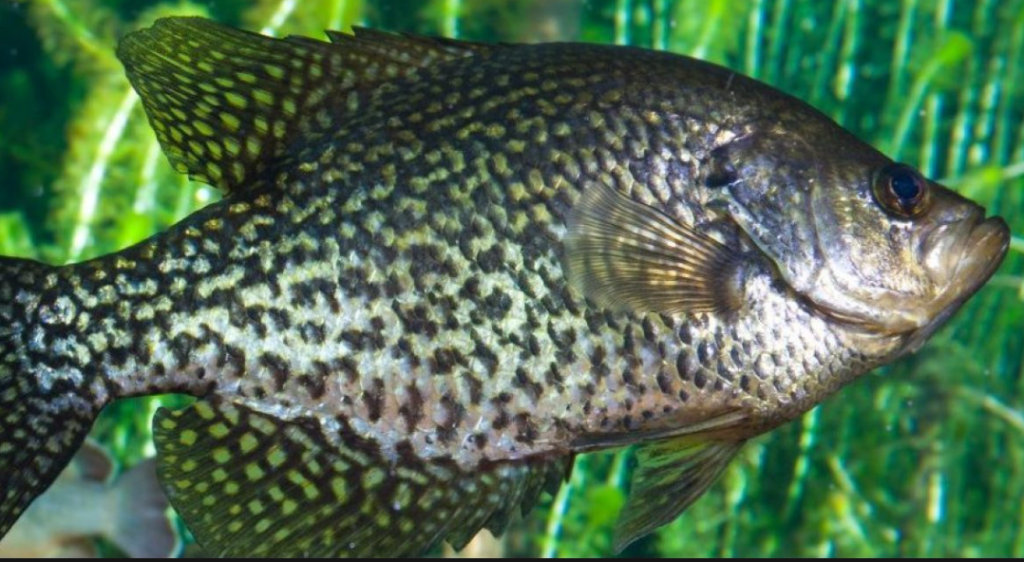
Black Crappies are easily recognized by their dark, irregular spots and silvery body.
2. Popular game fish
They are highly prized by freshwater anglers due to their abundance and delicious taste.
3. Spawn in spring
Males build nests in shallow waters and guard the eggs until they hatch.
4. Excellent schooling fish
Black Crappies often travel in large schools, especially in cooler waters.
5. Sensitive to water clarity
They prefer clear water and are less tolerant of murky environments compared to their white crappie cousins.
6. Active during dawn and dusk
They are most actively feeding during early morning and evening hours.
7. Found throughout North America
Though native to eastern North America, they’ve been widely introduced throughout the U.S. and southern Canada.
8. Diet changes with age
Juvenile crappies feed primarily on plankton and insects, while adults eat more fish and aquatic invertebrates.
9. Can be ice fished
In colder climates, Black Crappies are a favorite target of ice fishermen in winter months.
10. Not actually “black”
Despite the name, Black Crappies aren’t truly black but have a mix of silver, green, and dark speckled coloring.
Intriguing Facts about Black Crappie fish
Black crappie, or Pomoxis nigromaculatus, is an interesting fish species found in freshwater lakes, ponds, and rivers across North America. Because of its very recognisable black and silver colour, this fish has grown to be a favourite target for anglers and fishing aficionados. The Black Crappie’s deep, laterally compressed body, dorsal fin with spines, and broad mouth are some of its unique physical traits. These attributes enable it to swim rather effectively, making it a formidable predator in its watery habitat.
Black crappie fish can live in both warm and cold water
The ideal areas to locate Black crappie fish live in calm, clear freshwater basins like lakes and reservoirs. It prefers areas with plenty of greenery, areas with adequate cover for protection, and items that are submerged, including brush heaps or fallen trees. It is well known that this species exhibits schooling behaviour, especially during the spawning season when large numbers of individuals come together to reproduce. Black crappies like to spend the day in deeper waters and go to shallower areas at night in order to eat small fish, insects, and crustaceans.
physical characteristics of black crappies make them appealing
Fish known as black crappies are amazing animals that may be enjoyed for food and entertainment. Anglers like them because of their unique look, varied eating habits, and tough bouts. Understanding the behaviours and traits of black crappie fish will improve your enjoyment of these fish, whether you are a serious fisherman or just find them to be beautiful.
Life cycle and lifespan of Black crabpie Fish
Black crappies only have a relatively limited lifespan—they could only survive up to seven years in the wild. Springtime temperatures between 55 and 65 degrees Fahrenheit are ideal for this species’ spawning. During this time, the male Black Crappie uses its tail to clean a circular area on the lake or riverbank so that it may construct a nest. The female lays eggs in the nest, which the male subsequently fertilises. Until the fry are big enough to swim alone, the male guards the nest while incubating the eggs.
Growth and development of Black crabpie Fish
In terms of conservation, black crappie numbers are generally stable and are not believed to be in danger. Nonetheless, pollution, overfishing, and habitat degradation may pose a danger to their population. It is essential to implement sustainable fishing practices and protect their natural habitats in order to ensure the long-term existence of this fascinating species.
Fascinating facts about Black crabpie Fish
Scientifically called Pomoxis nigromaculatus, the black crappie fish is a common freshwater species that is indigenous to North America. It belongs to the sunfish family and is highly prized by fishermen for both its mouthwatering flavour and its difficult battle. The following are some intriguing facts about black crappie fish:
Physical appearance of Black Crappie Fish
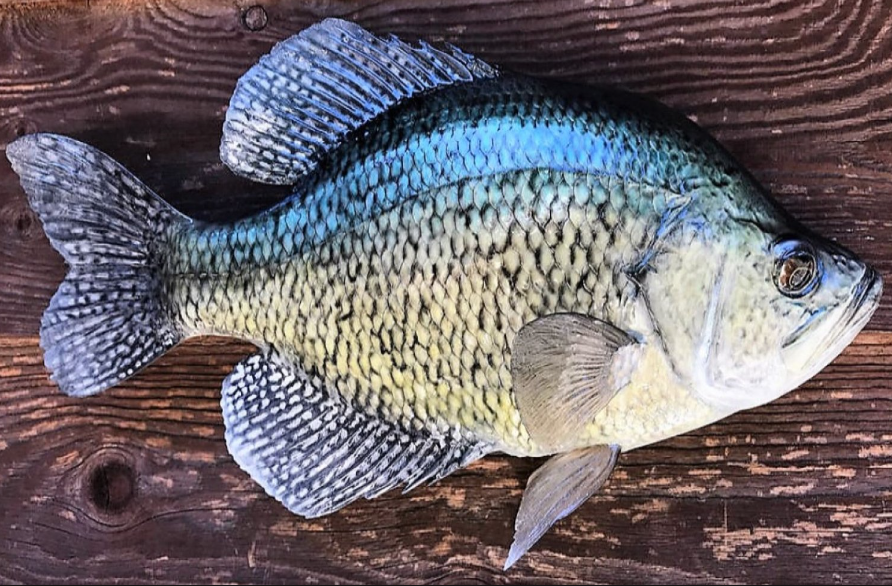
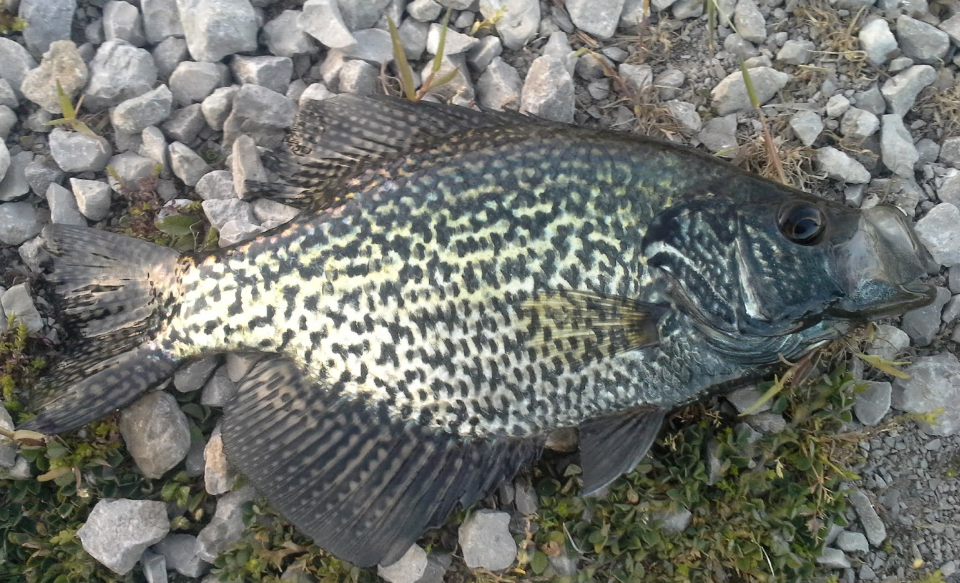
The black crappie is easily distinguished from other fish species by its unique look. Its body is deeply and laterally compressed, and its back and sides have a silvery-green hue. The fish has a mottled look due to its coating of black speckles. There are two portions to its dorsal fin, the front of which has sharp spines.
Habitat and distribution of Black Crappie Fish
Across North America, freshwater lakes, ponds, rivers, and reservoirs are the usual habitat for black crappie fish. Where they can conceal themselves and ambush their prey, they choose clear water with vegetation and submerged obstructions like fallen trees or submerged brush. It is well known that these fish do well in both warm and cold water.
Feeding behaviour of Black Crappie Fish
Black crappie fish have a varied diet and are opportunistic eaters. Their main sources of food are tiny fish, including shad and minnows, as well as crabs, insects, and zooplankton. They are renowned for being expert hunters, and they often lurk among aquatic plants or underwater buildings, waiting for their prey to approach before making a kill.
Behaviour and adaptations of Black Crappie Fish
In the spring, when the water temperature reaches between 55 and 65 degrees Fahrenheit, black crappie fish usually spawn. The males use this period to dig nests in shallow water by making depressions in the substrate with their tail fans. The males then watch over and ventilate the eggs until they hatch, while the females deposit their eggs in these nests. Within two to three years, the juvenile fish might attain sexual maturity due to their fast growth.
appearance of Black crabpie Fish depends on their habitat and age
The size of black crappie fish varies according to their habitat and the availability of food. They weigh from 0.5 to 2 pounds and are typically 9 to 15 inches long. But other individuals may become considerably bigger; a black crappie fish’s record weight is more than five pounds. These fish only live for an average of seven to ten years, which is a rather brief lifetime.
Black crabpie fish and its popularity among anglers
Anglers really value black crappie fish for their sporting abilities. They are popular targets for recreational fishing because of their strong strikes and acrobatic fighting. Black crappie may be caught by anglers using a range of methods, including trolling, jigging, and using artificial or live bait. During the winter, they are also a well-liked prey for ice fishing.
Fishermen prefer Black Crappie fish species over others
The culinary features of black crappie fish are highly valued, in addition to their appeal among fishermen. The mild-tasting, delicate, and white flesh of black crappie makes it an adaptable element in a variety of cuisines. It may be cooked in a variety of ways, including by baking, grilling, frying, or even adding it to soups and stews. For many people, one of the best-tasting freshwater fish is black crappie.
FAQ (Frequently Asked Questions) about Black Crappie Fish
Q: What is a Black Crappie?
Ans: The Black Crappie (Pomoxis nigromaculatus) is a freshwater fish native to North America. It belongs to the sunfish family and is popular among anglers for its tasty, flaky meat and sporting challenge. Black Crappies are known for their silvery bodies speckled with black or dark spots, making them easily distinguishable from their relative, the White Crappie.
Q: Where do Black Crappie live?
Ans: Black Crappie are commonly found in clear, cool freshwater lakes, reservoirs, ponds, and slow-moving rivers throughout North America. They prefer environments with plenty of vegetation, submerged trees, or other underwater structures where they can hide and hunt.
Q: What does the Black Crappie eat?
Ans: Black Crappie are carnivorous and feed mainly on small fish, insects, crustaceans, and zooplankton. Juveniles feed mostly on plankton and insects, while adults hunt small baitfish such as minnows. They are most active during dawn and dusk.
Q: How big do Black Crappie get?
Ans: Black Crappie typically grow to about 4 to 12 inches (10 to 30 cm) in length and weigh between 0.25 to 1.5 pounds (0.1 to 0.7 kg). However, under ideal conditions, some can reach over 15 inches (38 cm) and weigh more than 2 pounds (0.9 kg).
Q: How do Black Crappie reproduce?
Ans: Black Crappie spawn in the spring when water temperatures reach around 60°F (15.5°C). Males build nests in shallow water by fanning out a depression in the substrate. After females lay eggs, males guard the nests until the eggs hatch. Spawning usually takes place in late April through June, depending on location.
Q: Are Black Crappie good to eat?
Ans: Yes, Black Crappie are considered excellent table fare. Their white, flaky meat has a mild, sweet flavor, making them popular among freshwater anglers. They are typically pan-fried, grilled, or used in fish tacos and other dishes.
Q: What’s the difference between Black Crappie and White Crappie?
Ans: While both species are similar in shape and size, Black Crappie have more dark speckles across their bodies and tend to have 7–8 dorsal spines, while White Crappie have vertical bars on their bodies and usually 5–6 dorsal spines. Black Crappie also prefer clearer, cooler water compared to White Crappie.
Q: Are Black Crappie easy to catch?
Ans: Yes, Black Crappie are a favorite target for recreational anglers. They can be caught using light tackle, live bait such as minnows or worms, and artificial lures. They are often found in schools near submerged structures and are most active during low-light periods.
Q: Are Black Crappie invasive?
Ans: Black Crappie are not typically considered invasive, but when introduced into non-native water bodies, they can overpopulate and disrupt local ecosystems. Fisheries managers monitor their populations to prevent overgrowth and competition with other fish species.
Q: How long do Black Crappie live?
Ans: Black Crappie have an average lifespan of 4 to 7 years in the wild, although some individuals may live longer in ideal conditions. Growth and lifespan can vary depending on factors like food availability, water quality, and climate.
#BlackCrappie, #FreshwaterFish, #CrappieFishing, #AnglingLife, #FishingUSA, #SportFishing, #LakesideLife, #FishingTips, #SunfishFamily, #FishFacts, #AquaticLife, #Panfish
Our sources and references about Black Crappie Fish
1: Wikipedia – Black Crappie
2: American Expedition – Black Crappie Facts
3: Texas Parks & Wildlife – Crappie Species
4: Outdoor Life – Black Crappie Info