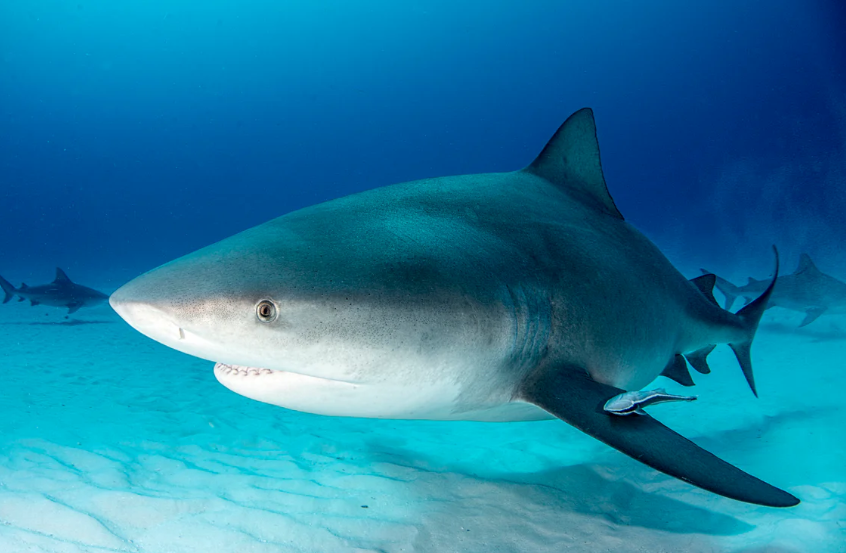
Quick Top 10 Facts about Bull Shark
| SCIENTIFIC NAME | Carcharhinus leucas |
| CLASSIFICATION | KINGDOM: Animalia PHYLUM: Chordata CLASS: Chondrichthyes ORDER: Carcharhiniformes FAMILY: Carcharhinidae GENUS: Carcharhinus SPECIES: C. leucas |
| SIZE | Length: 7–11 feet (2.1–3.4 meters); Weight: 200–500 pounds (90–230 kg) |
| HABITAT | Coastal waters, rivers, and freshwater environments in tropical and subtropical regions |
| DIET | Carnivorous; preys on fish, sharks, rays, dolphins, and even terrestrial animals such as birds |
| SPECIES | Bull Shark, known for its aggressive nature and ability to thrive in both saltwater and freshwater |
| COUNTRY | Found in tropical and subtropical coastal waters worldwide, particularly in the Americas, Africa, and Asia |
| GESTATION PERIOD | 10–11 months; gives birth to live young (viviparous) |
| LIFE SPAN | 16–24 years in the wild |
| CONSERVATION STATUS | Near Threatened; populations are declining due to habitat loss, overfishing, and hunting |
Amazing Facts About Bull Sharks
1. They are one of the most aggressive shark species
Bull Sharks are known for their territorial and aggressive behavior, particularly around humans.
2. They can live in both saltwater and freshwater
Unlike most sharks, Bull Sharks have a unique ability to regulate their internal salinity, allowing them to thrive in both saltwater and freshwater environments.
3. They can travel up rivers
Bull Sharks are known to travel far up freshwater rivers, including the Amazon and the Mississippi, making them one of the most versatile sharks in terms of habitat.
4. Bull Sharks have powerful jaws
With their strong bite, Bull Sharks are capable of taking down large prey, including other sharks, dolphins, and even large terrestrial mammals.
5. They are fast swimmers
Bull Sharks can swim at speeds of up to 12 miles per hour (20 km/h), using their streamlined bodies and powerful tails.
6. They are opportunistic feeders
Bull Sharks will eat almost anything they encounter, from fish and rays to birds and small mammals, often preying on easy targets in shallow waters.
7. They have a short gestation period
Their relatively short 10–11 month gestation period allows for quicker reproduction compared to many other shark species.
8. They are capable of hunting in murky waters
Bull Sharks are known for being able to hunt in low-visibility, murky waters, a trait that sets them apart from other sharks that prefer clearer waters.
9. Bull Sharks are apex predators
As apex predators, Bull Sharks play an important role in maintaining the balance of their ecosystems by controlling the populations of smaller animals.
10. They are highly adaptable
Bull Sharks are one of the most adaptable shark species, thriving in a wide range of environments, from coastal estuaries to rivers, and can even survive in warm, brackish waters.
Intriguing Facts about bull shark fish
Bull sharks, scientifically known as Carcharhinus leucas, are a distinct species of shark that inhabits both freshwater and saltwater environments. Because of their remarkable ability to tolerate and adapt to varying salinities, bull sharks, unlike most other shark species, can dwell in rivers, estuaries, and even lakes. Because of their versatility, they have earned the title of being among the most diverse and adaptable shark species in the world.
Bull sharks have unique characteristics
With their size, unusual reproductive technique, hostility, and adaptability, bull sharks are really amazing animals. They differ from other shark species in that they can live in both freshwater and saltwater habitats. Even if they could be seen as harmful to people, it’s crucial to recognise and value their contribution to preserving environmental equilibrium. The long-term health and variety of the aquatic environments on our planet can be guaranteed by safeguarding and preserving bull shark populations.
Amazing and unique facts about bull sharks
One of bull sharks migrating upriver into freshwater habitats is among the most amazing facts about them. They have been seen swimming hundreds of kilometres upstream, jumping over obstacles like waterfalls, and crossing rivers. Their unique behaviour sets them apart from other shark species and allows them access to new food sources and regions for mating that were previously inaccessible.
Bull sharks and interactivity with humans
Bull sharks are among the shark species most dangerous to humans because of their reputation for violence. With their powerful jaws, sharp fangs, and stocky build, they are formidable predators. They eat a wide range of species, including fish, dolphins, turtles, and even other sharks. Because they can withstand freshwater, bull sharks have been known to enter areas where humans are present, increasing the possibility of encounters and accidents. When swimming or engaging in other water activities in areas where bull sharks are known to be prevalent, people should use caution.
Fascinating facts about bull sharks
Carcharhinus leucas, the scientific name for bull sharks, is a unique type of shark that lives in freshwater and coastal areas worldwide. Here are a few fascinating details about these unusual animals:
Adaptability of bull sharks to various environments
The fact that bull sharks can live and prosper in both freshwater and saltwater settings is one of their most amazing traits. Bull sharks, which inhabit rivers, lakes, and even swamps, are able to withstand low salinity levels, in contrast to the majority of other shark species. Because of their versatility, they may travel hundreds of kilometres upstream in quest of food or good places to mate.
Social behavior of bull sharks
Because of their aggressive nature, bull sharks are among the shark species that pose the greatest threat to people. They are known to be aggressive and bear much of the blame for shark attacks that occur in shallow coastal waters. Because of their hostile disposition and capacity to swim in both fresh and saltwater, they pose a risk to people and shark populations in regions where they cohabit.
Description of Bull sharks appearance
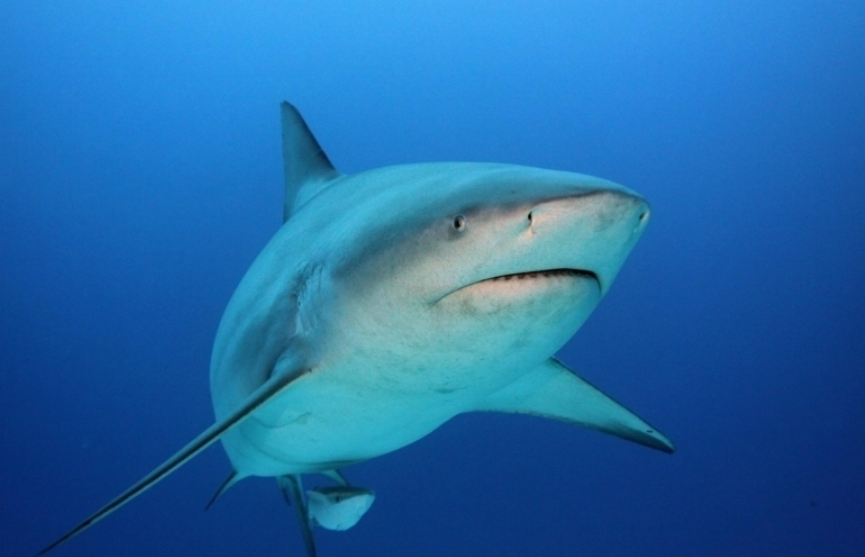
Bull sharks are well-known for their size, power, and aggressiveness. With mature females generally reaching lengths of 7 to 8 feet (2.1 to 2.4 metres) and males somewhat smaller at roughly 6 to 7 feet (1.8 to 2.1 metres), they are regarded as medium-sized sharks. But others have been known to grow considerably bigger; bull sharks have been documented to weigh more than 500 pounds (227 kilogrammes) and reach lengths of up to 11 feet (3.4 metres).
Explanation of Bull Shark diet preferences
Bull sharks eat a variety of species; thus, their teeth are uniquely suited for this diet. Their front teeth are triangular and sharp for tearing and grabbing, while their rear teeth are wider and more serrated for grinding and crushing. Their adaptable oral structure enables them to consume a wide range of freshwater and marine organisms, including fish, birds, turtles, and even other sharks.
Reproduction and life cycle of Bull sharks
Bull sharks use a special kind of reproduction called viviparity. By this, it is meant that the embryos grow within the mother’s body and get nourishment from the placenta until birth. Bull sharks usually have a litter of four to ten pups during their ten- to eleven-month gestation period. Soon after birth, the baby sharks are completely grown and ready to swim and hunt.
Habitat and distribution of Bull sharks
Bull sharks are distributed around the globe and are particularly common in warm coastal waters and freshwater environments. They are often found in areas like the Caribbean Sea, the Gulf of Mexico, the western Atlantic Ocean, and the South American rivers. Additionally, reports of them have been found in the waterways of Africa, Asia, Australia, and even as far north as the Great Lakes of the United States.
Encouragement for further exploration and appreciation of Bull sharks
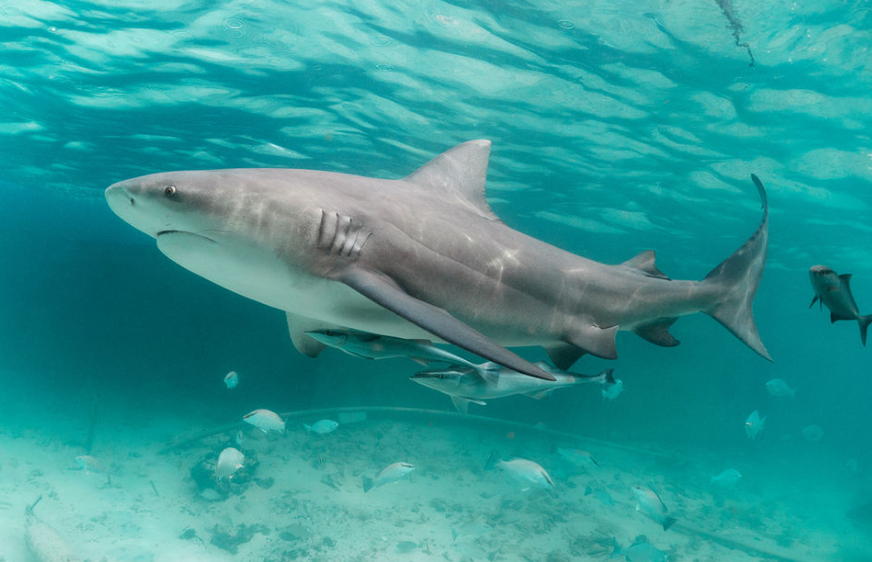
In order to keep freshwater and marine ecosystems in balance, bull sharks are essential. As apex predators, they aid in controlling and preventing overpopulation in their prey species populations. Because they are sensitive to changes in water quality and habitat degradation, their existence also serves as an indicator of the ecosystem’s general health. For these ecosystems to be healthy and sustainable overall, bull shark populations must be protected.
FAQ (Frequently Asked Questions) about Bull Shark
Q: What is a Bull Shark?
Ans: The Bull Shark (Carcharhinus leucas) is a large, aggressive species of shark found in both saltwater and freshwater environments. Known for its robust and stocky body, the Bull Shark is one of the few shark species that can live in freshwater for extended periods, and it is considered one of the most dangerous sharks to humans due to its unpredictable behavior.
Q: Where does the Bull Shark live?
Ans: Bull Sharks are found in coastal regions around the world, typically in warm, shallow waters. They are known for their ability to travel between saltwater and freshwater habitats. They can be found in rivers, lakes, and estuaries, in addition to the open ocean, and have been known to swim far inland in places like the Amazon River and Lake Nicaragua.
Q: What does the Bull Shark eat?
Ans: Bull Sharks are carnivorous apex predators. Their diet consists of a variety of prey, including fish, rays, and smaller sharks. They also hunt in freshwater areas, consuming freshwater fish, turtles, and even mammals like seals or birds. Bull Sharks are opportunistic feeders, often hunting in shallow water near shorelines.
Q: How big does a Bull Shark get?
Ans: Bull Sharks are relatively large, with adult males reaching lengths of around 7 to 8 feet (2.1 to 2.4 meters) and females growing slightly larger, up to 10 feet (3 meters). They can weigh between 200 to 500 pounds (90 to 230 kg), with females being the heavier of the two sexes.
Q: Are Bull Sharks dangerous to humans?
Ans: Yes, Bull Sharks are considered one of the most dangerous shark species to humans due to their aggressive nature, large size, and tendency to inhabit shallow coastal areas where human activity is common. While attacks on humans are rare, Bull Sharks have been involved in several unprovoked attacks, especially in murky waters where they may feel threatened or confused.
Q: How does the Bull Shark hunt?
Ans: Bull Sharks use their keen senses to locate prey in both saltwater and freshwater environments. They are known for their aggressive hunting style and ability to attack quickly from below. They often ambush their prey by swimming in shallow waters, making them particularly dangerous in areas where humans are swimming or wading.
Q: What does the Bull Shark look like?
Ans: Bull Sharks have a stout, muscular body with a broad, flat head and a short, blunt snout. Their coloration is typically grey on the top and white on the underside, which helps them blend into the ocean when viewed from above or below. They have large, triangular dorsal fins and sharp, serrated teeth.
Q: How long do Bull Sharks live?
Ans: Bull Sharks typically live for about 16 years in the wild. However, some individuals have been known to live longer, particularly in protected environments. Their lifespan is influenced by factors such as food availability, predation, and habitat quality.
Q: Can Bull Sharks live in freshwater?
Ans: Yes, Bull Sharks are one of the few shark species that can live in freshwater. They have the ability to regulate their salt levels, allowing them to survive in both saltwater and freshwater environments. Bull Sharks have been found far inland in rivers and lakes, such as the Mississippi River and the Amazon River.
Q: Are Bull Sharks endangered?
Ans: Bull Sharks are not currently listed as endangered, but they are considered a species of concern due to overfishing, habitat destruction, and the demand for shark fins. Conservation efforts are underway to protect their habitats and ensure sustainable populations in the wild.
#BullShark, #Sharks, #ApexPredators, #DangerousSharks, #MarineLife, #SharkConservation, #SharkAttack, #Wildlife, #SharkFacts, #OceanWildlife, #SharkProtection, #MarineEcosystem
Our sources and references about Bull Shark
1: Wikipedia – Bull Shark
2: National Geographic – Bull Shark
3: Sharksider – Bull Shark
4: Smithsonian Ocean – Bull Sharks