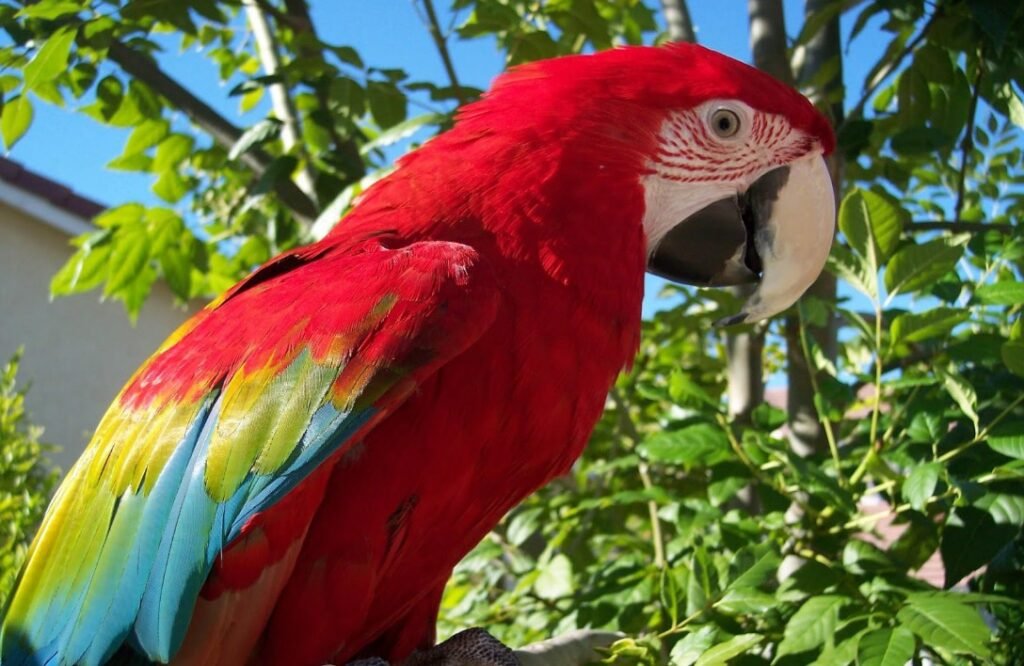
The Scarlet Macaw is one of the most beautiful and recognizable parrots in the world, known for its vivid red, blue, and yellow plumage. Native to Central and South American rainforests, these large parrots are highly intelligent and social, often forming lifelong pair bonds. Scarlet Macaws are excellent fliers and vocal communicators, using a range of calls and body language to interact with their flock. Sadly, habitat loss and the pet trade have impacted wild populations, but conservation efforts are ongoing.
Quick Top 10 Facts about Scarlet Macaw
| SCIENTIFIC NAME | Ara macao |
| CLASSIFICATION | KINGDOM: Animalia PHYLUM: Chordata CLASS: Aves ORDER: Psittaciformes FAMILY: Psittacidae |
| SIZE | Length: 32–36 inches; Wingspan: up to 3.3 feet; Weight: 2–2.5 pounds |
| SPECIES | Scarlet Macaw |
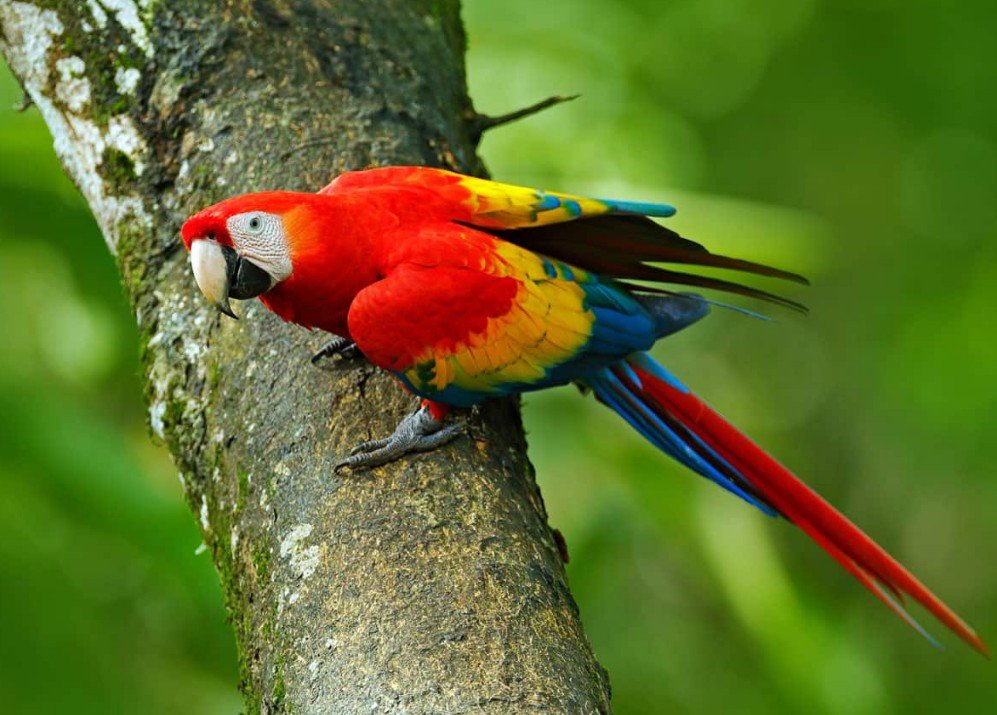
| APPEARANCE | Bright red body, with blue and yellow wings; long tail feathers; bare white facial skin with small black feathers around the eyes |
| LIFE SPAN | 40–50 years in the wild; up to 75 years in captivity |
| HABITAT | Tropical rainforests of Central and South America, especially near rivers and lowland forests |
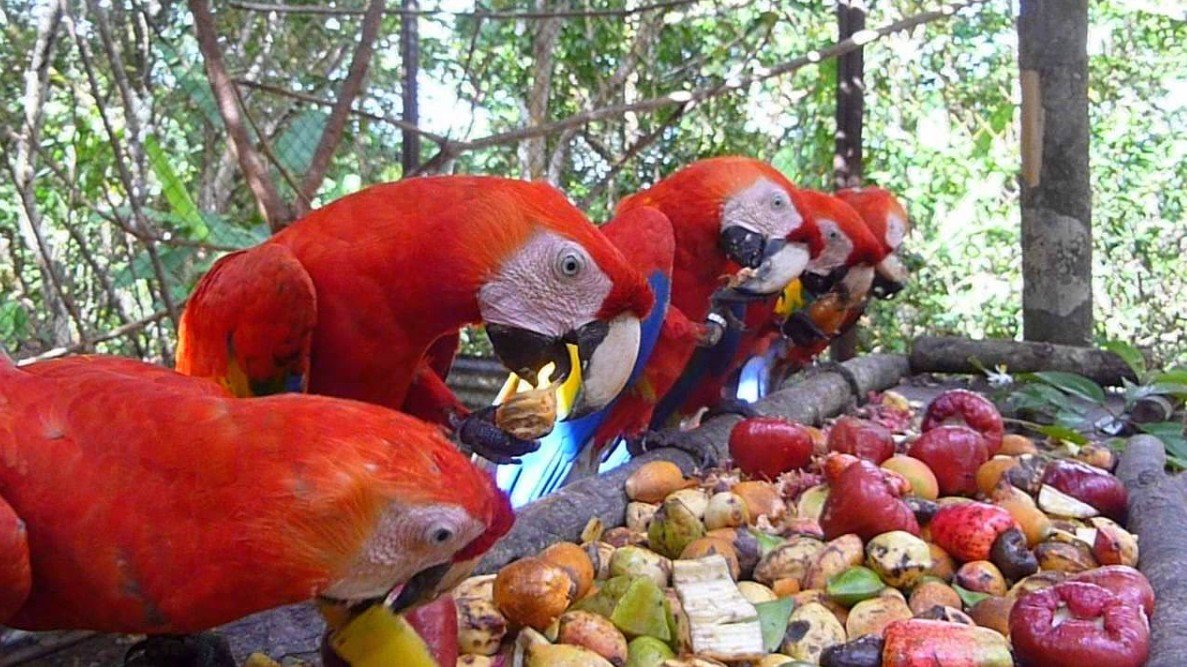
| DIET | Fruits, nuts, seeds, berries, and sometimes clay (which helps neutralize toxins in their food) |
| NATURAL PREDATORS | Harpy eagles, snakes, and humans (due to illegal trade and habitat destruction) |
| COUNTRY | Found across countries like Mexico, Panama, Colombia, Brazil, Peru, and Bolivia |
| GESTATION PERIOD | Incubation of eggs: about 24–28 days |
| CONSERVATION STATUS | Least Concern globally (IUCN), but regionally threatened due to habitat loss and capture for the pet trade |
Amazing Facts About Scarlet Macaw
1. Spectacular Plumage
Scarlet Macaws are among the most colorful birds on Earth, with striking red, yellow, and blue feathers.
2. Long Lifespan
These parrots can live for several decades—up to 50 years in the wild and even longer in captivity with proper care.
3. Intelligent and Social
Scarlet Macaws are highly intelligent and require mental stimulation; they often mimic human speech and sounds.
4. Life in the Canopy
They spend most of their lives in the upper canopy of tropical rainforests, rarely coming to the ground.
5. Monogamous Pairs
They typically form strong pair bonds and often mate for life, sharing feeding and nesting responsibilities.
6. Powerful Beaks
Their beaks are incredibly strong, capable of cracking open hard nuts and seeds that other animals can’t access.
7. Use of Clay Licks
Scarlet Macaws are known to eat clay from riverbanks to detoxify harmful substances in their diet.
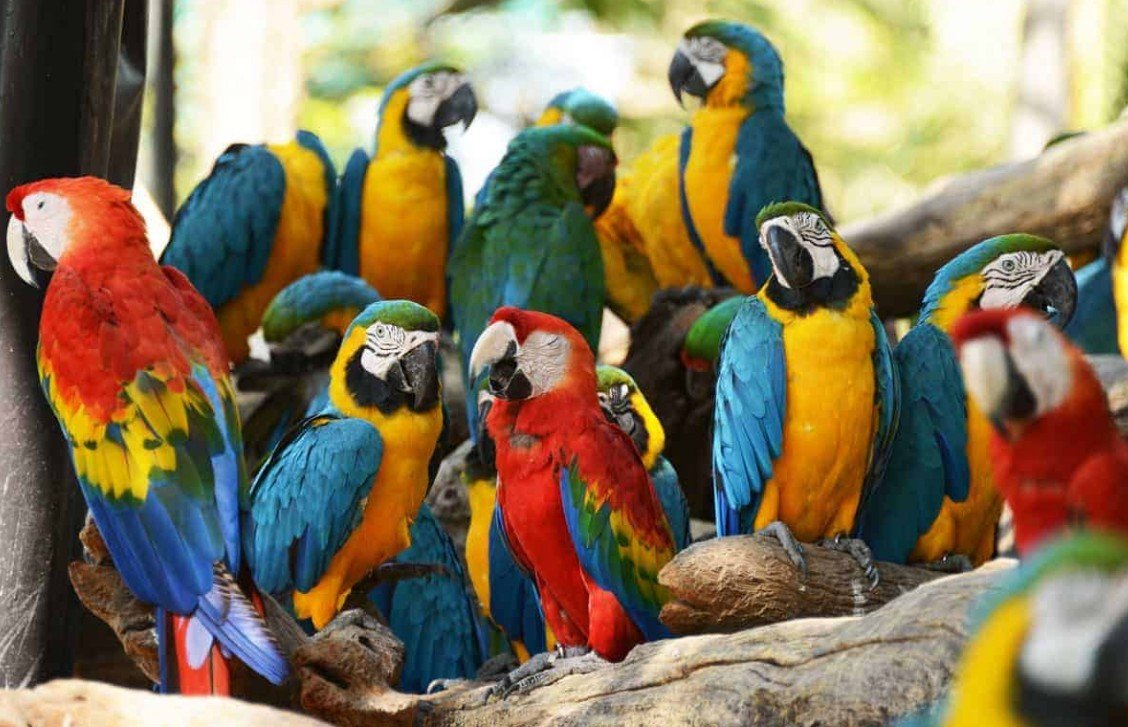
8. Important Seed Dispersers
They play a vital role in forest ecology by dispersing seeds throughout the rainforest.
9. Endangered in Some Regions
Though not globally endangered, they are locally extinct or threatened in parts of their range due to deforestation and illegal pet trade.
10. Noisy Flyers
Their loud, screeching calls can be heard from a distance, used to communicate with flock members.
Introduction to the Scarlet Macaw: A Stunning Yet Endangered Parrot
A very beautiful and endangered parrot is the scarlet macaw.
What Makes the Scarlet Macaw So Unique?
Appearance and Recognition
One of the world’s most striking and recognisable parrots is the scarlet macaw (Ara macao). This type of bird has captured the interest of both nature and bird enthusiasts due to its vivid red, yellow, and blue plumage. The scarlet macaw is a symbol of beauty and exotic appeal, but it also confronts many conservation concerns and is essential to its natural ecosystems. The biology, behaviour, habitat, nutrition, and conservation status of the scarlet macaw will all be covered in this article.
Overview and Physical Characteristics of the Scarlet Macaw
1. The Scarlet Macaw in Brief
Large parrots like the scarlet macaw are indigenous to Central and South America. It belongs to the family Psittacidae, which also contains well-known parrot species like the green-winged macaw and the blue-and-gold macaw. One of the most recognisable members of the macaw family, the scarlet macaw is distinguished by its vivid colours, size, and long tail feathers.
Key Physical Attributes of the Scarlet Macaw
- Plumage: The scarlet macaw’s vivid red plumage, which covers the majority of its body, is its most noticeable characteristic. It has a bright yellow band close to its shoulders and blue patches on its wings to go with this. The bird has a unique and beautiful look due to the mix of these basic colours.
- Size and Weight: Scarlet macaws are huge parrots that may reach a wingspan of up to 46 inches (117 cm) and an average length of 32 inches (81 cm) from head to tail. One of the biggest macaw species, they usually weigh between 900 grammes (2 lbs) and 1.5 kg (3.3 lbs).
- Beak Strength: The scarlet macaw, like other macaws, has a powerful, curved beak that is ideal for breaking open hard fruits, nuts, and seeds. The purpose of its beak is to help break down hard outer shells so the bird can get its food.
Habitat and Distribution of Scarlet Macaws
2. Distribution and Habitat
The tropical woods of Central and South America are home to the scarlet macaw. Its range reaches nations including Costa Rica, Panama, Colombia, Ecuador, and portions of Peru and Brazil, as well as southern Mexico, Central America, and South America. Areas with abundance of food and towering trees for breeding and protection are usually home to scarlet macaws.
Preferred Ecosystems of Scarlet Macaws
- Tropical Rainforests: The humid, deep forests of the tropics, with their abundant tree cover and high biodiversity, are ideal habitats for the scarlet macaw. Along with big trees that are ideal for nesting, these woods provide the birds a variety of fruits, seeds, and nuts to consume.
- Mangrove Habitats and Flooded Forests: In some places, scarlet macaws may also be found in mangrove ecosystems or flooded forests, which provide the environmental factors they need to survive, such towering trees and water supplies.
- Mountains and Lowlands: Usually located between 300 and 1,000 meters (1,000 and 3,300 feet) above sea level, scarlet macaws may be found in both lowland and mountainous areas. They do, however, often remain near water sources, which facilitates their access to the nutrients and minerals they need.
Social Life and Behavior Patterns of Scarlet Macaws
3. Social Structure and Behaviour
Living in groups, scarlet macaws are gregarious, bright, and captivating birds. Particularly while in flight, they are renowned for their capacity to communicate via loud, colourful sounds that are audible over great distances. Their need to seek for food, highly developed communication abilities, and sociable nature all influence their behaviour.
Flocking and Nesting Habits
- Flocks: Small to large flocks of scarlet macaws are common; these flocks may consist of as few as a few birds or as many as thirty. These flocks, which are made up of family groups, are often seen soaring across the forest canopy or perched on trees together in the wild.
- Nesting Behavior: In order to provide themselves protection and a place to raise their young, scarlet macaws are known to construct their nests in tree hollows during the mating season. In order to evade predators like huge birds of prey or animals, their nests are often located high in the trees.
- Monogamy: Male and female scarlet macaws usually develop lifelong relationships in monogamous pairs. Given that both parents share responsibility for feeding and tending to their chicks, these pairings have a close attachment.
Communication Methods
- Vocalisations: The scarlet macaw is a very talkative bird. They use sharp, harsh cries and squawks to communicate with one another. They may use these cries to alert other animals or flock members to their presence, convey alarm, or find one another.
- Body Language: Additionally, they communicate with other macaws using body language, such as fluttering their wings.
Diet and Feeding Behaviors of the Scarlet Macaw
4. Nutrition and Feeding Practices
The scarlet macaw’s diversified diet is mostly determined by the natural foods that are available in its tropical habitat. Being omnivores, these birds consume a variety of fruits, seeds, nuts, and plant materials.
What Do Scarlet Macaws Eat?
- Fruits and Nuts: A broad range of tropical fruits, including papayas, bananas, and mangoes, are reported to be consumed by scarlet macaws. They also consume tree nuts and seeds, including guava, palm fruits, and Brazil nuts.
- Berries and Seeds: These macaws like to eat berries and seeds, which provide them vital vitamins and minerals. They may access food sources that others would not be able to reach because of their powerful beaks, which enable them to shatter open stubborn seeds.
- Clay Licks: Scarlet macaws have been seen visiting clay licks, which are mineral-rich clay deposits on riverbanks, in some areas. Here, they consume the clay, which gives them vital minerals like calcium and salt and aids in the neutralisation of poisons in their diet.
Reproduction and Lifespan of the Scarlet Macaw
5. Lifespan and Reproduction
Compared to several other bird species, scarlet macaws reproduce at a very low pace. They only lay one or two eggs each clutch and usually only reproduce once a year.
Breeding and Chick Development
- Nesting: In tree hollows in the canopy, where they are protected from predators, female scarlet macaws deposit their eggs. While the female spends more time on the nest, the male and female alternate incubating the eggs.
- Incubation and Hatching: Before hatching, the eggs usually incubate for 24 to 28 days. Until they are big enough to consume solid meals, the chicks are fed a diet of regurgitated food by both parents after they hatch.
- Fledging: Around three to four months of age is when scarlet macaw babies typically fledge, or leave the nest. Before they are completely autonomous, however, they could remain with their parents for a few months.
How Long Do Scarlet Macaws Live?
Scarlet macaws may live 40 to 50 years in the wild and much longer in captivity, with some individuals living to be 60 years or more. Because of their lengthy lifetime, scarlet macaws develop close relationships with their partners and young, which helps to shape their social structure.
Threats and Conservation Status of the Scarlet Macaw
6. Status of Conservation
As of right now, the International Union for Conservation of Nature (IUCN) has designated the scarlet macaw as Least Concern. It is threatened by many factors, however, which may eventually affect its population. Climate change, illicit trapping and trading, and habitat degradation are the main causes of these problems.
Primary Threats to the Scarlet Macaw
- Loss of Habitat: The scarlet macaw’s vital habitats have been lost as a result of forest clearance for logging, agriculture, and urbanisation. There are less food and nesting places available in areas like Central America and South America due to deforestation.
- Illegal Trade: Illegal trapping and poaching of the scarlet macaw are caused by its popularity in the exotic pet trade. Natural habitats are disturbed and wild populations are drastically decreased by this technique.
- Climate Change: By changing the availability of food supplies, nesting locations, and even the general temperature conditions to which scarlet macaws are acclimated, climate change presents a long-term danger to these birds.
Conservation Initiatives and Recovery Programs
- Protection Programs: The scarlet macaw is protected by a number of conservation initiatives. In order to assist increase the wild population, these projects emphasise habitat protection, the reduction of illicit trafficking, and the promotion of captive breeding initiatives.
- Reforestation Efforts: In areas where scarlet macaws reside, reforestation and habitat restoration initiatives are also being carried out in an attempt to partially undo the harm that deforestation has caused.
The Scarlet Macaw in Art, Culture, and Popular Imagination
7. The Popular Culture of the Scarlet Macaw
One famous bird that is often connected to tropical areas and exotic fauna is the scarlet macaw. It is a popular topic in art, culture, and tourism because of its colourful look.
Symbolism in History and Modern Art
- In Symbolism and Art: The scarlet macaw is a common emblem of beauty, power, and independence in indigenous art and mythology throughout the Americas, especially in Mayan and Aztec civilisations.
Representation in Modern Media
- In the Media: With appearances in films, documentaries, and literature, the scarlet macaw is well-known in contemporary culture. It is a favourite among wildlife filmmakers because of its eye-catching colours and distinctive sounds.
FAQ (Frequently Asked Questions) about Scarlet Macaw
Q: What is a Scarlet Macaw?
Ans: A Scarlet Macaw is a large, vividly colored parrot native to Central and South America, known for its intelligence and strong social bonds.
Q: Where do Scarlet Macaws live?
Ans: They live in the tropical rainforests of countries like Mexico, Brazil, Peru, and Bolivia.
Q: What do Scarlet Macaws eat?
Ans: Their diet includes fruits, nuts, seeds, berries, and sometimes clay to help digest toxins.
Q: How long do Scarlet Macaws live?
Ans: They can live 40–50 years in the wild and up to 75 years in captivity.
Q: Are Scarlet Macaws endangered?
Ans: Globally, they are listed as Least Concern, but they are endangered in some regions due to habitat loss and poaching.
Q: Can Scarlet Macaws talk?
Ans: Yes, they can mimic human speech and other sounds, especially when raised in captivity.
Q: Do Scarlet Macaws make good pets?
Ans: While intelligent and affectionate, they require a lot of space, attention, and care—not ideal for all households.
Q: How do Scarlet Macaws reproduce?
Ans: They lay 1–4 eggs in tree cavities, which are incubated for about 24–28 days.
Q: What are the threats to Scarlet Macaws?
Ans: Habitat destruction, illegal wildlife trade, and nest predation are major threats.
Q: Are Scarlet Macaws important to the ecosystem?
Ans: Yes, they help disperse seeds and maintain forest biodiversity.
#ScarletMacaw #TropicalBirds #RainforestWildlife #ColorfulBirds #ParrotSpecies #EndangeredBirds #WildlifeConservation
Our sources and references about Scarlet Macaw
1: National Geographic – Scarlet Macaw
2: Wikipedia – Scarlet Macaw
3: Audubon – Scarlet Macaw