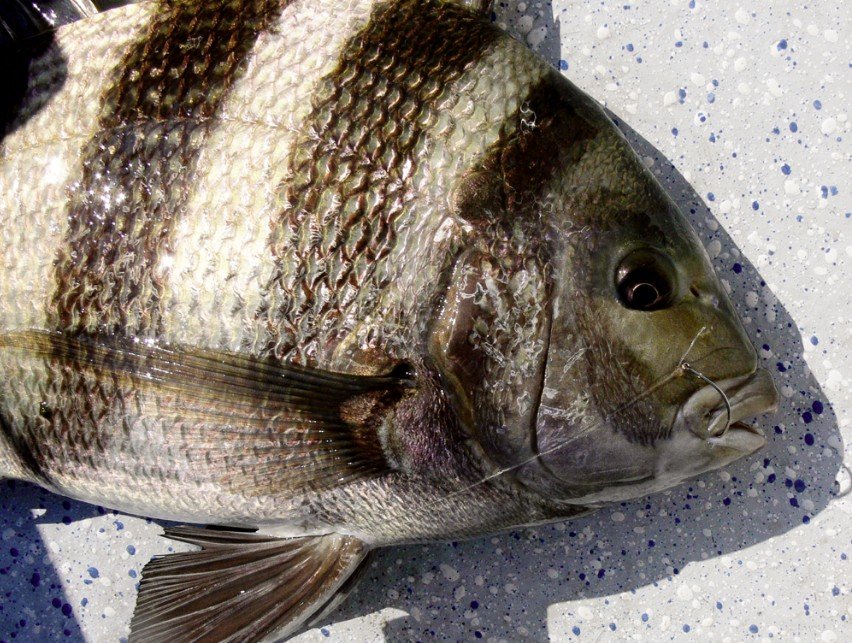
The Sheepshead Fish (Archosargus probatocephalus) is a distinctive fish known for its human-like teeth and robust, oval body. Found primarily in coastal waters along the southeastern United States, this species is a popular catch among anglers. Sheepshead Fish are known for their keen ability to hunt for food along rocky shorelines and piers. They are omnivores, feeding on a variety of marine life, including crustaceans, mollusks, and small fish. With their tough, bony mouth and impressive teeth, they are well-equipped to break open shells and consume a wide range of prey.
Quick Top 10 Facts about Sheepshead Fish
| SCIENTIFIC NAME | Archosargus probatocephalus |
| CLASSIFICATION | KINGDOM: Animalia PHYLUM: Chordata CLASS: Actinopterygii ORDER: Perciformes FAMILY: Sparidae |
| SIZE | Length: 18–24 inches (45–61 cm) Weight: 4–10 lbs (1.8–4.5 kg) |
| SPECIES | Found along the coastlines of the southeastern United States, including the Gulf of Mexico and the Atlantic Ocean. |
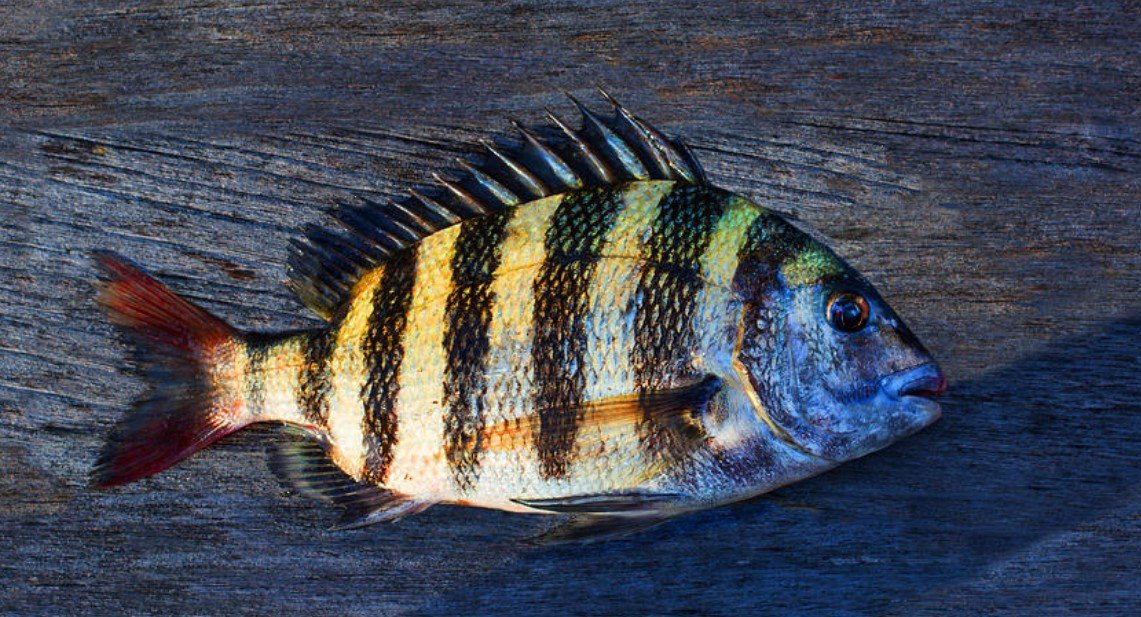
| APPEARANCE | Distinctive appearance with a deep, oval-shaped body, black vertical stripes, and large human-like teeth for crushing shells and crustaceans. |
| LIFE SPAN | Up to 12 years |
| HABITAT | Inshore coastal waters, including rocky shorelines, jetties, and piers. Often found around structures that offer shelter and food sources. |
| DIET | Omnivorous: Crustaceans, mollusks, small fish, and some algae. They are known to use their powerful jaws and teeth to crush shellfish and crabs. |
| NATURAL PREDATORS | Larger fish species such as sharks, groupers, and barracudas. |
| COUNTRY | Found primarily in the United States, along the Gulf of Mexico and Atlantic Coast, from North Carolina to Texas. |
| GESTATION PERIOD | Not applicable, as Sheepshead Fish are oviparous, laying eggs to reproduce. |
| CONSERVATION STATUS | Least Concern; populations are stable, though they are subject to fishing pressures and habitat changes. |
Amazing Facts About Sheepshead Fish
1. Human-Like Teeth
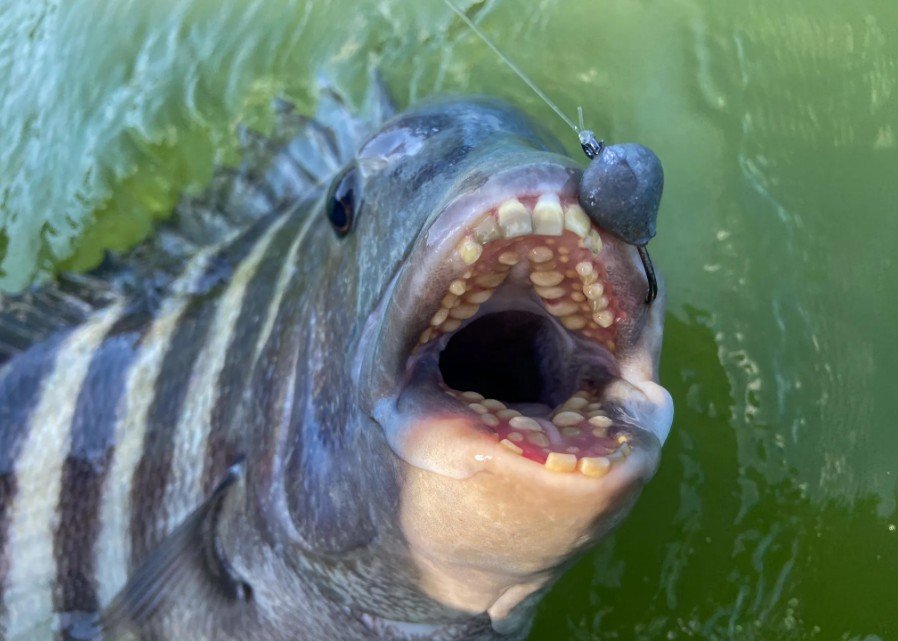
Sheepshead Fish are famous for their unique, human-like teeth, which they use to crush shellfish and crabs. Their teeth resemble molars, helping them break open hard shells.
2. Skilled foragers
Sheepshead Fish are excellent foragers, using their specialized teeth to find food in rocky environments. They can often be seen near piers, jetties, or reefs hunting for crabs and mollusks.
3. Bottom Feeders
While they can swim freely in the water, Sheepshead Fish prefer to stay close to the bottom where they can hunt for food in rocky or sandy areas.
4. Coastal Dwellers
These fish are primarily found in coastal waters, especially around structures like piers, rocks, and jetties, which provide them with shelter and easy access to food.
5. Aggressive Eaters
Sheepshead Fish are known for their aggressive feeding behavior. They are capable of breaking open hard-shelled animals with their powerful jaws and sharp teeth.
6. They Have Great Vision
Sheepshead Fish have excellent vision, allowing them to spot potential prey from a distance. This is crucial when hunting in murky waters or near structures where prey might be hiding.
7. Popular Game Fish
Sheepshead Fish are a popular target for recreational anglers, who enjoy the challenge of catching them due to their aggressive feeding habits and strong fight when hooked.
8. Spawning in Winter
Sheepshead Fish typically spawn during the winter months, with males and females coming together in large groups for mating.
9. Can Live Over a Decade
The lifespan of a Sheepshead Fish can extend up to 12 years, with some individuals reaching impressive sizes over their lifetime.
10. Unique Stripes
Sheepshead Fish are easily recognizable due to their vertical black stripes, which run across their silvery body, giving them a striking appearance.
An Interesting and Distinct Marine Animal
A unique and fascinating species, the sheepshead fish (Archosargus probatocephalus) is often found around the coast of the southeast United States, especially in the Atlantic Ocean and the Gulf of Mexico. The name of this fish comes from its unusual look, which includes human-like teeth in fish. The Sheepshead fish is well-known for its feeding behaviour, coastal habitat preferences, and significance in both commercial fishing and recreational fishing, in addition to its morphological features of sheepshead fish.
The traits, habitat, food, behaviour, fishing advice, and ecological and culinary value of the Sheepshead fish will all be covered in this extensive book.
Sheepshead Fish Appearance, Size, and Teeth
The Sheepshead fish’s striking look, especially its mouth, is among the first things that people notice about it. Perhaps the most distinguishing characteristic of the fish is its teeth, which resemble human molars and are the reason for the name “Sheepshead.” The fish uses these teeth to pulverise its meal, which usually consists of hard-shelled invertebrates for fish.
Broad Characteristics: Body Shape, Size, and Colour
- Body Shape and Size: The Sheepshead resembles a tiny, robust fish in part because of its deep, compressed body. Typically, adults reach a length of 12 to 24 inches (30 to 61 cm) and a weight of 4 to 8 pounds (1.8 to 3.6 kg). Larger specimens may reach lengths of 36 inches (91 cm) and weights of more than 15 pounds (6.8 kg).
- Colouration and Camouflage: Dark vertical stripes run down the sides of the silver-gray body of the sheepshead fish. In younger fish, the stripes, which may number anywhere from five to seven, are often seen. The fish’s colouring aids in its ability to blend in with the rocks, reefs, and buildings of its native home.
- Teeth of Sheepshead: The Sheepshead’s teeth are its most noticeable characteristic. Crushing hard-shelled animals like crabs, barnacles, and molluscs is made possible by the fish’s human-like molars. Because of their several rows, these teeth are useful for crushing food.
Additional Physical Features: Dorsal Fin, Tail, and Eyes
- Dorsal Fin and Tail Fin: The Sheepshead’s forked tail and large, spined dorsal fin aid in its effective swimming skills.
- Eyes and Vision: The Sheepshead fish’s wide eyes and excellent eyesight enable it to identify possible food sources and environmental dangers.
Sheepshead Coastal and Marine Environment
Usually found in coastal areas, the Sheepshead may be found close to rocks, jetties, piers, and even shipwrecks. They are often found in salty and brackish water habitats. Because of its versatility, the fish is often found in a variety of water depths, from shallow coastal regions to deeper estuary and marine seas.
Geographical Dispersion: Atlantic and Gulf Coast Distribution
- Atlantic Coast Locations: The Atlantic coast of North America, which includes states like Florida, Louisiana, and Texas, and extends from New Jersey to the Gulf of Mexico, is where sheepshead fish are most often found.
- Preferred Environment for Sheepshead: Because they can find plenty of food and shelter in inshore waters with features like rocks, submerged reefs, and piers, sheepshead prefer these areas. They often inhabit very shallow waters that range in depth from 10 to 40 feet (3 to 12 meters).
- Shelter and Prey Locations: Although the Sheepshead may survive in a range of habitats, it often favours places with plenty of prey and excellent shelter. In order to hide from predators and hunt for food, the fish may often be found around structures like bridges, piers, and wrecks.
Nutrition and Feeding Practices: Diet and Eating Behaviour
Being an omnivore, the sheepshead has a diverse diet. It is very specialised in feeding on hard-shelled prey because of its unusual teeth. Crustaceans, molluscs, barnacles, and other minute invertebrates make up the majority of the fish’s diet, which it grinds and crushes with its teeth.
Crabs, Molluscs, and Barnacles
- Crabs: Fiddler and blue crabs are among the little crabs that sheepshead often eat.
- Molluscs: These fish eat a variety of molluscs, such as snails, clams, and oysters. They may reach the delicate tissue inside these hard shells by cracking them apart with the aid of their powerful teeth.
- Barnacles and Mussels: The Sheepshead fish’s molars can readily split open barnacles and mussels, two other prevalent food sources.
Foraging, Bottom Feeding, and Marine Life Indicators
Sheepshead often forage on the bottom or close to submerged objects, tearing apart crustaceans and molluscs with their strong teeth. They usually rummage around in rocks and cracks to find food as part of their eating behaviour. They are thus excellent indicator species for healthy marine ecosystems.
Behaviour and Reproduction Patterns
Although they are mostly solitary, sheepshead fish may sometimes be seen in small groups, particularly when they are young. Although environmental factors and food availability might affect their behaviour, they are often seen to being territorial, particularly when it comes to defending feeding locations.
Sheepshead Spawning, Eggs, and Larvae
- Spawning Season: As water temperatures increase from January to March, sheepshead usually spawn in the winter and early spring. Although juveniles may be seen in shallower coastal areas, the spawning activity often occurs in deeper seas.
- Larvae and Eggs: Fertilisation takes place in open water after female sheepshead discharge their eggs. After hatching, the larvae grow in the water column until sinking to the bottom as juveniles. Typically, the eggs are pelagic, which means they float on the water’s surface.
- Duration of Life: Although its longevity is often impacted by environmental factors, predators, and fishing pressures, sheepshead may live up to nine years.
Sheepshead Fishing Tips, Techniques, and Gear
Sheepshead are a desirable catch for both commercial fishing and recreational fishing enthusiasts because of their distinctive look and difficult fighting abilities. Anglers in the Atlantic and Gulf Coast areas often target them because of their exceptional flavour and culinary worth.
Bait, Location, and Tackle
- Baiting: Using live bait, such as shrimp, fiddler crabs or sand fleas, is the most effective method of capturing sheepshead. These baits work well to draw in sheepsheads by imitating their natural diet. Artificial lures, especially those that mimic tiny crabs or prawns, are also used by certain fishermen.
- Fishing Spots: As previously said, Sheepshead are often seen close to buildings like jetties, bridges, and piers. The best technique to capture them in these locations is via bottom fishing.
- Tackle and Equipment: Because sheepshead are fierce fighters, anglers will want a powerful rod and reel set. Using stronger gear may assist assure success since fishing might be difficult due to the fish’s sharp teeth.
Regulations and Sustainable Practices
Because sheepshead fishing is so popular, several areas have set fishing regulations to keep populations healthy. To prevent overfishing and guarantee sustainable harvest methods, anglers must be informed of size and bag limitations, as well as any seasonal restrictions.
Sheepshead Recipes and Culinary Value
Sheepshead is a common ingredient in many recipes because of its gentle, sweet flavour. When cooked, the flesh has a little flaky texture and is firm and white. It is often contrasted with other well-known fish species, such as sea bass or snapper.
Grilled, Fried, and Baked Fish Recipes
- Grilled Sheepshead: You may grill the sheepshead whole or in fillets. It’s ideal for grilling because of its robust texture.
- Fried Sheepshead: Fried sheepshead is a traditional seaside preparation that is delicate on the inside and crispy on the surface.
- Baked Sheepshead: Another well-liked cooking technique is baked sheepshead, which is often seasoned with lemon, garlic, and herbs.
Sheepshead’s adaptability makes it a favourite in a wide range of recipes, from simple fish tacos to soups and stews.
FAQ (Frequently Asked Questions) about Sheepshead Fish
Q: What is a Sheepshead Fish?
Ans: The Sheepshead Fish is a species of fish known for its human-like teeth, which it uses to break open shellfish. It is commonly found in coastal waters along the southeastern United States.
Q: Why do Sheepshead Fish have teeth that look like human teeth?
Ans: The Sheepshead Fish has molar-like teeth that help it crush hard-shelled prey, such as crabs, oysters, and other mollusks. These teeth are essential for their diet and survival.
Q: Where can I find Sheepshead Fish?
Ans: Sheepshead Fish are found in coastal waters along the Gulf of Mexico and the Atlantic Ocean, from North Carolina down to Texas.
Q: What do Sheepshead Fish eat?
Ans: Sheepshead Fish are omnivores and feed on a wide variety of prey, including crustaceans, mollusks, and small fish.
Q: How big do Sheepshead Fish get?
Ans: Sheepshead Fish typically grow to a length of 18–24 inches and weigh between 4–10 lbs, although larger specimens can be found.
Q: Are Sheepshead Fish good to eat?
Ans: Yes, Sheepshead Fish are considered a tasty fish, known for their firm, white flesh. They are a popular catch among anglers for both sport and food.
Q: Are Sheepshead Fish endangered?
Ans: No, Sheepshead Fish are listed as “Least Concern” in terms of conservation status, and their populations are stable, though they face fishing pressures.
Q: Can I catch Sheepshead Fish while fishing?
Ans: Yes, Sheepshead Fish are popular among anglers. They are commonly caught from piers, jetties, or inshore waters, where they forage for food.
Q: How long do Sheepshead Fish live?
Ans: Sheepshead Fish can live up to 12 years in the wild, depending on environmental conditions and fishing pressures.
Q: Do Sheepshead Fish migrate?
Ans: Sheepshead Fish do not typically migrate long distances but may move to deeper waters during colder months.
#SheepsheadFish #CoastalFish #Fishing #GameFish #FishFacts #HumanTeethFish #MarineWildlife #AnglerFavorites #OmnivorousFish
Our sources and references about Sheepshead Fish
1: Wikipedia – Sheepshead Fish
2: Florida State Parks – Sheepshead
3: National Geographic – Sheepshead Fish
4: FishWatch – Sheepshead Fish