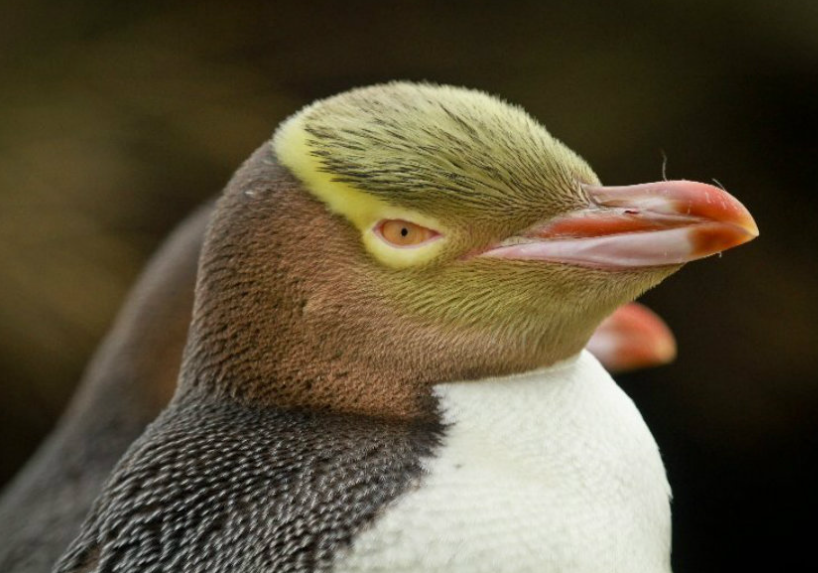
The Yellow-Eyed Penguin is one of the rarest and most endangered species of penguin in the world. Native to New Zealand, it has a distinctive yellow ring around its eyes, which gives it its name. The Yellow-Eyed Penguin prefers forested and coastal environments and is known for its solitary nature, often staying away from other penguin colonies.
Quick Top 10 Facts about Yellow-Eyed Penguin
| SCIENTIFIC NAME | Megadyptes antipodes |
| CLASSIFICATION | KINGDOM: Animalia PHYLUM: Chordata CLASS: Aves ORDER: Sphenisciformes FAMILY: Spheniscidae GENUS: Megadyptes SPECIES: M. antipodes |
| SIZE | Height: 24–30 inches (60–76 cm) Weight: 5–6 kg (11–13 lbs) |
| HABITAT | Native to New Zealand, primarily found on the southeast coast of the South Island and surrounding islands |
| DIET | Fish, squid, and other marine invertebrates |
| SPECIES | Yellow-Eyed Penguin, one of the rarest and most endangered penguin species in the world |
| COUNTRY | Endemic to New Zealand |
| GESTATION PERIOD | Incubation lasts about 34–37 days, with both parents sharing the incubation duties |
| LIFE SPAN | Up to 20 years in the wild |
| CONSERVATION STATUS | Endangered; their population is threatened by habitat loss, predation by introduced species, and human disturbance |
Amazing Facts About Yellow-Eyed Penguins
1. Rarest penguin species
The Yellow-Eyed Penguin is considered one of the rarest penguin species in the world, with only around 200 individuals remaining in the wild.
2. Named for their striking yellow eyes
The species gets its name from its distinct, pale yellow eyes, which make it easily recognizable among other penguins.
3. Shy and solitary behavior
Unlike other penguin species, Yellow-Eyed Penguins are solitary and tend to be shy, avoiding human contact when possible.
4. Strong swimmers
Yellow-Eyed Penguins are strong swimmers, capable of diving to depths of over 100 meters in search of food.
5. Nesting on land
They prefer to nest in secluded, forested areas rather than on open, rocky shorelines, making their nests harder to spot.
6. Very territorial
These penguins are highly territorial and often fight with other penguins to defend their nesting sites.
7. Vulnerable to predation
Introduced predators, such as stoats, rats, and dogs, pose a significant threat to their population, particularly for their eggs and chicks.
8. Long incubation period
Yellow-Eyed Penguins have a relatively long incubation period, with both parents sharing the responsibility of incubating the eggs.
9. Declining population
The population of Yellow-Eyed Penguins has been in sharp decline due to habitat loss, climate change, and human activities.
10. Conservation efforts in place
Conservation programs are actively working to protect their habitat, reduce predation, and raise awareness about this endangered species.
Introduction to the Yellow-Eyed Penguin, One of the Cutest Penguins in the World
The yellow-eyed penguin, or Megadyptes antipodes, is one of the world’s rarest and most endangered penguin species. This amazing bird, which is native to New Zealand’s coastal areas, is well-known for its secretive, lonely personality and its brilliant light yellow eyes. Predation, habitat degradation, and threats from humans are just a few of the many issues the yellow-eyed penguin encounters in the wild as one of the rarest and most endangered penguin species. We will examine this amazing species’ physical traits, behaviour, nutrition, habitat, breeding, and conservation initiatives below:
Features of the Yellow-Eyed Penguin’s Body
The medium-sized yellow-eyed penguin stands apart from many of its cousins because of its unusual colouring and tendency to live alone.
Look: The Yellow-Eyed Penguin’s Distinctive Appearance
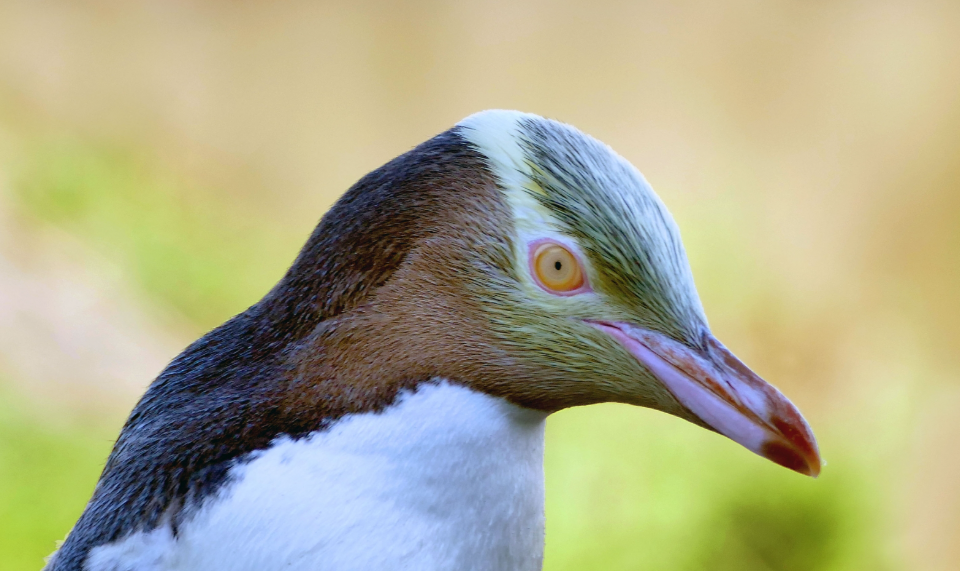
The yellow-eyed penguin’s huge, light yellow eyes are its most noticeable characteristic, giving it a unique and somewhat enigmatic look. The eyes stand out against the bird’s darker plumage because they are surrounded by a line that is either light pink or white in colour.
- The adult yellow-eyed penguin has a subdued but graceful look due to its mostly greyish-blue body and light-coloured head and neck.
- The flippers are altered for swimming rather than flying, and the body is streamlined.
- Its black feathers contrast even more with its pinkish-orange beak.
Dimensions: Size of the Yellow-Eyed Penguin
One of the largest penguin species is the Yellow-Eyed Penguin, which may grow to a height of 60 cm (about 24 inches) and weigh 2.5 to 6 kg (5.5 to 13 pounds). It is a sturdy bird with a muscular structure that is appropriate for its water lifestyle while being smaller than other well-known penguins like the Emperor Penguin.
Unique Qualities of the Yellow-Eyed Penguin
Aside from its yellow eyes, the yellow-eyed penguin’s distinctive light pinkish facial colouring is its most distinctive characteristic. In contrast to other penguin species, it also possesses a characteristic band of light yellowish feathers on its head that contributes to its distinguishing appearance.
- Its feet are webbed, which helps it swim, and its short, sturdy flippers are ideal for underwater propulsion.
- It has a rather humorous but elegant appearance while walking on land because it has a more erect stance than other penguin species.
Distribution and Habitat
Native to New Zealand, the yellow-eyed penguin may be found on the country’s eastern and southern beaches as well as on a few offshore islands. Despite being very suited to its surroundings, this bird is seriously threatened by habitat loss and predation.
Range of Geography: The Yellow-Eyed Penguin’s Location
New Zealand is the only place in the world where the yellow-eyed penguin is indigenous. It is mostly found in Otago, Southland, and portions of Canterbury in the South Island. Additionally, it lives on a few outlying islands, such as Stewart Island and the Auckland Islands, where its inhabitants are more secluded and shielded from other influences.
- In the past, yellow-eyed penguins were widespread throughout New Zealand’s coasts, but their range has shrunk as a result of human activity and the introduction of predators.
Favourite Environment: Habitat of the Yellow-Eyed Penguin
The temperate rainforests and scrublands that provide refuge and breeding locations are among the wooded coastal regions that Yellow-Eyed Penguins choose. Due to their extreme territoriality, these birds usually nest in remote locations where people don’t bother them.
- Usually located far from the ocean, they build their nests on rocky outcrops or in caves or burrows concealed in forest undergrowth.
- The penguins may safely rear their young in the wooded habitat without worrying about predators.
Conditions of the Environment: Ideal Habitat for the Yellow-Eyed Penguin
Areas with moderate rainfall, chilly temperatures, and a generally pleasant environment are home to yellow-eyed penguins. They prefer to remain in comparatively protected areas to escape severe weather events since they are used to living in these milder, colder temperatures.
Nutrition and Feeding Practices of the Yellow-Eyed Penguin
Fish and squid are the main food sources for the carnivorous yellow-eyed penguin. The abundance of marine life in the waterways around New Zealand has a direct impact on its food.
Nutrition: What the Yellow-Eyed Penguin Eats
The yellow-eyed penguin’s main food sources include fish, such as orange roughy, flatfish, and whitebait, as well as squid. It can dive up to 60 meters (approximately 200 feet) to capture food, and it hunts in shallow coastal waters.
- Instead of hunting in groups like some other penguin species, the penguins often hunt alone.
- One of the main aspects of their lifestyle is their solitary foraging behaviour.
Feeding Practices: Hunting and Eating Habits
The yellow-eyed penguin often eats numerous smaller meals throughout the day and catches and swallows fish with its keen beak. To find and catch prey, it uses its exceptional underwater eyesight and diving skills.
- In contrast to other penguin species, yellow-eyed penguins typically hunt in shallower waters rather than going as deep as species like the king or emperor penguins.
Social Structure and Behaviour
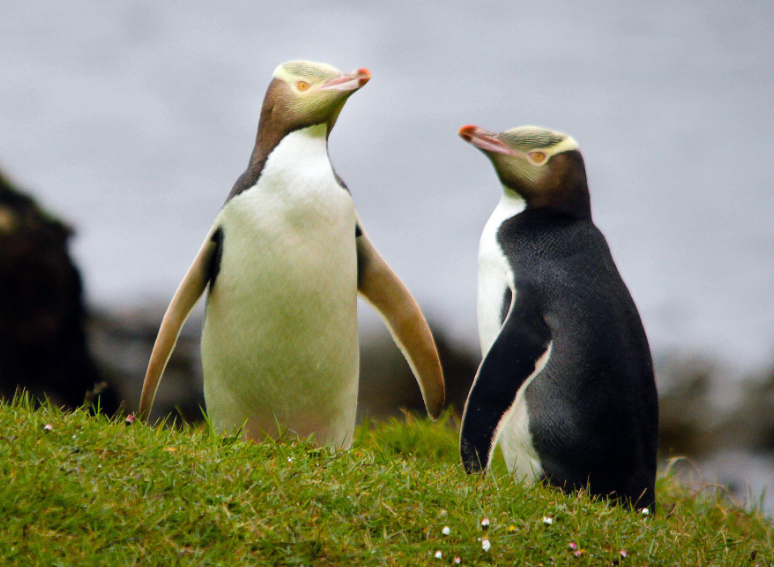
Yellow-eyed penguins tend to be alone and possessive. They prefer to live and reproduce in more remote areas and do not display the colonial nesting behaviour that other penguin species do.
Territorial Conduct: Protecting Their Territory
Due to their extreme territoriality, yellow-eyed penguins have been reported to protect their nests from other penguins and any predators. Being solitary birds, couples usually stay around their own nests, often creating areas that they strongly defend throughout the mating season.
- Despite their lack of social skills, these penguins are sometimes seen in couples or small groups, especially during the breeding season or while foraging in locations with plenty of food.
Courtship and Mating: Reproductive Behaviour
Because they are monogamous, yellow-eyed penguins usually mate with the same person for many breeding seasons. Male and female vocalisations, reciprocal preening, and affectional displays are all part of the courting process. In sharp contrast to the loud, raucous sounds of other penguin species, these penguins are renowned for their calm, gentle courting calls.
- After selecting a partner, the two will start constructing a nesting location, sometimes behind rocks or in thick vegetation, where they will raise their young.
Lifespan and Reproduction of the Yellow-Eyed Penguin
The environmental factors and difficulties that yellow-eyed penguins encounter in the wild have a direct impact on their reproductive behaviour and life cycle.
Season of Breeding: When Yellow-Eyed Penguins Breed
Pairs of yellow-eyed penguins form and get ready to build their nests during the breeding season, which usually starts in early spring (September to November). Typically, the female lays one or two eggs, which both parents incubate for 40 to 50 days.
- Following hatching, the parents feed the chicks a meal that mostly consists of fish that they have regurgitated.
- Although the male often spends more time searching for food, the female and male alternate in caring for the young.
Raising a Chick: Growth and Independence
Over the course of their many weeks in the nest, the chicks progressively gain strength and independence. The chicks are still reliant on their parents for sustenance, but at around 8 weeks of age, they start to explore the open ocean.
- Although the chicks will stay in the approximate vicinity of their nesting grounds until they reach maturity, they are prepared to leave the nest and begin living on their own by the time they are 4 to 6 months old.
Duration of Life: Lifespan of Yellow-Eyed Penguins
The yellow-eyed penguin often lives 12 to 20 years in the wild, which is a considerable time for a bird of its size. Predation and habitat degradation pose a hazard to many, however, and may shorten their lifespan.
Status of Conservation for the Yellow-Eyed Penguin
With an estimated population of just 250 to 300 mature individuals, the International Union for Conservation of Nature (IUCN) has classed the yellow-eyed penguin as endangered. If present dangers are not addressed, this puts the species at serious risk of becoming extinct.
The Yellow-Eyed Penguin’s Threats
The yellow-eyed penguin is at risk from:
- There are fewer appropriate nesting sites as a result of habitat damage brought on by human activities, including construction, tourism, and invasive species.
- Penguin populations have been severely reduced as a result of the introduction of predators like stoats, rats, and dogs to the islands of New Zealand. These predators feed on adult penguins, chicks, and eggs.
- Another new issue is climate change, which may cause severe weather events that harm nesting locations and alter the amount of food available in coastal seas.
Conservation Initiatives: Protecting the Yellow-Eyed Penguin
To save the yellow-eyed penguin, a number of conservation initiatives have been started, such as initiatives to reduce predators, repair habitats, and provide safe nesting grounds.
- Monitoring activities are being carried out to follow individual birds and guarantee the survival of the species, and captive breeding programs have been put in place to aid in population growth.
FAQ (Frequently Asked Questions) about Yellow-Eyed Penguin
Q: What is a Yellow-Eyed Penguin?
Ans: The Yellow-Eyed Penguin (Megadyptes antipodes), also known as the Hoiho, is one of the rarest and most endangered species of penguins in the world. Native to New Zealand, it is known for its striking yellow eyes and pale yellowish-green feathers. It is considered one of the most ancient penguin species still in existence.
Q: Where does the Yellow-Eyed Penguin live?
Ans: The Yellow-Eyed Penguin is native to the southeastern coast of New Zealand, including the Otago Peninsula, the Catlins, and Stewart Island. They are typically found in dense coastal forests, scrublands, and rocky shorelines, where they nest in secluded areas away from human disturbances.
Q: What does the Yellow-Eyed Penguin eat?
Ans: Yellow-Eyed Penguins are carnivorous and primarily feed on a diet of fish and squid. They are excellent swimmers and dive to depths of 50 meters (164 feet) or more to catch their prey. Their diet consists mainly of small fish such as demersal species, eels, and squid found in their marine environment.
Q: How big is the Yellow-Eyed Penguin?
Ans: The Yellow-Eyed Penguin is a medium-sized penguin species, standing about 60 to 75 cm (24 to 30 inches) tall and weighing between 2 to 6 kg (4.4 to 13.2 lbs). Males are generally larger than females. Their pale coloration and distinct yellow eyes make them easy to identify among other penguin species.
Q: What does the Yellow-Eyed Penguin look like?
Ans: The Yellow-Eyed Penguin has a distinctive appearance, characterized by its large, bright yellow eyes, pale yellow-green plumage, and a white belly. It has a unique, almost albino-like appearance compared to other penguins. It has a narrow, dark-grey line running along the back of the head and neck, which is one of its distinguishing features.
Q: How does the Yellow-Eyed Penguin breed?
Ans: Yellow-Eyed Penguins are solitary breeders and prefer to nest in secluded areas, often under dense vegetation or in hollow logs. The female lays one or two eggs in a nest built by both parents. The eggs are incubated for about 35 days, and both parents take turns guarding and incubating the eggs. After hatching, the chicks are fed a diet of regurgitated fish until they are ready to fledge, typically around 70 to 80 days old.
Q: How long do Yellow-Eyed Penguins live?
Ans: Yellow-Eyed Penguins have a lifespan of around 20 years in the wild. However, due to predation, habitat disturbance, and human-related factors, their lifespan can be reduced in some areas. Conservation efforts are vital for ensuring their survival.
Q: Are Yellow-Eyed Penguins endangered?
Ans: Yes, the Yellow-Eyed Penguin is critically endangered, with fewer than 250 individuals remaining in the wild. Habitat loss, predation by introduced species such as rats and stoats, and human disturbance have contributed to the decline in their population. Conservation efforts are in place to protect their habitat and reduce the threats they face.
Q: Can Yellow-Eyed Penguins be kept in captivity?
Ans: Yellow-Eyed Penguins are best left in their natural environment. Due to their endangered status and the specific conditions they need for breeding and feeding, it is not advisable or ethical to keep them in captivity. They are protected by law in New Zealand, and efforts are focused on their conservation in the wild.
#YellowEyedPenguin, #Hoiho, #EndangeredPenguin, #PenguinConservation, #NewZealandWildlife, #MarineConservation, #WildlifeProtection, #NatureLovers, #RareSpecies, #PenguinLovers
Our sources and references about Yellow-Eyed Penguin
1: Wikipedia – Yellow-Eyed Penguin
2: New Zealand Department of Conservation – Yellow-Eyed Penguin
3: Smithsonian Magazine – The Secret Life of the Yellow-Eyed Penguin
4: Greenpeace – Yellow-Eyed Penguin