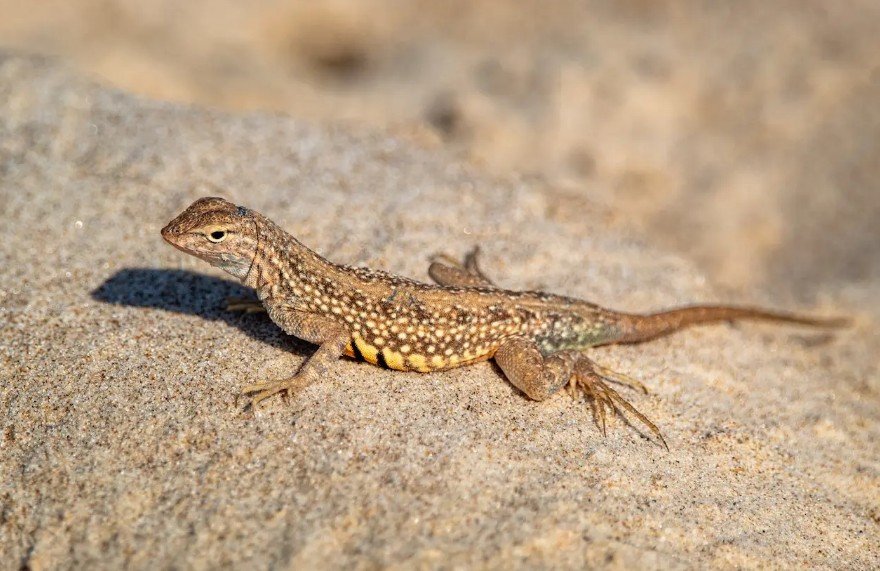
Quick Top 10 Facts about Sand Lizard
The Sand Lizard (Lacerta agilis) is a fascinating species of lizard found in sandy and heathland habitats across Europe. Known for its distinctive coloration and ability to adapt to a variety of environments, the Sand Lizard is one of the most well-known reptiles in its range. It plays a key role in controlling insect populations and thrives in areas with abundant sunshine, which it uses to regulate its body temperature. Below are some amazing facts about this remarkable reptile.
| SCIENTIFIC NAME | Lacerta agilis |
| CLASSIFICATION | KINGDOM: Animalia PHYLUM: Chordata CLASS: Reptilia ORDER: Squamata FAMILY: Lacertidae |
| SIZE | Length: 20–25 cm (8–10 inches) |
| SPECIES | There are several subspecies of Sand Lizard found across its range, including the European Sand Lizard (Lacerta agilis agilis). |
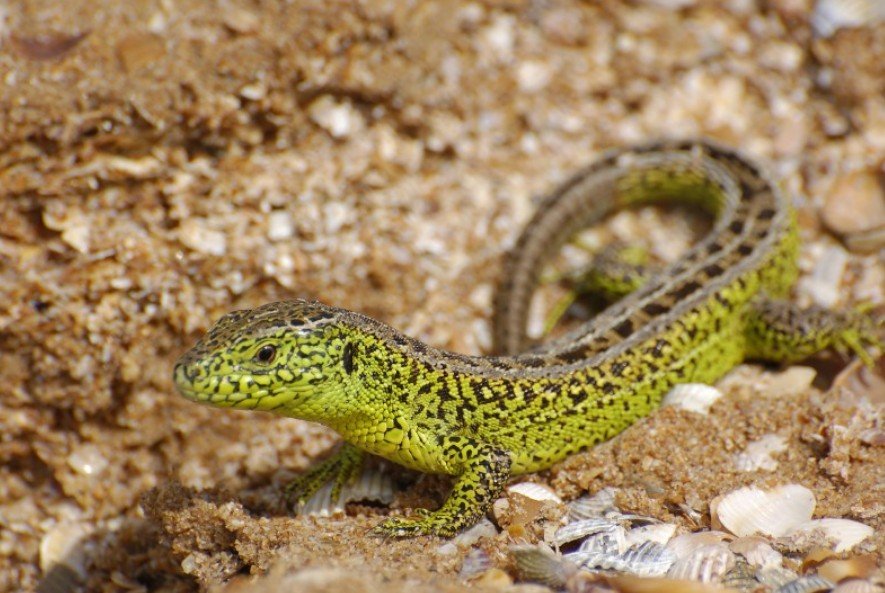
| APPEARANCE | The Sand Lizard has a slender body with a long tail, which can be shed if threatened. Males are typically bright green with a dark stripe down the back, while females are more muted in color with a brown or greyish hue. |
| LIFE SPAN | Typically 4 to 6 years, though some may live longer in protected areas. |
| HABITAT | Sandy heathlands, heath moors, coastal dunes, and clearings in forests. The Sand Lizard enjoys sunny, warm locations with plenty of cover. |
| DIET | Insects, spiders, small invertebrates, and occasionally small plants or berries. |
| NATURAL PREDATORS | Birds of prey, larger mammals, and other predators may pose a threat to the Sand Lizard, especially to younger lizards. |
| COUNTRY | Found across Europe, especially in the UK, France, Germany, and parts of Scandinavia. |
| CONSERVATION STATUS | Least Concern, but populations can be threatened by habitat destruction and climate change, particularly in areas where heathland is being lost. |
Amazing Facts About Sand Lizard
1. Expert Sunbather
The Sand Lizard is a cold-blooded reptile that relies on the sun to regulate its body temperature. It often basks on rocks or open ground to warm up in the morning.
2. Colorful Males
Male Sand Lizards are known for their striking green coloration, especially during the breeding season, where they use their vibrant colors to attract females.
3. Agile Climbers
While they are most commonly seen on the ground, Sand Lizards are excellent climbers and can easily scale low shrubs or rocks in search of food or shelter.
4. Tail Defense Mechanism
Like many lizards, the Sand Lizard can shed its tail when threatened by predators. The tail will continue to wriggle, distracting the predator and allowing the lizard to escape.
5. Mating Rituals
During the mating season, male Sand Lizards engage in territorial displays to attract females. These displays often include head-bobbing and waving their bodies in a distinct pattern.
6. Territorial Creatures
Male Sand Lizards are highly territorial during the breeding season and will aggressively defend their chosen areas from other males.
7. High-Protein Diet
The Sand Lizard is an insectivore, feeding primarily on a variety of insects, including ants, beetles, and spiders. It is an important predator of small invertebrates.
8. Sensitive to Habitat Loss
Sand Lizards rely on specific habitats, such as heathland, dunes, and clearings. Their numbers are threatened by the destruction of these habitats due to urbanization and agricultural expansion.
9. Hibernation
In colder climates, Sand Lizards hibernate during the winter months. They retreat to sheltered locations, such as under rocks or in soil, to avoid freezing temperatures.
10. Conservation Efforts
Conservation efforts are underway to protect Sand Lizard populations, particularly in areas where their habitats are being threatened. These efforts include habitat restoration and protection.
The Sand Lizard: The Elusive Reptile of Dunes and Wetlands
The sand lizard (Lacerta agilis) is a fascinating and highly adaptable reptile found across Europe and parts of Asia. Renowned for its bright colours, swift movements, and preference for sandy soils and heathlands, it plays an important role in maintaining ecosystem balance. Researchers, conservationists, and wildlife enthusiasts have long admired this species for its survival skills and ability to thrive in challenging environments.
Overview of the Sand Lizard
The sand lizard is native to Europe and parts of Asia, ranging from Russia in the east to Spain and France in the west. It thrives in sandy and heathland habitats, where it can bask in the sun or hunt insects and other small prey.
Being diurnal, sand lizards are active throughout the day, particularly in the early morning and late afternoon. They rely on sunlight to regulate their body temperature, a critical aspect of reptilian thermoregulation.
Although widespread, populations have declined in some regions due to habitat loss, climate change, and other environmental pressures. Conservation programmes aim to preserve and restore suitable habitats.
Physical Characteristics
Sand lizards are small to medium-sized reptiles with physical traits that allow them to thrive in sandy and heathland environments.
Dimensions and Form
- Adults, including the tail, measure 12–20 cm (4.7–7.8 inches).
- Males are often smaller but display brighter colours during the mating season.
- The elongated, slender body supports rapid and agile movement.
- The long tail, which may exceed half the body length, aids balance and agility and can autotomise when threatened, later regrowing partially.
Colouration
- Males display bright green or yellow flanks and necks during mating, signalling dominance and attracting females.
- Females and juveniles exhibit muted brown or greyish tones for camouflage in sandy or rocky habitats.
Limbs and Head
- The triangular head features keen eyes with vertical slit pupils, enhancing vision in bright light and motion detection.
- Limbs have wide toes for stability on loose sand and uneven terrain, with strong claws for digging and climbing.
Distribution and Habitat
Sand lizards prefer sandy soils in coastal dunes, heathlands, grasslands, and forest edges. These habitats provide warmth for thermoregulation, food sources, and shelter.
Preferred Habitats
- Coastal dunes and heathlands in the UK, Germany, and Scandinavia offer sun exposure and insect prey.
- Grasslands, woodland clearings, and scrubland supply food and shelter for insects and small invertebrates.
- Mediterranean dry slopes and scrublands in Spain and France support sand lizard populations.
Geographic Range
- Western Europe: France, Spain, Germany, United Kingdom.
- Eastern Europe and parts of Asia: Russia and Central Asia.
Diet and Feeding
Sand lizards are insectivores, feeding on worms, spiders, grasshoppers, beetles, ants, flies, and other small arthropods. These prey items supply essential proteins and lipids for growth and reproduction.
Hunting Methods
- Sand lizards actively forage using keen eyesight and swift movements.
- They hunt during cooler periods, typically early morning and late afternoon.
- They ambush prey by digging or waiting, striking quickly when the opportunity arises.
Thermoregulation
- As ectothermic reptiles, sand lizards rely on external heat sources to maintain energy for hunting and reproduction.
- They bask in the sun and retreat to shade or burrows when temperatures are extreme.
Life Cycle and Reproduction
Sand lizards breed seasonally, with mating in spring and egg-laying in summer. Males display vibrant colours and territorial behaviours to attract females, including head bobbing and nudging.
Egg-Laying and Incubation
- Females deposit four to twelve eggs in hidden burrows or soil, often sandy or loamy.
- Leathery, oval eggs incubate for six to eight weeks in soil warmth.
- Juveniles are self-sufficient after hatching.
Development and Maturity
- Juveniles resemble adults but are smaller and less colourful.
- They grow rapidly, shedding skin multiple times, reaching sexual maturity after about two years.
- Typical lifespan in the wild is five to seven years, although environmental factors and predation may shorten it.
Threats and Conservation
- Habitat loss: Urbanisation, industrial development, and agriculture fragment habitats, limiting suitable breeding and hunting areas.
- Climate change: Rising temperatures and extreme weather disrupt access to food, reproductive cycles, and habitat stability.
- Predation: Natural predators, including snakes, larger animals, and birds of prey, pose threats; non-native predators exacerbate risks.
Conservation initiatives include habitat restoration, creation of wildlife corridors, and population monitoring to ensure the sand lizard remains viable in the wild.
FAQ (Frequently Asked Questions) about Sand Lizard
Q: What is a Sand Lizard?
Ans: The Sand Lizard is a small, agile lizard species native to Europe, often found in sandy heathlands, coastal dunes, and forest clearings. It is known for its ability to regulate body temperature through sunbathing.
Q: How long do Sand Lizards live?
Ans: Sand Lizards typically live 4 to 6 years in the wild, although they can live longer in protected areas with fewer predators.
Q: Where can you find Sand Lizards?
Ans: Sand Lizards are found in parts of Europe, including the UK, France, Germany, and Scandinavia. They thrive in heathlands, coastal areas, and forest clearings.
Q: Are Sand Lizards endangered?
Ans: While the Sand Lizard is listed as “Least Concern,” local populations are at risk due to habitat destruction, particularly in areas where heathland is disappearing.
Q: What do Sand Lizards eat?
Ans: Sand Lizards are insectivores and eat a variety of small invertebrates, including insects, spiders, and beetles.
Q: How do Sand Lizards regulate their temperature?
Ans: Sand Lizards are cold-blooded and rely on basking in the sun to warm up. They are often seen sunbathing in the morning to raise their body temperature.
Q: Can Sand Lizards regenerate their tails?
Ans: Yes, like many other lizards, Sand Lizards can shed their tails as a defense mechanism. The tail can regrow, although it is often not as long or as functional as the original.
Q: Are Sand Lizards good climbers?
Ans: Yes, Sand Lizards are skilled climbers and can scale rocks and low shrubs to hunt for food or to find shelter.
Q: Do Sand Lizards hibernate?
Ans: Yes, in colder regions, Sand Lizards hibernate during the winter, retreating to sheltered locations to survive the freezing temperatures.
Q: How can we help protect Sand Lizards?
Ans: Supporting conservation efforts, such as habitat restoration and protection, can help safeguard Sand Lizard populations from habitat loss and degradation.
#SandLizard #Reptiles #Lizards #Wildlife #Conservation #EuropeanWildlife #LacertaAgilis #Heathlands #ReptileFacts
Our sources and references about Sand Lizard
1: Wikipedia – Sand Lizard
2: Reptiles Magazine – Sand Lizard
3: Britannica – Sand Lizard