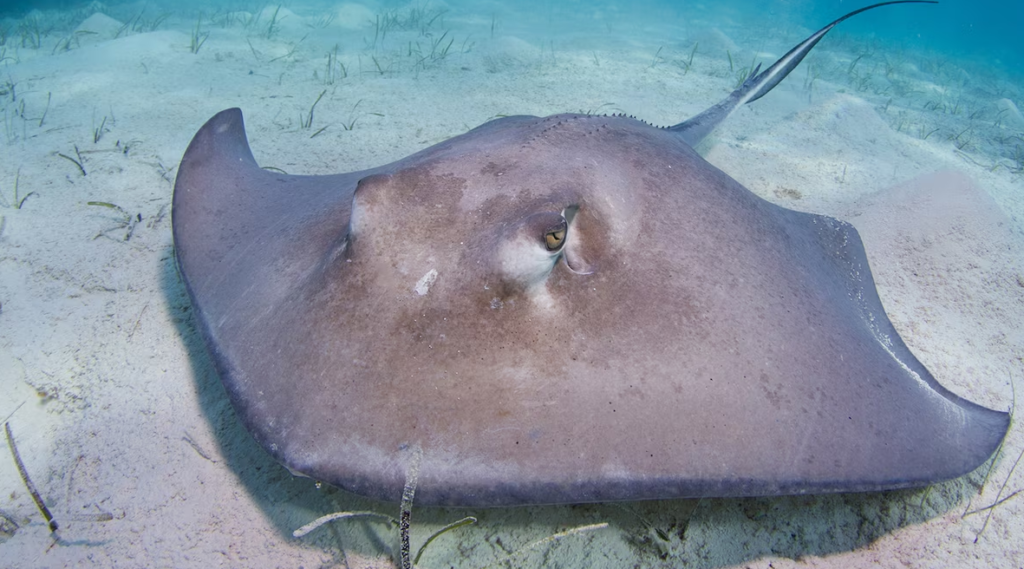
Stingrays are fascinating marine animals known for their flat, disk-shaped bodies and long, whip-like tails. They are closely related to sharks and belong to the family Dasyatidae. Stingrays are typically found in shallow coastal waters, where they can bury themselves in the sand to hide from predators and ambush prey. Their tails are equipped with venomous barbs used for defense, and they primarily feed on small fish, crustaceans, and mollusks. Although they are generally peaceful, stingrays can deliver a painful sting when threatened.
Quick Top 10 Facts about Stingray
| SCIENTIFIC NAME | Dasyatidae |
| CLASSIFICATION | KINGDOM: Animalia PHYLUM: Chordata CLASS: Chondrichthyes ORDER: Myliobatiformes FAMILY: Dasyatidae |
| SIZE | Length: 45–75 cm (18–30 inches); Tail Length: Can be up to 2 meters (6.6 feet) |
| SPECIES | Stingrays are found in oceans worldwide, typically in tropical and subtropical waters, including shallow coastal regions, estuaries, and reefs. |
| APPEARANCE | Stingrays have wide, flattened bodies with wing-like pectoral fins that give them their characteristic shape. Their tails are long and thin, with venomous barbs used for self-defense. |
| LIFE SPAN | Stingrays typically live for 15–25 years in the wild, depending on the species and environmental factors. |
| HABITAT | Stingrays inhabit shallow coastal waters, coral reefs, and estuaries. Some species are also found in deeper ocean waters, while others are benthic, spending most of their time on the ocean floor. |
| DIET | Stingrays are carnivorous and primarily feed on small fish, crustaceans, mollusks, and other invertebrates that they find by using their electroreception ability to detect prey buried in the sand. |
| NATURAL PREDATORS | Stingrays have few natural predators due to their venomous sting and camouflage abilities, but large sharks, such as hammerheads, may prey on them. |
| COUNTRY | Stingrays are found in oceans and seas around the world, including in tropical and subtropical coastal regions of the Americas, Asia, Africa, and Australia. |
| GESTATION PERIOD | Stingrays are viviparous, meaning they give birth to live young. Their gestation period typically lasts between 6 to 12 months, depending on the species. |
| CONSERVATION STATUS | Some species of stingrays are considered vulnerable or endangered due to habitat loss, overfishing, and hunting for their meat, leather, and medicinal uses. |
Amazing Facts About Stingray
1. Flattened Body for Camouflage
Stingrays have a flat, disc-shaped body that allows them to easily camouflage with the sandy ocean floor, where they bury themselves to ambush prey or avoid predators.
2. Venomous Sting
Stingrays have long, whip-like tails equipped with venomous barbs that they use for self-defense. These stings can be painful and potentially dangerous if not treated properly.
3. Electroreception
Stingrays have specialized sensory organs called ampullae of Lorenzini that allow them to detect electrical signals from the muscles and nerves of their prey. This helps them locate buried animals on the ocean floor.
4. Viviparous Reproduction
Unlike many fish species, stingrays give birth to live young. Their embryos develop inside the mother, and after a gestation period of several months, the young stingrays are born fully formed.
5. Benthic Lifestyle
Many stingrays are benthic, meaning they live on or near the ocean floor. They spend a lot of time buried in the sand, making them less visible to predators and prey.
6. Wide Distribution
Stingrays are found in a variety of ocean habitats around the world, from shallow coastal waters to deeper oceanic zones. They are especially common in tropical and subtropical regions.
7. Filter Feeders
Some species of stingrays are filter feeders, using their specialized gills to filter plankton and small organisms from the water, while others actively hunt for prey on the ocean floor.
8. Social Animals
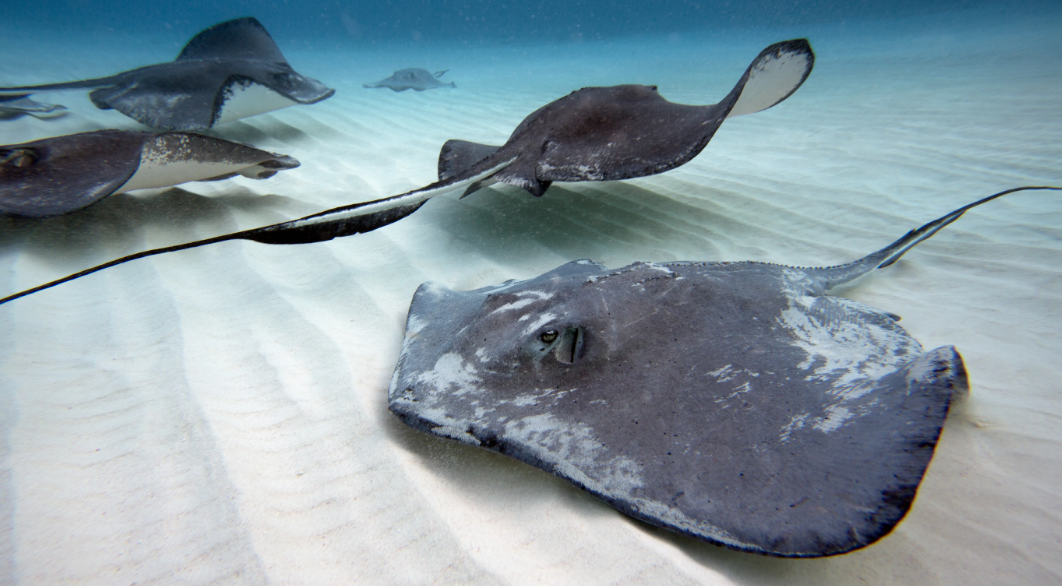
Stingrays are often found in groups, particularly during the breeding season. They can be seen swimming in schools or aggregating in areas with abundant food sources.
9. Predatory Tactics
Stingrays have developed sophisticated hunting techniques. They use their electroreception abilities to detect prey hiding in the sand and then unearth it using their flat bodies and strong pectoral fins.
10. Threatened Species
The Elegant and Perilous Marine Animal: The Stingray
The amazing stingray belongs to the class Chondrichthyes, which also contains sharks and skates. Its distinctive flat-bodied shape comes from its wing-like pectoral fins. Despite its graceful motions and generally peaceful nature, the stingray remains deadly in the water because it carries poisonous barbs on its tail. Stingrays play an essential role in their marine ecosystems and inhabit seas ranging from tropical to temperate regions.
This article highlights the importance of stingrays in marine ecosystems and explores their biology, behaviour, habitats, nutrition, and unique traits. It offers insights into their fascinating adaptations and their interactions with humans.
Physical Attributes of Stingrays
Stingrays are easily identifiable due to their unique body shape and remarkable physical features that help them thrive in aquatic environments. Below are the primary characteristics of stingrays:
Key Features of Stingray Anatomy
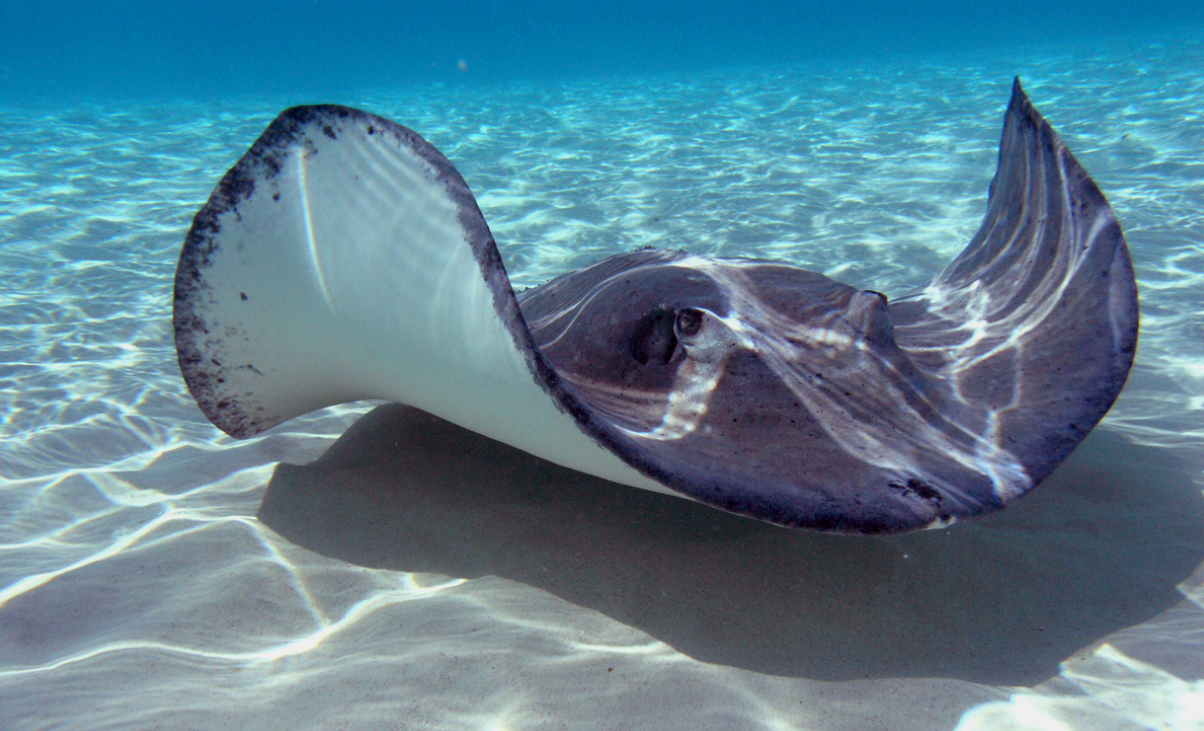
- Body Shape: Stingrays have a flattened, disc-shaped body with large pectoral fins on each side that resemble wings. These fins give them an elegant appearance as they glide over the ocean floor. Their body shape allows them to swim efficiently along the seabed.
- Tail and Sting: The tail of a stingray, often several times longer than its body, stands out as one of its most recognisable and dangerous features. It carries a venomous spine or barb capable of inflicting serious injury. When threatened, the stingray defends itself by whipping its venom-coated barb. Although fatalities are rare, the venom causes intense pain, swelling, and even tissue necrosis.
- Size: Stingrays vary greatly in size. Some species weigh up to 300 pounds (136 kilogrammes) and reach lengths of 6.5 feet (2 metres). However, most stingrays are smaller, typically ranging from 1.5 to 3 feet (0.5 to 1 metre) across.
Camouflage and Sensory Organs
- Colouration: Most stingrays have cryptic colouring that allows them to blend into their surroundings. Their undersides are lighter to match the ocean floor, while their dorsal (top) side often appears in muted shades of grey, brown, or green.
- Eyes and Spiracles: Stingrays keep watch for predators while buried under sand or silt thanks to eyes positioned on the top of their heads. Their spiracles, small openings behind the eyes, help draw water into their gills while they remain buried or rest on the seabed.
Distribution and Habitat
Geographic Range of Stingrays
Stingrays inhabit coastal regions of every continent. They occur from the shallow, tropical seas of the Caribbean, Indian, and Pacific Oceans to temperate areas such as parts of the Mediterranean and Atlantic Oceans. They favour bays, estuaries, and coral reef areas where the water is warmer and richer in nutrients.
Preferred Marine Habitats
- Bottom-Dwelling Behaviour: Stingrays generally dwell on the seabed. They enjoy burrowing in sand or mud and resting on the ocean floor. Mangrove areas, tidal flats, and shallow coastal waters provide ideal habitats.
- Deep-Sea Presence: Although less common, some species inhabit deep-sea environments.
Depth Range of Stingrays
Depending on the species, stingrays live at depths ranging from just a few feet to as deep as 1,000 metres (3,280 feet). However, most stingrays prefer shallow coastal waters.
Nutrition and Feeding Practices
What Do Stingrays Eat?
- Prey: Stingrays primarily feed on crustaceans, molluscs, small fish, and other benthic (bottom-dwelling) creatures. Their diet often includes small squid, prawns, clams, crabs, and snails. Larger species may also consume octopuses, small rays, and flatfish.
Feeding Techniques and Behaviour
- Feeding Habits: Stingrays are secretive predators that often lie in wait beneath mud or sand to ambush prey. They use their powerful pectoral fins to push sand away from the ocean floor, uncovering hidden crustaceans.
- Teeth and Mouth Design: Positioned on the underside of their bodies, their flattened lips contain flat, crushing teeth that allow them to crack open the shells of clams and crustaceans.
Electroreception Abilities
- Ampullae of Lorenzini: These specialised electroreceptors enable stingrays to detect electrical signals from prey hidden beneath the ocean floor, giving them a unique hunting advantage.
Feeding Strategy Explained
Once a stingray locates its prey, it uses its jaws to suck it up and crush it with its teeth. Their teeth are designed to break hard exoskeletons or shells, such as those of crustaceans and molluscs.
Life Cycle and Reproduction
Mating and Fertilisation
Male stingrays use their modified pelvic fins, called claspers, to transfer sperm internally to females. Males often perform courting rituals to attract females, and mating usually occurs during warmer months.
Birth and Gestation Process
As viviparous animals, stingrays give birth to live young. After fertilisation, the female carries the developing embryos in her uterus. Nourishment comes from a yolk sac or placental attachment. Gestation lasts from six months to over a year, depending on the species.
Size and Development of Litters
- Size of Litter: Stingray litters vary between two and twelve pups per pregnancy, depending on the species.
- Puppy Growth: Although the pups initially depend on their mother’s protection, they are born well developed. They can swim soon after birth and share the flattened body shape, quickly growing into adults.
Behaviour and Defensive Strategies
Camouflage and Burrowing Skills
- Burrowing and Camouflage: Stingrays use cryptic colouring to blend with their environment and avoid predators. Many species bury themselves when threatened, leaving only their spiracles and eyes exposed.
Stingray’s Venomous Defence
- Venomous Sting: To defend themselves, stingrays use a poisonous barb on their tail. When threatened, they may strike with venom that causes intense pain and injury. Although fatalities are rare, the venom can seriously damage tissue, requiring medical treatment.
Movement and Predator Avoidance
- Slow Motion: Stingrays typically move slowly, gliding elegantly over the seabed with their large pectoral fins. Their primary defence when threatened is to flee quickly and bury themselves.
- Threats and Predators: While adult stingrays face few natural enemies, sharks, large fish, and sea otters do prey on them. Young stingrays are more vulnerable to smaller predators.
The Significance of Stingrays in the Environment
Ecological Role in Marine Ecosystems
In their maritime environments, stingrays are essential. Their eating patterns aid in controlling the numbers of invertebrates that live on the bottom, such molluscs and crabs. By keeping these numbers under control, stingrays contribute to the preservation of a healthy environment by avoiding the overdominance of any one species.
Stingrays in the Marine Food Web
Additionally, larger marine predators, such as sharks and big fish, depend on stingrays for food. Stingrays contribute to the diversity and richness of marine life by occupying an important position in the food chain.
FAQ (Frequently Asked Questions) about Stingray
Q: What is a Stingray?
Ans: A Stingray is a type of cartilaginous fish related to sharks, known for its flat body, long tail, and venomous barb used for defense. They are typically found in warm, coastal waters.
Q: How do Stingrays defend themselves?
Ans: Stingrays have venomous barbs located on their tails, which they use for self-defense when threatened. These barbs can deliver a painful sting.
Q: What do Stingrays eat?
Ans: Stingrays are carnivorous and primarily feed on small fish, mollusks, crustaceans, and other invertebrates, which they detect using electroreception.
Q: Are Stingrays dangerous to humans?
Ans: Stingrays are generally not aggressive and will not attack humans unless provoked. However, their sting can be painful and potentially dangerous if stepped on or threatened.
Q: Where can I find Stingrays?
Ans: Stingrays are found in tropical and subtropical coastal waters around the world, including estuaries, coral reefs, and shallow sandy areas.
Q: How long do Stingrays live?
Ans: Stingrays can live anywhere from 15 to 25 years, depending on the species and environmental conditions.
Q: How do Stingrays reproduce?
Ans: Stingrays are viviparous, meaning they give birth to live young. Their gestation period typically lasts between 6 to 12 months, and the young are born fully developed.
Q: Are Stingrays endangered?
Ans: Some species of stingrays are considered vulnerable or endangered due to habitat loss, overfishing, and hunting for their meat and skin.
Our sources and references about Stingray
1: Wikipedia – Stingray
2: National Geographic – Stingray
3: Britannica – Stingray