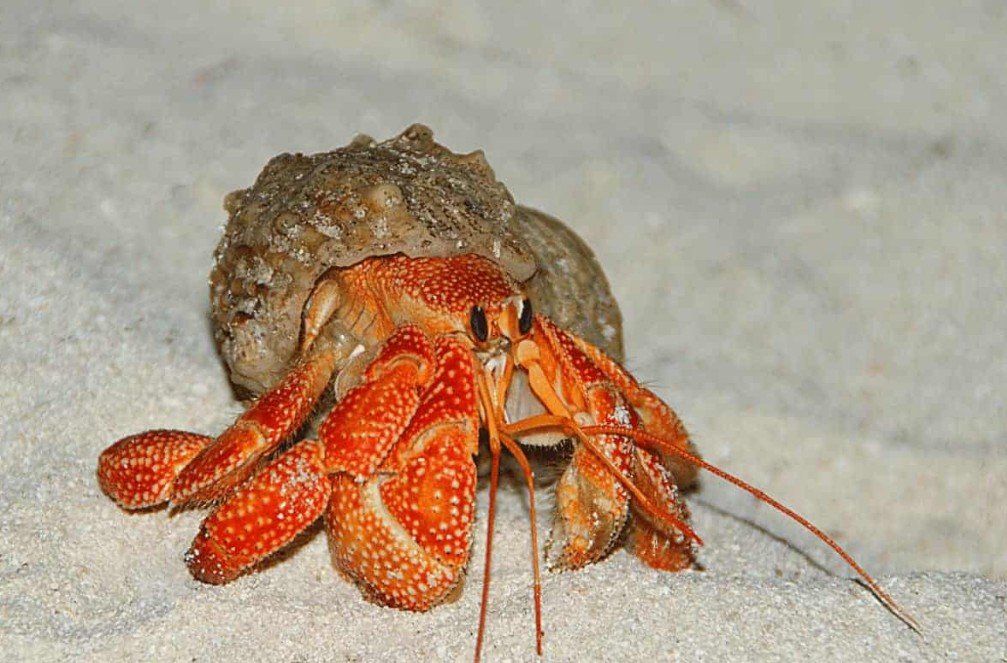
The Strawberry Hermit Crab is a vibrant, terrestrial hermit crab known for its bright red or orange coloration, resembling a ripe strawberry. Native to coastal regions of the Indo-Pacific, this crab lives in borrowed shells and relies on humidity and access to seawater to stay healthy. It plays an important role in its ecosystem as a scavenger, cleaning up organic debris. Despite its exotic appearance, it is a popular species in the exotic pet trade, though it requires very specific care and environmental conditions to thrive in captivity.
Quick Top 10 Facts about Strawberry Hermit Crab
| SCIENTIFIC NAME | Coenobita perlatus |
| CLASSIFICATION | KINGDOM: Animalia PHYLUM: Arthropoda CLASS: Malacostraca ORDER: Decapoda FAMILY: Coenobitidae |
| SIZE | Length: up to 12 cm (4.7 inches); Weight: up to 500 grams (1.1 pounds) |
| SPECIES | One recognized species: Coenobita perlatus |
| APPEARANCE | Bright red to orange coloration with small white dots; large, clawed front limbs and a coiled abdomen protected inside a seashell |
| LIFE SPAN | Up to 25–30 years in the wild; significantly shorter in captivity if not properly cared for |
| HABITAT | Tropical coastal areas, especially near sandy beaches and coconut groves in the Indo-Pacific region |
| DIET | Omnivorous scavenger; feeds on fruits, decaying plants and animals, and sometimes carrion |
| NATURAL PREDATORS | Birds, large reptiles, mammals, and humans (pet trade collection) |
| COUNTRY | Found in countries along the Indo-Pacific coast, including Indonesia, Madagascar, Seychelles, and parts of Australia |
| GESTATION PERIOD | Eggs are carried on the female’s abdomen and released into the sea, where they develop into larvae over several weeks |
| CONSERVATION STATUS | Not officially evaluated by IUCN; local populations may be affected by habitat loss and overcollection |
Amazing Facts About Strawberry Hermit Crab
1. Stunning Coloration
Their bright red or strawberry-like appearance makes them one of the most visually striking hermit crab species.
2. Shell Dwellers
Like all hermit crabs, they use discarded snail shells to protect their soft abdomen.
3. Coastal Lifestyle
They live near shorelines but spend most of their lives on land, only returning to the ocean to reproduce.
4. Lifespan Surprise
With proper conditions, these crabs can live up to 30 years, though this is rare in captivity.
5. Humidity Lovers
Strawberry Hermit Crabs require high humidity and saltwater access to stay healthy.
6. Social Creatures
They are often found in groups and can interact socially, especially when foraging or migrating.
7. Skilled Climbers
They are excellent climbers and can often be seen scaling rocks or driftwood in their habitat.
8. Nighttime Activity
Nocturnal by nature, they are most active during the night when they search for food.
9. Sensitive to Environment
They are sensitive to changes in humidity, temperature, and pollution, which can affect their survival.
10. Threatened by Pet Trade
Their popularity as exotic pets has led to collection pressure in some regions, threatening wild populations.
Introduction to the Strawberry Hermit Crab
The vibrant and distinctive strawberry hermit crab is a marine invertebrate. A striking species of hermit crab, the Strawberry Hermit Crab (Coenobita perlatus) is distinguished by its vivid colouring and intriguing habits. This species is a favourite among aquarium hobbyists and marine enthusiasts due to its colourful look and versatility. We shall examine the biology, habitat, behaviour, and maintenance needs of the Strawberry Hermit Crab in this comprehensive study, highlighting its special traits and its function in both natural and captive settings.

Physical Features of the Strawberry Hermit Crab
Unique Colouration and Size
The unique characteristics of the Strawberry Hermit Crab make it easy to identify. Let’s examine its physical characteristics in more detail:
- Colouration: The Strawberry Hermit Crab’s most remarkable characteristic is its vivid red or orange exoskeleton, which takes its name from the colour of a ripe strawberry. It is a striking species because of its striking colouring, which is dotted with pink or yellow hues. Individual characteristics as well as environmental elements like habitat and food may affect the colour intensity.
- Size: Strawberry Hermit Crabs are little; they usually reach a size of 5 to 6 centimetres (2 to 2.5 inches). Despite their seemingly small size, they stand out in any setting because to their vibrant colours and the contrast with their shells.
Shell Usage and Selection
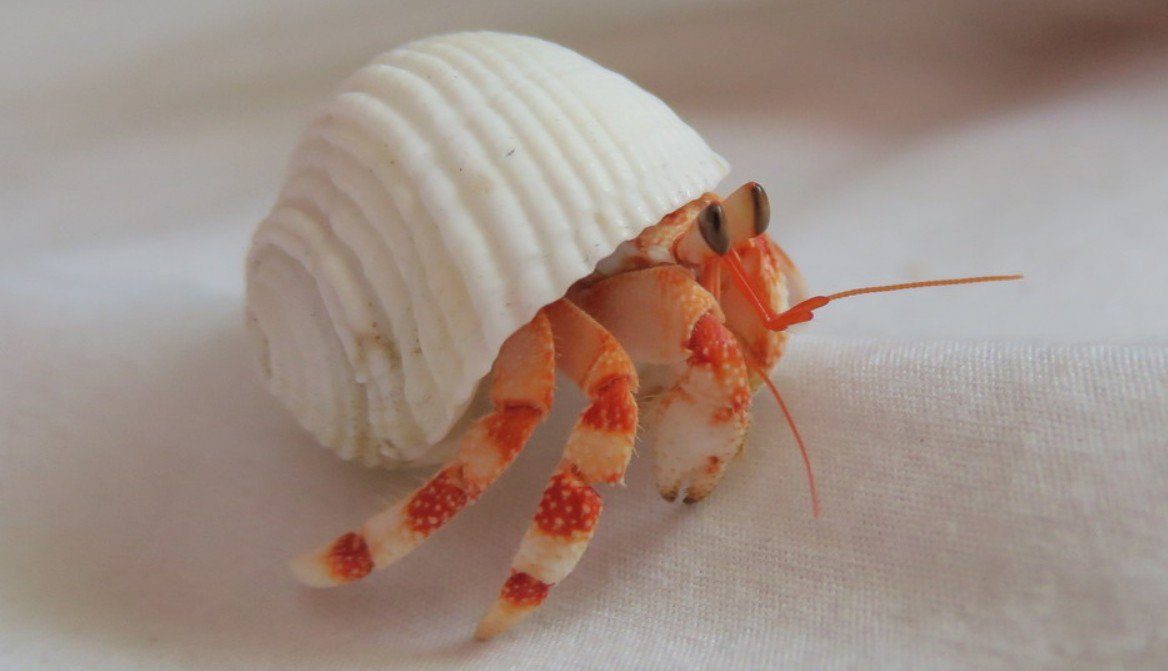
Shells: The Strawberry Hermit Crab does not create its own exoskeleton, much as other hermit crabs. Rather, it lives within the empty shells of other molluscs, like snails. The soft crab abdomen is shielded by the shells, which are usually helical in form. The crab may sometimes choose a shell with a colourful hue to go with its lively look.
Legs, Antennae, and Claw Adaptations
- Legs and Antennae: Strawberry Hermit Crabs have two long, sensitive antennae that they utilise to sense their environment and find food. They have five pairs of legs that are ideally suited for mobility; the first pair is bigger and more powerful, and it helps keep the shell in place for protection. Additionally, they utilise their legs to climb on a variety of objects, such as plants, rocks, and corals.
- Claws: There is a giant claw and a little claw on this hermit crab. The smaller claw is usually employed for delicate manipulation, while the bigger one is utilised for defence and food acquisition.
Natural Habitat and Geographic Distribution
Where Strawberry Hermit Crabs Are Found
The Indo-Pacific’s tropical and subtropical zones, which include sections of Southeast Asia, the Philippines, Indonesia, and other Indian Ocean islands, are home to the Strawberry Hermit Crab. They are most often seen around the shore, especially in shallow seas, coral reefs, and mangrove forests. Because there is food available and appropriate shells for shelter, these environments provide hermit crabs the perfect environment.
Environmental Preferences in the Wild
The Strawberry Hermit Crab usually lives on sandy or rocky substrates in the wild, where it may readily locate shells that other marine life has left behind. Because they can migrate between land and water based on the tide, these crabs are often seen in intertidal zones. The omniherbivorous Strawberry Hermit Crab diet, which mostly consists of plant materials, detritus, and tiny invertebrates, is supported by the great biodiversity of these habitats.
Habitat Requirements in Captivity
Strawberry Hermit Crabs are often housed in saltwater aquariums in captivity. With plenty of hiding places, shells, and access to both land and water, they flourish in settings that closely resemble their native habitat.
Diet and Feeding Habits of the Strawberry Hermit Crab
What They Eat in the Wild
- Algae: Found growing on rocks, corals, and other marine surfaces, algae are very popular with these hermit crabs. They wipe algae off surfaces using their tiny claw.
- Detritus: The Strawberry Hermit Crab, like many other hermit crabs, feeds on detritus, which is decaying plant and animal materials that is found on the ocean bottom. This is a major source of food, particularly in the wild.
- Plant Matter: In their native environment, they also eat fallen leaves from mangrove trees and other plants like seaweed.
- Invertebrates: Although they are more likely to eat plant matter and debris, strawberry hermit crabs may also eat tiny invertebrates, such as snails and other molluscs.
Dietary Needs in Captivity
Diet in Captivity: Strawberry Hermit Crabs are often fed a combination of fresh vegetables, commercial hermit crab diet, seaweed, and sometimes fish flakes for protein. To make sure they get all the nutrients they need for development and reproduction, they benefit from a diversified diet.
Behaviour and Social Traits
Shell-Finding and Competition
Shell Selection: The Strawberry Hermit Crab is renowned for its habit of searching for new shells as it matures, a trait shared by all hermit crabs. A crab will look for a new shell as it outgrows its present one, and sometimes it may even get into “shell fights” with other crabs. These conflicts arise when many crabs vie for the same shell, which often results in the shell being traded or obtained.
Burrowing and Hiding
Burrowing: Strawberry Hermit Crabs may dig small tunnels in the sand or mud to relax or hide from predators, however they may not rely as much on burrowing as some other hermit crab species. They get shelter, moisture, and a place to moult in these burrows.
Climbing and Exploring Behaviour
Climbing: Because of their exceptional climbing skills, these crabs are often seen ascending plants, rocks, and aquarium decorations. One adaptation that helps them avoid predators and locate new food sources is their ability to climb.
Community Interaction and Moulting
- Interaction with Other Species: In their native environment, strawberry hermit crabs often interact with other tiny marine species and are capable of living in groups. Although they could compete with other hermit crabs for shells, they are usually not hostile towards other marine life.
- Moulting: In order to develop, the Strawberry Hermit Crab periodically loses its exoskeleton, a process that is common among crustaceans. The crab is at risk at this period and usually hides in a secure area to evade predators.
Life Cycle and Reproductive Behaviour
Mating and Courtship
Mating: Male and female Strawberry Hermit Crabs are different in size and appearance because they are sexually dimorphic. Males engage in certain courting rituals to vie for female attention throughout the breeding season. To entice mates, they may dance and wave their claws.
Egg Development and Larval Stages
Egg Laying: Following mating, the female deposits externally fertilised eggs. Until they hatch, the eggs are typically carried under the female’s belly. After a number of developmental phases, the larvae eventually mature into young hermit crabs.
Larval Stage: Strawberry Hermit Crab larvae are planktonic, which means they follow the currents in the water. They change throughout time and end up on the ocean bottom, where they start looking for shells.
Strawberry Hermit Crab Care in Captivity
Tank Setup and Environmental Requirements
- Tank Setup: Strawberry Hermit Crabs need a saltwater tank. With a specific gravity of 1.022 to 1.025, the water should be salty. To satisfy the crabs’ drive to climb and explore, the tank should include both land and water sections.
- Lighting and Temperature: Keep the water between 24°C and 28°C (75°F and 82°F). In order to maintain their internal clocks, aquarium illumination should replicate the day and night cycles that these crabs need.
- Shelter and Substrate: Give the crabs a range of empty shells to choose from, along with climbing plants, rocks, and driftwood. Sand or fine gravel should make up the substrate to facilitate simple mobility and burrowing.
- Water Quality: Make sure that ammonia, nitrites, and nitrates are maintained at acceptable levels and that the pH stays between 8.1 and 8.4 by routinely checking the water quality.
- Diet: To keep them healthy, feed them a variety of fresh veggies, protein, algae, and special hermit crab chow. There should always be access to both fresh and saltwater for hydration.
FAQ (Frequently Asked Questions) about Strawberry Hermit Crab
Q: What is a Strawberry Hermit Crab?
Ans: The Strawberry Hermit Crab (Coenobita perlatus) is a land hermit crab known for its bright red color and shell-dwelling behavior, native to Indo-Pacific coastlines.
Q: Where can Strawberry Hermit Crabs be found?
Ans: They are found in tropical coastal areas of the Indo-Pacific, including Seychelles, Indonesia, and Madagascar.
Q: What do Strawberry Hermit Crabs eat?
Ans: They are omnivorous scavengers that eat fruit, dead plant matter, carrion, and even fish.
Q: Do Strawberry Hermit Crabs live in the ocean?
Ans: No, they are land-dwelling but require access to seawater for reproduction and moisture.
Q: How long do Strawberry Hermit Crabs live?
Ans: They can live up to 30 years in the wild with proper conditions.
Q: Can Strawberry Hermit Crabs be kept as pets?
Ans: Yes, but they require very specific care, including high humidity, warm temperatures, and both saltwater and freshwater.
Q: Are Strawberry Hermit Crabs endangered?
Ans: They are not listed as endangered, but overcollection and habitat degradation are concerns.
Q: How do they reproduce?
Ans: Females release eggs into the ocean where they hatch into free-swimming larvae before settling on land.
Q: Why do they need shells?
Ans: Their soft abdomens need protection, so they use empty snail shells as portable shelters.
Our sources and references about Strawberry Hermit Crab
1: Wikipedia – Coenobita perlatus
2: Aquarium of the Pacific – Strawberry Hermit Crab
3: IUCN Red List (general)


