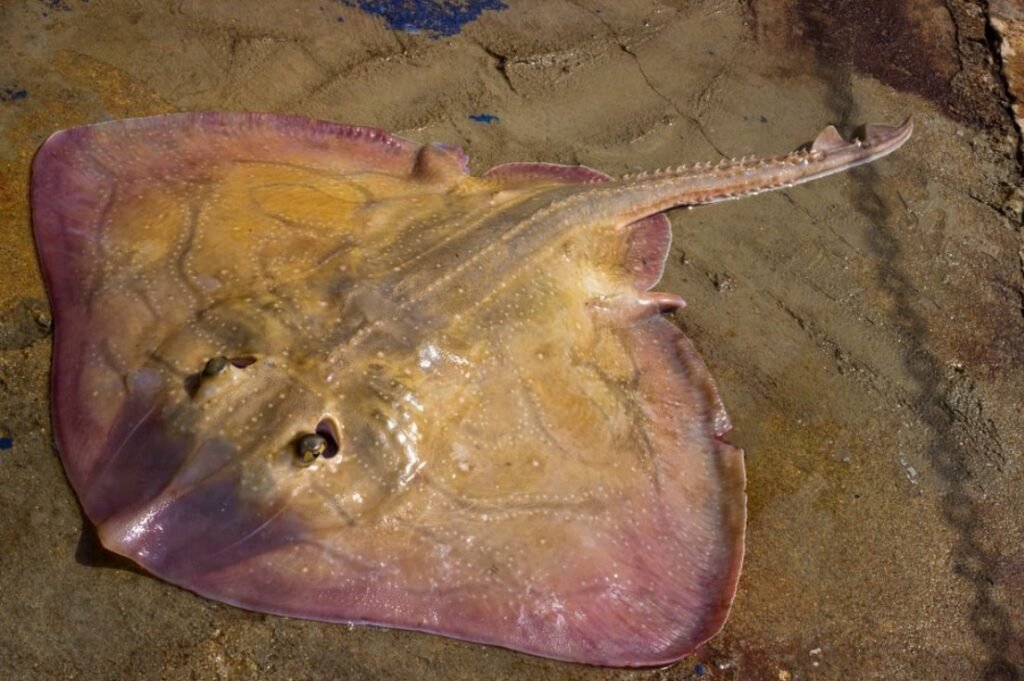
Skate fish are cartilaginous fish closely related to rays, known for their unique flattened bodies and wing-like pectoral fins. These fish are found in both temperate and polar waters, with many species inhabiting the ocean floor. Skates have a wide range of adaptations for their bottom-dwelling lifestyle, including the ability to camouflage themselves with the seafloor to avoid predators. While their diet primarily consists of small invertebrates and fish, skates are often preyed upon by larger marine animals such as sharks and large fish. Despite their wide distribution, many species of skates are threatened by overfishing and habitat degradation.
Quick Top 10 Facts about Skate Fish
| SCIENTIFIC NAME | Raja spp. |
| CLASSIFICATION | KINGDOM: Animalia PHYLUM: Chordata CLASS: Chondrichthyes ORDER: Rajiformes FAMILY: Rajidae |
| SIZE | Length: 40–250 cm (16–98 inches), depending on the species |
| SPECIES | There are over 200 species of skates found across the world’s oceans. |
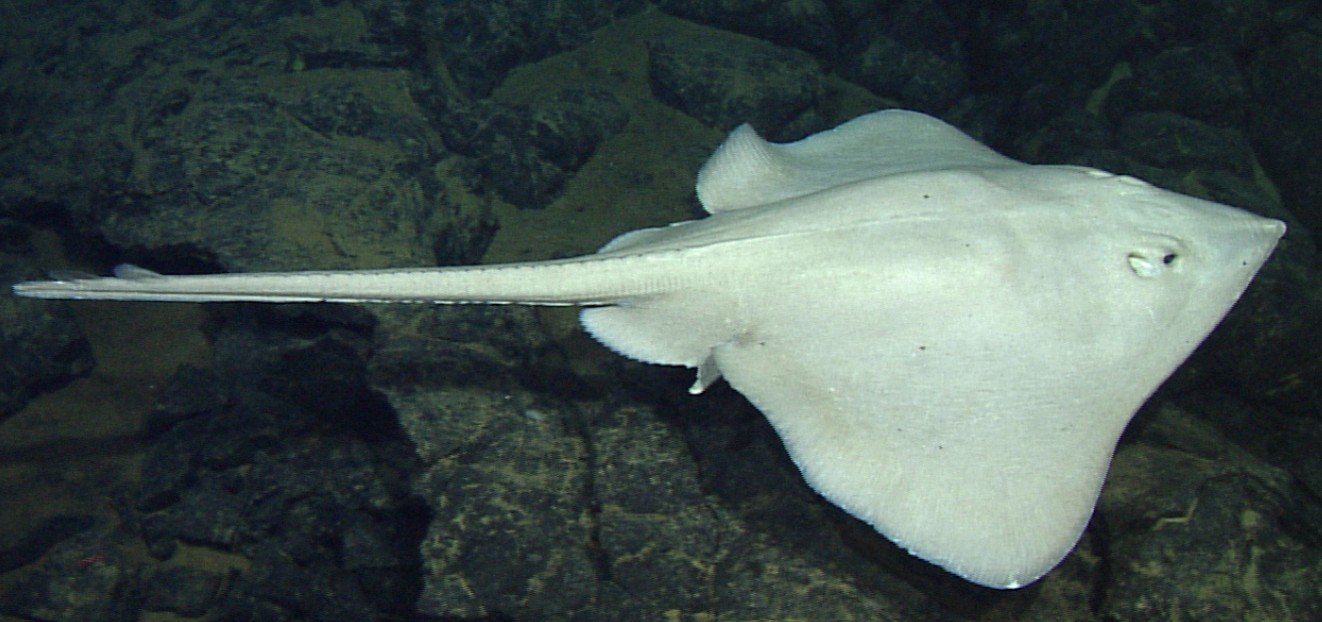
| APPEARANCE | Skates have flat, diamond-shaped bodies with wing-like pectoral fins, a long, slender tail, and small eyes located on the top of their head. |
| LIFE SPAN | Skates typically live between 15–25 years, depending on the species. |
| HABITAT | Skates are bottom-dwelling creatures that live on or near the ocean floor, ranging from shallow coastal waters to deep-sea habitats. |
| DIET | Skates are carnivorous, primarily feeding on crustaceans, mollusks, and small fish. They often use their flattened bodies to stir up the seabed to uncover prey. |
| NATURAL PREDATORS | Sharks, larger fish, and some marine mammals prey on skates. |
| COUNTRY | Skates are found in oceans worldwide, with the majority of species inhabiting temperate and polar waters. |
| GESTATION PERIOD | Skates are oviparous, laying eggs that develop outside the body. The incubation period typically ranges from 6 months to over a year, depending on the species. |
| CONSERVATION STATUS | Many skate species are threatened or near threatened due to overfishing and habitat destruction, with some species facing population declines. |
Amazing Facts About Skate Fish
1. Wing-Like Pectoral Fins
Skates are easily recognized by their large, wing-like pectoral fins, which they use to glide smoothly over the ocean floor, similar to flying in the water.
2. Bottom-Dwelling Lifestyle
Skates spend most of their time on the ocean floor, where they use their flattened bodies to stay close to the seabed. This helps them avoid predators and hunt for food.
3. Excellent Camouflage
Skates have evolved to blend in with the ocean floor, with colors that help them match the sandy or rocky environments where they live. This camouflage helps them evade predators.
4. Slow Movers
Skates are not known for speed but instead rely on their camouflage and ability to hide in the sand to avoid detection by predators.
5. Specialized Diet
Skates have a highly specialized diet, feeding on small invertebrates and fish that they find by scouring the ocean floor with their sensitive snouts.
6. Oviparous Reproduction
Skates lay eggs that are protected by a hard casing known as a “mermaid’s purse.” The eggs hatch into young skates after a lengthy incubation period.
7. Long Lifespan
Skates have a relatively long lifespan compared to many other fish species. Some can live for 15–25 years, depending on the species.
8. Diverse Species
There are over 200 species of skates, with each species having unique traits and adaptations suited to its specific environment.
9. Essential Role in Marine Ecosystems
Skates play an important role in marine ecosystems by helping control populations of bottom-dwelling invertebrates and small fish, thereby maintaining balance in the food web.
10. Vulnerable to Overfishing
 Many skate species are threatened due to overfishing, particularly those in the same family as rays. Conservation efforts are being made to protect these fascinating creatures.
Skate Fish Overview
The skate fish belongs to the family Rajidae and occupies an often-overlooked yet fascinating place in the vast marine ecosystem. Skates remain closely related to rays and sharks, and they share their classification within the cartilaginous group known as elasmobranchs. Many people confuse skates with rays, yet several biological and behavioural traits clearly separate them. This article explores the biology, habitat, behaviour, and conservation of skate fish and explains why they hold such importance in diverse marine ecosystems.
Skate Fish Characteristics and Body Structure
General Description of Skate Fish Anatomy
Skate fish live as benthic creatures, and they spend most of their lives on or near the seafloor while using their large, flat bodies to camouflage themselves in sand and other substrates. The term “skate” applies to the broad group within the Rajidae family that includes many species found across the world’s oceans, especially in colder and deeper waters. Skates and rays share several similarities, yet skates display a stiff, triangular body shape and lack the whip-like tail that appears in many ray species.
Unique Physical Features of Skate Fish
Skates display a flattened, diamond-shaped body with large pectoral fins that create a wing-like appearance. Their tails appear shorter than those of most rays, and their fins do not form the long and slender structure seen in ray species. Many skate fish also show small, smooth spines along their back and tail, and these spines help them protect themselves against natural predators.
Skate Fish Appearance and Distinct Traits
Body Shape and Adaptations
Skates feature flattened, disc-shaped bodies that allow them to hide effectively on the seafloor. Their broad pectoral fins extend from the head to the tail and create a wide, wing-like outline. These wings help them glide smoothly over the ocean floor while they search for food or avoid predators. The colour of skate fish varies across species and habitats, though most appear greyish-brown or mottled to blend into the surrounding seabed.
Key Physical Features of Skate Fish
- Body Shape: Flattened shape with broad pectoral fins that resemble wings.
- Tail: Skates display shorter and less flexible tails and generally lack the whip-like structure seen in ray species.
- Spines: Some skate species show protective spines along the back and tail to deter predators.
- Eyes: Their eyes sit on top of the head, giving them a heightened view while resting on the seafloor.
- Mouth: Their downward-facing mouths contain rows of flat teeth designed to crush hard-shelled prey.
Skate Fish Habitat and Global Distribution
Where Do Skate Fish Live?
Skates appear mainly in temperate and cold waters, yet several species live in tropical regions depending on their specific adaptations. They live predominantly as benthic animals, occupying the ocean floor where they can camouflage effectively. You can find skate fish at depths ranging from shallow coastal areas to deep waters reaching nearly 1,000 metres (3,280 feet).
Common Species and Regional Ranges
Certain skate species, such as the Atlantic Skate, inhabit the coastal waters of North America and Europe, while others like the White Skate thrive in colder and deeper zones. The Shortnose Skate often appears along the eastern coast of North America, and the Giant Sea Skate occupies deep waters around New Zealand and nearby regions.
Preferred Skate Fish Environments
Most skates prefer muddy or sandy seabeds, where they can bury themselves and remain hidden from predators or prey. They can also move through rocky and kelp-filled habitats, although scientists most commonly associate them with soft, sandy or muddy substrates.
Skate Fish Behaviour and Diet
Feeding Habits of Skate Fish
Skates behave as carnivores and prey on smaller fish, crustaceans, molluscs, and worms. Their diet consists mainly of bottom-dwelling organisms that they detect through a highly developed sense of electroreception. Skates sense electromagnetic fields and identify subtle signals emitted by hidden prey, even when buried beneath layers of sand.
Hunting Techniques and Movement
After locating prey, skates press their flattened bodies into the sand to expose buried animals. Their flat and blunt teeth work effectively by crushing tough mollusc shells and the hard exoskeletons of crustaceans, enabling them to access the soft tissue inside.
Burrowing and Gliding Behaviour
Skates frequently bury themselves beneath sand or sediment, and this behaviour helps them stay concealed from predators while they wait for prey to move close enough for ambush.
Locomotion and Escape Strategies
Skates glide smoothly across the seafloor by undulating their broad pectoral fins in a wave-like pattern. This movement helps them evade predators and navigate complex ocean environments. Unlike rays that often rely on their tail for propulsion, skates depend primarily on their large fins for movement.
Skate Fish Reproduction and Life Cycle
Oviparous Reproductive Strategy
Skates reproduce as oviparous species and lay eggs instead of giving birth to live young. Female skates produce their eggs in a tough casing commonly known as a “mermaid’s purse” due to its rectangular shape. These cases attach to underwater structures such as seaweed or rocks, and the embryos remain there for several months.
Development Inside Mermaid’s Purses
Skate eggs can withstand the challenging conditions of deep-sea life. Their tough, leathery cases protect the developing embryos from predators, strong currents, and shifting environmental conditions. Depending on the species, skate eggs may require between three and nine months to hatch, and the young emerge as miniature versions of the adults.
Parental Involvement in Skate Fish
Skates generally show no parental involvement after laying their eggs. However, they choose safe and undisturbed locations with suitable resources so the young can thrive once they hatch.
Skate Fish Conservation Status and Threats
Threats to Skate Fish Populations
Many skate species face serious threats due to overfishing, habitat loss, and the wide-ranging impacts of climate change. Commercial trawling and accidental bycatch have reduced several skate populations, especially in busy coastal waters with intense human activity. Because skates reproduce slowly, overfishing creates long-term risks as populations require many years to recover.
Environmental Challenges Affecting Skates
Skates also suffer from habitat destruction, particularly in degraded coastal environments. Pollution and ocean acidification may reduce the availability of shellfish and other invertebrates, which skates depend on for food.
IUCN Status and Conservation Efforts
Several skate species now appear as vulnerable or near threatened on the International Union for Conservation of Nature (IUCN) Red List. Conservation programmes aim to protect skate habitats and reduce fishing pressure to ensure these unique marine creatures continue to survive.
Interesting Facts About Skate Fish
Little-Known Skate Fish Facts
- Ancient Relatives: Skates belong to one of the oldest fish lineages, with ancestors dating back more than 150 million years.
- Camouflage Experts: Skates excel at camouflage and often bury themselves in sand to avoid predators or ambush prey.
- Electroreception: These fish detect electrical signals released by prey and use this ability to hunt efficiently in dark or murky waters.
- Slow Growth: Skates grow slowly, and some species require several years to reach full adult size.
- Low Reproductive Rate: Their long gestation periods and limited number of eggs contribute to a naturally low reproductive rate.
FAQ (Frequently Asked Questions) about Skate Fish
Q: What do skates eat?
Ans: Skates are carnivorous and primarily feed on small fish, crustaceans, mollusks, and other invertebrates they find on the ocean floor.
Q: How do skates move?
Ans: Skates use their large, wing-like pectoral fins to “fly” through the water. They glide smoothly across the ocean floor while using their fins for propulsion.
Q: Are skates endangered?
Ans: Many skate species are threatened due to overfishing and habitat loss. Conservation measures are important to protect these species.
Q: Where are skates found?
Ans: Skates are found in oceans worldwide, particularly in temperate and polar waters, where they inhabit the ocean floor.
Q: How long do skates live?
Ans: Skates can live for 15–25 years, depending on the species. Female skates tend to have longer lifespans than males.
Q: Do skates lay eggs?
Ans: Yes, skates are oviparous and lay eggs that develop outside the body. The eggs are often encased in a hard, leathery shell known as a “mermaid’s purse.”
Q: What predators do skates have?
Ans: Skates are preyed upon by sharks, large fish, and marine mammals such as sea otters and larger birds.
Q: How do skates protect themselves?
Ans: Skates rely on their excellent camouflage to blend in with the ocean floor and avoid predators. They also have the ability to bury themselves in sand to hide.
Q: Can skates be kept in aquariums?
Ans: While it is possible to keep some species of skates in large aquariums, they require a lot of space and specific environmental conditions to thrive.
#SkateFish #MarineLife #OceanFloor #Skates #Rays #MarineConservation #OceanWildlife
Our sources and references about Skate Fish
1: Wikipedia – Skate Fish
2: National Geographic – Skate Fish
3: Britannica – Skate Fish
4: NOAA – Skate Species