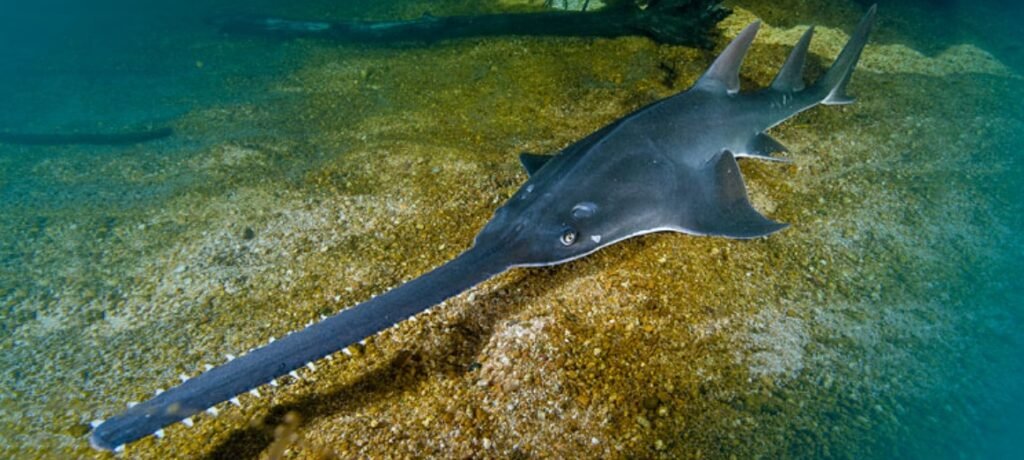
Sawfish are unique and fascinating fish known for their long, flattened snouts that resemble saw blades. These fish belong to the family Pristidae and are found in shallow coastal waters and rivers. Despite their fearsome appearance, sawfish are generally not dangerous to humans. They use their distinctive “saw” to hunt and defend themselves. Sawfish are known for their excellent swimming capabilities, as well as their ability to adapt to both saltwater and freshwater environments. However, many species of sawfish are critically endangered due to habitat loss, overfishing, and the illegal trade of their fins.
Quick Top 10 Facts about Sawfish
| SCIENTIFIC NAME | Pristis species |
| CLASSIFICATION | KINGDOM: Animalia PHYLUM: Chordata CLASS: Chondrichthyes ORDER: Pristiformes FAMILY: Pristidae |
| SIZE | Length: Up to 7 meters (23 feet), depending on species |
| SPECIES | Various species, including the Smalltooth Sawfish (Pristis pectinata) and the Largetooth Sawfish (Pristis pristis) |
| APPEARANCE | Long, flattened snout resembling a saw blade; large body, usually with a grayish-brown to greenish color. |
| LIFE SPAN | Typically 25–30 years, depending on the species |
| HABITAT | Shallow coastal waters, estuaries, and rivers, primarily in tropical and subtropical regions |
| DIET | Small fish, crustaceans, and invertebrates; they use their saws to stir up the sand and catch prey |
| NATURAL PREDATORS | Large sharks, saltwater crocodiles, and occasionally large predatory fish |
| COUNTRY | Found in coastal waters and rivers of tropical and subtropical regions, including the Americas, Africa, and Asia |
| GESTATION PERIOD | Gestation lasts approximately 12 months, with live birth occurring in some species |
| CONSERVATION STATUS | Critically endangered due to habitat destruction, overfishing, and illegal trade |
Amazing Facts About Sawfish
1. Saw Blade Snout
Sawfish are most famous for their long, flattened snouts, which resemble saw blades. These snouts are lined with teeth and are used for hunting and foraging in the sand.
2. Use of the Saw for Hunting
Sawfish use their saw-like snouts to stir up the bottom of rivers and ocean floors, uncovering small fish, crustaceans, and other prey hidden in the sand.
3. Adaptable to Salt and Freshwater
Sawfish can live in both saltwater and freshwater environments, making them highly adaptable to different aquatic habitats.
4. Slow Reproduction
Sawfish have a slow reproductive rate, with females giving birth to live young after a long gestation period, making their populations more vulnerable to decline.
5. Powerful Swimmers
Sawfish are strong swimmers, capable of moving swiftly through water with the aid of their large, powerful tail fins.
6. Threatened by Overfishing
Due to their unique appearance and the value of their fins, sawfish are heavily targeted in illegal fishing and are often caught unintentionally in commercial fishing nets.
7. Critical Endangerment
Many sawfish species, like the Smalltooth Sawfish, are critically endangered due to habitat loss, pollution, and overfishing. Conservation efforts are crucial to their survival.
8. Long Life Span
Sawfish can live up to 25–30 years in the wild, though this is shortened in captivity due to stress and inadequate living conditions.
9. Social Behavior
While sawfish are often solitary creatures, some species may exhibit a degree of social interaction, especially during the breeding season.
10. Ecological Role
Sawfish play a vital role in their ecosystem by helping control populations of small fish and invertebrates, ensuring a balanced food chain.
Introduction to Sawfish: Unique Elasmobranch Species
Sawfish are remarkable members of the elasmobranch group, which also includes sharks and rays. They belong to the Pristidae family. Sawfish are easily recognised by their distinctive long, flattened rostrum, often referred to as a “saw”. Along the edges of this rostrum, they possess a set of multipurpose lateral teeth. These serrated features enable sawfish to slice through the water with precision, aiding in the capture of prey such as fish and crabs. This adaptation not only facilitates feeding but also provides protection against predators.
Classification and Evolutionary Background of Sawfish
Taxonomically, five sawfish species, including the Smalltooth and Largetooth sawfish, are classified under the genera Pristis and Anoxypristis. This classification places them among the oldest fish lineages, having existed for millions of years, reflecting both their evolutionary history and morphological traits. Their streamlined body structure allows them to move swiftly across various aquatic environments, aligning with their preferred habitats.
Geographic Distribution and Habitat of Sawfish
Sawfish are found in both freshwater and saltwater environments, demonstrating their adaptability. They inhabit tropical and subtropical river systems, estuaries, and shallow coastal waters. Certain species, like the Smalltooth sawfish, are native to the warm seas of the Australian coastline, while others have been observed along the southeast coast of the United States. Their preference for shallow coastal and estuarine areas highlights their ability to thrive in diverse ecological niches, despite facing significant threats from environmental degradation.
Importance of Understanding Sawfish Traits
Understanding the fundamental traits of sawfish enhances our comprehension of their ecological roles and the challenges they face in surviving across various aquatic habitats.

Unusual Sawfish Adaptations: Anatomy and Survival
Rostral Adaptation and Hunting Strategy
Among the numerous adaptations that enable sawfish to thrive in diverse aquatic habitats, their characteristic saw-like snouts are particularly striking. These long, flattened rostra, equipped with sharp teeth on each side, serve multiple functions. In hunting, sawfish employ precise, agile movements with their rostrum to slice through schools of fish, immobilising them. This agile weapon also acts as a defensive mechanism against predators, allowing sawfish to establish control in their environments.
Electroreception and Sensory Adaptation in Sawfish
Sawfish possess highly developed sensory adaptations that assist them in locating prey, especially in the murky waters they frequent. Their ampullae of Lorenzini, a collection of electroreceptors, enhance their ability to detect the electric fields produced by the movements of nearby species. Despite the challenges of their environments, sawfish can hunt effectively due to their exceptional sensory capabilities, particularly in low-visibility conditions.
Mobility and Morphological Strengths
Sawfish navigate various aquatic environments, including freshwater river systems and estuaries. Their agile swimming abilities allow them to adapt to both slow-moving currents and swift-moving waters, thanks to their body form and fin structure, which facilitate efficient mobility. These morphological characteristics underscore the sawfish’s evolutionary significance, as their capacity to adapt to diverse environments has contributed to their long-term survival.
Role as Apex Predators in Ecosystems
As apex predators, sawfish play a crucial role in maintaining the ecological balance of freshwater and marine ecosystems by regulating prey populations and promoting overall ecosystem health.
Sawfish Behaviour and Diet Explained
Nocturnal Hunting Patterns and Feeding Techniques
The elongated, flattened rostra of sawfish, resembling saw blades, make them fascinating aquatic creatures. Their unique morphology significantly influences their feeding habits and hunting strategies. Being predominantly nocturnal predators, sawfish spend most of their foraging time at night, utilising their acute electroreception to locate prey in murky waters. This adaptation enables them to thrive in various environments, including river estuaries and coastal regions.
Social Behaviour and Aggregation Patterns
Although sawfish typically exhibit solitary behaviour, individuals have been observed to gather in areas with abundant food supplies. During mating seasons, this tendency to aggregate becomes more pronounced, indicating that social interactions are vital for reproduction.
Diet Composition of Sawfish
- Primarily consume fish, including crabs and small bony fish, as well as invertebrates.
- Capture prey using their specialised saw-like rostra.
- Employ a lateral sawing motion to disorient and immobilise their target before securing it with their teeth.
Ecological Significance in Marine Biodiversity
As apex predators, sawfish play a vital role in preserving the balance of marine ecosystems. By regulating fish and invertebrate populations through their predation, sawfish help maintain healthy marine biodiversity. Healthy sawfish populations are often associated with vibrant ecosystems, indicating robust habitats.
Symbiotic Interactions with Marine Species
Sawfish may form symbiotic relationships with other marine species; for example, cleaner fish may remove parasites from their bodies. Understanding sawfish behaviour and diet is essential for developing conservation strategies to protect these unique marine creatures.
Need for Ongoing Research and Conservation
Given the threats sawfish face from habitat loss and exploitation, their significant roles in the marine food chain highlight the necessity for continued research and awareness to ensure their survival.

Sawfish Conservation Status and Human Impact
Human-Induced Threats and Population Decline
Despite their intriguing traits, various human-induced factors are causing sawfish populations to decline sharply. Sawfish are frequently caught unintentionally as bycatch in commercial fishing gear, with overfishing remaining one of the most significant threats to these fish. Their distinctive rostra make them susceptible to entanglement, and their slow reproduction rates hinder population recovery.
Habitat Destruction and Environmental Risks
In addition to exploitation, sawfish face severe threats from habitat degradation. These species predominantly inhabit estuaries and shallow coastal waters, which are increasingly being destroyed or altered due to industrialisation, pollution, and urbanisation. The destruction of mangroves and seagrass beds, vital for sawfish during their early life stages, further exacerbates the degradation of their native habitats.
Effects of Climate Change on Sawfish Ecosystems
Climate change introduces additional challenges, as sawfish-supporting habitats may be adversely affected by rising sea levels and changing water temperatures.
Conservation Laws and Habitat Restoration
Several countries have implemented laws that ban the capture and trade of sawfish, which has helped accelerate conservation efforts.
Conservation groups are also working to restore vital ecosystems by launching habitat restoration initiatives.
By addressing the ongoing degradation of coastal zones, these programmes focus on reviving mangroves and other essential sawfish habitats.
These restored environments support sawfish populations and benefit broader aquatic biodiversity.
Community Involvement and Awareness Campaigns
Public engagement plays a critical role in sawfish conservation.
Educators and conservationists must inform communities about the importance of sustainable fishing practices.
Raising awareness helps reduce accidental bycatch and supports efforts to protect these remarkable creatures.
Government bodies, non-governmental organisations, and local communities can collaborate to create more effective conservation strategies.
Future Outlook for Sawfish Conservation
Eco-friendly actions can significantly influence the long-term survival of these aquatic, sabre-toothed marvels.
A future that includes thriving sawfish populations requires ongoing research, policy reform, and community cooperation.
By uniting scientific efforts and public participation, we can ensure that these ancient animals continue to play their vital ecological role.
FAQ (Frequently Asked Questions) about Sawfish
Q: What is a Sawfish?
Ans: A Sawfish is a type of ray-finned fish known for its long, flattened snout that resembles a saw blade, which it uses for hunting and defense.
Q: How big do Sawfish get?
Ans: Sawfish can grow up to 7 meters (23 feet) in length, with their saw-like snouts measuring up to a third of their body length.
Q: Are Sawfish dangerous to humans?
Ans: Sawfish are generally not dangerous to humans, though their long snouts can cause injury if provoked.
Q: Where do Sawfish live?
Ans: Sawfish are found in shallow coastal waters, estuaries, and rivers in tropical and subtropical regions of the world.
Q: What do Sawfish eat?
Ans: Sawfish primarily feed on small fish, crustaceans, and invertebrates, using their saws to stir up sand and catch prey.
Q: Are Sawfish endangered?
Ans: Yes, many sawfish species are critically endangered due to habitat loss, overfishing, and illegal trade in their fins.
Q: How long do Sawfish live?
Ans: Sawfish can live up to 25–30 years in the wild, though their lifespan is often shorter in captivity.
Q: How do Sawfish use their saws?
Ans: Sawfish use their saws to detect and capture prey, and also to defend themselves against larger predators.
Q: Can Sawfish be kept in aquariums?
Ans: Sawfish are not typically kept in aquariums due to their large size and the special care they require.

Q: Why are Sawfish endangered?
Ans: Sawfish are endangered mainly due to habitat loss, overfishing, and illegal fishing for their valuable fins.
#Sawfish #MarineLife #EndangeredSpecies #OceanConservation #UniqueFish #SawfishFacts #MarineEcosystems #WildlifeProtection #AquaticAnimals
Our sources and references about Sawfish
1: Wikipedia – Sawfish
2: IUCN – Sawfish Conservation
3: National Geographic – Sawfish