
The Sand Tiger Shark is a large, powerful predator found in coastal waters around the world. Known for its menacing appearance with sharp, visible teeth and a robust body, it is one of the more iconic species of shark. Despite its fierce look, the Sand Tiger Shark is generally not aggressive toward humans. It plays a crucial role in the marine ecosystem by controlling the populations of fish and other marine life. Below are some fascinating facts about this incredible shark species.
Quick Top 10 Facts about Sand Tiger Shark
| SCIENTIFIC NAME | Carcharias taurus |
| CLASSIFICATION | KINGDOM: Animalia PHYLUM: Chordata CLASS: Chondrichthyes ORDER: Lamniformes FAMILY: Carcharhinidae |
| SIZE | Length: 2.5 to 3.5 meters (8–11 feet) |
| SPECIES | The Sand Tiger Shark is the only species in the genus Carcharias. |
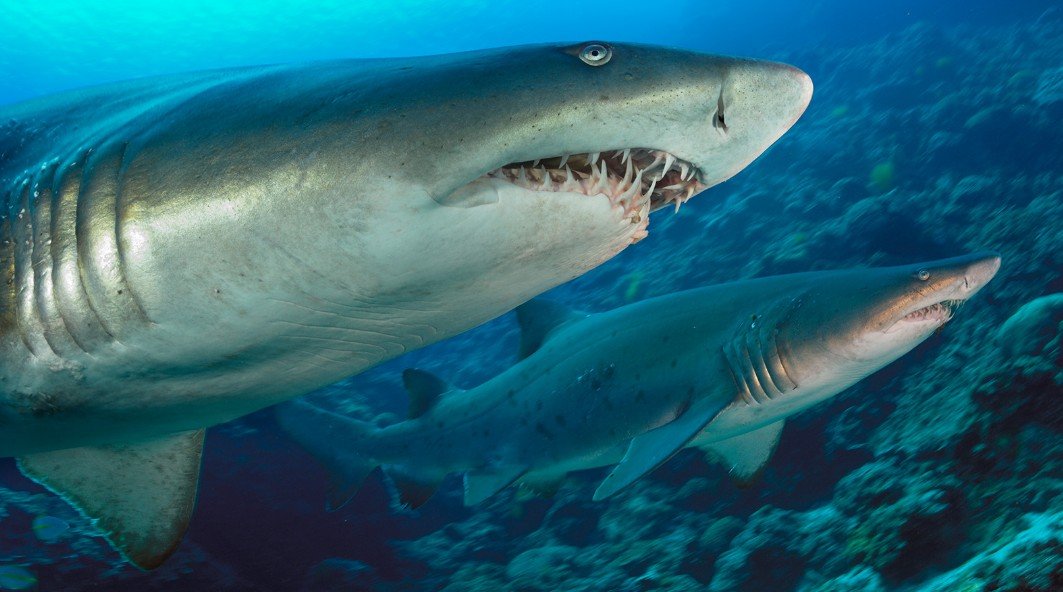
| APPEARANCE | The Sand Tiger Shark has a broad, flattened head with large, sharp teeth visible even when its mouth is closed. Its body is muscular and streamlined, and it typically has a grayish-brown or greenish-brown coloration with lighter undersides. |
| LIFE SPAN | Typically 15 to 20 years in the wild |
| HABITAT | Coastal waters of the Atlantic, Pacific, and Indian Oceans, generally at depths between 10 and 40 meters (33–131 feet). |
| DIET | The Sand Tiger Shark is a carnivorous predator, feeding on fish, rays, crustaceans, and occasionally other sharks. |
| NATURAL PREDATORS | Large predatory sharks, including great white sharks, may pose a threat to younger Sand Tiger Sharks. |
| COUNTRY | The Sand Tiger Shark is found in coastal waters worldwide, particularly along the coasts of North America, Australia, and Africa. |
| CONSERVATION STATUS | Vulnerable due to overfishing, habitat loss, and slow reproduction rates. It is protected in some areas but remains at risk globally. |
Amazing Facts About Sand Tiger Shark
1. Not Actually Aggressive
Despite its fierce appearance and sharp teeth, the Sand Tiger Shark is not typically aggressive toward humans. Most interactions with humans are non-confrontational.
2. Air-Breathing Shark
The Sand Tiger Shark must regularly swim to the surface to breathe. It has a special ability to gulp air at the surface, and unlike most sharks, it can store air in its stomach to stay buoyant.
3. Impressive Teeth
The Sand Tiger Shark’s teeth are large, sharp, and visible even when its mouth is closed. This shark often shows off its teeth when it opens its mouth, giving it an intimidating look.
4. Solitary by Nature
While it may gather in large numbers in some locations, Sand Tiger Sharks are generally solitary creatures and prefer to hunt alone.
5. Slow Reproduction
The Sand Tiger Shark has a very slow reproductive rate. It gives birth to live young, but typically only a few pups at a time, and it takes years for the shark to reach sexual maturity.
6. Thrives in Coastal Habitats
This species is found in shallow, coastal waters, where it can be spotted swimming near the surface or hunting near the seafloor.
7. Important Ecological Role
As a top predator, the Sand Tiger Shark plays a key role in maintaining the balance of marine ecosystems by controlling the populations of smaller fish and other marine life.
8. Migratory Behavior
The Sand Tiger Shark is known to undertake seasonal migrations, particularly in response to changes in water temperature or to find more abundant food sources.
9. Vulnerable Status
Overfishing, habitat degradation, and slow reproduction rates have contributed to the Sand Tiger Shark’s status as a vulnerable species, making it an important focus for conservation efforts.
10. Fascinating Hunting Techniques
The Sand Tiger Shark hunts using its keen senses to detect vibrations in the water. It primarily uses ambush tactics to strike at fish, rays, and other small prey.
Sand Tiger Shark: An Oceanic Predatory Giant
The biology, behaviour, habitat, nutrition, and reproduction of the sand tiger shark will all be covered in this extensive guide, along with the conservation initiatives meant to save this significant ocean species. We will also look at the sand tiger shark’s present dangers and its function in preserving the wellbeing of marine ecosystems.
Overview of the Sand Tiger Shark
Throughout the world, temperate and subtropical seas are home to the huge, predatory sand tiger shark. It also goes by a number of other names, such as the ragged tooth shark in South Africa and the grey nurse shark in Australia. The sand tiger shark is not a very hostile species, despite its frightening look, and it is more likely to avoid than pursue human contact.
The sand tiger shark is often seen close to the water’s surface, where it hunts prey or relaxes in warm currents, in contrast to many other shark species. Being a non-migratory species, it usually inhabits coastal waters and the areas around shipwrecks and reefs.
Physical Characteristics of the Sand Tiger Shark
1. Teeth and Body Features
- Teeth: The long, pointed teeth of the sand tiger shark are well-known and often show through its closed mouth. These teeth are well suited to seizing and clinging to fish and squid. Throughout its life, the shark constantly sheds and grows new teeth, with many rows of teeth in each jaw.
- Body: The sand tiger shark’s body is sturdy and cylindrical, with a sharp snout that tapers to it. Its caudal fin, also known as the tail fin, is asymmetrical, having a larger upper lobe than a lower lobe, and its dorsal fin is situated around the centre of its back.
- Colouration: The dorsal (top) side of sand tiger sharks is often greyish-brown or yellowish-brown, while the belly is lighter in colour. When hunting or sleeping, their natural camouflage from this colouring helps them blend in with the reefs or ocean bottom.
2. Dimensions and Size
The size of sand tiger sharks is quite huge. Although some individuals may grow up to 12 feet (3.6 metres) in length, they usually reach 8 to 10 feet (2.5 to 3 metres) in length. They have a maximum weight of 350 pounds (160 kilogrammes). Although they are powerful predators due to their size, they move more slowly than other shark species, therefore they must use stealth and ambush techniques to get their food.
Distribution and Habitat
Around the globe, temperate and subtropical coastal seas are home to the sand tiger shark, which is typically found between 30 and 60 metres (98 and 197 feet) below the surface, however it may sometimes be found at greater depths. With populations around the coastlines of North America, South America, Australia, South Africa, and portions of Asia, it is generally found in the Atlantic, Indian, and Pacific oceans.
1. Preferred Environments
Nearshore habitats including reefs, seagrass meadows, sandbanks, and shipwrecks are common habitats for sand tiger sharks. The sand tiger shark preys on fish, rays, and other marine creatures, which are numerous in these areas. The species is also known to live in offshore seas, where it hunts in the ocean’s deeper regions, especially near drop-offs and submerged structures.
Divers often meet sand tiger sharks in regions with high densities, such as sections of the eastern United States, especially near shipwrecks or marine parks where they congregate in greater numbers. Because there is prey available and sheltering habitats present, the species has been seen to visit these locations.
Behaviour and Diet
Sand tiger sharks are ambush predators that catch and retain food with their keen jaws. Sand tiger sharks do not aggressively pursue or hunt down prey in fast-paced chases as many other shark species do. Rather, they would rather wait and attack when the time is right with amazing precision. Although they are usually active at night, they may sometimes be seen hunting during the day, particularly in shallow waters.
1. Feeding Habits
Fish, squid, rays, crabs, and sometimes tiny sharks are among the marine species that the sand tiger shark consumes. Bony fish like menhaden, mullets, and surfperch make up the majority of its diet. The shark hunts both alone and in small groups, often in places with a lot of prey.
2. Hunting Techniques
Ambush predation is a tactic used by sand tiger sharks, in which they wait for their victim to approach. The sand tiger shark attacks swiftly, capturing and immobilising its victim with its strong teeth when an unwary fish swims near. It is particularly good at grabbing and hanging onto slick prey because of its large, pointed teeth.
Although they do not usually hunt in schools or groups, sand tiger sharks have been seen to congregate in areas with an abundance of food. These meetings may lead to interactions between several individuals, often in places like deep reefs or shipwrecks. The sharks, however, are not territorial and often avoid aggressive conflicts with one another for food.
Life Cycle and Reproduction
Due to their lengthy gestation periods and poor reproductive output, sand tiger sharks reproduce slowly. Because of this, they are especially susceptible to population decreases brought on by overfishing or environmental hazards.
1. Gestation and Mating
Sand tiger sharks are ovoviviparous, which means that while the embryos grow within the mother’s body, the yolk sac, not the placenta, provides nutrition for the newborn sharks. Males use their strong teeth to grab the female during mating, which takes place in the spring and summer. Following mating, the female bears the fertilised eggs for a lengthy gestation period of around nine to twelve months.
2. Birth of Pups
Pups of sand tiger sharks are born fully grown, measuring between 50 and 70 centimetres (20 and 27 inches) in length. Sand tiger shark pups do not get parental care after birth, in contrast to several other shark species. Rather, they are left on their own and have to start looking for food nearly right away.
Although the number of pups might vary, females usually give birth to two to four pups every litter. Sand tiger shark populations are especially susceptible to overfishing, habitat degradation, and other environmental stresses due to their poor rate of reproduction and small litter size.
Threats and Conservation Status
The International Union for Conservation of Nature (IUCN) has classified the sand tiger shark as Vulnerable. The sand tiger shark faces serious challenges from human activities, even though it is not as seriously endangered as some other shark species. These hazards include:
1. Overfishing
Commercial fisheries often target sand tiger sharks as either a main capture or as bycatch in fishing nets. Their fins, flesh, and liver are often highly prized in various markets, and their sluggish rates of reproduction make it difficult for populations to recover from overfishing.
2. Habitat Degradation
Sand tiger sharks are seriously threatened by the loss of coastal ecosystems including seagrass beds and reefs. Sharks’ capacity to locate food and refuge is directly impacted by habitat loss, which is a result of coastal development, pollution, and climate change.
3. Climate Change
The distribution of prey species and the health of marine ecosystems are being threatened by rising ocean temperatures and acidity. Because of this, sand tiger sharks could have trouble obtaining enough food, and changes in the availability of habitat might interfere with their life cycle and migratory habits.
Conservation Efforts
- Marine Protected Areas (MPAs): One important conservation tactic is the creation of MPAs where sand tiger sharks may locate secure feeding and breeding areas.
- Fishing Regulations: In order to save sand tiger sharks, sustainable fishing methods must be used, and laws restricting their catch must be strictly enforced.
- Public Awareness: Getting support for shark preservation requires educating the public about the value of shark conservation and the part sharks play in marine ecosystems.
FAQ (Frequently Asked Questions) about Sand Tiger Shark
Q: What is a Sand Tiger Shark?
Ans: The Sand Tiger Shark is a large, carnivorous shark found in coastal waters worldwide. It is known for its intimidating appearance, with large, visible teeth, but it is not typically dangerous to humans.
Q: Where can Sand Tiger Sharks be found?
Ans: Sand Tiger Sharks inhabit coastal waters across the Atlantic, Pacific, and Indian Oceans, especially along the coasts of North America, Australia, and parts of Africa.
Q: Are Sand Tiger Sharks dangerous?
Ans: Despite their sharp teeth and aggressive-looking appearance, Sand Tiger Sharks are generally not a threat to humans. They are more likely to avoid humans and are considered non-aggressive.
Q: How do Sand Tiger Sharks breathe?
Ans: Sand Tiger Sharks are air-breathing sharks. They need to swim to the surface to gulp air, and they can store air in their stomach to maintain buoyancy while swimming.
Q: What do Sand Tiger Sharks eat?
Ans: Sand Tiger Sharks feed on a variety of marine life, including fish, rays, crustaceans, and occasionally smaller sharks.
Q: How many pups do Sand Tiger Sharks have?
Ans: Sand Tiger Sharks give birth to live young, but they typically produce only a small number of pups per litter. The gestation period is lengthy, which contributes to their slow reproductive rate.
Q: Are Sand Tiger Sharks endangered?
Ans: Yes, Sand Tiger Sharks are listed as vulnerable due to overfishing, habitat loss, and slow reproduction. Efforts are underway in some regions to protect them.
Q: How long do Sand Tiger Sharks live?
Ans: The average lifespan of a Sand Tiger Shark is 15 to 20 years, although it can vary depending on environmental conditions.
Q: Do Sand Tiger Sharks migrate?
Ans: Yes, Sand Tiger Sharks are known to undertake seasonal migrations, often in search of food or to adjust to water temperature changes.
Q: What role do Sand Tiger Sharks play in the ecosystem?
Ans: Sand Tiger Sharks help maintain balance in the marine food chain by controlling the populations of smaller fish, rays, and other marine life.
#SandTigerShark #Sharks #MarineWildlife #SharkFacts #Conservation #Predator #OceanLife #SharksOfTheWorld
Our sources and references about Sand Tiger Shark
1: Wikipedia – Sand Tiger Shark
2: National Geographic – Sand Tiger Shark
3: Shark Sider – Sand Tiger Shark


